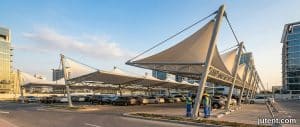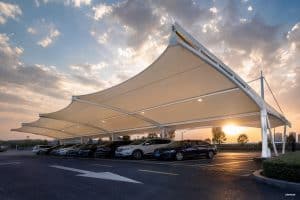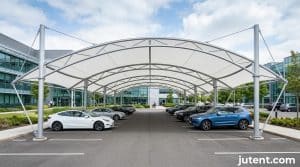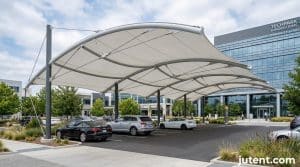

The Engineering Challenge of Commercial Parking Shade
Selecting the right membrane material for a commercial parking shade structure is not just an aesthetic choice—it is a critical engineering decision. High UV exposure, urban pollution, heavy rain, and coastal winds place extreme demands on open-air structures.
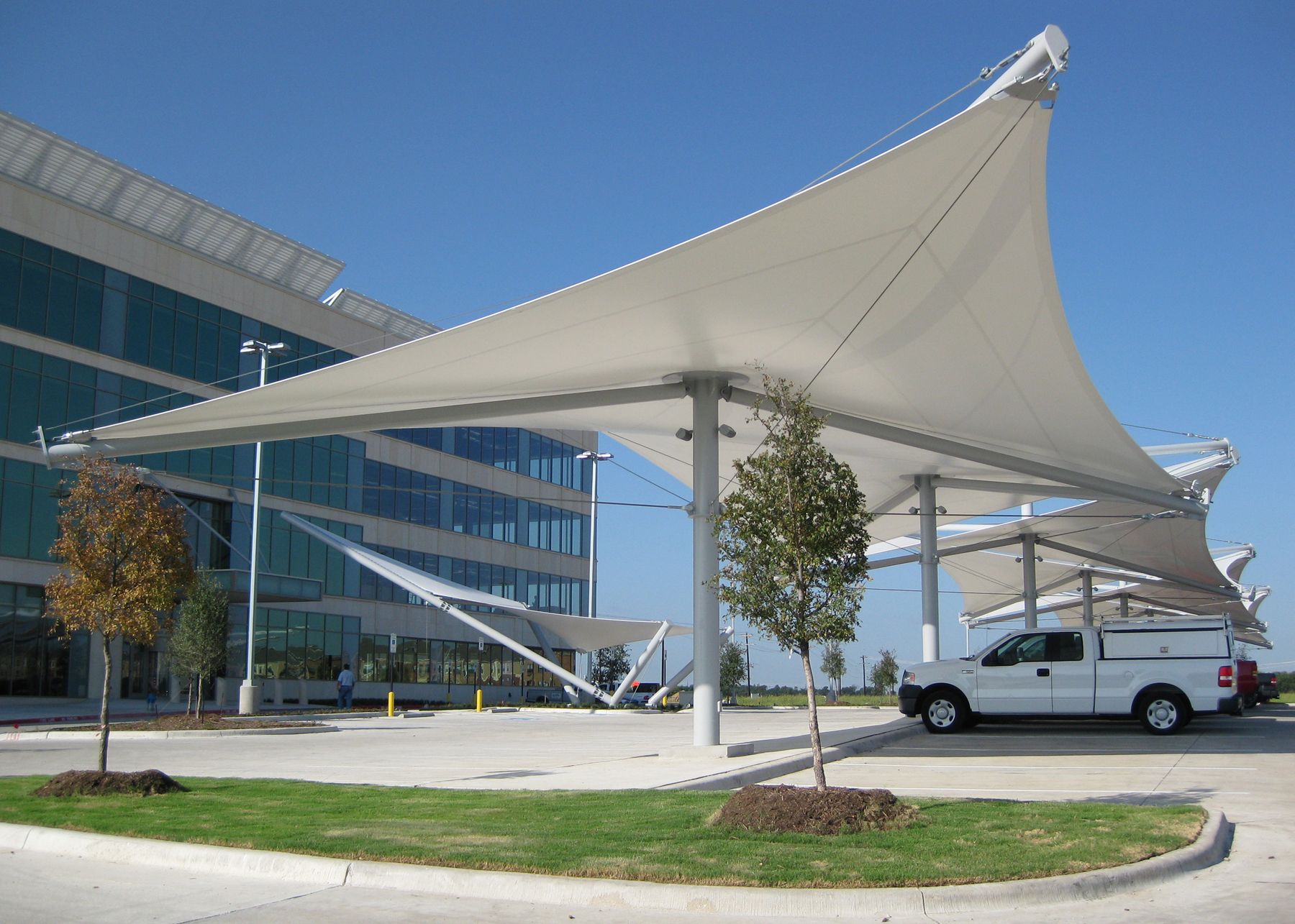
For procurement managers and facility developers, material performance directly determines the project's service life, ongoing maintenance costs, and structural safety. A poorly specified fabric will degrade quickly under solar radiation, leading to discoloration, loss of tension, and premature structural failure.
Material Comparison: PVDF vs. PTFE vs. ETFE
Tension fabric structures rely on high-strength membranes combined with rigid steel frames. By pre-tensioning the fabric, the structure achieves a stable form capable of resisting dynamic wind loads. Here is how the top three architectural materials compare for tensile carport applications:
| Membrane Material | Average Lifespan | Engineering Advantages | Best Application Scenario |
|---|---|---|---|
| PVDF Coated PVC | 15–20 Years | Excellent UV protection, highly flexible, cost-effective, self-cleaning properties. | Standard commercial car parks, shopping mall parking lots, modular shade structures. |
| PTFE (Fiberglass) | 25–30+ Years | Class-A fire resistance, extreme durability, chemically inert. Higher initial capital cost. | Major public infrastructure, airport parking, permanent landmark facilities. |
| ETFE Foil | 20–25 Years | Ultra-lightweight, high light transmission (up to 95%). Lacks natural shading properties. | Enclosed architectural façades or atriums (Not recommended for open car shading). |
Why PVDF is the Standard for Tensile Carports
When assessing life cycle costs, a PVDF membrane parking shade offers the most balanced return on investment (ROI) for B2B procurement. While a PTFE fabric carport delivers exceptional longevity, its high fabrication and material costs often exceed standard commercial budgets.
PVDF combines the mechanical strength of a polyester base fabric with a protective fluorocarbon coating. This formulation blocks damaging UV rays, prevents dirt accumulation, and provides sufficient flexibility for rapid modular installation over large parking zones.
Common Mistakes to Avoid in Canopy Procurement
Many commercial developers face unexpected maintenance costs due to poor specification during the bidding phase. Avoid these costly B2B procurement errors:
- Ignoring Steel Frame Anti-Corrosion: Upgrading to a premium membrane is useless if the steel structure rusts. For coastal or high-humidity zones, standard spray paint is insufficient. Always specify hot-dip galvanized steel with a marine-grade epoxy topcoat.
- Specifying ETFE for Vehicle Shading: ETFE allows too much solar heat and light transmission, defeating the purpose of shading parked vehicles. It should be reserved for botanical gardens or enclosed transit hubs.
- Inadequate Pre-Tensioning: If the membrane is not tensioned correctly using proper computational form-finding, it will flutter in high winds. This friction causes rapid wear at the connection points and significantly reduces the structure's lifespan.
Build Reliable Vehicle Shelter Systems
A successful commercial carport project requires aligning your budget with precise environmental data and engineering expertise. Jutent provides modular and custom-engineered canopy solutions designed for rapid deployment and long-term durability.