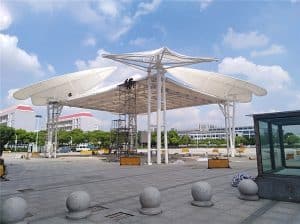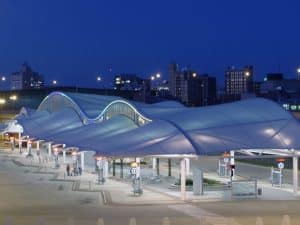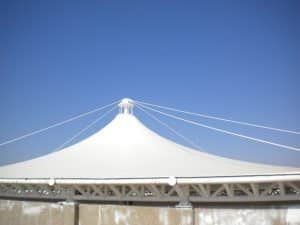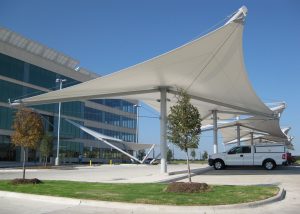

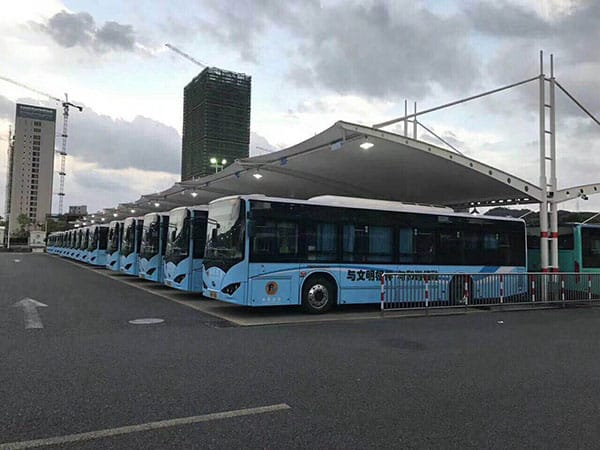
Bus stop tensile fabric structures have become increasingly common in modern cities. As tensile membrane architecture continues to develop, more urban transport systems are adopting this lightweight structure for public waiting areas. Compared with traditional rigid shelters, tensile fabric bus stops offer a balance between functionality, durability, and visual appeal, making them well suited to today’s urban environments.
A bus stop is a basic public facility designed to provide shelter and comfort for people waiting for public transport. From a design perspective, it should be easily recognizable, practical, and well-integrated with the surrounding cityscape. Tensile fabric structures meet these requirements by using smooth curved forms and open spatial layouts. Their clean lines and flexible shapes allow designers to combine local culture, modern aesthetics, and functional needs in a single structure.
Structural Reliability and Safety Performance
Although tensile fabric structures appear light and simple, their structural performance is highly reliable. A bus stop tensile fabric structure is formed by high-strength membrane materials combined with steel frames, columns, or cables. Through controlled pre-tensioning, the membrane works together with the supporting system to create a stable spatial structure capable of withstanding wind, rain, and other external loads.
Compared with conventional materials, tensile membranes achieve strength through tension rather than mass. This allows the structure to remain lightweight while maintaining excellent load-bearing capacity. In addition, the flexibility of the membrane and cable system gives the structure good deformation ability, which improves overall safety under dynamic loads such as strong wind or seismic movement.
Environmental Performance and Construction Efficiency
One of the key advantages of bus stop tensile fabric structures is their environmental performance. Membrane surfaces are commonly coated with PVDF or titanium dioxide, which helps reflect solar heat and reduce heat absorption. Around 70% of solar radiation can be reflected, while natural light is still transmitted through the membrane. This creates a bright waiting space without excessive heat buildup.
Tensile membranes also have self-cleaning properties. Dust and dirt are less likely to accumulate on the surface, and rainwater can naturally wash the membrane clean, helping the structure maintain its appearance over time. In addition, modern membrane materials offer good flame retardancy and high temperature resistance, allowing them to meet standard fire safety requirements for public facilities.
From a construction standpoint, tensile fabric bus stops have a short installation cycle. Steel components and membranes are typically fabricated in the factory and assembled on site, reducing on-site work and minimizing disruption to surrounding traffic and pedestrians. This efficiency makes tensile fabric structures a practical choice for urban infrastructure projects.