

“`html
New Zealand's unique climate, with its intense UV radiation and often unpredictable weather patterns, presents specific challenges for school infrastructure, especially when specifying a tensile membrane structure for walkway canopies. For contractors tasked with installing a tensile membrane مورد مظلات ممرات مدرسية في نيوزيلندا، فإن فهم المعايير المحلية والالتزام بها ليس مجرد توصية - بل هو ضرورة قانونية وأخلاقية. من ضمان سلامة الطلاب من أشعة الشمس القاسية إلى تصميم هياكل تتحمل أحمال الرياح الكبيرة، كل مواصفة مهمة. يوجه هذا المقال المقاولين في نيوزيلندا عبر المتطلبات الأساسية لممرات المدارس المغطاة المتوافقة والمتينة، مما يساعدك على التنقل في تعقيدات اللوائح المحلية والمصادر الدولية.
حماية من الأشعة فوق البنفسجية UPF 50+: ما تتطلبه المعايير النيوزيلندية لممرات المدارس
حماية الطلاب من مستويات الأشعة فوق البنفسجية العالية في نيوزيلندا أمر بالغ الأهمية، مما يجعل الحماية من الأشعة فوق البنفسجية مواصفة حاسمة لأي مورد مظلات ممرات مدرسية. تشهد البلاد بعضًا من أعلى مستويات الأشعة فوق البنفسجية عالميًا، مما يستلزم معايير صارمة لهياكل الظل الخارجية. بالنسبة للممرات المغطاة في المدارس، يجب أن يوفر الغشاء النسيجي حدًا أدنى من عامل الحماية من الأشعة فوق البنفسجية (UPF) يبلغ 50+. يضمن هذا المعيار أن المظلة تحجب بشكل فعال أكثر من 98% من الأشعة فوق البنفسجية الضارة، مما يوفر ممرًا آمنًا للطلاب بين المباني.
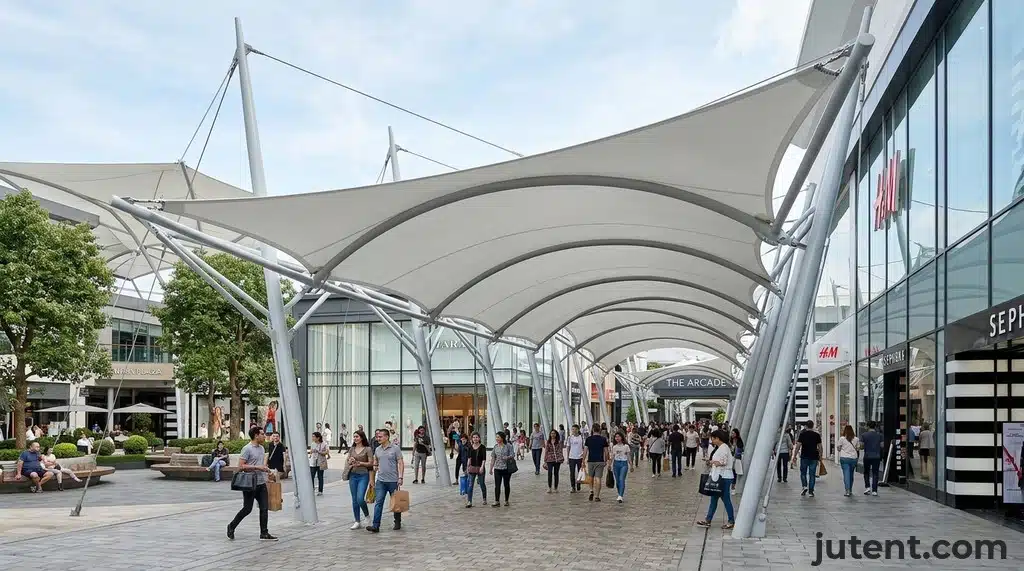
When specifying materials, contractors must request UPF 50+ certification from the membrane supplier. This certification typically comes from independent testing laboratories, verifying the fabric's ability to meet the required protection level. Common tensile membrane materials like PVDF (Polyvinylidene Fluoride) are excellent choices, often exceeding this requirement while offering long service life. A standard 900 g/m² PVDF membrane, for instance, provides superior UV resistance and durability. Ensuring this level of protection is not just about compliance; it's about safeguarding the health of students and staff daily. School Walkways
NZS 1170.2: حجر الزاوية في السلامة الهيكلية
Beyond UV protection, the structural integrity of a مورد مظلات ممرات مدرسية in New Zealand is governed by the NZS 1170 series of standards, particularly NZS 1170.2 for wind actions. This standard dictates how structures must be designed to withstand the specific wind conditions prevalent across different regions of New Zealand. For contractors, this means that every aspect of the canopy's design – from the steel framework to the membrane attachment points – must be engineered to meet these precise wind load requirements.
Compliance with NZS 1170.2 is non-negotiable for obtaining building consent and ensuring the long-term safety and stability of the structure. It requires detailed engineering calculations that consider the canopy's location, height, terrain category, and the regional basic wind speed. Manufacturers supplying structures to New Zealand must be capable of providing these calculations, ideally stamped by a New Zealand-registered structural engineer. Based on Jutent's experience across 400+ projects in 30+ countries [link to /projects/], we understand the critical importance of tailoring designs to local building codes, ensuring that our tensile structures meet or exceed these rigorous standards. مظلة ممر المشاة المدرسي دليل

متطلبات حمل الرياح لممرات المدارس في نيوزيلندا
تضاريس نيوزيلندا المتنوعة وتعرضها لأنظمة الطقس القوية، بما في ذلك الأعاصير والرياح الجنوبية العاتية، تعني أن متطلبات حمل الرياح لمظلات ممرات المدارس هي من بين الأكثر صرامة عالميًا. يحدد معيار NZS 1170.2 المنهجية لتحديد أحمال الرياح التصميمية، والتي تختلف بشكل كبير اعتمادًا على موقع الموقع (مثل الساحلي أو الحضري أو الوادي المحمي)، وفئة التضاريس (مثل المفتوحة أو الضواحي أو المدينة)، وارتفاع الهيكل وهندسته.
بالنسبة لـ مورد مظلات ممرات مدرسية, contractors must provide the exact project location to the manufacturer. This allows for precise calculation of the ultimate limit state (ULS) and serviceability limit state (SLS) wind pressures. These calculations will dictate the required steel grades (e.g., Q235B, Q355B), section sizes, and connection details. For instance, a مورد مظلات ممرات مدرسية Auckland might face different wind pressures than one in Wellington or Christchurch due to varying basic wind speeds and terrain characteristics. The design must account for both positive and negative pressures (uplift) on the membrane and frame. A reputable manufacturer will provide detailed engineering drawings and calculations, demonstrating full compliance with NZS 1170.2, ensuring the structure can safely withstand the maximum anticipated wind events over its service life.
موافقة المجلس: ما هي الوثائق المطلوبة عادةً في نيوزيلندا
Securing council approval is a crucial step for an
“`
Ready to move forward? Contact Jutent with your project details and we'll guide you through every step.
Get Your NZ-Compliant School Canopy Quote
Request Engineering Drawings for Your Project
Compare PVDF vs PTFE for School Walkways


