
“`html
Gulf region, July. Ambient temperatures routinely hit 48°C, surface temperatures on exposed steel exceed 65°C, and the UV Index peaks at an unforgiving 11+. Standard industrial tent specifications imported without modification will suffer severe plasticizer migration and UV degradation within 36 months. To engineer a durable مظلة شد مستودعية Middle East logistics hubs can rely on, contractors must implement structural and material adaptations that account for extreme thermal expansion, high solar radiation, and strict regional wind codes. Whether you need a tensile fabric warehouse for industrial storage or a مظلة صناعية كبيرة الامتداد for logistics centers, the right material and engineering choices make the difference.
يجب وصف الحماية من التآكل وعمر الخدمة وفقًا لنظام الحماية المختار وبيئة المشروع وظروف الصيانة، وليس كضمان غير مشروط لعمر الخدمة.
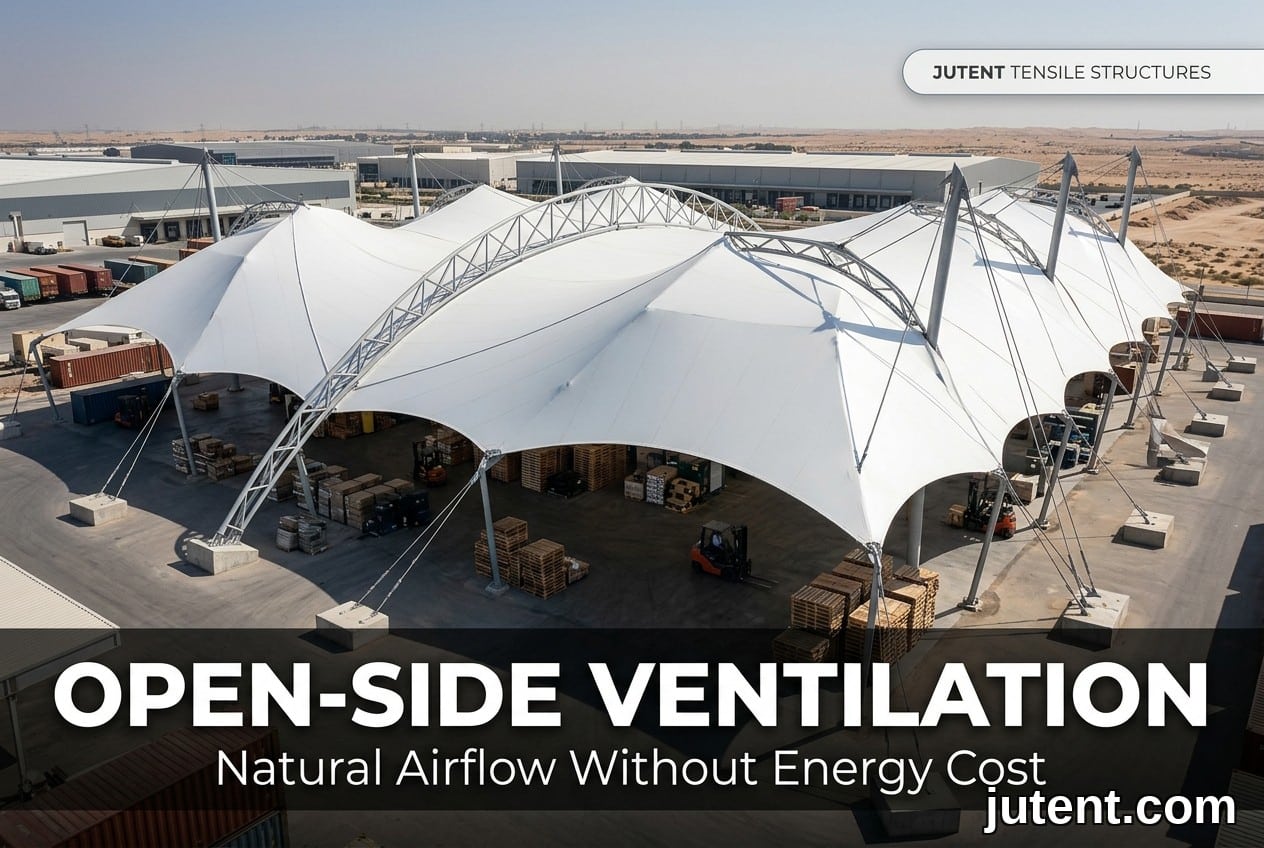
Warehouse Thermal Control: Beating Desert Heat without HVAC with Tensile Canopies

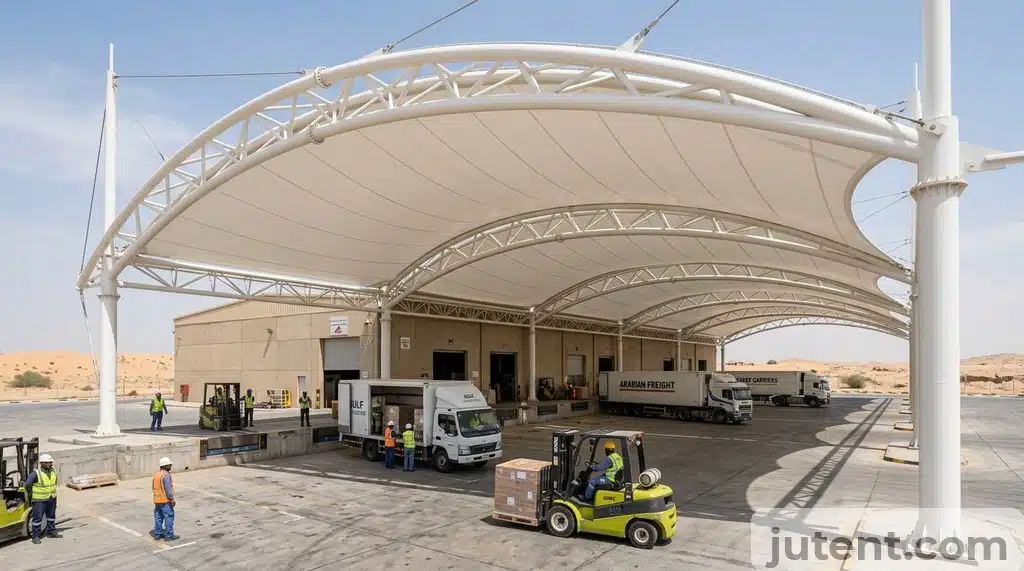
يجبر مناخ الخليج على إعادة حساب كاملة للهياكل الشدية القياسية. عادةً ما تعطي المواصفات الأوروبية أو الأمريكية الأولوية لأحمال الثلوج والرياح المعتدلة. في الشرق الأوسط، الضغوط الهيكلية الأساسية هي التدوير الحراري، والتدهور بالأشعة فوق البنفسجية، والرمال المحمولة جواً الكاشطة.
A مظلة شد مستودعية in hot climate regions experiences daily temperature swings of up to 20°C. This thermal cycling causes significant expansion and contraction in the primary steel framework and the tensioned membrane. If connection details fail to accommodate this movement, the membrane will either over-tension and tear at the catenary cables or lose pre-stress, leading to ponding during heavy winter rain events.
Standard PVC membranes (typically 650g/㎡ to 850g/㎡) with basic acrylic topcoats degrade faster in extreme heat. Plasticizers in standard PVC can migrate to the surface, causing the fabric to become brittle and discolor within 3-5 years depending on UV exposure levels. For التخزين للتطبيقات في الخليج، يجب أن يتحول المواصفات الأساسية إلى هياكل PVDF أو PTFE عالية الجودة.
أحمال التبريد داخل الهيكل تحدد أيضًا المواصفات. ينقل غشاء أحادي الطبقة القياسي ما يصل إلى 15% من الإشعاع الشمسي. في بيئة تبلغ 45 درجة مئوية، يخلق هذا تأثيرًا دفيئًا يجعل الداخل غير صالح للاستخدام في الخدمات اللوجستية الحساسة لدرجة الحرارة. يجب أن يخفف التصميم من انتقال الحرارة هذا على مستوى المواد قبل أن يفكر المهندسون في أنظمة التدفئة والتهوية وتكييف الهواء.
حماية من الأشعة فوق البنفسجية والحرارة: درجة الغشاء لمشاريع الخليج
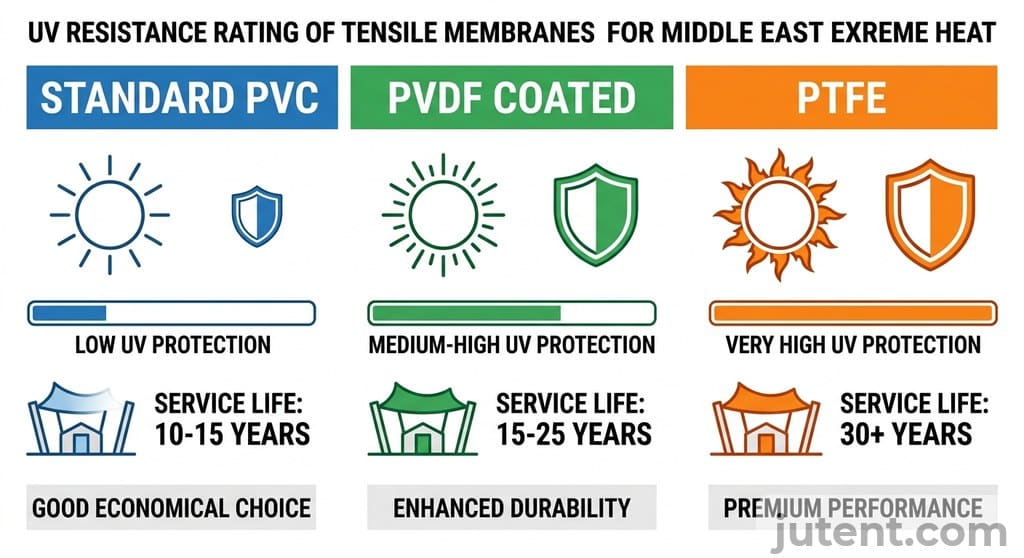
يتعامل PVDF عالي الجودة بوزن 1050 جم/م² مع 95% من مشاريع الخدمات اللوجستية في الخليج. PVC القياسي قابل للاستخدام فقط للهياكل المؤقتة التي تستخدم لمدة تقل عن 24 شهرًا.
يتفوق PVDF على PVC القياسي بسبب طبقة سطحه الفلوروكربونية، التي تعكس الأشعة فوق البنفسجية بدلاً من امتصاصها. عند مؤشر الأشعة فوق البنفسجية 11-12 (صيف الخليج النموذجي)، يحتفظ غشاء PVDF بوزن 1050 جم/م² بقوة الشد ضمن 10% من مواصفاته الأصلية بعد 15 عامًا. توفر هذه الطبقة السطحية أيضًا خصائص التنظيف الذاتي، مما يمنع الرمال الصحراوية الناعمة من الاندماج في نسيج القماش.
For a heat-resistant مظلة شد مستودعية, specify thermal transmission properties. A standard white PVDF membrane reflects approximately 80-85% of solar energy. To further reduce interior temperatures, specify a double-skin membrane system with an air gap or insulation layer. This configuration reduces interior ambient temperatures by 8°C to 12°C compared to single-skin structures, lowering cooling operational costs.
As noted in our المظلة الشفافة للمستودعات Guide (link to guide page), specify an anti-wicking treatment on the base yarn. High humidity in coastal cities in the region causes fungal growth if moisture penetrates micro-cracks at membrane edges. Finally, the membrane must carry fire retardancy ratings such as NFPA 701 or DIN 4102 B1, available upon request to meet regional requirements.
Wind Load: Middle Eastern Markets Standards
تتطلب هندسة الرياح في الشرق الأوسط الالتزام الصارم بقوانين البلديات المحلية، والتي غالبًا ما تتجاوز المعايير الدولية الأساسية بسبب خطر رياح الشمال والتعرض الساحلي.
A warehouse tensile canopy in hot climate regions must comply with the Saudi Building Code (SBC), specifically Chapter 7, which dictates wind load calculations. For coastal industrial zones in the Gulf region, the basic design wind speed is typically set at 40 m/s (144 km/h) to 45 m/s (162 km/h), depending on the exact exposure category and building height.
Similarly, a warehouse tensile canopy in arid coastal zones requires engineering calculations based on ASCE 7-16 or local municipal guidelines. Gulf coastal cities typically require a basic wind speed of 38 m/s (136 km/h) for 3-second gusts.
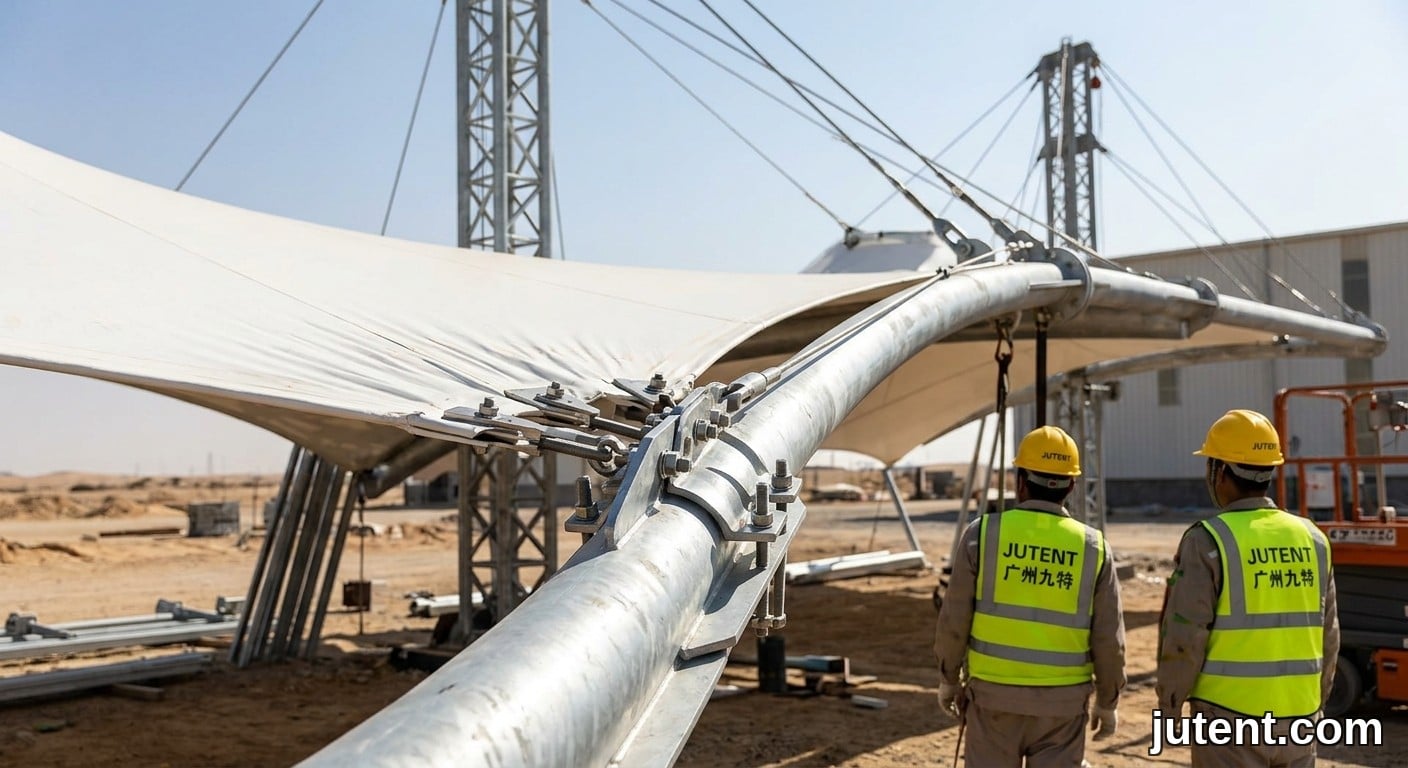
To meet these loads, the primary steel structure cannot rely on standard lightweight aluminum profiles used in temporary event tents. The specification must mandate hot-dip galvanized structural steel (minimum S355 grade) with moment-connected base plates. The galvanization thickness should be a minimum of 85 microns for moderate coastal environments, and 100 microns for high-salinity coastal zones to ensure long-term corrosion protection. The
“`