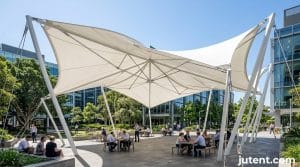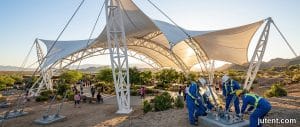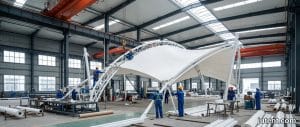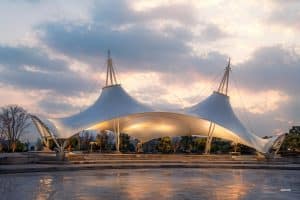

مقتطف: حديقة هيكل ظل شد في جنوب شرق آسيا يجب أن تتحمل أحمال الرياح الإعصارية والأشعة فوق البنفسجية الاستوائية الشديدة. يغطي هذا الدليل ما يحتاج المقاولون في الفلبين وماليزيا وإندونيسيا إلى تحديده.
Regional building codes establish base wind speeds of 250 km/h or higher for coastal zones. Designing a park tensile shade structure Southeast Asia requires strict adherence to these localized environmental stressors, particularly extreme wind pressure and constant solar radiation. Understanding what a tensile membrane structure is and how it differs from traditional shade sails helps contractors specify the right solution for public parks. Public amenity sites—including playgrounds, community plazas, and sports courts—demand engineered canopies that balance large-span shade coverage with severe-weather survivability. Contractors building infrastructure across the region must specify correct steel framing profiles, high-tension membranes, and specialized corrosion treatments to prevent premature failure.
Typhoon Wind Load Requirements for Park Tensile Shade Structures in Tropical Zones
تحديد هيكل مقاوم للأعاصير هياكل الظل الشدية للمنتزهات يبدأ بحسابات حمل الرياح الأساسية الدقيقة المستمدة من الهندسة المحددة للنسيج المعماري. يتراوح عرض امتداد المظلة النموذجي للمتنزهات العامة من 6 إلى 20 مترًا. عبر هذه الامتدادات، تولد قوى الرفع الجانبية للرياح عزوم انقلاب هائلة عند الأساسات.
Structural engineering parameters must adapt strictly to regional geography. A هياكل الظل الشدية للمنتزهات structure in coastal typhoon zones must routinely endure cyclonic events, necessitating heavy-wall Q235B or Q355B carbon steel columns with enlarged base plates secured via deep concrete anchorings. By contrast, a park هيكل ظل شد in monsoon regions faces lower sustained baseline wind codes but must resist sudden, intense monsoonal squalls over open recreation fields. Similarly, a هياكل الظل الشدية للمنتزهات structure positioned along exposed archipelagic coastal belts requires distinct perimeter tensioning details to mitigate high-velocity localized downdrafts.
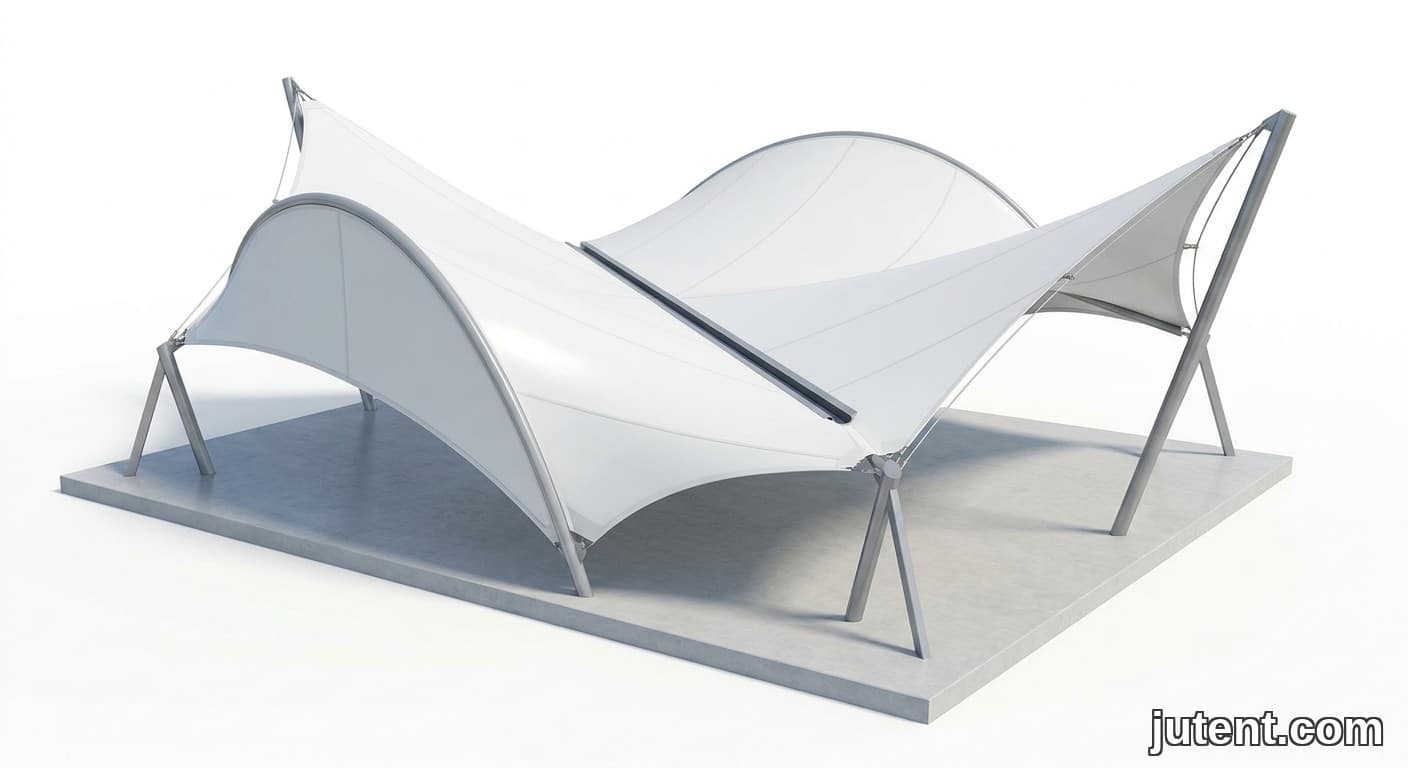
تعالج هندسة Jutent هذه القوى الجانبية المتميزة من خلال أشكال هندسية للمظلات عالية الاستقرار - بشكل أساسي القطع المكافئ الزائدي (hypar)، والقبو البرميلي، والشراع المخروطي. تعمل هذه الأشكال الهيكلية المنحنية بشكل مزدوج على تبديد طاقة الرياح الحركية بشكل طبيعي من خلال ضمان عدم وجود أسطح كبيرة ومسطحة تلتقط هبات الرياح المتعامدة المباشرة. يعتمد التخلص الصحيح من الأحمال كليًا على الحفاظ على شد القماش الدقيق. لضمان الاستقرار الهيكلي والشد الصحيح عبر شبكة الكابلات بأكملها أثناء الرياح العاتية، نلزم بحد أدنى لنطاق المشروع يبلغ 100 متر مربع من مساحة الغشاء. بالنسبة لمشاريع البنية التحتية المدنية التي تقوم بتقييم منتجات هياكل الظل في المتنزهات، فإن اختيار الهندسة المصممة بشكل صحيح يمنع الرفرفة التوافقية المدمرة.
الحماية من الأشعة فوق البنفسجية في المناخات الاستوائية: متطلبات درجة الغشاء
تتعرض المناخات الاستوائية للبنية التحتية للمتنزهات العامة لمؤشر أشعة فوق بنفسجية (UV) شديد، يتجاوز غالبًا 11 خلال ساعات الذروة النهارية. يؤدي هذا الإشعاع الشمسي الشديد إلى تدهور الأقمشة التجارية القياسية بسرعة، مما يجعلها هشة ومتغيرة اللون وتتمزق في النهاية تحت شد الرياح. تتطلب أنظمة الظل في المتنزهات منسوجات معمارية من الدرجة الصناعية لضمان السلامة العامة والحفاظ على قيمة الأصول طويلة الأجل.
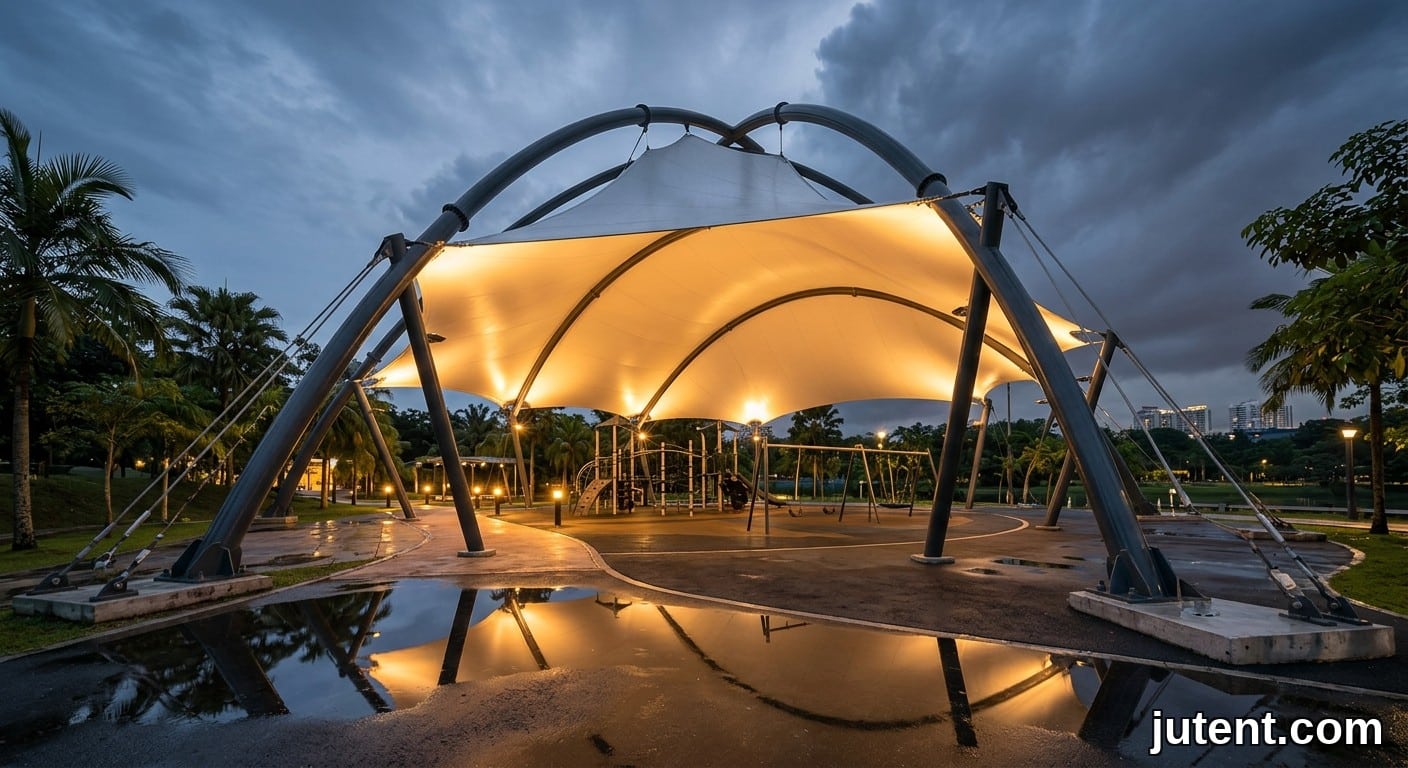
For standard regional park deployments, Jutent Engineering specifies 1050 g/m² PVDF-coated polyester membranes. We source these heavy-duty materials from premium European and Asian mills, ensuring consistent quality across all projects. The 1050 g/m² PVDF membrane blocks over 95% of harmful UV transmission, providing critical shade over heat-sensitive الملاعب المعدات ومناطق الجلوس الخرسانية الخارجية الحساسة للحرارة. يحمل هذا التصنيف المادي ضمانًا لمدة 10 سنوات وعمر خدمة مختبر يتجاوز 15 عامًا في البيئات الاستوائية.
عندما يحتاج المطورون المدنيون إلى أقصى درجات المتانة للساحات الحضرية البارزة، نحدد أغشية ألياف زجاجية من PTFE (بولي تترافلوروإيثيلين) الممتازة. يظل PTFE خاملًا كيميائيًا ومقاومًا بشدة للأشعة فوق البنفسجية الاستوائية الشديدة، مع ضمان لمدة 15 عامًا وعمر خدمة متوقع يزيد عن 25 عامًا.
Both PVDF and PTFE materials offer self-cleaning properties. PVDF membranes feature a specialized topcoat, while PTFE's non-stick surface naturally repels dirt and debris. In public parks with limited maintenance budgets, this characteristic allows heavy seasonal rains to wash away accumulated dust, bird droppings, and organic debris. The heavy-duty coating also prevents fungal growth, a critical specification for humid Southeast Asian environments. Engineers intentionally design these park structures with vandal-resistant clearances, ensuring the lowest point of the tensioned membrane and its primary hardware remain at least 3 meters above grade, safely out of reach from pedestrian traffic.
تصميم الصرف للبيئات عالية الأمطار
تسقط الرياح الموسمية الاستوائية كميات هائلة من المياه في فترات قصيرة، مما يجعل هندسة الصرف الصارمة ضرورية للهياكل العامة العلوية. أي غشاء ذو ميل ضعيف سيتجمع فيه الماء بسرعة، مما يمدد القماش ويؤدي إلى انهيار هيكلي كارثي بسبب وزن الماء الميت غير المحسوب.
To channel water rapidly away from the center of the canopy, our engineers establish steep geometric pitches—typically requiring minimum slope angles of 15 to
الأسئلة الشائعة
Q: What is the lifespan of a park هيكل ظل شد in tropical climates?
A: For PVDF-coated polyester membranes, the expected service life exceeds 15 years in tropical environments with a 10-year warranty. For PTFE fiberglass membranes, the lifespan extends beyond 25 years with a 15-year warranty. Both materials feature self-cleaning topcoats that reduce maintenance costs.
Q: How much does a park هيكل ظل شد التكلفة؟
A: The cost depends on membrane area, steel grade, and site conditions. For a standard 100-square-meter PVDF park canopy, expect a range of $15,000 to $30,000 installed. PTFE options cost 30-50% more but offer longer lifespan. Contact us with your specific project dimensions for an accurate quote.
Q: What wind speed can a هيكل ظل شد withstand?
A: Our engineered هياكل الظل الشدية للمنتزهات structures are designed to withstand typhoon-force winds up to 250 km/h when properly specified with heavy-duty steel framing and high-tension membranes.
Q: What is the minimum area requirement for a project?
A: We mandate a minimum project scope of 100 square meters of membrane area to ensure structural stability and correct tension across the entire cable network during high winds.
Q: How do I get a typhoon-rated specification for my project?
A: Tell us your project location and we'll provide a typhoon-rated specification.