
“`html
حمل الرياح هو الاعتبار الهيكلي الحاسم لـ الملاعب الهياكل المظللة — ليس فقط من أجل السلامة، بل للحصول على موافقة المجلس. فهم كيفية حساب حمل الرياح والمعايير المطبقة أمر ضروري قبل التحديد.
عند تصميم أو تحديد الملاعب shade structure, the initial focus often gravitates towards aesthetics, material durability, and UV protection. However, for any structural engineer or contractor, the paramount consideration must be the structure's ability to withstand environmental forces, particularly wind. Neglecting a thorough wind load analysis can lead to catastrophic structural failure, posing significant safety risks to children and staff, and resulting in costly repairs or replacements. Beyond safety, inadequate wind load design is a common reason for project delays or outright rejection during council approval processes. Local authorities rigorously enforce building codes that mandate specific wind resistance capabilities, making precise engineering calculations non-negotiable. A well-engineered tensile membrane structure, like those Jutent provides for الملاعب shade projects, is designed from the ground up to distribute these forces effectively, ensuring long-term stability and compliance. This foundational understanding of wind dynamics is what differentiates a compliant, safe, and enduring الملاعب shade from a potential liability. ملعب Shade
For a complete overview of what a tensile membrane structure is and how it differs from traditional canopies, see our guide on tensile fabric structures.

كيفية حساب حمل الرياح لهياكل مظلات الملاعب
حساب حمل الرياح لـ شراع ظل للملعب structure or tensile canopy involves a multi-faceted approach, integrating geographical data, structural characteristics, and applicable building codes. The fundamental principle is to determine the dynamic pressure exerted by wind on the structure's surface. This pressure is then converted into forces acting on individual structural components.
غالبًا ما يتم اشتقاق الصيغة العامة لحساب ضغط الرياح التصميمي ($P$) من:
$P = 0.5 \times \rho \times V^2 \times C_d \times C_e \times C_p$
حيث:
* $P$ = ضغط الرياح التصميمي (باسكال أو psf)
* $\rho$ = كثافة الهواء (عادة 1.225 كجم/م³ في الظروف القياسية)
* $V$ = سرعة الرياح التصميمية الأساسية (م/ث أو ميل/ساعة)، تحددها بيانات الأرصاد الجوية الإقليمية وفترات التكرار (مثل فترة العودة 50 عامًا).
* $C_d$ = معامل السحب، الذي يأخذ في الاعتبار شكل واتجاه الهيكل. بالنسبة للأغشية الشدية، يمكن أن يكون هذا معقدًا بسبب أشكالها الديناميكية الهوائية.
* $C_e$ = معامل التعرض، الذي يعكس خشونة التضاريس والارتفاع عن سطح الأرض. سيكون للحقل المفتوح $C_e$ أعلى من المنطقة الضواحي.
* $C_p$ = معامل الضغط، والذي يختلف عبر الأسطح المختلفة للهيكل (مثل جهة الريح، وجهة الظل، والسقف).
Engineers must also consider factors like gust effects, topographical features (hills, valleys), and the structure's dynamic response to wind (vibration, oscillation). For tensile structures, the membrane's flexibility and interaction with the supporting steel framework (Q235B or Q355B, for example) are critical. Jutent's engineers utilize advanced computational fluid dynamics (CFD) and finite element analysis (FEA) software to model these complex interactions, providing precise wind load distributions for every project. This rigorous approach ensures that the design accounts for both static and dynamic wind effects, guaranteeing the structural integrity of the ملعب Shade Structures Guide.
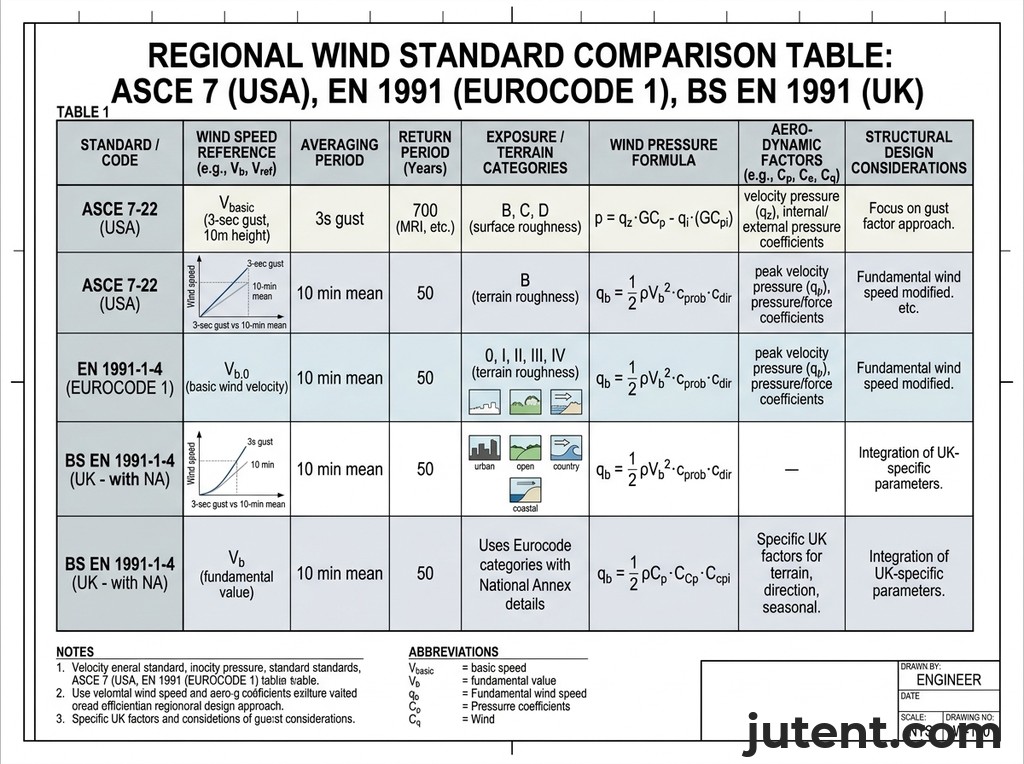
المعايير الإقليمية: AS/NZS، NSCP، SBC، وغيرها من الرموز المعمول بها
Adherence to regional building codes and standards is paramount for any construction project, and الملاعب shade structures are no exception. These codes dictate the minimum design wind speeds, load factors, and calculation methodologies specific to a geographical area, ensuring public safety and structural resilience.
بالنسبة لأستراليا ونيوزيلندا، المعيار الأساسي هو AS
“`
Ready to move forward? Contact Jutent with your project details and we'll guide you through every step.
Get Your Playground Shade Wind Load Report
Request Engineering Data for Your Project
Speak to a Tensile Structure Engineer