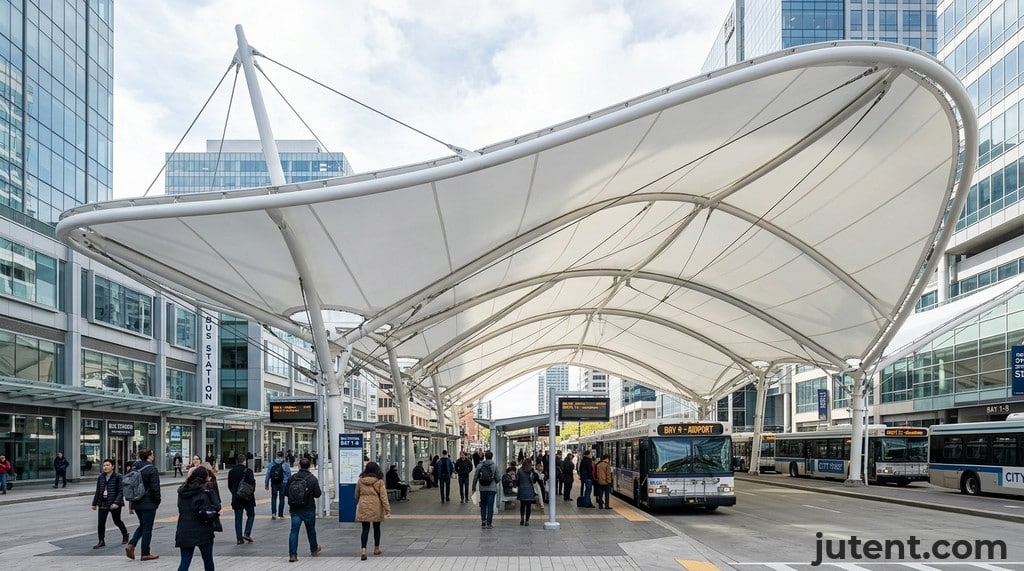
For contractors in Nigeria, Kenya, and South Africa, sourcing a bus station canopy locally often means limited options, inconsistent quality, and high prices. The local supply chain for large-scale tensile structures, particularly those designed for rigorous public use, can struggle to meet demand for specific material grades, engineering precision, and cost-effectiveness. This reality frequently leads project managers and procurement teams to look beyond national borders, with China emerging as a primary source for high-quality, cost-efficient bus station canopies. Understanding the practicalities of importing these essential transit facility components is key to successful project delivery in the African market.
Why African Contractors Source Bus Station Canopies from China
The decision to import bus station canopies from China stems from a confluence of factors that directly address the challenges faced by African contractors. Primarily, the scale of manufacturing in China allows for economies of scale that local fabricators often cannot match, leading to more competitive pricing for large-format tensile structures. This is particularly true for projects requiring multiple units or custom designs that demand specialized engineering and fabrication capabilities.
Beyond cost, the breadth of material options and engineering expertise available from established Chinese manufacturers is a significant draw. Contractors can specify high-grade PVDF or PTFE membranes, engineered steel structures (Q235B, Q355B), and advanced surface treatments like hot-dip galvanizing or epoxy zinc-rich primer with fluorocarbon topcoat, which are crucial for durability in diverse African climates. Local suppliers may offer limited choices, potentially compromising the longevity and aesthetic appeal of the final installation. Based on Jutent’s experience across 400+ projects in 30+ countries, importing ensures access to a wider range of proven solutions tailored to specific project requirements, from simple shade structures to complex architectural forms. This access to specialized materials and fabrication techniques ensures that the final product meets international standards for safety, durability, and design.
Transit Canopies
What to Specify When Importing: Membrane Grade, Steel, and Documentation
When importing a bus station canopy, precise specifications are paramount to ensure the product meets local climate demands, building codes, and project longevity expectations. The two primary components requiring careful attention are the tensile membrane and the supporting steel structure.
For the membrane, PVDF (Polyvinylidene Fluoride) is a standard choice, offering a 10-year warranty and a service life of 15+ years. For projects demanding superior durability and a longer lifespan, PTFE (Polytetrafluoroethylene) membrane is an excellent upgrade, providing a 15-year warranty and a service life of 25+ years. Standard membrane weight is typically 1050 g/m², but this can be adjusted based on wind load requirements. The choice between PVDF and PTFE should consider the project budget, expected lifespan, and specific environmental conditions, such as extreme UV exposure or high temperatures common in many parts of Africa.
The steel structure is equally critical. Specifying high-quality steel grades like Q235B or Q355B ensures structural integrity. For surface treatment, hot-dip galvanizing is highly recommended for its superior corrosion resistance, especially in coastal or humid regions. Alternatively, an epoxy zinc-rich primer followed by a fluorocarbon topcoat provides excellent protection. Never accept powder coating or baking paint for these applications. All connection hardware should be SS304 as standard, with SS316 available for enhanced corrosion resistance.
Crucially, thorough documentation is required for successful import and local approval. For export projects, Jutent can provide design drawings, structural calculations, material specifications, and detailed installation manuals. These documents are essential for local permitting, customs clearance, and on-site assembly. Always ensure these specifications are clearly outlined in the contract.
Bus Station Canopy Guide
Shipping to African Ports: How Transit Canopies Are Packed
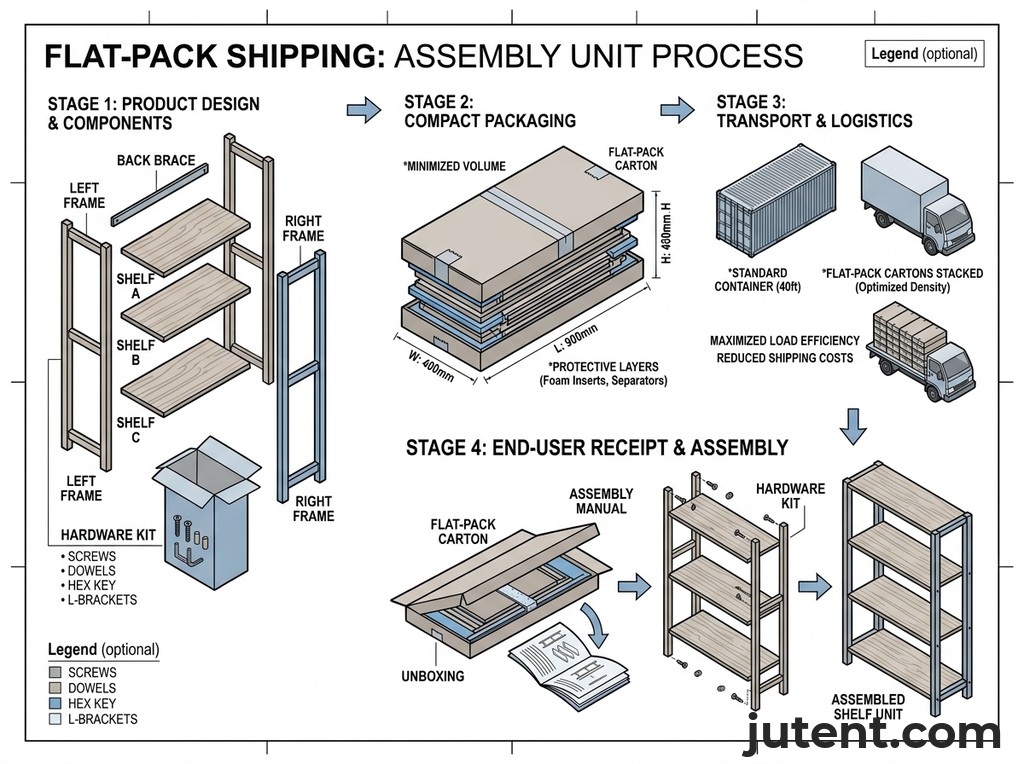
Efficient and secure shipping is a critical aspect of importing bus station canopies to Africa. Manufacturers like Jutent specialize in optimizing packaging to minimize shipping costs and prevent damage during transit. The primary method involves flat-packing the steel components and carefully rolling the membrane fabric.
Steel structural elements, including columns, beams, and connection plates, are meticulously prepared. They are often disassembled into manageable sections, bundled, and secured to prevent movement and abrasion. Each component is clearly marked according to the assembly drawings, facilitating easy identification upon arrival. For corrosion protection during transit, especially over long sea voyages, additional wrapping or protective coatings may be applied to the treated steel.
The tensile membrane fabric, whether PVDF or PTFE, is typically rolled onto large, reliable cores to prevent creasing, tearing, or damage. These rolls are then encased in protective layers, such as heavy-duty plastic sheeting and wooden crates, to shield them from moisture, UV exposure, and physical impact. Smaller components, such as cables, tensioning hardware (SS304 or SS316), and fasteners, are carefully packed into sturdy wooden crates or industrial-grade boxes, often with internal compartmentalization to prevent shifting.
A standard 20ft shipping container can typically accommodate a bus station canopy ranging from 150m² to 300m², depending on the complexity of the design and the density of the steel structure. For larger projects, multiple 20ft or 40ft containers may be utilized. The packing list and container manifest are meticulously prepared, detailing every item to ensure smooth customs clearance at African ports such as Durban, Mombasa, or Lagos. This systematic approach to packing is designed to streamline unloading and assembly on-site, reducing potential delays and costs for the contractor.
Cost Comparison: Import vs Local Fabrication in Key African Markets
When considering a bus station canopy project in Africa, a detailed cost comparison between importing from China and local fabrication is essential. While local options might seem appealing due to proximity, the overall cost-effectiveness often favors importing, particularly for projects exceeding 100 m².
Local fabrication in markets like South Africa, Nigeria, or Kenya can face several challenges that drive up costs. These include higher raw material prices for steel and specialized membranes, limited access to advanced fabrication machinery, and potentially higher labor costs for skilled welders and engineers specializing in tensile structures. the availability of specific membrane grades (e.g., 1050 g/m² PVDF or PTFE) and advanced surface treatments (hot-dip galvanizing, fluorocarbon topcoats) might be restricted, leading to compromises on quality or extended lead times.
Importing from China, despite shipping costs and import duties, often presents a more competitive total project cost. For a simple form PVDF membrane structure, contractors can expect pricing in the range of $40–$70/m² (EXW, minimal steel), while more complex forms might range from $60–$90/m². PTFE membrane structures would add approximately $20/m² to these ranges. These prices include the complete structure, fabricated to precise specifications, and ready for shipment.
While local fabrication might offer perceived advantages in terms of immediate oversight, the cost savings from importing often outweigh these. For example, a 200m² bus station canopy with a simple PVDF membrane could cost $8,000–$14,000 EXW from China. Even with shipping, duties, and local installation, this often proves more economical than sourcing the same quality and specification locally, where material scarcity and fabrication overheads can inflate prices significantly. The 1-year overall project warranty and 10-year PVDF membrane warranty (15 years for PTFE) offered by reputable Chinese manufacturers also provide long-term value that local options may struggle to match.
FAQ
- Q: How are bus station canopies shipped to Africa from China?
- A: Bus station canopies are meticulously prepared for international shipping. Steel components are flat-packed, bundled, and secured to prevent movement and damage during transit. Tensile membrane fabric is rolled onto reliable cores and protected in durable packaging. Smaller hardware is crated. A standard 20ft container can typically carry a 150–300m² bus station canopy, depending on its design complexity and material volume. This optimized packing minimizes shipping volume and ensures components arrive safely at African ports.
- Q: What import duties apply to bus station canopies in African countries?
- A: Import duties for bus station canopies vary significantly by country across Africa. Factors such as the specific Harmonized System (HS) code used, trade agreements between China and the destination country, and local tax regulations all influence the final duty rate. Jutent provides thorough HS code documentation and material breakdowns to assist contractors in accurately calculating and, where possible, minimizing their duty exposure. It is always advisable for contractors to consult with a local customs broker for precise, up-to-date information relevant to their specific project location.
Tell us your project location in Africa and we’ll provide a cost comparison and logistics plan.