
The CAPEX and OPEX Reality of Modern Construction
When industrial developers and facility managers evaluate spatial expansion, the debate often centers around evaluating a tensile structure vs steel roof building. Traditional concrete and heavy steel buildings require massive upfront capital expenditure (CAPEX), extensive foundation groundworks, and rigid timelines that delay operational readiness.
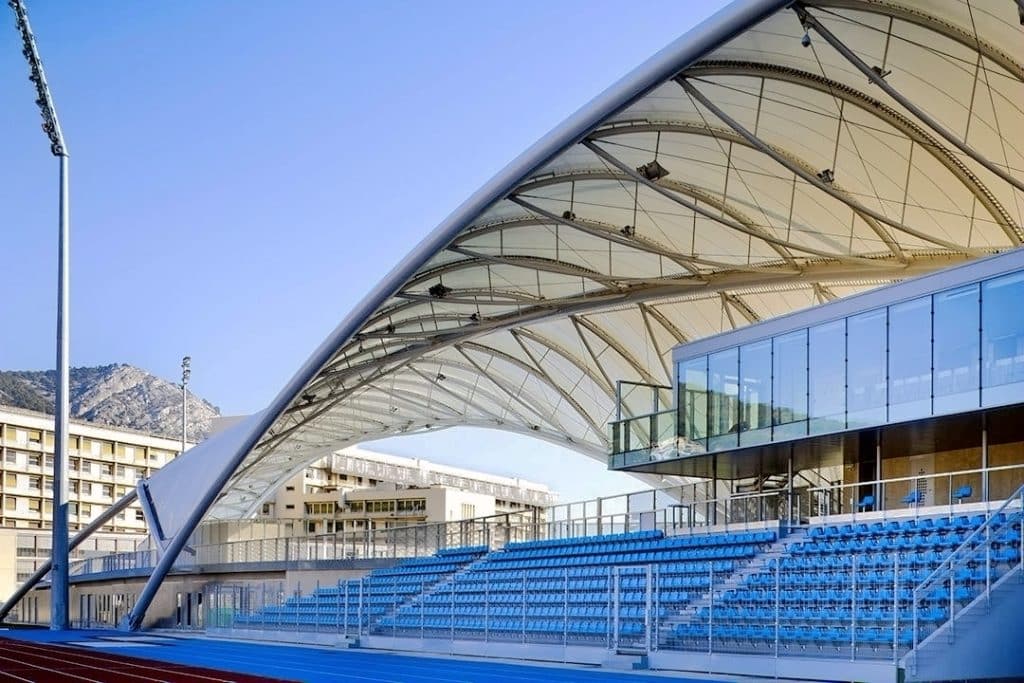
Procurement teams are increasingly shifting toward engineered fabric structure buildings. By utilizing high-tensile architectural membranes over modular galvanized steel or aluminum frames, these structures bypass the sunk costs of deep foundations while delivering equivalent—and often superior—functional space in a fraction of the time.
Core B2B Procurement Advantages
Why are sectors ranging from aviation to bulk warehousing abandoning brick-and-mortar? The answer lies in the highly optimized engineering parameters of tensile architecture.
Clear-Span Spatial Efficiency
Tensile engineering eliminates the need for internal support columns. This unobstructed clear-span footprint maximizes cubic storage capacity and allows heavy machinery to maneuver freely without collision risks.
Rapid Deployment Timelines
Traditional buildings take months. Fabric structures use pre-engineered, modular components that are bolted together on-site. This drastically slashes the overall commercial canopy installation cost and accelerates time-to-revenue.
OPEX Reduction (Daylighting)
High light-transmission architectural membranes allow natural diffused daylight to illuminate the interior space. This eliminates the need for artificial lighting during the day, significantly reducing long-term electrical overhead.
Asset Relocation (No Stranded Costs)
Unlike concrete buildings that become sunk costs if operations move, modular tension structures can be entirely dismantled, transported, and re-erected at a new site, protecting your infrastructure investment.
Data Comparison: Tensile vs. Traditional Steel
A frequent misconception is that fabric structures are merely "temporary tents." In reality, the tensile structure lifespan directly competes with conventional buildings when specified correctly.
| Specification | Engineered Fabric Structure | Traditional Steel Building |
|---|---|---|
| Foundation Requirement | Minimal (Surface mounts, screw anchors, or basic pads) | Intensive (Deep concrete footings, high excavation cost) |
| Corrosion Resistance | High (Hot-dip galvanized frame + inert fabric) | Moderate (Requires frequent repainting of steel cladding) |
| Construction Speed | Measured in Weeks | Measured in Months |
| Structural Lifespan | 20–30+ Years (Membrane), 50+ Years (Frame) | 30–50 Years (Requires reroofing) |
Common Mistakes When Procuring Fabric Buildings
To fully capture the economic benefits of lightweight architecture, buyers must avoid these critical specification errors during the bidding phase:
- Ignoring Local Code Requirements: Assuming a standard "off-the-shelf" fabric building will survive in an extreme climate is a costly error. The structure's steel profile and fabric tension must be strictly engineered for local peak wind velocities and snow loads.
- Comparing Only the Superstructure Cost: When comparing bids against traditional buildings, buyers often forget to calculate the massive savings on foundation works and heavy lifting equipment. Always calculate the total installed cost.
- Specifying Low-Grade Polyethylene (PE): While cheap, PE fabrics degrade rapidly under industrial use. For long-term commercial applications, always specify high-grade PVC coated with PVDF, or PTFE fiberglass membranes.