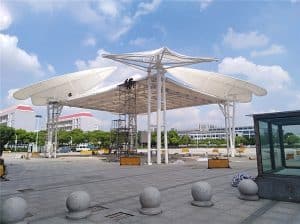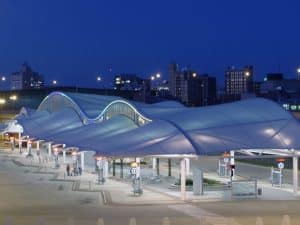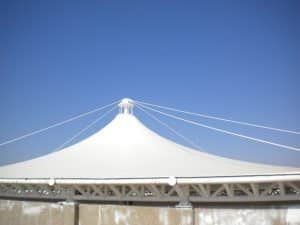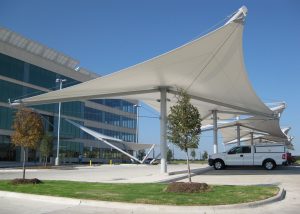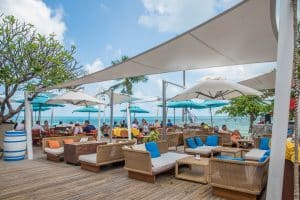

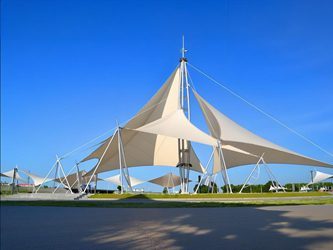
The pursuit of harmony between environment, culture, atmosphere, and architectural form has always been a core goal for architects and urban planners. In the 21st century, how we design and build our living spaces has become an important topic in modern construction. Cable membrane structures have emerged as a practical and visually striking answer to this challenge.
The Development of Cable Membrane Structure Architecture
Cable membrane structure architecture began to develop in the 1960s, driven by advances in flexible materials and structural engineering. Inspired by tents—one of the earliest forms of human shelter—architects transformed simple concepts into advanced structural systems.
Through the use of cables and membranes, these structures can form single-curved or multi-curved surfaces. This flexibility allows designers to create light, flowing forms that meet high standards for both structural performance and architectural beauty.
Creating Open and Natural Architectural Spaces
One of the key strengths of tensile membrane structures is their ability to create large, open spaces with minimal visual obstruction. Instead of heavy walls and columns, the membrane works together with cables to define space while allowing light and air to flow freely.
When integrated into landscape design, membrane structure buildings connect naturally with sunlight, fresh air, water features, and green spaces. This creates environments that feel open, comfortable, and closely linked to nature, improving the overall user experience.
Shorter Construction Time and Lower Environmental Impact
Compared with traditional buildings, cable membrane structures require much less construction time—often only a fraction of the schedule needed for concrete or steel buildings. The prefabricated nature of membrane components allows for fast and efficient installation.
In addition, membrane construction reduces the use of sand and cement, helping to minimize dust, noise, and on-site pollution. This makes fabric structure systems a more environmentally friendly option for modern projects.
Low Maintenance and Long Service Life
Maintenance of high-rise buildings is often costly and risky. In contrast, membrane materials used in tensile membrane structures are designed with self-cleaning properties. Rainwater naturally washes away dust and surface dirt, reducing the need for frequent manual cleaning.
Today, high-quality membrane materials typically have a service life of 25 to 30 years. Thanks to this durability, membrane structure architecture has been widely adopted around the world for public spaces, commercial buildings, and landmark projects.
Jutent Cable Membrane Structure Solutions
Jutent focuses on delivering reliable and well-designed cable membrane structures that balance aesthetics, efficiency, and durability. By combining advanced materials with careful engineering, Jutent helps create modern architectural spaces that meet the demands of today’s built environment.