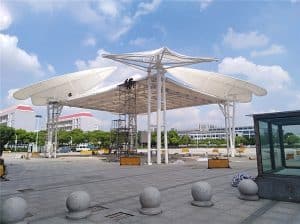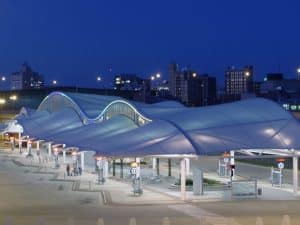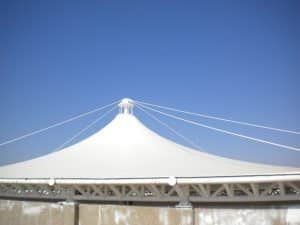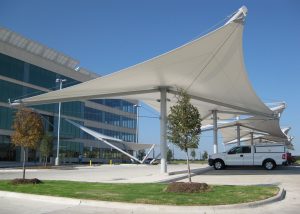

Compared with conventional steel or concrete roofing systems, tensile fabric structures offer lighter weight, faster construction, lower energy consumption, and greater architectural freedom. These measurable advantages make them a preferred solution for large-span public and commercial buildings.
📐 Classification of Tensile Fabric Structures
1. Fabric Membrane Structure (Cable–Membrane System)
Steel cables and membrane materials work together to form a stable, pre-tensioned surface covering the building space. Structurally, loads are primarily transferred through tension rather than bending, allowing efficient large-span coverage.
🔧Engineering Data:
- Membrane thickness: 0.8–1.2 mm
- Structural weight: approx. 3–5 kg/m²
- Typical applications: stadium roofs, transport hubs, landmark canopies
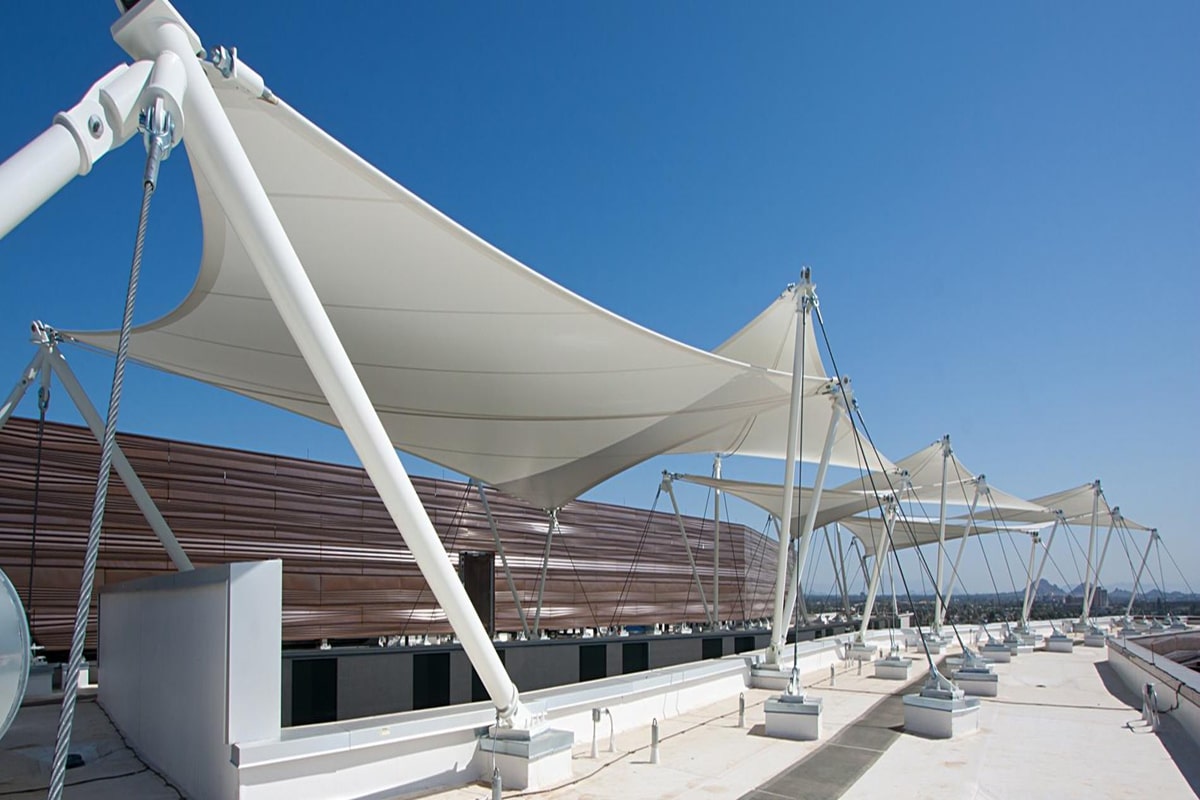
2. Skeleton Membrane Structure (Frame-Supported System)
A rigid steel or aluminum skeleton defines the architectural form, while the membrane functions as a lightweight enclosure. The main structural loads are carried by the frame, with the membrane resisting wind and environmental forces.
- Overall roof weight reduction: 60–70%
- Higher structural predictability
- Common use: exhibition halls, commercial walkways, entrance canopies
3. Air-Supported Membrane Structure (Pneumatic System)
The membrane is stabilized by internal air pressure, eliminating the need for internal supports. While shape options are limited, this system excels in speed and structural simplicity.
- Internal air pressure: 200–500 Pa
- Construction time reduction: up to 70%
- Best for temporary or seasonal buildings
🌟 Advantages of Membrane Structure Construction
✔ Freer Architectural Form
Flexible membranes enable complex curved geometries with significantly less material than rigid systems, allowing distinctive architectural expressions.
✔ Better Economic Performance
With roof weights only about 1/30 of traditional steel systems, membrane structures reduce foundation and steel consumption while enhancing visual and commercial value.
✔ Shorter Construction Period
Factory prefabrication and rapid on-site installation shorten construction cycles by nearly 50%, improving schedule reliability.
✔ Lower Energy Consumption
High solar reflectivity and controlled translucency reduce cooling and lighting energy demands, especially in large public spaces.
✔ Larger Clear Spans
Typical clear spans of 40–120 meters can be achieved with minimal internal supports, enabling flexible and unobstructed interior layouts.
Engineering Conclusion: Tensile fabric structures provide a data-backed balance of efficiency, performance, and design freedom. Their lightweight nature, measurable energy savings, and rapid construction make them a highly competitive solution for modern large-span architecture.