

El precio debe revisarse por categoría de producto y alcance del proyecto, en lugar de tratarse como un número fijo publicado. Para una cotización precisa, primero se deben confirmar el tamaño de la estructura, la clasificación de viento, el grado de membrana y los términos de entrega.
Los 5 factores que determinan el costo de una marquesina para muelle de carga
El precio final de la marquesina para muelle de carga se determina por cinco variables principales: el claro estructural, los requisitos de viento y nieve, el grado de la membrana, la complejidad de la cimentación y el alcance del suministro.
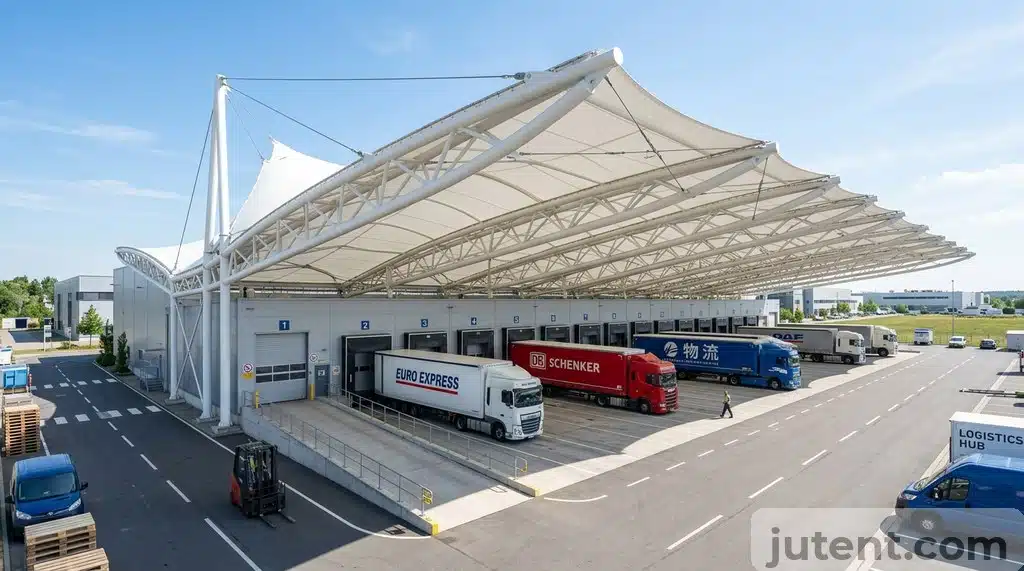
Los valores técnicos finales deben confirmarse con los requisitos de ingeniería específicos del proyecto y las condiciones del código local.
La selección de la membrana altera el precio por metro cuadrado según la vida útil y la tecnología de recubrimiento. La complejidad de la cimentación escala con las cargas estructurales; las condiciones deficientes del suelo o las fuerzas de levantamiento elevadas requieren zapatas de concreto más grandes, lo que se suma al presupuesto de obra civil. Finalmente, el modelo de adquisición —ya sea que adquiera un kit completo o requiera instalación completa— cambia el costo comercial marquesina para muelle de carga significativamente.
Para los contratistas que evalúan Muelles de Carga, aislar estas cinco variables es el primer paso hacia un presupuesto preciso. Ignorar cualquiera de estos factores durante la fase de estimación inicial garantiza una discrepancia entre el presupuesto preliminar y el costo final de fabricación.
Costo según la escala del proyecto: aplicaciones pequeñas vs. grandes
Las economías de escala influyen fuertemente en el marquesina para muelle de carga costo por m². Los centros logísticos grandes generan una tarifa unitaria más baja que los muelles minoristas de un solo vano porque los costos fijos de ingeniería se amortizan en una superficie mayor.

Para una aplicación pequeña —que generalmente cubre de 1 a 3 vanos con una superficie inferior a 150 m²—, el costo de suministro suele situarse en el extremo superior del espectro, alrededor de $50 a $70/m². Los costos de ingeniería, detallado y configuración de la máquina se distribuyen en un área más pequeña. Una marquesina estándar de 10 m × 5 m requiere los mismos cálculos estructurales básicos y tiempo de dibujo que una instalación masiva.
La planificación del presupuesto debe basarse en el tipo de estructura, la luz libre, la clasificación de viento, el grado de membrana, el tonelaje de acero y el alcance del proyecto. Para una cotización precisa EXW, FOB, CIP o DDU, las dimensiones del proyecto y los requisitos de ingeniería deben revisarse primero.
Basado en la experiencia de Jutent en más de 400 proyectos en más de 30 países, vemos consistentemente que los contratistas sobreestiman los requisitos de acero para marquesinas continuas de varios vanos. Al compartir columnas intermedias entre vanos en lugar de construir estructuras aisladas, el tonelaje total de acero se reduce hasta en un 22%.
Consulte nuestra Toldo para Muelle de Carga Guía para ver cómo la separación de vanos impacta la cuadrícula estructural.
Grado de membrana: cómo la elección del material afecta el presupuesto
La selección de la membrana representa del 15% al 30% del costo total del material. Los tejidos recubiertos de PVDF son el estándar de la industria para instalaciones logísticas comerciales, pero el peso específico y el grosor del recubrimiento determinan el marquesina para muelle de carga presupuesto.
Una membrana de PVDF estándar de 900 g/m² es suficiente para climas moderados y generalmente representa el costo base. Actualizar a un tejido de PVDF de 1050 g/m² o 1200 g/m² incrementa el costo de la membrana entre $4 y $8/m². Este grado más pesado es necesario en zonas de vientos fuertes o áreas con cargas de nieve elevadas, ya que la mayor densidad del tejido base proporciona mayor resistencia a la tracción y al desgarro bajo estrés ambiental sostenido.
La protección contra la corrosión y la vida útil deben describirse según el sistema de protección seleccionado, el entorno del proyecto y las condiciones de mantenimiento, en lugar de como una garantía de vida útil incondicional.
Suministro vs. Suministro e Instalación: Comprendiendo la Diferencia de Precio
El modelo de adquisición determina si usted paga por los materiales o absorbe las tarifas laborales locales. Un contrato solo de suministro proporciona el acero estructural, la membrana y el hardware entregados en el sitio. Un contrato de suministro e instalación incluye la mano de obra, el equipo de elevación y la gestión del sitio necesarios para erigir la estructura.
El precio debe revisarse por categoría de producto y alcance del proyecto, en lugar de tratarse como un número fijo publicado. Para una cotización precisa, primero se deben confirmar el tamaño de la estructura, la clasificación de viento, el grado de membrana y los términos de entrega.
Agregar la instalación generalmente duplica el costo total del proyecto, dependiendo del mercado laboral local. En regiones con salarios de construcción altos, la mano de obra en sitio, el alquiler de grúa (generalmente una grúa móvil de 20 toneladas para marquesinas de muelle estándar) y las plataformas de trabajo elevadas añaden entre $30 y $60/m² al costo final. Los contratistas que gestionan las obras civiles y las zapatas de concreto internamente deben optar por solo suministro para mantener el control sobre el presupuesto de la marquesina para muelles de carga y el cronograma del proyecto.
Cómo Obtener un Presupuesto Preciso
Para convertir un presupuesto aproximado de marquesina para muelles de carga en un precio de fabricación fijo, los proveedores requieren datos específicos del sitio y operativos. Las solicitudes vagas generan cotizaciones conservadoras e infladas porque los ingenieros deben asumir los peores escenarios.
Primero, defina las dimensiones exactas: longitud total, proyección (profundidad del voladizo) y altura libre mínima. Una altura libre de 4.5 metros permite el paso de remolques estándar, pero especificar 5.5 metros para carga especializada requiere columnas más largas y pesadas para resistir el mayor momento de volteo por viento.
Segundo, proporcione la ubicación del sitio. Esto permite al equipo de ingeniería calcular las cargas exactas de viento y nieve según los códigos de construcción locales. Una cubierta en una zona de viento de 120 km/h requiere una especificación de acero fundamentalmente diferente a una en una zona costera de 160 km/h.
Finalmente, especifique cualquier restricción del sitio. Si la cubierta debe fijarse a un muro de concreto existente en lugar de sostenerse de forma independiente sobre nuevas zapatas, el proveedor debe diseñar soportes de pared personalizados y verificar las cargas de extracción de los anclajes químicos. Proporcionar estos tres puntos de datos asegura que la cotización refleje la realidad de la ingeniería, no una suposición pesimista.
Si desea una referencia presupuestaria precisa para este proyecto, comparta las dimensiones, la zona de viento y el tipo de membrana preferido con nuestro equipo.
Obtenga su cotización para cubierta de muelle de carga
Preguntas Frecuentes
- ¿Cuál es el costo por metro cuadrado de una marquesina para muelle de carga?
- El costo de suministro generalmente oscila entre $25 y $70/m² en fábrica, dependiendo de la forma estructural y el grado de la membrana. Para proyectos de gran escala que superen los 500 m², la tarifa solo de suministro puede reducirse a $25–$40/m² debido a la compra de materiales al por mayor y el detallado repetitivo. Esta cifra representa un contrato solo de suministro, que incluye acero estructural, membrana y herrajes. Agregar servicios de instalación, que cubren mano de obra, equipo de elevación y gestión del sitio, generalmente puede duplicar el costo total del proyecto, influenciado por las tarifas del mercado laboral local. El grado de la membrana también impacta significativamente el presupuesto, ya que las telas de PVDF más pesadas aumentan los costos entre $4 y $8/m² para una mayor durabilidad.
- ¿Qué información necesito para obtener un presupuesto preciso de una marquesina para muelle de carga?
- Para obtener un presupuesto preciso de una marquesina para muelle de carga, la información esencial incluye las dimensiones del proyecto, la ubicación del sitio para los cálculos de carga de viento, la forma estructural preferida y la preferencia del grado de membrana. Específicamente, definir la longitud total, el voladizo y la altura libre mínima es crucial, ya que alturas libres mayores requieren componentes estructurales más pesados. Proporcionar la ubicación exacta del sitio permite a los ingenieros calcular cargas de viento y nieve precisas según los códigos de construcción locales, lo que influye directamente en las especificaciones del acero. Además, detallar cualquier restricción del sitio, como la fijación a estructuras existentes, permite la ingeniería de soluciones personalizadas y asegura que el presupuesto refleje los requisitos reales del proyecto en lugar de suposiciones del peor escenario.


