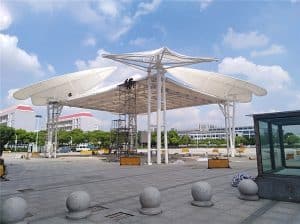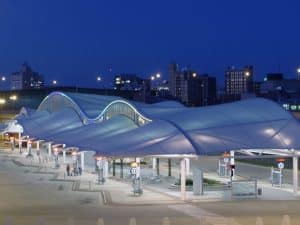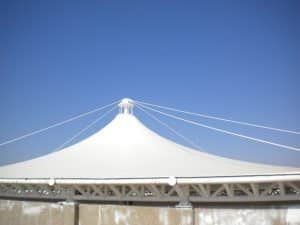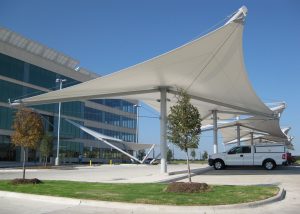

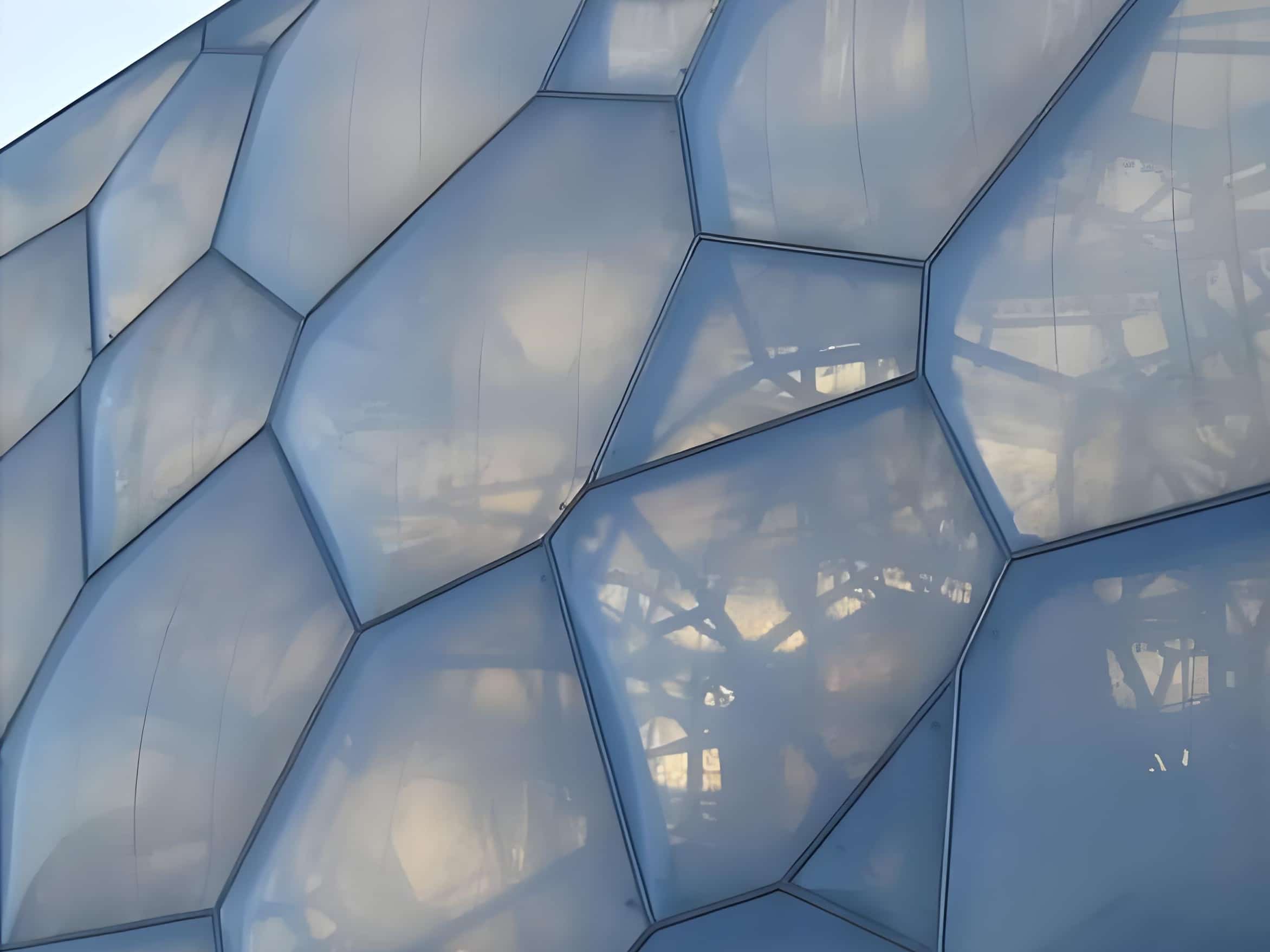
ETFE membrane systems are revolutionizing modern architecture — from stadium roofs and atriums to botanical gardens and landmark canopies. With lightweight structure, high transparency, thermal efficiency, and sustainability, ETFE is more than a roofing material — it is a high-performance engineering solution.
- ✔ ETFE allows high natural light and UV transmission, supporting daylighting and plant growth
- ✔ Lightweight yet structurally resilient under wind and snow loads
- ✔ Multi-layer pneumatic ETFE systems improve insulation and thermal performance
- ✔ Low maintenance, long service life, and fully recyclable
- ✔ Ideal for energy-efficient, large-span architectural applications
✅ Key Takeaways
🌞 ETFE Benefits Overview
ETFE film is highly transparent, allowing both visible and ultraviolet light to pass through.
Applications: Botanical gardens, greenhouses, atriums. Engineering insight: Supports photosynthesis and reduces artificial lighting needs.
1. Solar Control & Shading
ETFE can be tuned for solar performance through printed frit patterns, customized graphics, and LED integration, allowing control of glare, solar gain, and aesthetics without adding structural weight.
2. Elasticity & Structural Strength
– Tensile strength at elastic/plastic limit: 21–23 N/mm² – Tensile strength at break: ≈52 N/mm² – Design stress typically used: 15 N/mm
High elasticity distributes load efficiently and reduces peak stress concentrations.
3. Durability
ETFE resists UV, environmental pollution, chemicals, and temperature extremes, ensuring long-term performance.
📊 ETFE Core Performance Parameters
| Performance Item | ETFE Membrane Data | Engineering Insight |
|---|---|---|
| Light Transmittance | Up to 90–95% | Maximizes daylighting and reduces artificial lighting demand |
| UV Transmission | Allows UV passage | Supports plant photosynthesis |
| Tensile Strength (Elastic Limit) | 21–23 N/mm² | Stable under design loads |
| Tensile Strength (Break) | ≈ 52 N/mm² | High safety margin |
| Design Stress (Typical) | 15 N/mm | Conservative design for membrane calculations |
| Acoustic Transmission | ≈ 70% | Reduces echo in large-span spaces |
| Service Life | 25–30+ years | Minimal material degradation over decades |
🌡 Thermal Performance of Multi-Layer Systems
Multi-layer pneumatic ETFE cushions enhance thermal insulation compared to glass. Cushions are welded panels inflated with low-pressure air, improving both stability and thermal performance.
📊 Multi-Layer ETFE Pneumatic System Thermal Performance
| ETFE System Type | Layers | Approx. R-Value | Approx. U-Value | Typical Application |
|---|---|---|---|---|
| Single Layer | 1 | ≈ 1.0 | — | Canopies, sunshades |
| Double Layer Cushion | 2 | ≈ 2.0 | — | Atriums, façades |
| Triple Layer Cushion | 3 | ≈ 2.9 | ≈ 0.35 | Stadiums, climate-controlled spaces |
💨 Pneumatic System & Energy Consumption
ETFE cushions are supported by redundant air units with dual blowers, dried incoming air to prevent condensation, and sensors maintaining 5–6 PSF internal pressure, compensating loads up to 30 PSF. Automatic adjustment ensures stability under wind and snow while minimizing energy consumption.
💡 Photovoltaic & LED Integration
Flexible PV cells or LED lighting can integrate with single or multi-layer systems to support energy generation and architectural aesthetics.
🧼 Maintenance & Self-Cleaning
ETFE’s non-stick surface naturally sheds dirt and debris. Annual inspections of blowers, filters, and cushions are required. Membrane and accessories should be checked for damage to ensure long-term performance.
♻ Sustainability & Cost-Effectiveness
Lightweight design reduces structural steel and foundation requirements. Low embodied energy in manufacturing and transport. Fully recyclable at end-of-life, minimizing environmental impact. Optimized daylighting reduces operational energy costs.
🏁 Conclusion
ETFE membranes combine lightweight structure, high transparency, durability, and sustainability. At Jutent, ETFE is engineered for both visual impact and long-term performance, making it ideal for large-span, energy-efficient architectural projects.