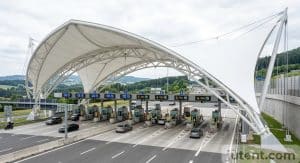

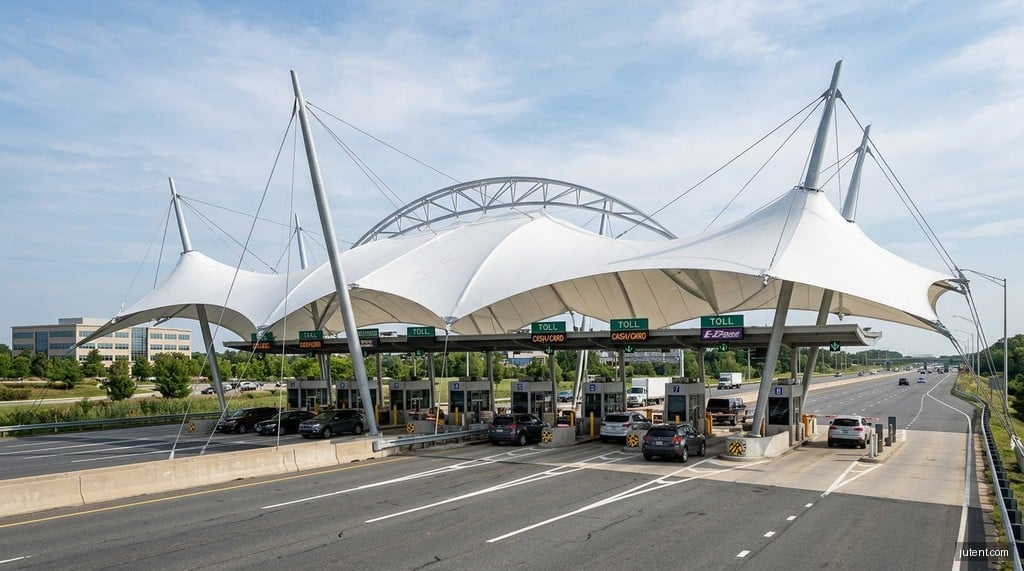
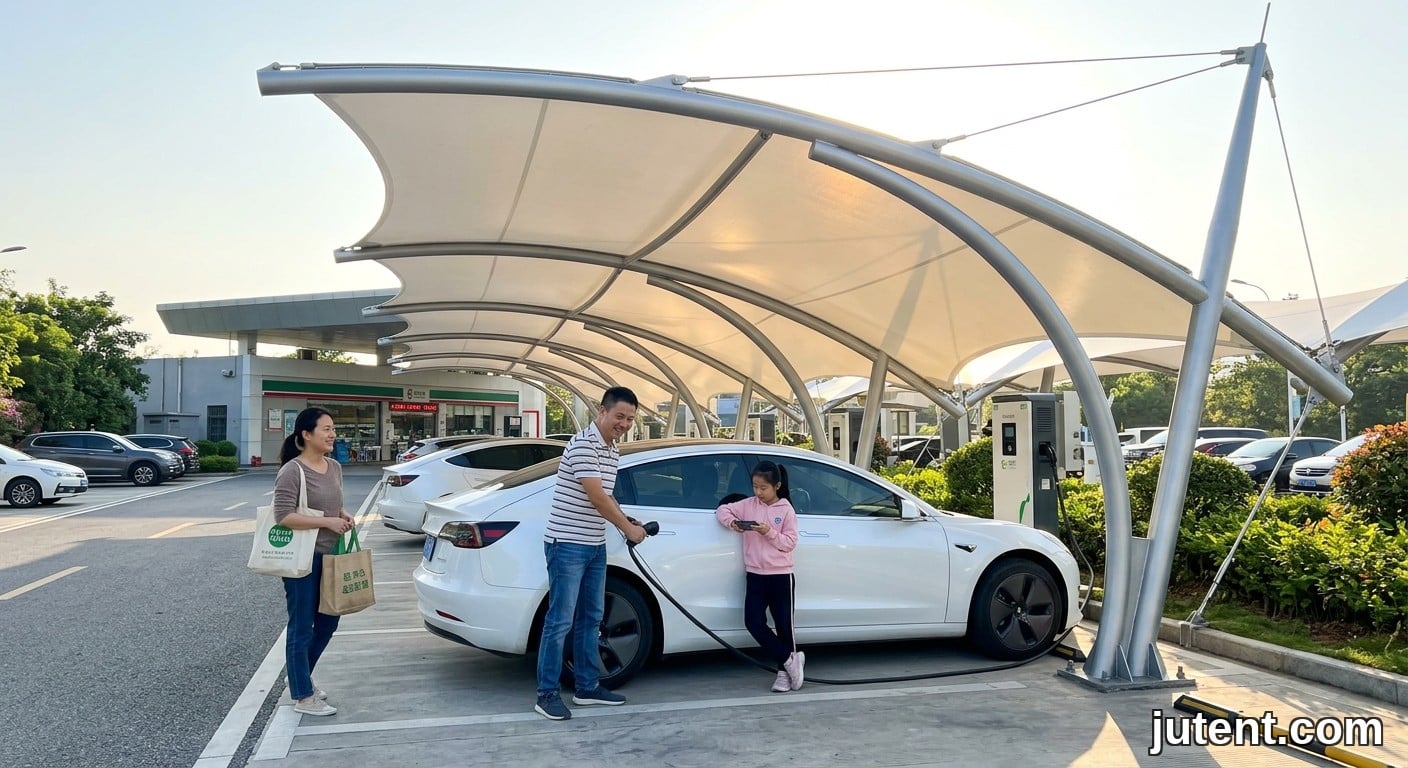
Tous les fabricants de structures tensiles ne peuvent pas livrer un auvent de station de péage with the wind rating and documentation your project requires. Here's what to verify before signing. This guide applies equally to highway toll canopies, gas station canopy tensile structures, and EV charging station canopies.
Pourquoi le choix de votre fabricant d'auvents de péage est crucial pour la conformité à la charge de vent
Choisir le bon auvent de station de péage Le fabricant est une décision critique qui impacte directement la sécurité, la longévité et la conformité réglementaire du projet. Une auvent de station de péage est plus qu'un simple abri ; c'est un élément structurel exposé à des contraintes environnementales importantes, en particulier les charges de vent. Ne pas spécifier et se procurer une toile adaptée aux conditions locales peut entraîner une instabilité structurelle, des réparations coûteuses et des risques potentiels pour la sécurité. Pour les entrepreneurs et les responsables des achats, cela signifie qu'un processus de diligence raisonnable approfondi est incontournable. Vous avez besoin d'un fournisseur capable de démontrer des capacités d'ingénierie éprouvées, une qualité de matériaux vérifiable et une chaîne de production et de logistique fiable. Cela est particulièrement vrai pour les projets d'infrastructure à grande échelle où les conséquences d'une défaillance structurelle sont graves. Vérifier la documentation technique, les certifications de qualité et l'expérience de projet d'un fabricant garantit que la structure finale répond à toutes les normes requises et fonctionne de manière fiable tout au long de sa durée de vie prévue. Basé sur l'expérience de Jutent dans plus de 400 auvents tendus de gare de péage projets dans plus de 30 pays, négliger ces détails peut entraîner des retards importants et des dépassements de budget. Stations-service à péage
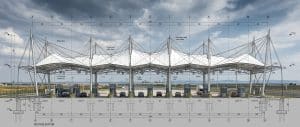
Capacité d'ingénierie : Calcul des charges de vent et des structures
L'intégrité structurelle d'une auvent de station de péage repose sur des calculs d'ingénierie précis, notamment en ce qui concerne la charge de vent. Différentes régions géographiques ont des exigences de vitesse de vent variables, et un fabricant réputé auvent de station de péage doit être capable de concevoir des structures capables de résister à ces forces spécifiques. Cela implique une analyse détaillée par éléments finis (FEA) et une modélisation structurelle. Lors de l'évaluation d'un fournisseur potentiel de canopée pour poste de péage, demandez des plans d'ingénierie complets et des rapports de calculs structurels. Ces documents doivent clairement décrire les paramètres de conception, les spécifications des matériaux (par exemple, les nuances d'acier Q235B ou Q355B), les détails des connexions et la méthodologie utilisée pour déterminer la résistance au vent. Pour les projets d'exportation, Jutent peut fournir des plans de conception, des calculs, des spécifications de matériaux, des manuels d'installation et une assistance à distance gratuite, sous réserve de la portée du projet et des conditions contractuelles. Vérifiez que les calculs sont effectués par des ingénieurs en structure qualifiés et, si nécessaire, peuvent être examinés et tamponnés par un ingénieur local agréé dans la juridiction de votre projet. La capacité d'un fabricant à fournir des données d'ingénierie transparentes et vérifiables est un indicateur principal de sa compétence technique et de son engagement envers la sécurité. À propos
Marque de membrane et certificats d'essai : ce qu'il faut demander
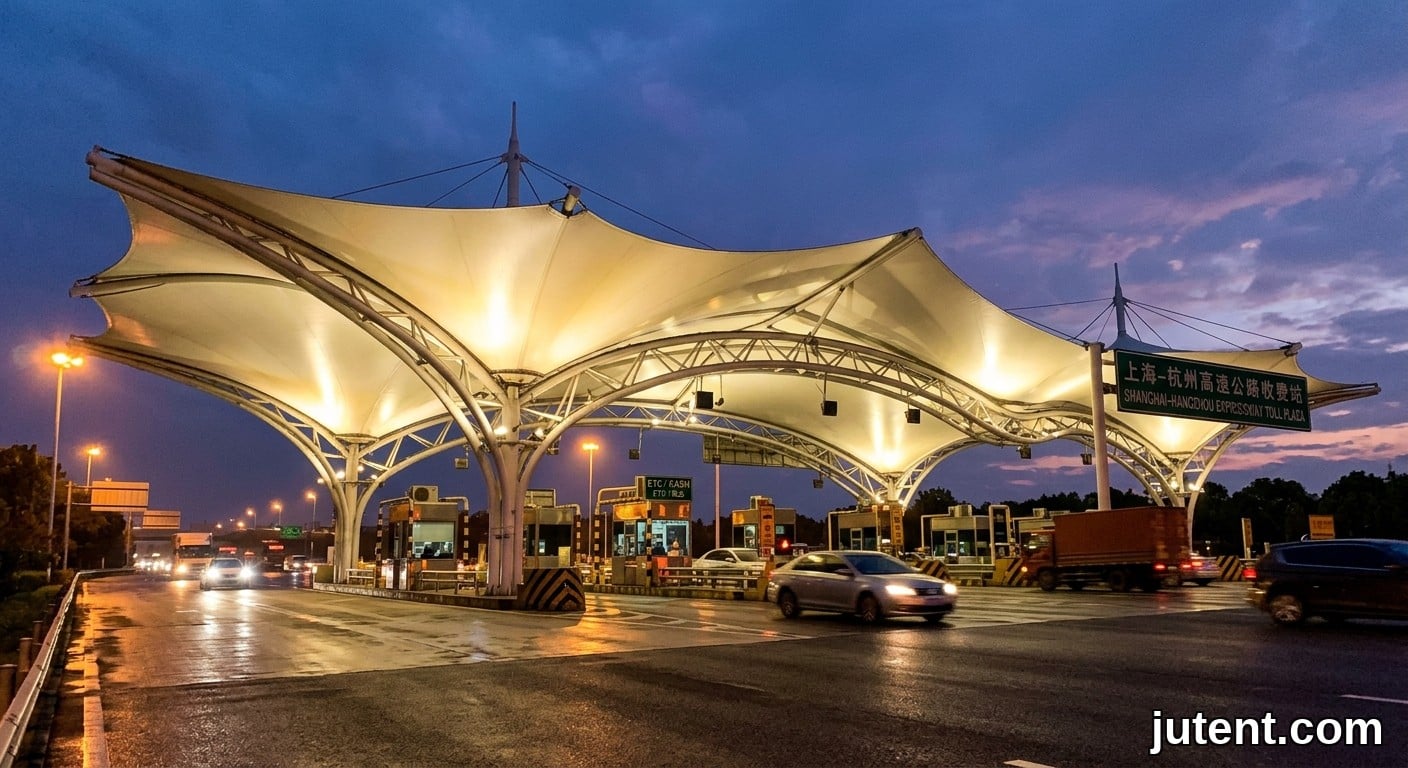
La membrane tendue est un composant clé de tout auvent de station de péage, et sa qualité affecte directement la durabilité et les performances de la structure. Lorsque vous contactez un fabricant d'auvents de station de péage, renseignez-vous sur les marques de membrane spécifiques qu'il utilise et exigez les certificats de test correspondants. Les fabricants réputés utilisent généralement des membranes PVDF ou PTFE de haute qualité, souvent d'un poids standard de 1050 g/m². Pour les membranes PVDF, attendez-vous à une garantie de 10 ans et une durée de vie de 15 ans et plus. Pour les membranes PTFE, une garantie de 15 ans et une durée de vie de 25 ans et plus sont la norme.
Les certificats clés à demander incluent :
* Rapports d'essai de résistance à la traction : Vérification de la capacité de la membrane à résister à la tension sans se déchirer.
* Rapports d'essai de résistance à la déchirure : Confirmation de la résistance à la propagation des déchirures.
* Certificats d'ignifugation : Essentiel pour la sécurité et la conformité aux codes du bâtiment.
* Rapports d'essai de résistance aux UV : Démontrant la capacité de la membrane à résister à la dégradation due à la lumière du soleil.
* Certificats de propriété autonettoyante : Pour le PVDF et le PTFE, cela indique la capacité de la membrane à se débarrasser de la saleté et à conserver son apparence.
Confirmez toujours que les certificats sont à jour et correspondent directement au matériau de membrane proposé pour votre projet. Une usine d'auvents de station de péage fiable fournira facilement cette documentation, garantissant la transparence et la qualité des matériaux.
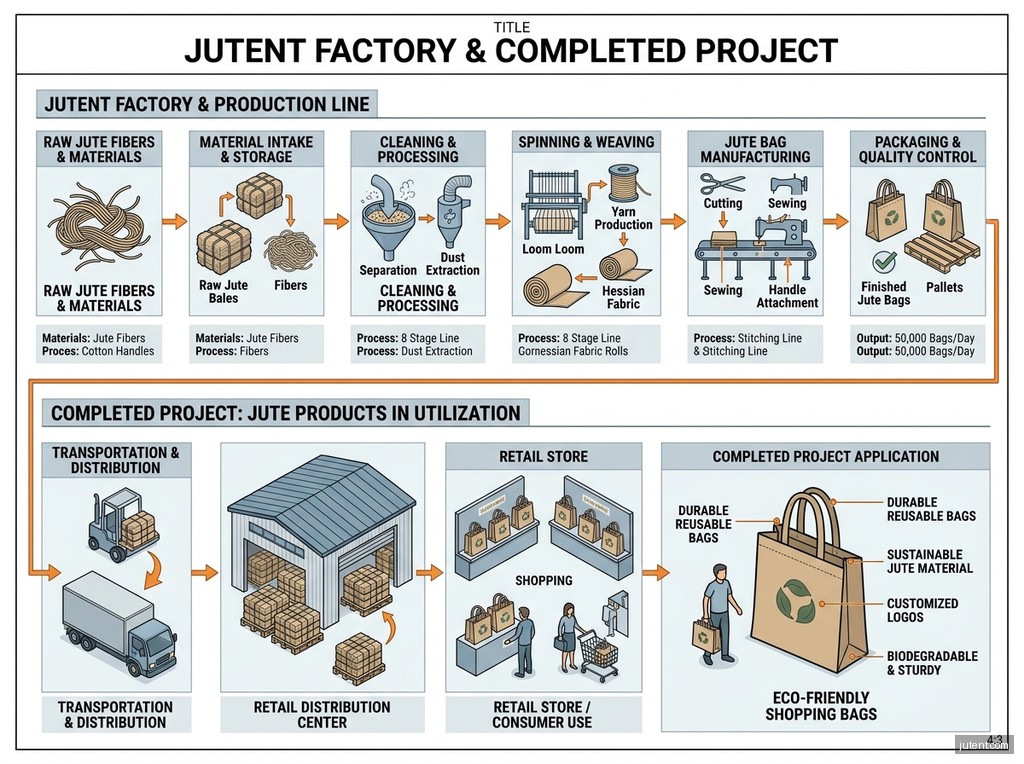
Délai de production et logistique
Compr
Obtenez votre devis pour la canopée de péage dès aujourd'hui