
Les réalités structurelles des installations à fort trafic
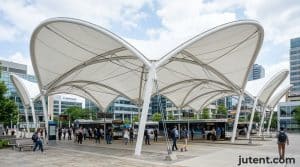
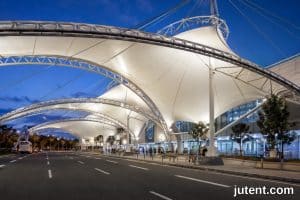
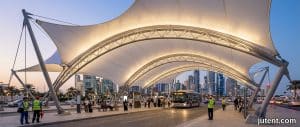
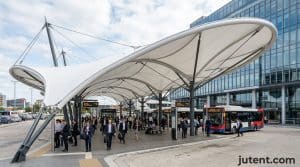
Les infrastructures de transport—des péages régionaux aux zones de dépose des aéroports internationaux—exigent le strict respect des normes de sécurité et de la continuité opérationnelle. Des cycles de construction prolongés créent des goulots d'étranglement inacceptables et des pertes de revenus. Cette réalité opérationnelle pousse les responsables des achats à spécifier un système de toiture moderne pour hub de transport plutôt que des auvents conventionnels en béton ou en acier lourd.
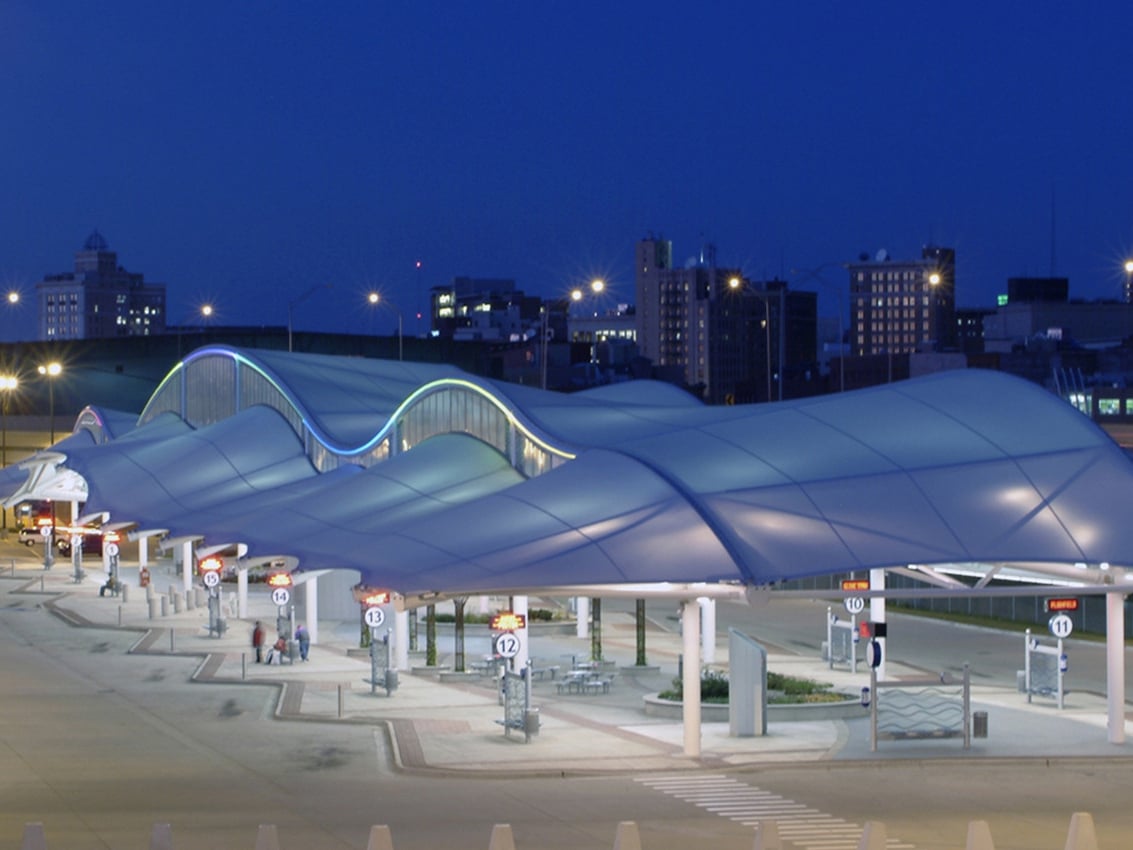
En concevant des systèmes qui transfèrent les charges par tension plutôt que par masse rigide, un toit tendu pour transport réduit considérablement le tonnage d'acier structurel nécessaire. Cela se traduit directement par des besoins de fondations minimisés, un assemblage sur site plus rapide et une perturbation quasi nulle des voies de transit actives.
Répartition des coûts : toitures en tissu vs. métal pour terminaux de bus
Lors de l'évaluation fabric vs metal roofs for bus terminals ou des quais de gare, comparer uniquement le prix au mètre carré initial donne une image financière incomplète. Une véritable stratégie d'approvisionnement doit tenir compte de l'expédition, des travaux de terrassement et de l'efficacité du cycle de vie.
- Regroupement d'expédition : Les membranes architecturales sont fabriquées hors site et pliées pour le transport. Cela permet une spécialisation fabricant de toits tendus pour transport pour emballer une surface massive dans des conteneurs d'expédition standard, contournant ainsi les coûts de fret surdimensionnés exorbitants associés aux panneaux métalliques rigides.
- Économies sur les fondations : La charge morte considérablement réduite de l'architecture en tissu limite le besoin de fondations en béton profondes et intensives, réduisant directement le coût global des bus terminal shelter cost per unit.
- Frais opérationnels : Les tissus à haute transmission lumineuse permettent la récupération de la lumière du jour, créant des espaces naturellement éclairés systèmes de toiture de gare économes en énergie qui réduisent considérablement la consommation électrique diurne.
Spécification des matériaux : Évaluation des coûts du cycle de vie
La sélection de la membrane architecturale appropriée détermine le calendrier d'entretien de la canopée et la durée de vie des dépenses d'investissement. Les gestionnaires d'installations doivent soigneusement peser le coût du cycle de vie du PTFE par rapport au PVC pour les aéroports et centres de transit.
| Spécification de la membrane | Durée de vie structurelle | Attributs techniques clés |
|---|---|---|
| Membrane de transit en PVC longue durée (Revêtement PVDF) |
15 - 20 ans | Très flexible, économique, facile à souder sur site. Idéal pour les infrastructures à moyen terme, les canopées de stationnement et les abris de bus modulaires. |
| Membrane PTFE pour centres de transit (Fibre de verre revêtue de téflon) |
30+ ans | Extreme chemical and UV resistance, Class-A fire rating, highly self-cleaning. The definitive choice for permanent airport terminals and grand railway stations. |
Erreurs courantes à éviter dans les appels d'offres pour toitures de hubs de transport
L'approvisionnement de structures architecturales à grande portée implique des variables d'ingénierie complexes. Ne pas les aborder dans la phase de planification entraîne des coûts cachés et des défaillances structurelles.
- Sous-estimation des forces aérodynamiques : Les structures ouvertes agissent comme de grandes voiles. Ignorer des charge de vent du toit du terminal d'aéroport Les exigences pour les conceptions en porte-à-faux peuvent entraîner une déchirure du tissu ou une fatigue des nœuds en acier lors d'événements météorologiques extrêmes.
- Négliger les facteurs de pollution locaux : Conception systèmes d'auvents pour trottoirs d'aéroport Sans tenir compte des épaisses fumées d'échappement, cela entraîne une décoloration rapide. Spécifier des couches de finition acryliques standard au lieu de traitements PVDF ou TiO2 de qualité supérieure garantit des frais de nettoyage à long terme gonflés.
- Mauvais génie du drainage : Les zones de tissu plat ou sous-tendu souffriront de l'accumulation d'eau. Une Appel d'offres pour la toiture d'un hub de transport doit exiger une recherche de forme 3D précise pour garantir un écoulement automatisé et des systèmes de drainage siphoniqes intégrés dans les colonnes en acier.
Sécurisez votre investissement dans les infrastructures
Un auvent de transport fiable allie la forme architecturale à une ingénierie structurelle rigoureuse. Un partenariat avec un fabricant spécialisé garantit que votre projet respecte les codes du bâtiment locaux, résiste aux contraintes environnementales et est livré dans un délai opérationnel strict.