

Specifying a membrane for an aquatic facility involves three decisions that most contractors get wrong the first time: material selection for chemical exposure, structural tensioning requirements, and lifecycle cost analysis. This guide covers each one, focusing specifically on pool shade membrane chlorine resistance, to give you the numbers needed to get the spec right before you go to tender. Chlorine in pool environments degrades standard shade cloth significantly faster than PVDF membrane. This guide explains the difference and what it means for your pool shade project’s long-term cost. Whether you are replacing an existing canopy or designing a new municipal aquatic center, understanding how off-gassing chemicals interact with tensile fabrics dictates whether the structure lasts five years or twenty. Selecting the wrong polymer results in premature tearing, sagging, and unexpected replacement costs that destroy facility maintenance budgets.
How Chlorine Affects Shade Membrane Over Time
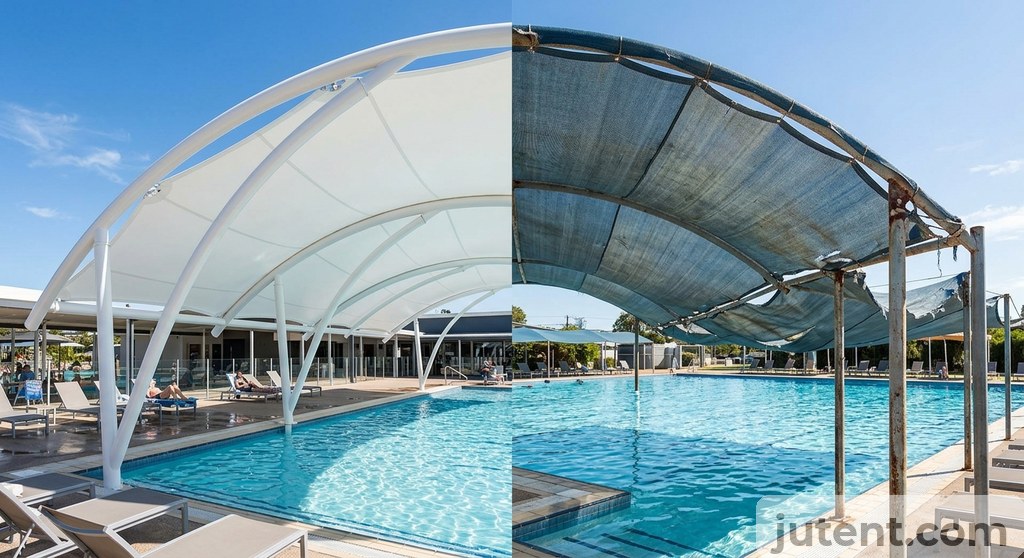
Chlorine does not stay in the water. As it reacts with organic matter, it forms chloramines—gases that rise and accumulate directly beneath overhead structures. This continuous chemical vapor exposure accelerates the degradation of polymers used in a standard Pool Shade.
The degradation process is chemical oxidation. When chloramines contact a porous material like high-density polyethylene (HDPE) shade cloth, the gas penetrates the woven fibers. Over time, this oxidation breaks down the plasticizers and UV stabilizers within the yarn. The material becomes brittle, loses its tensile strength, and eventually tears under standard wind loads.
Sebuah kontena 40GP biasanya menyokong muatan kira-kira 21–28 tan, manakala kawasan bertutup sebenar bergantung pada jenis struktur, kuantiti keluli, dan kaedah pembungkusan.
PVDF Membrane: Chlorine Resistance and UV Stability Data
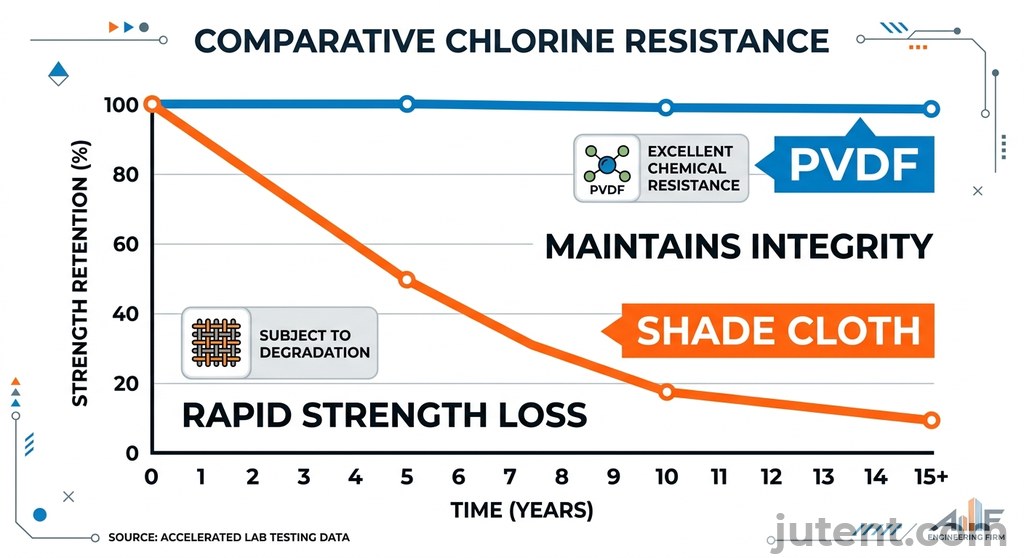
Polyvinylidene fluoride (PVDF) architectural membrane prevents chloramine degradation through a highly cross-linked fluorocarbon surface coating. This topcoat acts as an impermeable barrier, sealing the base polyester scrim from both chemical vapors and moisture.
The reason PVDF outperforms standard alternatives in aquatic environments is this surface layer. At UV Index 12–13, a 1050g/㎡ PVDF membrane maintains its tensile strength within 10% of the original specification after 15 years of continuous exposure. The fluorocarbon coating reflects UV radiation rather than absorbing it, while simultaneously blocking the oxidation process caused by pool chemicals.
Based on Jutent’s experience across 400+ projects in 30+ countries, similar specification issues often appear when early-stage assumptions are made before the engineering conditions are confirmed.
Shade Cloth: What Happens After 3–5 Years in a Pool Environment
High-density polyethylene (HDPE) shade cloth is a porous, knitted material. While it provides immediate temperature reduction and UV protection, it lacks the solid chemical barrier required for long-term survival above chlorinated water.
The degradation timeline for shade cloth in a commercial aquatic environment follows a predictable curve. During years one and two, the material performs adequately but begins trapping airborne moisture, chloramines, and particulate matter within its knitted structure. By year three, continuous chemical oxidation of the UV stabilizers causes the polymer yarn to harden. The fabric loses its elasticity, which manifests structurally as visible sagging between the tension points.
Between years three and five, polymer embrittlement reaches a critical threshold. A standard 340g/㎡ commercial shade cloth typically fails at the perimeter connection points during moderate wind events. The fabric tears because it can no longer flex to distribute dynamic wind loads. The porous structure also allows mold and mildew to breed deep within the fibers, creating permanent staining. Facility managers cannot clean these stains without further damaging the weakened yarn. This degradation necessitates complete canopy replacement, disrupting facility operations and requiring new capital outlay. Contractors frequently face warranty claims during this period when clients mistake chemical degradation for a manufacturing defect.
Cost Comparison: PVDF vs Shade Cloth Over a 10-Year Period
Comparing a pool shade PVDF vs shade cloth based solely on initial capital expenditure creates a false economy. A lifecycle cost analysis over a 10-year period reveals the true financial impact for an aquatic facility manager.
Perancangan belanjawan harus berdasarkan jenis struktur, rentang jelas, penarafan angin, gred membran, tan keluli, dan skop projek. Untuk sebut harga EXW, FOB, CIP, atau DDU yang tepat, dimensi projek dan keperluan kejuruteraan harus disemak terlebih dahulu.
Perancangan belanjawan harus berdasarkan jenis struktur, rentang jelas, penarafan angin, gred membran, tan keluli, dan skop projek. Untuk sebut harga EXW, FOB, CIP, atau DDU yang tepat, dimensi projek dan keperluan kejuruteraan harus disemak terlebih dahulu.
What to Specify for a Pool Shade Membrane
To ensure a chlorine resistant shade membrane survives its intended design life, contractors must enforce strict material and hardware parameters in the tender documentation. Vague specifications lead to premature structural failure.
First, specify a Type 2 architectural membrane with a minimum base weight of 1050g/㎡. The fabric must feature a weldable PVDF topcoat on both the upper and lower surfaces. The lower surface coating is critical; it is the primary defense against rising chloramine vapors.
Spesifikasi biasa menggunakan keluli Q235B atau Q355B, membran PVDF atau PTFE 1050 g/㎡ sebagai standard, dan aksesori keluli tahan karat SS304, dengan gred yang lebih tinggi tersedia apabila projek memerlukannya.
Finally, define the clearance height. The lowest point of the membrane should be engineered at a minimum of 3.5 meters above the water deck. This dimension ensures adequate air circulation, diluting the concentration of corrosive gases before they contact the fabric surface. These three specifications guarantee the structure performs as engineered and prevents costly post-installation modifications. Always require material test certificates confirming the exact coating composition before approving the shop drawings.
Jika anda mahukan rujukan belanjawan yang tepat untuk projek ini, kongsikan dimensi, zon angin, dan jenis membran pilihan anda dengan pasukan kami.
Soalan Lazim
- How long does PVDF membrane last in a pool environment?
- High-grade PVDF membrane typically lasts 15–20 years in pool environments, offering significant longevity for tensile membrane structures. This extended lifespan is a key advantage for project specifications, minimizing long-term replacement costs and maintenance cycles compared to alternative materials. Architects and contractors can confidently specify PVDF for projects requiring durable, low-maintenance shade solutions that withstand consistent exposure to chlorinated water, UV radiation, and general weather conditions over decades. Proper installation and occasional cleaning can further optimize this lifespan.
- Does shade cloth meet UPF 50+ standards for pool shade?
- Yes, high-quality commercial-grade shade cloth can achieve UPF 50+ ratings, providing excellent UV protection for pool shade applications. However, it’s crucial for B2B buyers to understand that while initially effective, shade cloth materials degrade significantly faster in chlorinated environments compared to PVDF membranes. This accelerated degradation impacts both its structural integrity and its ability to maintain the UPF 50+ standard over time, necessitating more frequent replacement to ensure consistent UV protection and aesthetic appeal.
 English
  Français
  Español de México
  Bahasa Melayu
  Tiếng Việt
  Português do Brasil
  Русский
  ไทย
ไทย  العربية