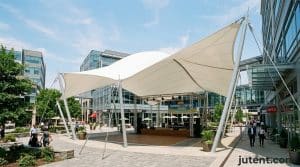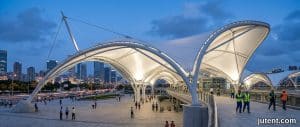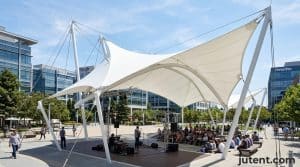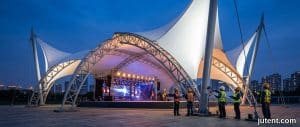

Kejuruteraan luaran yang tahan lama kanopi pentas Kontraktor di Timur Tengah boleh bergantung pada memerlukan garis dasar yang sama sekali berbeza untuk kelangsungan struktur. Struktur prestasi ini menghadapi suhu persekitaran melebihi 45°C (dengan suhu permukaan membran melebihi 70°C), indeks UV yang kerap mencecah 12+, dan pasir yang melelas serta sarat dengan shamal . Akibatnya, spesifikasi Eurocode atau IBC standard sering gagal di rantau ini dalam tempoh tiga tahun akibat degradasi membran pramatang dan keletihan struktur.
Menentukan tempat persembahan untuk Teluk melibatkan penyesuaian persekitaran kritikal yang sering dipandang remeh semasa fasa reka bentuk awal. Untuk memastikan integriti struktur dan jangka hayat membran di seluruh UAE, Arab Saudi, dan Qatar, jurutera mesti menyimpang daripada kod standard. Panduan ini memperincikan parameter kejuruteraan tepat yang diperlukan untuk toleransi pengembangan haba suhu tinggi, rawatan permukaan PTFE dan PVC termaju, geometri penyingkiran pasir, dan pematuhan beban angin setempat—menyediakan data tepat yang diperlukan untuk memuktamadkan spesifikasi sebelum tender dan mengelakkan kerja semula yang mahal.
Iklim Teluk: Mengapa Spesifikasi Kanopi Pentas Standard Tidak Terpakai
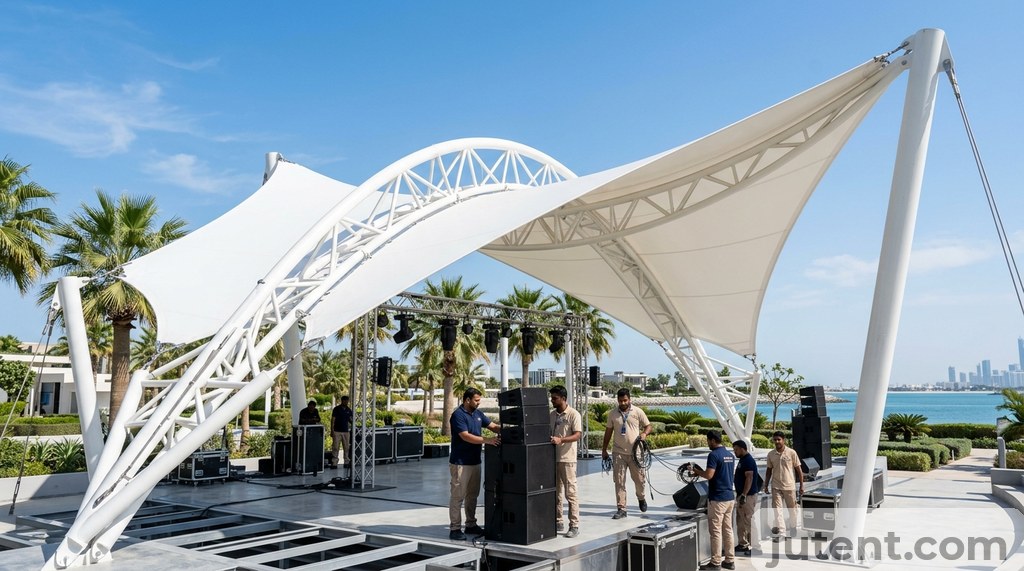
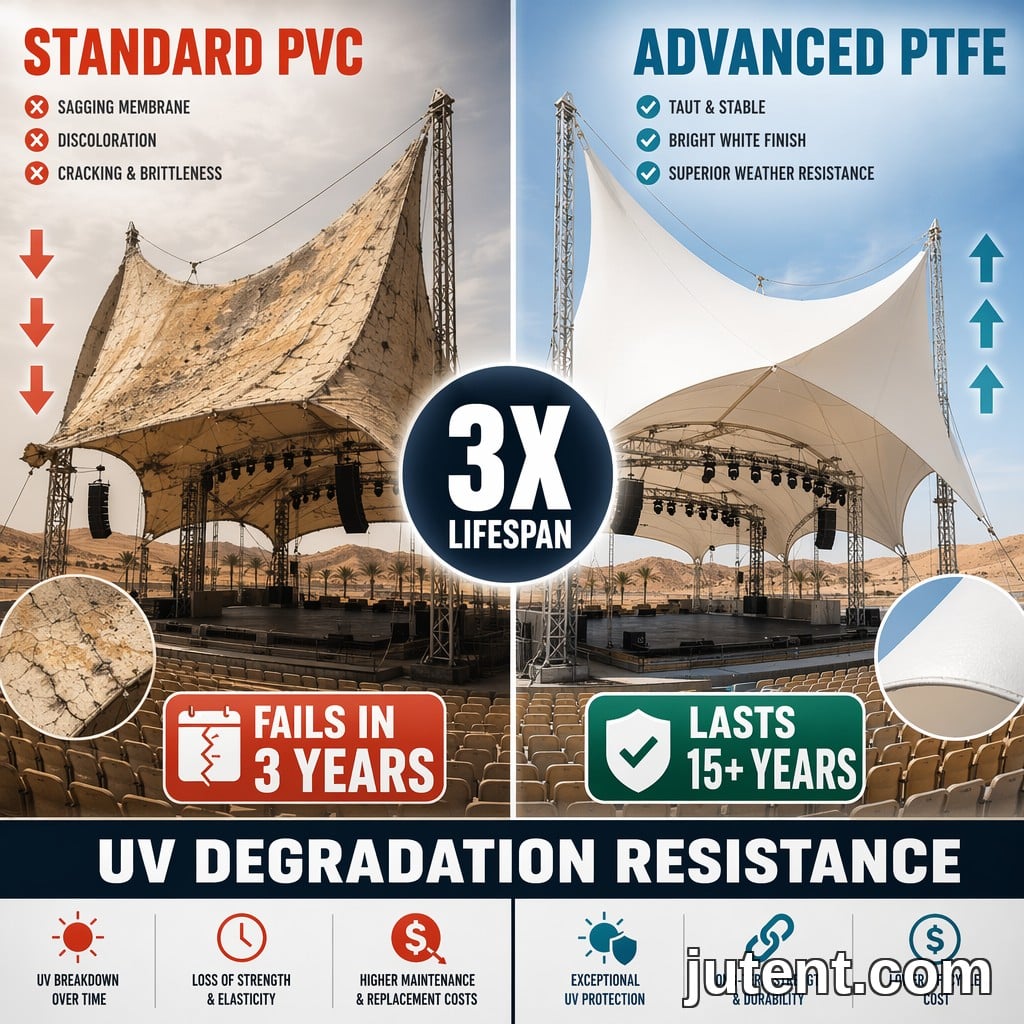
Standard siap guna penutup pentas merosot dengan cepat di Teluk. Titik kegagalan utama ialah degradasi haba pemplastik membran dan haus kasar daripada pasir yang ditiup angin. Membran PVC 650g/㎡ standard, yang mungkin tahan 10 tahun dalam iklim sederhana, biasanya kehilangan kekuatan tariknya dalam tempoh 36 bulan di Dubai atau Riyadh.
Kontraktor mesti mengubah garis dasar spesifikasi mereka. Rangka struktur mesti mengambil kira pengembangan haba yang tinggi, manakala membran memerlukan rawatan permukaan khusus untuk menahan kerosakan UV dan lekatan habuk. Apabila menentukan Pentas, keperluan garis dasar berubah daripada perlindungan cuaca asas kepada pengasingan persekitaran yang melampau.
Beban terma juga memberi kesan pada titik-titik rigging utama. Rangka keluli yang terdedah kepada cahaya matahari langsung 50°C mengalami pengembangan terma yang ketara. Jika membran diperincikan dengan toleransi sifar, pengembangan ini memindahkan tekanan berlebihan terus ke jahitan fabrik, menyebabkan koyakan mikro dan akhirnya kegagalan. Kejuruteraan untuk Timur Tengah memerlukan perincian sambungan gelincir atau sistem ketegangan boleh laras yang menampung pergerakan terma ±15mm merentasi rentang standard 20m. Mengabaikan dinamik terma ini semasa fasa penggubalan menjamin kos penyelenggaraan yang tinggi dan keletihan struktur pramatang. Perincian struktur mesti mengutamakan fleksibiliti tanpa menjejaskan ketegaran keseluruhan sistem yang diperlukan untuk rigging peralatan lampu dan audio.
Rintangan UV dan Haba: Gred Membran untuk Projek Pentas Timur Tengah
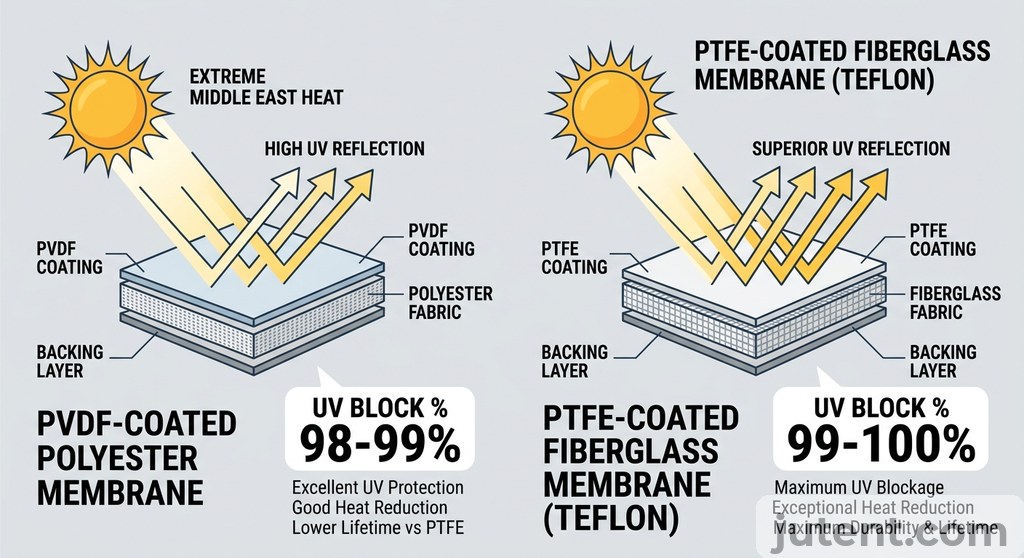
Tahan haba kanopi pentas di rantau ini memerlukan membran PVDF gred tinggi, minimum 1050g/㎡. Gred yang lebih rendah menyerap sinaran UV, menyebabkan pemplastik berpindah ke permukaan, yang membawa kepada kerapuhan, perubahan warna, dan kelemahan struktur.
Lapisan permukaan fluorokarbon membran PVDF premium memantulkan sinaran UV dan bukannya menyerapnya. Pada Indeks UV 12, yang biasa berlaku pada musim panas Teluk, membran PVDF 1050g/㎡ mengekalkan kekuatan tegangannya dalam lingkungan 10% daripada spesifikasi asalnya selepas 15 tahun. Ini adalah standard minimum yang boleh diterima untuk venue persembahan kekal atau separa kekal.
Untuk projek yang memerlukan pantulan haba maksimum, menentukan membran putih yang sangat legap dengan lapisan penyekat mengurangkan pemindahan haba sinaran ke pentas di bawah. Ini menurunkan suhu persekitaran untuk penghibur dan peralatan AV sensitif sehingga 8°C berbanding fabrik lut sinar standard. Untuk butiran lanjut mengenai pemilihan bahan, rujuk Panduan Kanopi Pentas Luar kami. Spesifikasi mesti menyatakan dengan jelas keperluan untuk salutan PVDF boleh kimpal bagi memastikan kekuatan jahitan di bawah beban haba 40°C+ yang berterusan, mencegah delaminasi yang melanda alternatif yang lebih murah. Kontraktor harus menolak sebarang penyerahan bahan yang tidak menyediakan ujian makmal bebas untuk degradasi UV khusus untuk iklim padang pasir.
Pasir dan Debu: Keperluan Saliran dan Permukaan
Pengumpulan pasir bertindak sebagai beban mati struktur, bukan sekadar kecacatan estetik. Kanopi pentas luar di Timur Tengah mesti direka bentuk untuk mengelakkan pengumpulan pasir. Debu padang pasir halus yang bercampur dengan hujan musim sejuk yang sekali-sekala menghasilkan lumpur padat yang melebihi 20kg/㎡ dalam kawasan setempat jika geometri membenarkan pengendapan. Untuk mengelakkan ini, membran mesti mengekalkan cerun minimum 15 darjah di semua kawasan permukaan. Reka bentuk rata atau cerun rendah gagal di Teluk. Bentuk antiklastik (pelana) tegangan tinggi adalah standard kerana ia memaksa angin untuk menyapu permukaan bersih, menggunakan aliran udara semula jadi untuk membuang debu.
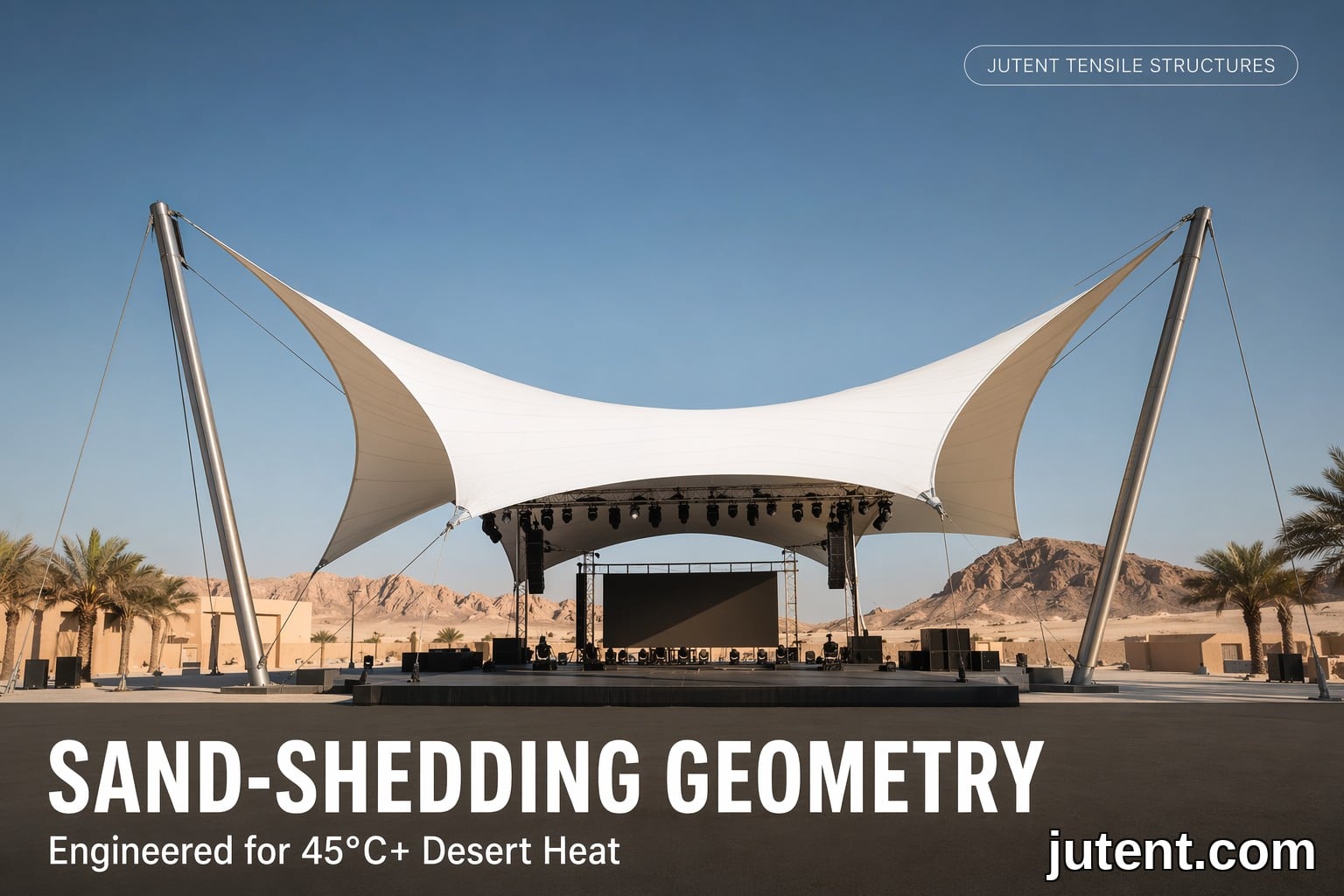
Rawatan permukaan membran menentukan betapa mudahnya pasir melekat. Lakuer akrilik standard menjadi melekit di bawah haba tinggi, memerangkap habuk secara kekal. Salutan PVDF gred tinggi kekal keras dan licin walaupun pada suhu 50°C, membolehkan angin dan hujan membersihkan permukaan. Sistem talang mesti bersaiz lebih besar—biasanya diameter minimum 150mm—dan direka tanpa bengkokan 90 darjah untuk mengelakkan penyumbatan daripada pasir yang padat. Jadual penyelenggaraan mesti mewajibkan pemeriksaan suku tahunan pada titik saliran ini untuk memastikan aliran air berterusan semasa hujan lebat musim sejuk yang mendadak. Kegagalan mengambil kira beban mati ini semasa kejuruteraan awal menyebabkan kendur membran dan akhirnya koyak.
Beban Angin: Piawaian Arab Saudi dan UAE untuk Struktur Pentas
Beban angin menentukan saiz keluli utama bagi mana-mana penutup pentas di Arab Saudi atau UAE. Kod Bangunan Saudi (SBC 301) dan Kod Amalan Keselamatan Kebakaran dan Nyawa UAE memerlukan pengiraan beban angin khusus berdasarkan topografi tapak tepat dan kategori pendedahan.
Pengalaman syarikat harus diterangkan melalui pengalaman eksport yang disahkan dan keupayaan sokongan projek, bukannya anekdot projek yang tidak disokong.
Pengalaman syarikat harus diterangkan melalui pengalaman eksport yang disahkan dan keupayaan sokongan projek, bukannya anekdot projek yang tidak disokong.
Rujukan Kes: Projek Kanopi Pentas di Wilayah Teluk
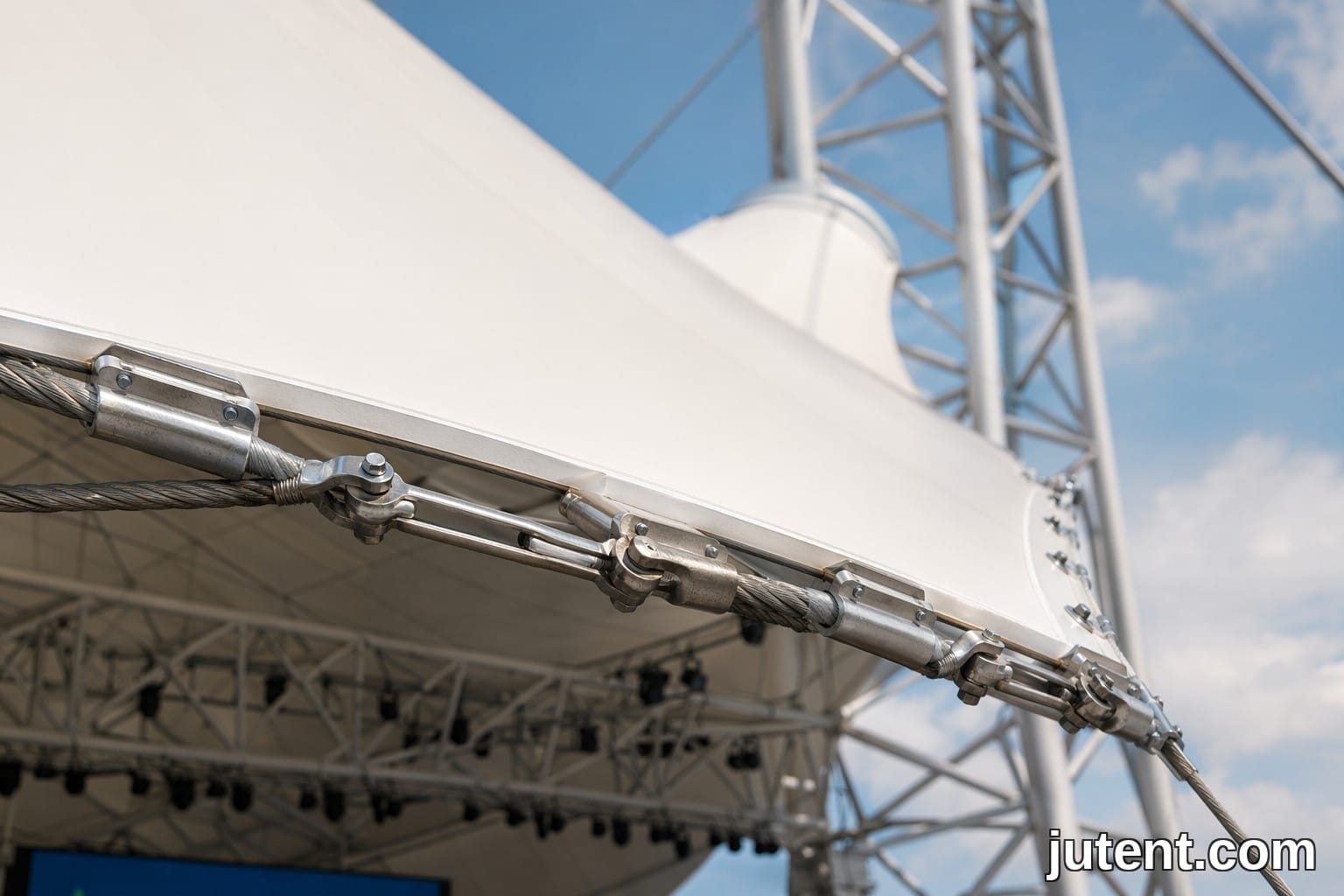
Berdasarkan pengalaman Jutent merentasi 400+ projek di 30+ negara, isu spesifikasi yang serupa sering timbul apabila andaian peringkat awal dibuat sebelum keadaan kejuruteraan disahkan.
Untuk projek membran tegangan pentas Timur Tengah baru-baru ini, pelanggan memerlukan rentang jelas 25m × 15m di atas amfiteater tanpa tiang perantaraan. Zon angin tapak memerlukan beban reka bentuk 180 km/j. Gabungan rentang dan penarafan angin itu mendorong spesifikasi ke arah struktur membran tegangan dengan sistem utama berkabel berbanding rangka portal standard.
Pengalaman syarikat harus diterangkan melalui pengalaman eksport yang disahkan dan keupayaan sokongan projek, bukannya anekdot projek yang tidak disokong.
Jika anda mahukan rujukan belanjawan yang tepat untuk projek ini, kongsikan dimensi, zon angin, dan jenis membran pilihan anda dengan pasukan kami.
Dapatkan Sebut Harga Kanopi Pentas Gurun Anda
Soalan Lazim
- Apakah gred membran yang disyorkan untuk kanopi pentas luar di UAE?
- Untuk kanopi pentas luar di UAE, membran PVDF gred tinggi, khususnya gred seni bina dengan berat 1050 g/m², adalah standard yang disyorkan. Spesifikasi ini memastikan ketahanan unggul terhadap haba melampau, sinaran UV yang kuat, dan beban pasir kasar yang lazim di rantau ini. Pilihan bahan ini memberikan ketahanan dan jangka hayat yang diperlukan untuk tempat persembahan awam yang mencabar, meminimumkan penyelenggaraan dan memaksimumkan jangka hayat struktur.
- Adakah kanopi pentas di Arab Saudi perlu mematuhi kod bangunan tertentu?
- Ya, kanopi pentas di Arab Saudi mesti mematuhi Kod Bangunan Saudi (SBC). Secara khusus, Bab 7 SBC menangani beban angin, yang kritikal untuk struktur membran tegangan yang terdedah kepada angin kencang di rantau ini. Spesifikasi projek akan memerlukan pengiraan yang menunjukkan pematuhan terhadap peruntukan beban angin ini, selalunya memerlukan analisis struktur terperinci dan cop kejuruteraan. Selain itu, bab SBC lain yang berkaitan mungkin terpakai bergantung pada integrasi kanopi dengan struktur kekal atau tujuan penggunaannya, yang memberi kesan kepada penarafan kebakaran bahan dan keperluan laluan keluar.