

O planejamento orçamentário deve ser baseado no tipo de estrutura, vão livre, classificação de vento, grau da membrana, tonelagem de aço e escopo do projeto. Para uma cotação precisa de EXW, FOB, CIP ou DDU, as dimensões do projeto e os requisitos de engenharia devem ser revisados primeiro.
Os 5 Fatores que Determinam o Custo do Hotel Tensile Canopy
Cinco variáveis principais determinam o custo comercial cobertura tensionada para hotel final: peso do aço estrutural, grau da membrana, complexidade de engenharia, especificações de hardware e logística.
Um contêiner de 40GP normalmente suporta cerca de 21 a 28 toneladas de carga útil, enquanto a área coberta real depende do tipo de estrutura, da quantidade de aço e do método de embalagem.
Formas personalizadas exigem mais horas de engenharia e software de modelagem complexo para garantir tensão biaxial adequada. Utilizar estruturas padronizadas de Hotel Leisure reduz significativamente essa sobrecarga. O hardware, incluindo cabos de tensionamento de aço inoxidável, esticadores e placas de base, adiciona 10–15% ao custo. Especificar aço inoxidável 316 de grau marinho em vez de componentes galvanizados aumenta os custos de hardware, mas é obrigatório para resorts costeiros para evitar corrosão rápida.
Por fim, o volume de envio é importante. Projetos modulares que se embalam planos em contêineres padrão de 40 pés HQ minimizam as despesas de frete em comparação com treliças volumosas pré-soldadas que desperdiçam espaço no contêiner. Considerar esses cinco elementos durante a fase de projeto esquemático evita atrasos de value engineering mais tarde no cronograma do projeto.
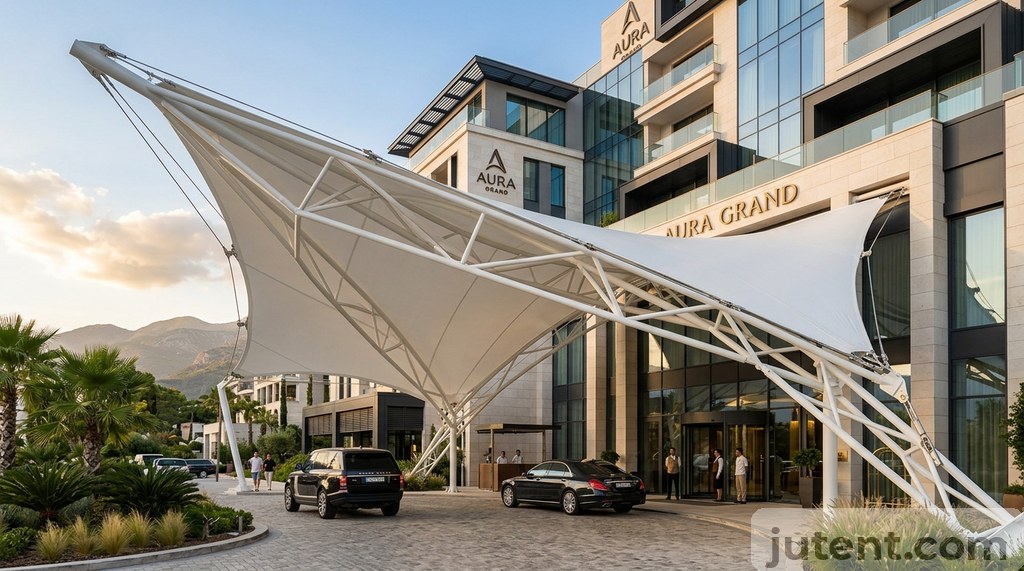
Custo por Escala de Projeto: Aplicações Pequenas vs Grandes
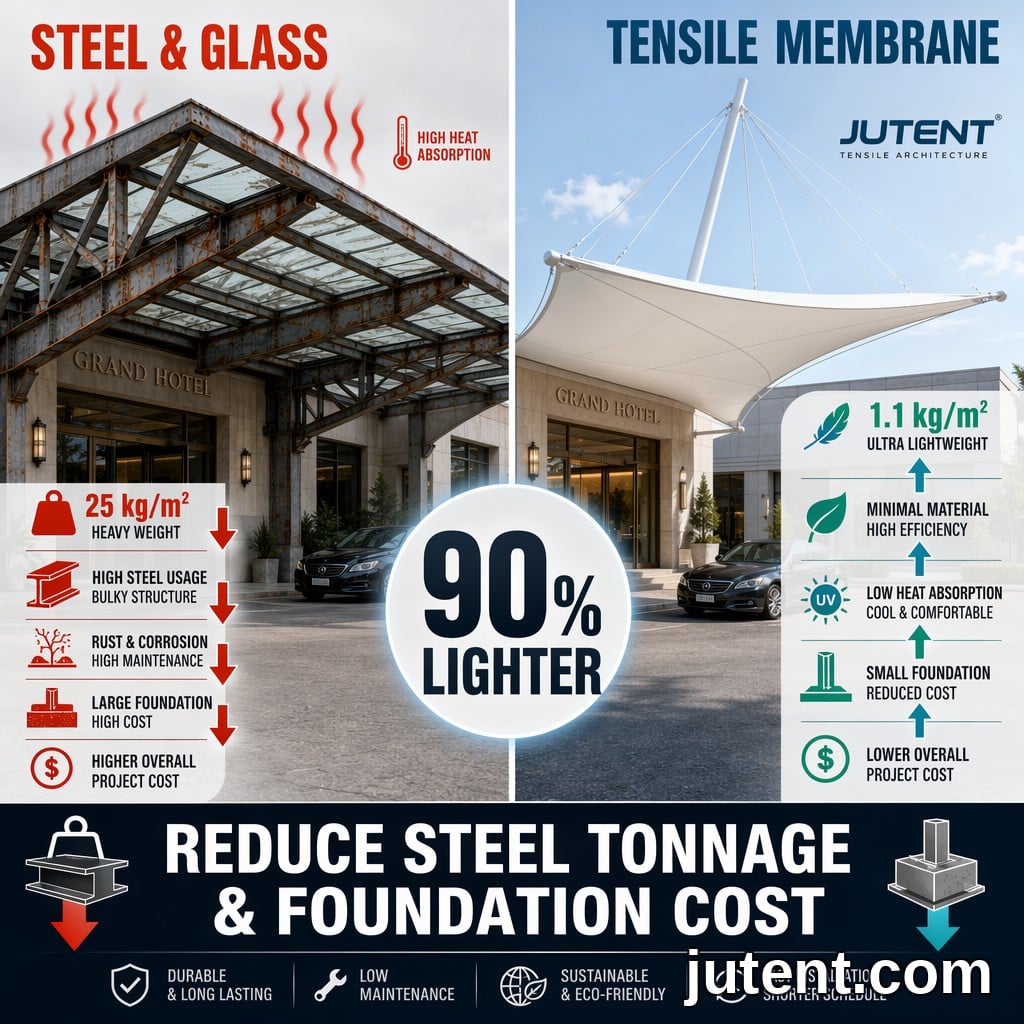
O planejamento orçamentário deve ser baseado no tipo de estrutura, vão livre, classificação de vento, grau da membrana, tonelagem de aço e escopo do projeto. Para uma cotação precisa de EXW, FOB, CIP ou DDU, as dimensões do projeto e os requisitos de engenharia devem ser revisados primeiro.
O preço deve ser analisado por categoria de produto e escopo do projeto, em vez de tratado como um número fixo publicado. Para uma cotação precisa, o tamanho da estrutura, a classificação de vento, o grau da membrana e os termos de entrega devem ser confirmados primeiro.
Com base na experiência da Jutent em mais de 400 projetos em mais de 30 países, problemas de especificação semelhantes frequentemente aparecem quando suposições de estágio inicial são feitas antes que as condições de engenharia sejam confirmadas.
Para um mergulho mais profundo na ampliação dessas estruturas, consulte nosso detalhado Guia de Dossel Têxtil para Hotéis Guia para especificações de engenharia e opções de design.
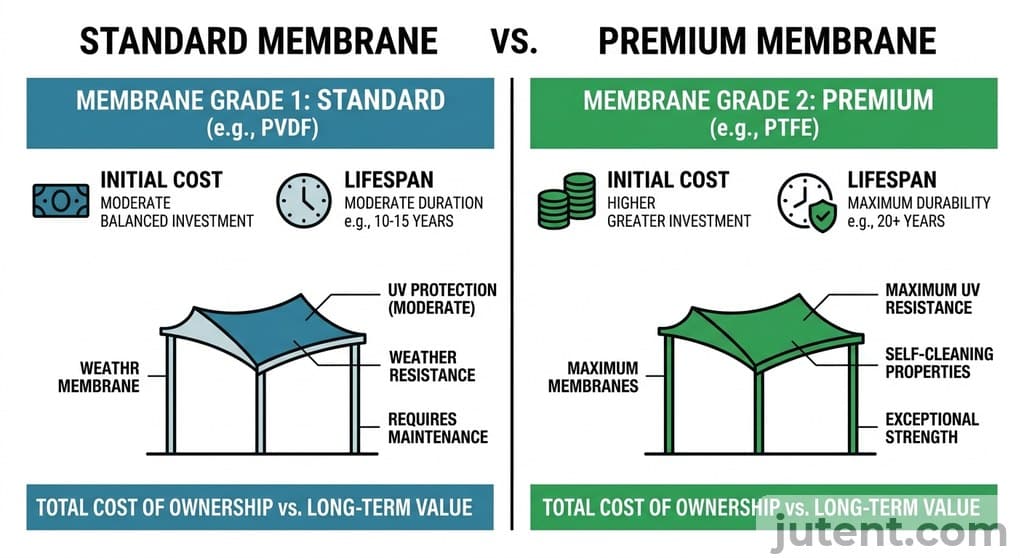
Grau da Membrana: Como a Escolha do Material Afeta o Orçamento
A seleção da membrana determina tanto o cobertura tensionada para hotel orçamento inicial quanto o ciclo de manutenção de longo prazo. O PVDF lida com 95% dos toldo de hotel projetos. O PTFE é a escolha certa apenas quando o projeto especifica uma vida útil de 25 anos sem substituição da membrana ou exige classificação de incêndio Classe 1 conforme a BS 476.
A proteção contra corrosão e a vida útil devem ser descritas de acordo com o sistema de proteção selecionado, o ambiente do projeto e as condições de manutenção, e não como uma garantia incondicional de vida útil.
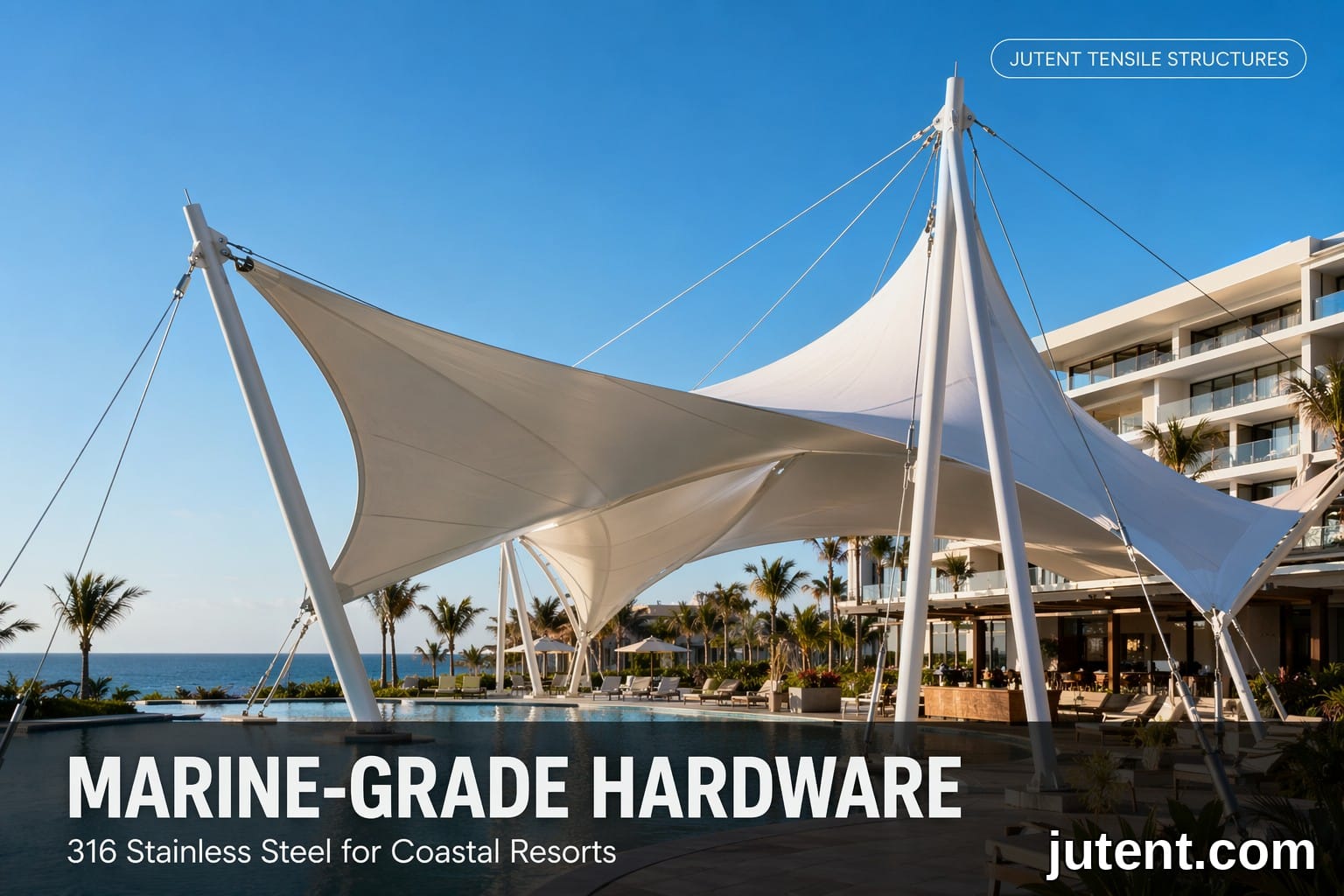
A proteção contra corrosão e a vida útil devem ser descritas de acordo com o sistema de proteção selecionado, o ambiente do projeto e as condições de manutenção, e não como uma garantia incondicional de vida útil.
Fornecimento Apenas vs Fornecimento e Instalação: Entendendo a Diferença de Preço
A estratégia de aquisição altera fundamentalmente o custo total do projeto. Um contrato apenas de fornecimento inclui o aço estrutural projetado, a membrana cortada e todos os ferramentais necessários, entregues no porto ou no local da obra. Essa abordagem minimiza o risco do fabricante e mantém o preço base baixo, sendo ideal para construtoras experientes com equipes de rigging estabelecidas.
Um contrato de fornecimento e instalação transfere o risco do canteiro, o gerenciamento de mão de obra e o aluguel de equipamentos para o fabricante. Isso geralmente adiciona 40–60% ao custo base do material, dependendo da localização do canteiro e das taxas de mão de obra locais. Para um toldo de piscina de hotel, a instalação pode exigir um guindaste de 50 toneladas, duas plataformas elevatórias tipo tesoura e uma equipe de rigging especializada por cinco dias.
O erro de especificação que vemos com mais frequência é construtoras assumirem que montadores de aço locais podem tensionar membranas arquitetônicas sem supervisão especializada. Tensionar um toldo de PVDF de 1050g/m² requer sequenciamento específico para atingir a pré-tensão projetada (tipicamente 2-3 kN/m) sem rasgar o tecido ou deformar as placas perimetrais. Para incorporadores que buscam controlar custos, o modelo mais eficiente é frequentemente um contrato apenas de fornecimento combinado com um supervisor de obra fornecido pelo fabricante. Essa abordagem híbrida garante o tensionamento correto enquanto utiliza mão de obra local e econômica para o trabalho pesado. Ela equilibra a garantia de qualidade com uma gestão orçamentária rigorosa.
Como Obter um Orçamento Preciso
Solicitar um orçamento com dimensões vagas garante uma estimativa inflada, pois os fabricantes precisam incluir contingências para variáveis desconhecidas. Para receber um preço preciso e acionável, os contratantes devem fornecer quatro pontos de dados específicos.

Primeiro, forneça as dimensões exatas do plano e as alturas livres necessárias. Um toldo que exige 3 metros de altura livre utiliza significativamente menos aço do que um que exige 6 metros para acesso de caminhão de bombeiros. Segundo, informe o local do projeto. Isso permite que a equipe de engenharia calcule as cargas locais de vento e neve. Uma estrutura projetada para uma zona de vento de 100 km/h requer dimensionamento de colunas diferente de uma projetada para uma zona de tufão de 250 km/h.
Terceiro, especifique a forma estrutural preferida. Um design de guarda-sol com coluna central é altamente econômico, enquanto uma estrutura de vão livre com suporte nas bordas requer aço primário mais pesado para vencer a distância sem suportes intermediários. Por fim, indique a qualidade desejada da membrana e a vida útil do projeto. Declarar uma preferência por PVDF de 1050g/㎡ em vez de PVC padrão elimina suposições. Fornecer esses dados antecipadamente permite que a equipe de orçamento realize cálculos preliminares de carga e retorne uma lista precisa de materiais, em vez de uma faixa de preço genérica. Essa precisão acelera o processo de aprovação e protege a margem do contratante.
Se você deseja uma referência de orçamento precisa para este projeto, compartilhe suas dimensões, zona de vento e tipo de membrana preferido com nossa equipe.
Get Your Hotel Canopy Quote Today
FAQ
- Qual é o custo por metro quadrado para uma cobertura tensionada de hotel?
- O custo de fornecimento normalmente varia de $25 a $70/m² ex-fábrica, dependendo da forma estrutural e da qualidade da membrana. Estruturas pequenas e altamente personalizadas, com aço cantilever pesado, tenderão ao extremo superior desse espectro. Por outro lado, projetos modulares de grande escala, cobrindo mais de 1.000 metros quadrados, se beneficiam de eficiências de material e geralmente se situam no extremo inferior. O custo final por metro quadrado do toldo tensionado para hotéis também é fortemente influenciado pelos requisitos locais de carga de vento, que determinam a tonelagem da estrutura de aço primário necessária para garantir a estabilidade estrutural.
- Quais informações preciso para obter um orçamento preciso para uma cobertura tensionada de hotel?
- Dimensões do projeto, localização (para carga de vento), forma estrutural preferida e preferência de grau de membrana. Fornecer a localização exata do local permite que os engenheiros calculem cargas ambientais específicas, como um requisito de vento costeiro de 150km/h. Especificar a altura livre também é crítico, pois colunas mais altas exigem perfis de aço mais espessos para resistir a momentos fletores. Fornecer esses parâmetros exatos garante que o fabricante possa realizar cálculos estruturais preliminares e fornecer um orçamento firme e acionável, em vez de uma estimativa ampla que deixe o contratante exposto a variações.