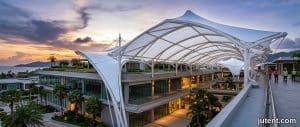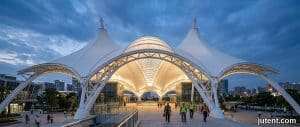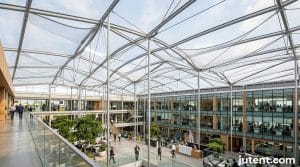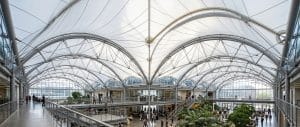

Nas zonas climáticas do Golfo, as temperaturas ambiente em julho rotineiramente atingem picos de 45°C, elevando a temperatura superficial dos tecidos arquitetônicos bem acima de 75°C. Ao projetar um claraboia tênsil de átrio, os climas do Oriente Médio exigem estruturas capazes de suportar essas cargas térmicas extremas enquanto bloqueiam a intensa radiação UV e mantêm a iluminação interna ideal. Especificações padrão de clima temperado geralmente falham nesta região em 36 meses, manifestando-se tipicamente como degradação do revestimento de PTFE ou PVC, microfissuras induzidas por UV ou perda de tensão no perímetro devido à fluência térmica.
Quando uma membrana falha prematuramente em Doha ou Riad, os custos de substituição frequentemente superam o investimento de capital original devido à complexidade das manobras e restrições de acesso sobre espaços internos acabados. Este guia detalha as classes específicas de materiais, tolerâncias de dilatação térmica e detalhamentos estruturais que os contratantes devem especificar para garantir desempenho de longo prazo em projetos comerciais em todo o Golfo.
Claraboias de Membrana Tracionada para Átrios: Vencendo o Sol do Deserto com Design Multicamadas
Clima do Golfo: Por que as Especificações Padrão de Claraboias Têxteis Tracionadas Não se Aplicam
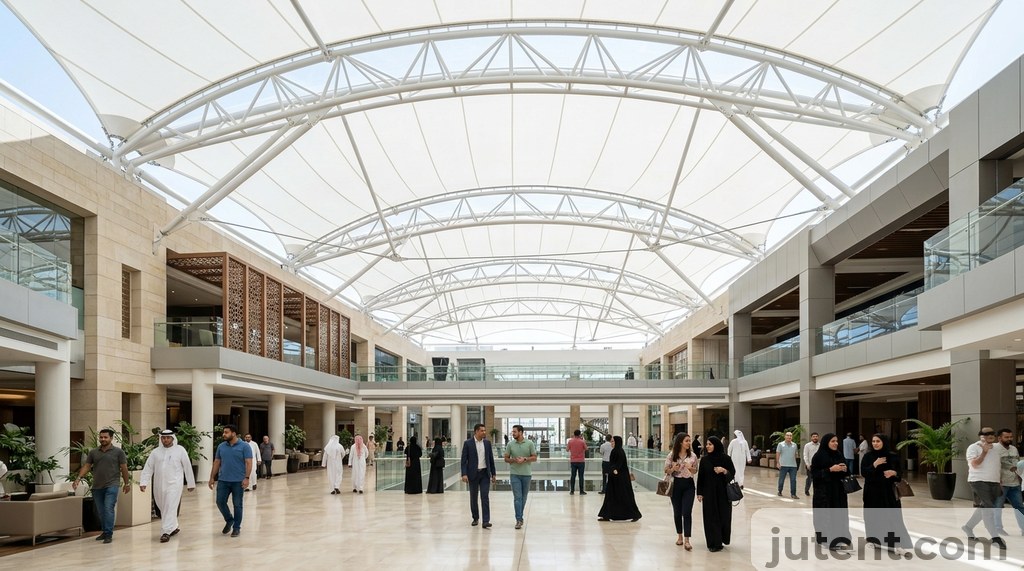
Especificações padrão para um Claraboias de Átrio escritas para climas temperados falharão no Golfo. O mecanismo de falha é previsível: a oscilação térmica extrema faz com que a membrana se expanda e contraia além dos limites do hardware de tensionamento padrão, levando ao acúmulo de água durante chuvas de inverno raras, porém intensas, seguido pela rápida degradação por UV do material frouxo.
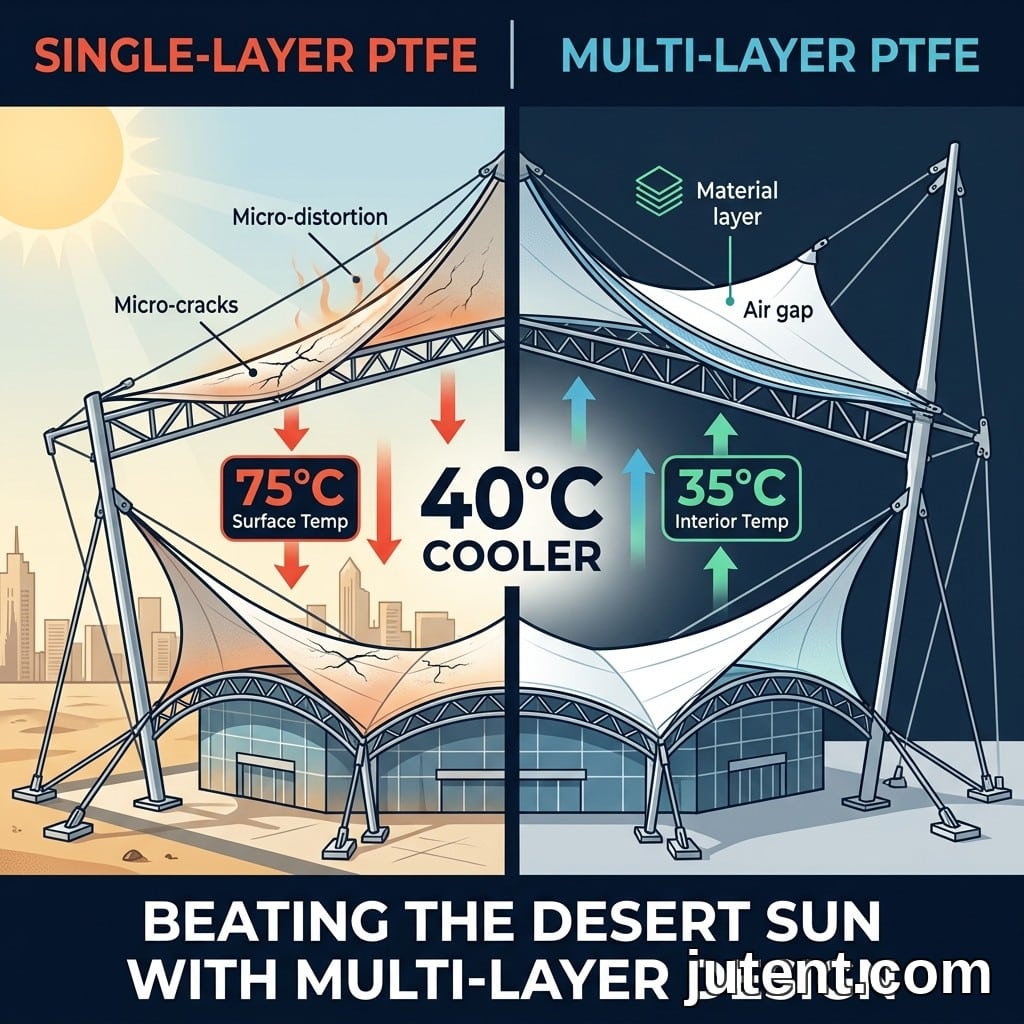
In a typical European application, peak surface temperatures rarely exceed 45°C. In the Gulf, the surface temperature of an claraboia tênsil de átrio nos Emirados Árabes Unidos ou na Arábia Saudita atinge rotineiramente 75°C a 80°C durante os meses de pico do verão. Essa carga térmica altera fundamentalmente a forma como a estrutura primária de aço e a membrana interagem.
Os tecidos arquitetônicos padrão de 700g/㎡ não possuem densidade de base suficiente para manter a estabilidade dimensional nessas condições. Embora tecidos de 900g/㎡ possam funcionar com especificações adequadas, o de 1050g/㎡ oferece a margem de segurança ideal para o ciclo térmico extremo do Golfo. Quando a temperatura cai de 45°C durante o dia para 25°C à noite, a contração térmica resultante coloca uma tensão imensa nos cabos de perímetro e nas placas de canto. Se o dimensionamento estrutural não levar em conta esse delta regional específico, os pontos de conexão cedem.
Os contratantes devem rejeitar especificações internacionais padrão e exigir engenharia localizada. A especificação deve exigir tecidos base de alta densidade, revestimentos de superfície especializados e hardware de tensionamento superdimensionado — como esticadores de aço inoxidável M24 ou M30 — capazes de acomodar uma oscilação diária de temperatura de 50°C sem exigir re-tensionamento manual nos primeiros cinco anos de vida operacional da estrutura.
Proteção UV e Térmica: Grau de Membrana para Projetos no Golfo
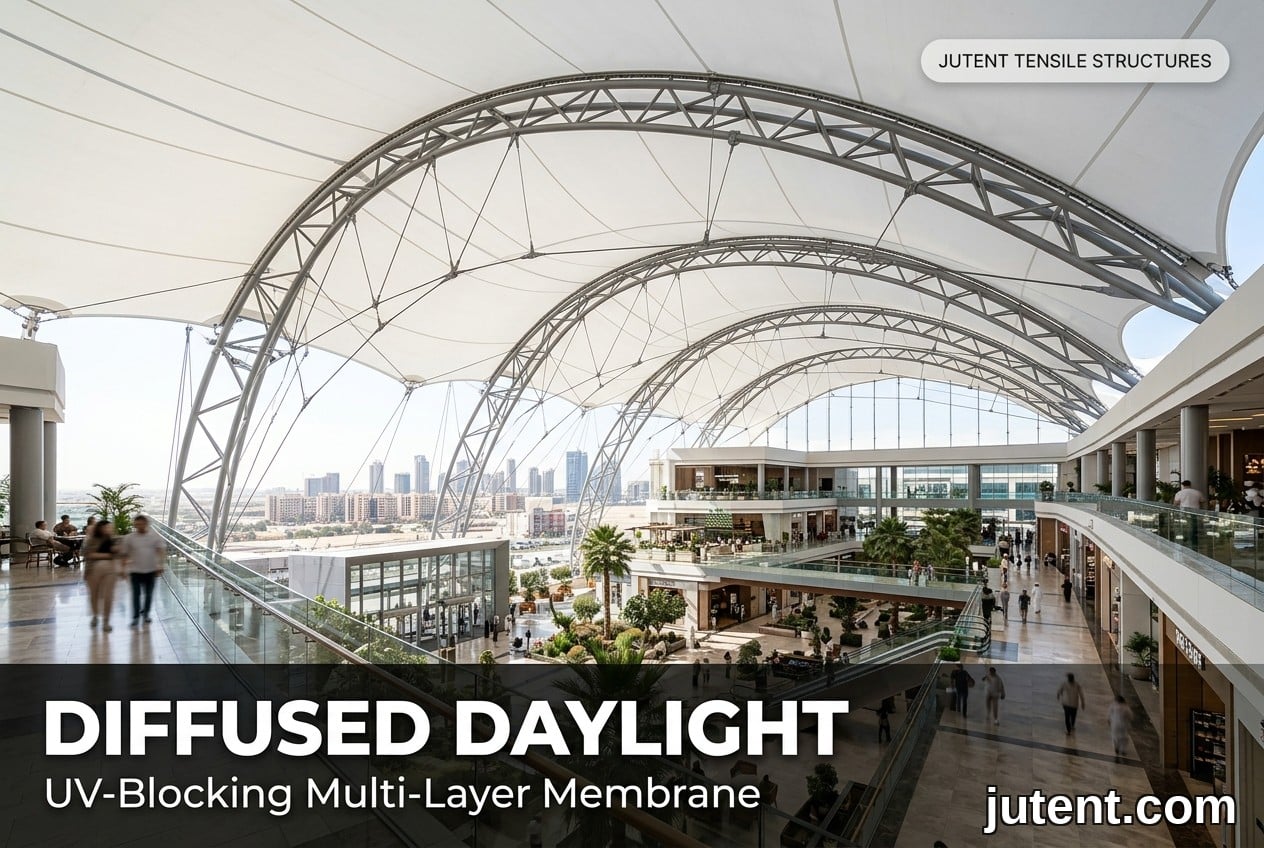
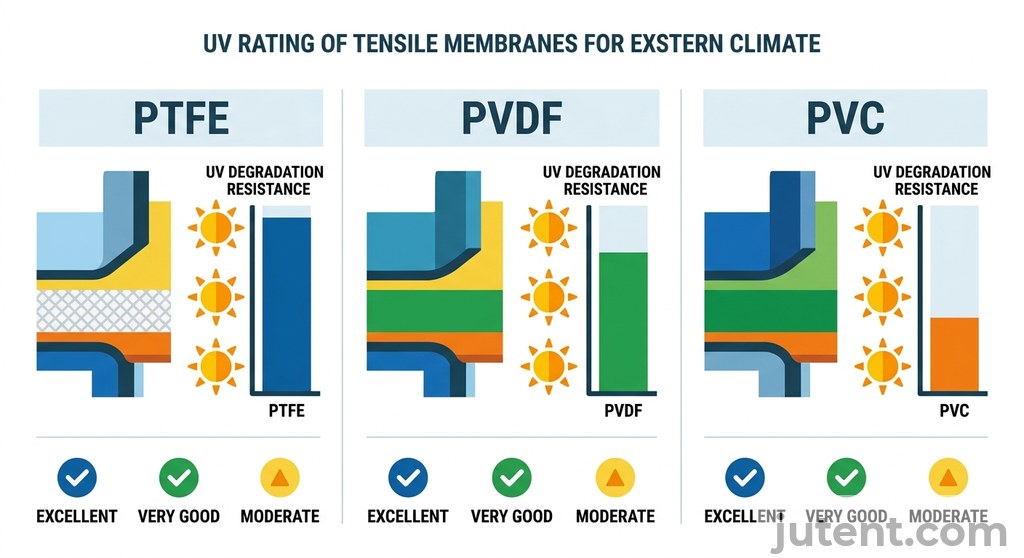
Uma cobertura resistente ao calor claraboia tênsil de átrio requer membranas projetadas para altos índices UV. Os níveis de UV no Golfo frequentemente atingem 11 ou 12, degradando os plastificantes em PVC padrão em 36 meses e causando fragilização severa.
A proteção contra corrosão e a vida útil devem ser descritas de acordo com o sistema de proteção selecionado, o ambiente do projeto e as condições de manutenção, e não como uma garantia incondicional de vida útil.
Contratantes revisando o Claraboia Tênsil de Átrio O guia também deve verificar os valores de transmissão de luz. Membranas altamente translúcidas (12% a 15%) aumentam as cargas de resfriamento interno. No Oriente Médio, especificar uma taxa de transmissão de 7% a 9% proporciona iluminação natural difusa enquanto controla rigorosamente o ganho de calor solar, reduzindo a tonelagem de HVAC necessária para o piso do átrio.
Carga de Vento: Padrões dos Emirados Árabes Unidos e da Arábia Saudita
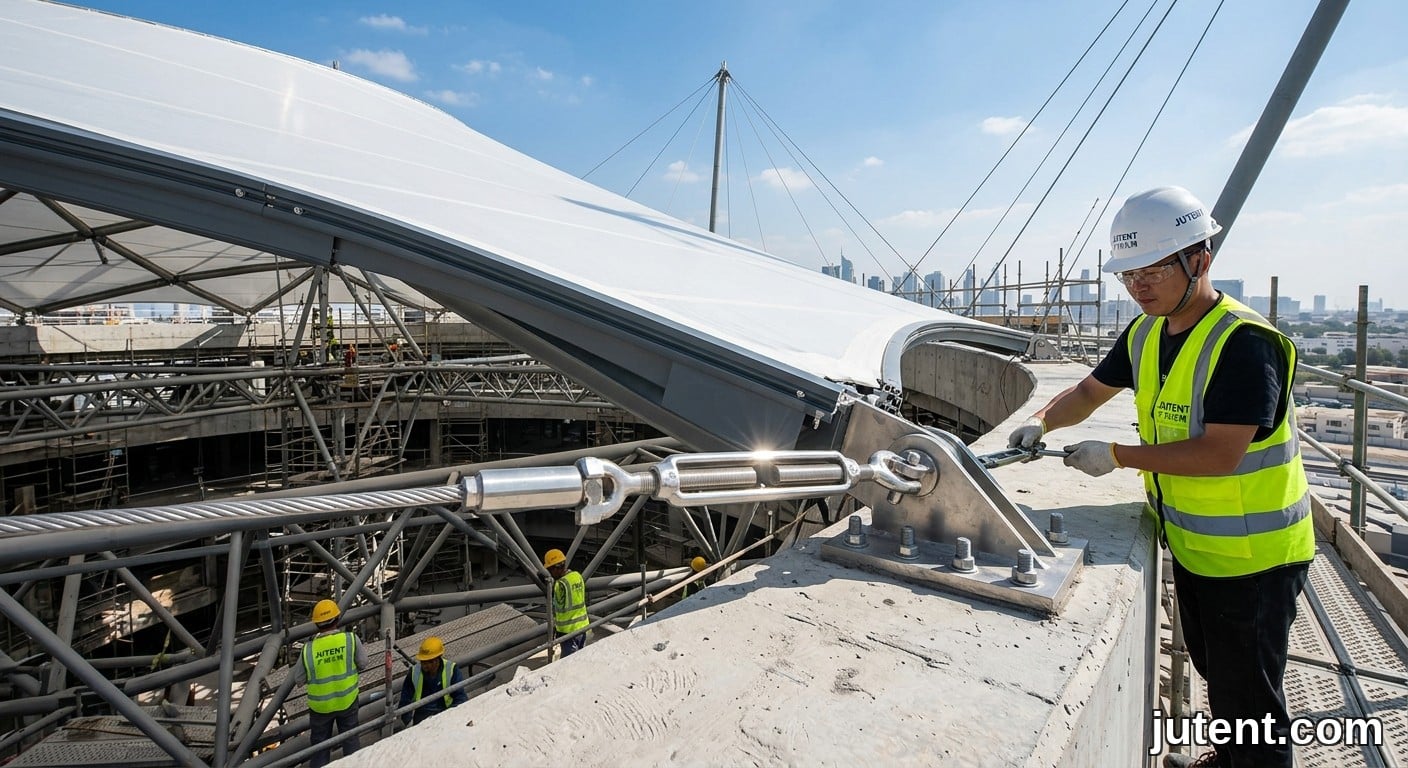
Embora o calor e os raios UV determinem a seleção da membrana, o vento determina a tonelagem de aço. Um claraboia tênsil de átrio na Arábia Saudita ou nos Emirados Árabes Unidos deve suportar rajadas de vento Shamal localizadas.
Na Arábia Saudita, a engenharia estrutural deve cumprir o Capítulo 7 do Código de Construção Saudita (SBC) para cálculos de carga de vento. Os requisitos de velocidade básica do vento variam de 130 km/h para desenvolvimentos no interior em Riade a 160 km/h para projetos costeiros em Jeddah.
Os valores técnicos finais devem ser confirmados de acordo com os requisitos de engenharia específicos do projeto e as condições do código local.
A sucção (uplift) apresenta o principal desafio de engenharia. Claraboias montadas no telhado ou que se estendem sobre parapeitos enfrentam velocidades de vento aceleradas devido à geometria do edifício, gerando pressões aerodinâmicas ascendentes que excedem 1,5 kPa. Para neutralizar essa sucção, a estrutura primária de aço — normalmente grau S355J2 (ou padrão local equivalente)— requer bases de conexão rígidas (moment-connected) fixadas com chumbadores químicos epóxi de alta resistência embutidos na viga circular de concreto estrutural.
Com base na experiência da Jutent em centenas de projetos em vários países, problemas de especificação semelhantes geralmente aparecem quando suposições iniciais são feitas antes da confirmação das condições de engenharia.