
Финальные технические значения должны быть подтверждены в соответствии с инженерными требованиями конкретного проекта и местными строительными нормами.
Чем отличается инженерия тентовых навесов для транзитных узлов
Транспортные среды накладывают строгие ограничения на геометрию конструкции и выбор материалов. В отличие от стандартных коммерческих тентовых конструкций, растяжная конструкция для терминала транзитного узла должна обеспечивать проезд высоких транспортных средств, справляться с большими объемами ливневых стоков и работать в условиях высокой коррозионной активности выхлопных газов.
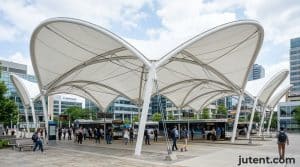
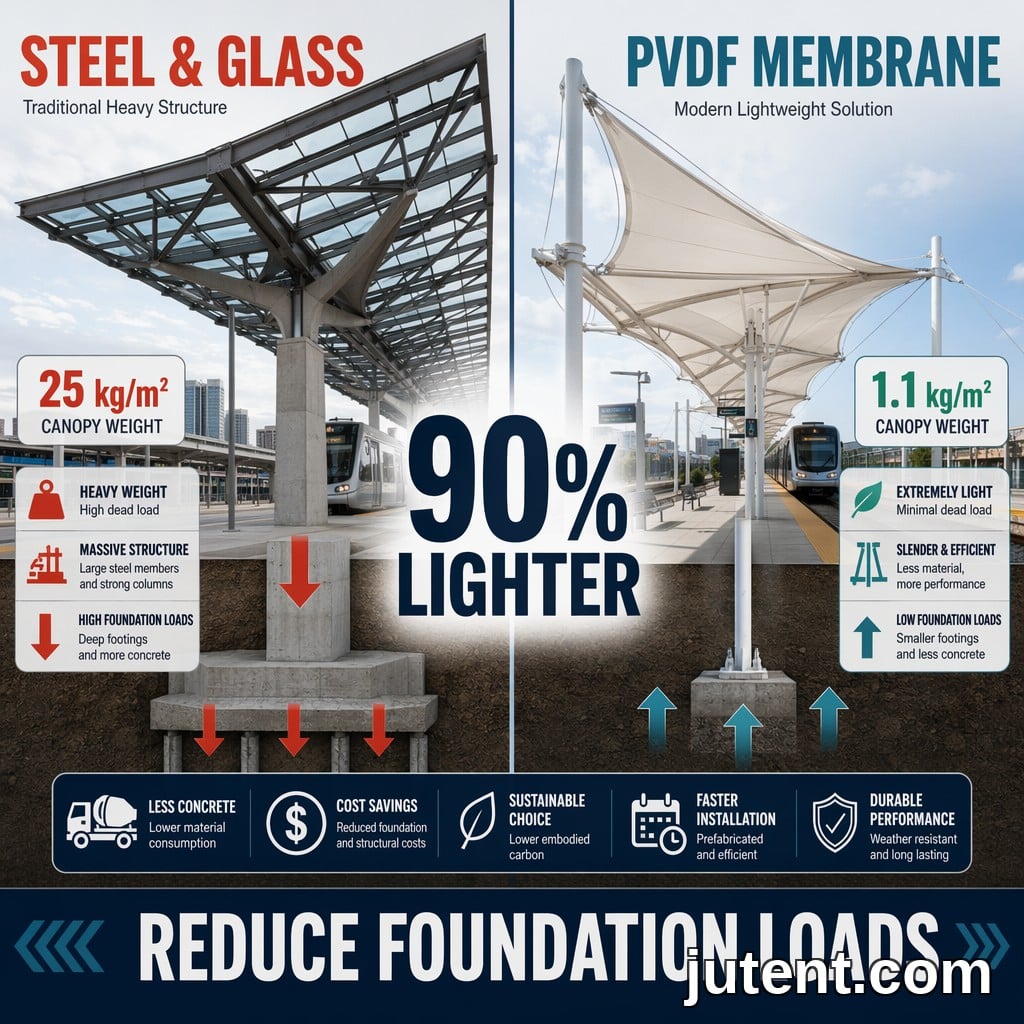
Основное инженерное отличие заключается в соотношении нагрузки к весу. Традиционный навес из стали и стекла пролетом 20 м требует значительной конструктивной высоты и массивных фундаментов. Растяжная мембранная система достигает того же пролета с использованием ПВХ-ткани плотностью 1050 г/м², натянутой на легкий стальной каркас, передавая нагрузки через геометрию, а не через массу. Это снижает требования к фундаменту — критическое преимущество при строительстве над действующими линиями метро или плотными сетями подземных коммуникаций, где глубокая выемка грунта невозможна.
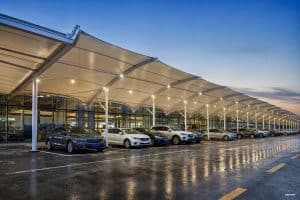
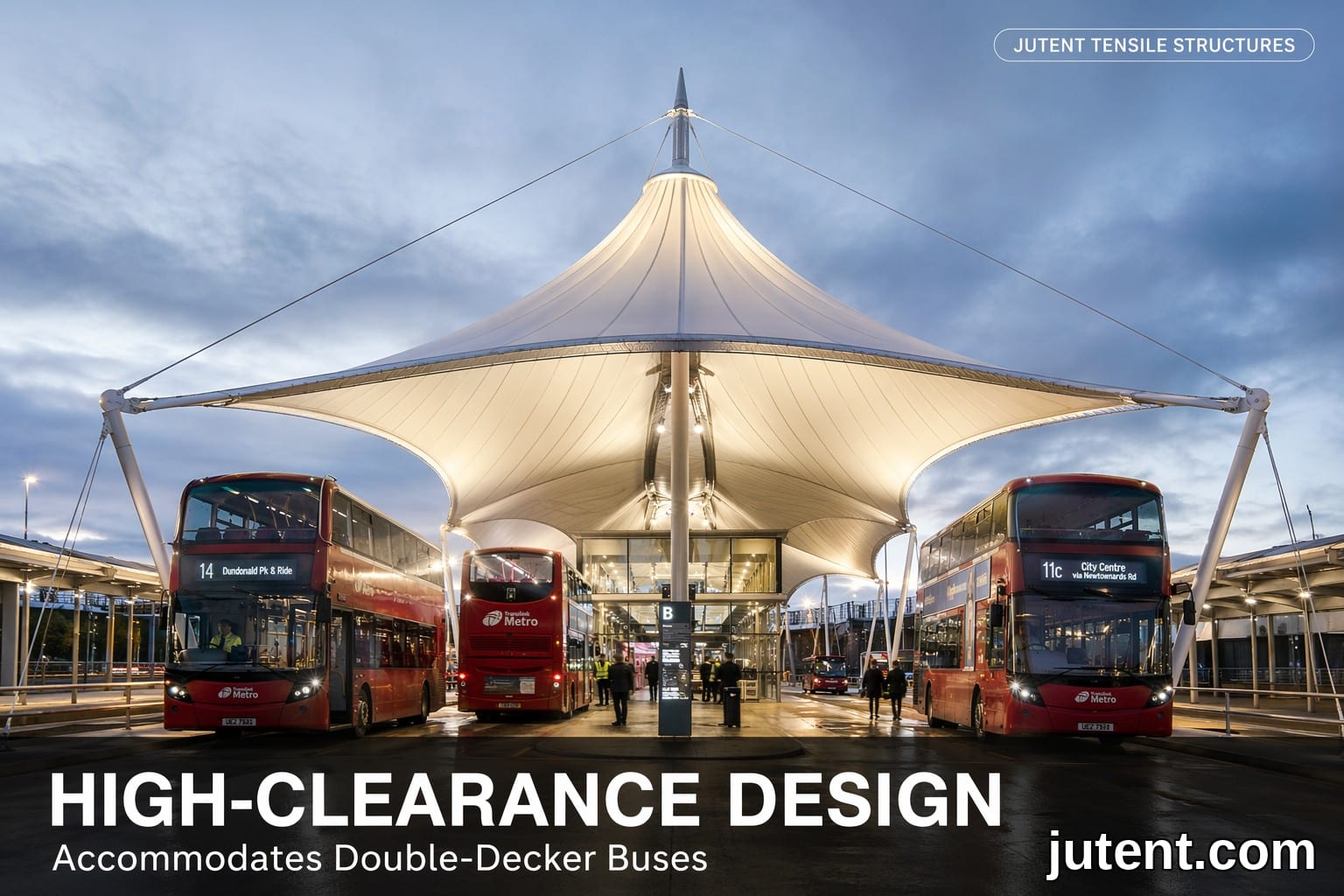
Высота проезда определяет форму конструкции. Двухэтажные автобусы и сочлененные транспортные средства обычно требуют минимальной высоты проезда 5,5 м по периметру. Для поддержания натяжения мембраны и предотвращения образования луж центральные пики навеса должны подниматься до 9 м и выше, создавая крутой уклон, ускоряющий сброс воды во время сильных ливней.
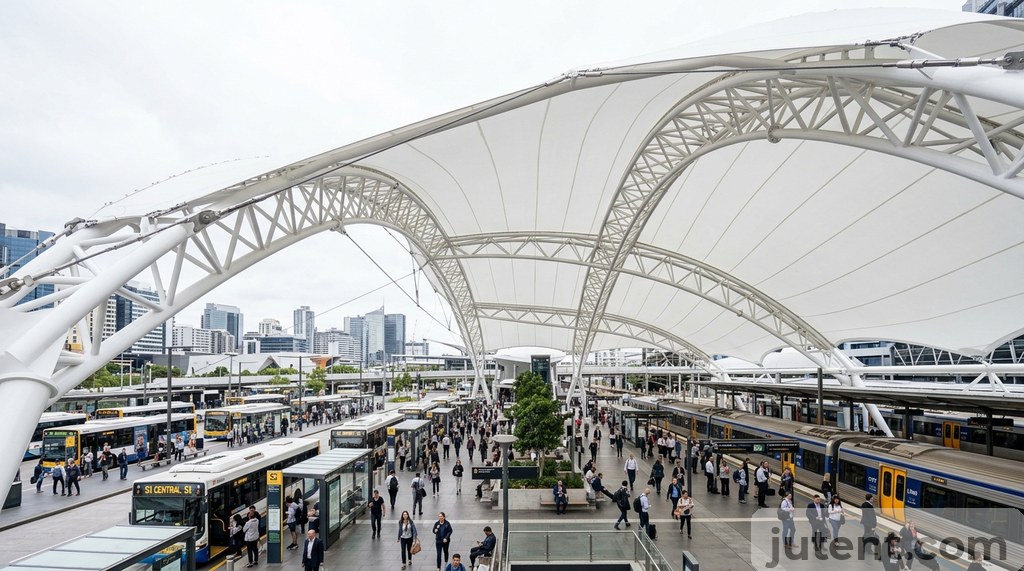
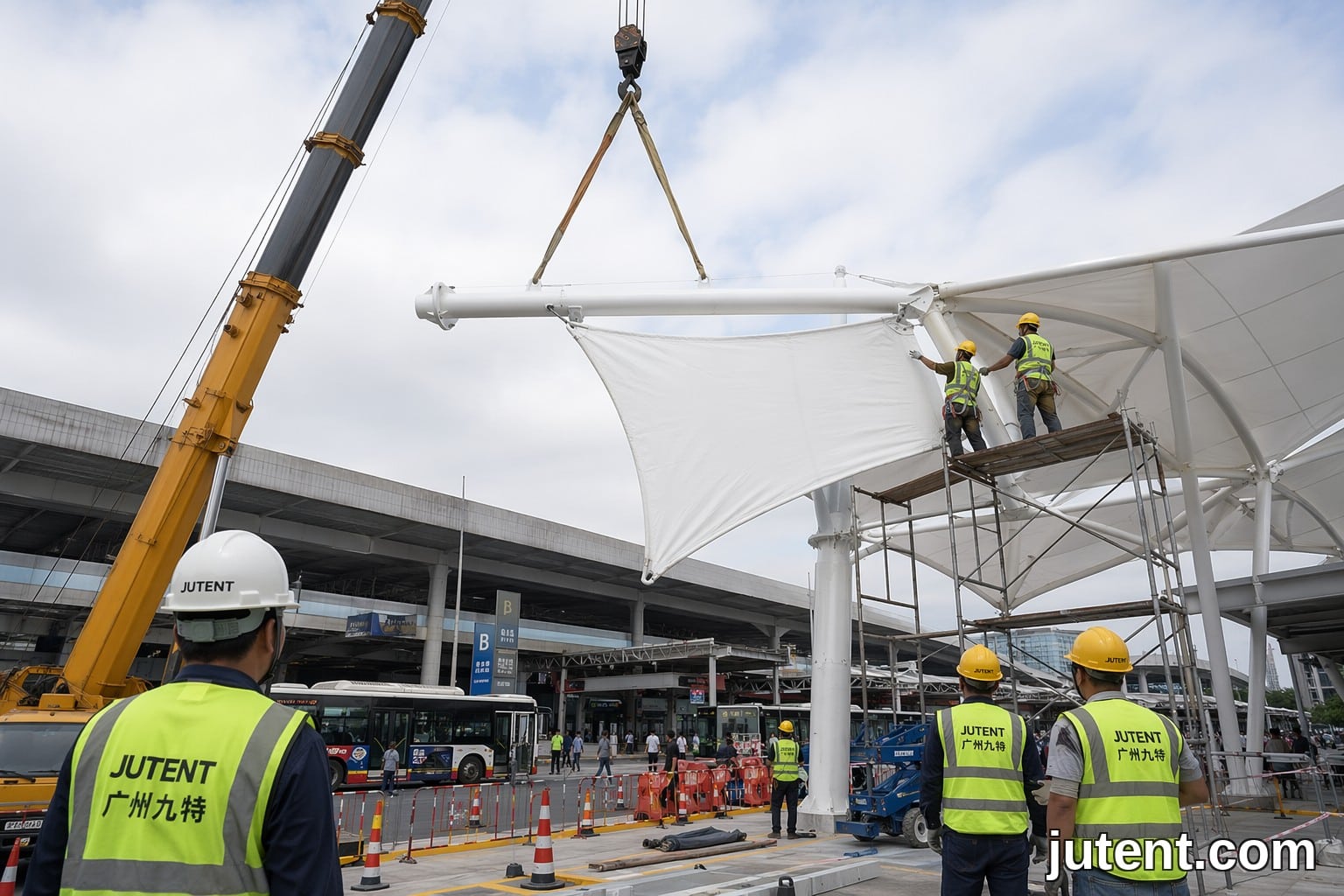
Для подрядчиков основное внимание должно быть уделено предварительной сборке. Транспортные узлы не могут закрываться на месяцы. Выбор транзитных навесов, которые поступают предварительно вырезанными и предварительно просверленными, позволяет проводить быструю ночную сборку, минимизируя помехи для действующих автобусных полос и пассажирских зон.
Варианты пролетов: Какую площадь могут покрыть растяжные навесы
Растяжные конструкции отлично подходят для покрытия обширных площадей с минимальным расходом материала. Максимальный практический пролет полностью зависит от выбранной конструктивной конфигурации и ветровой нагрузки на участке.
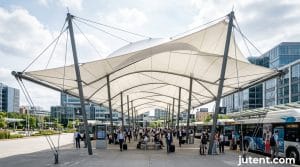
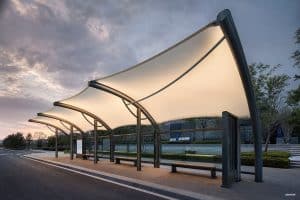
Сводчатые и непрерывные гребне-елочные формы являются стандартом для линейных пассажирских платформ. Такие конфигурации обычно имеют ширину от 10 до 15 метров и могут быть бесконечно увеличены в длину за счет повторения конструктивных пролетов. Для центральных пересадочных узлов или главных вестибюлей предпочтительны конические или мачтовые конструкции. Одна центральная мачта может поддерживать мембрану диаметром до 30 метров, покрывая около 700 м² площади без единой промежуточной колонны.
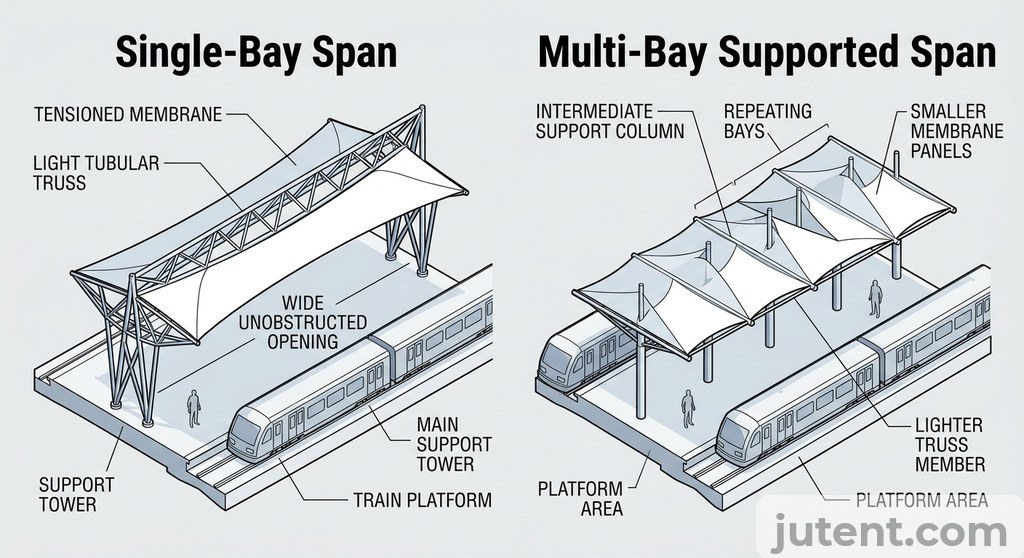
При выборе навеса для транзитного узла подрядчики должны балансировать между пролетом и тоннажем стали. Увеличение свободного пролета с 20 до 30 метров не просто увеличивает площадь мембраны — оно экспоненциально увеличивает требуемый диаметр и толщину стенок основных стальных элементов для сопротивления прогибу. Это напрямую влияет на бюджет проекта и требования к монтажному крану.
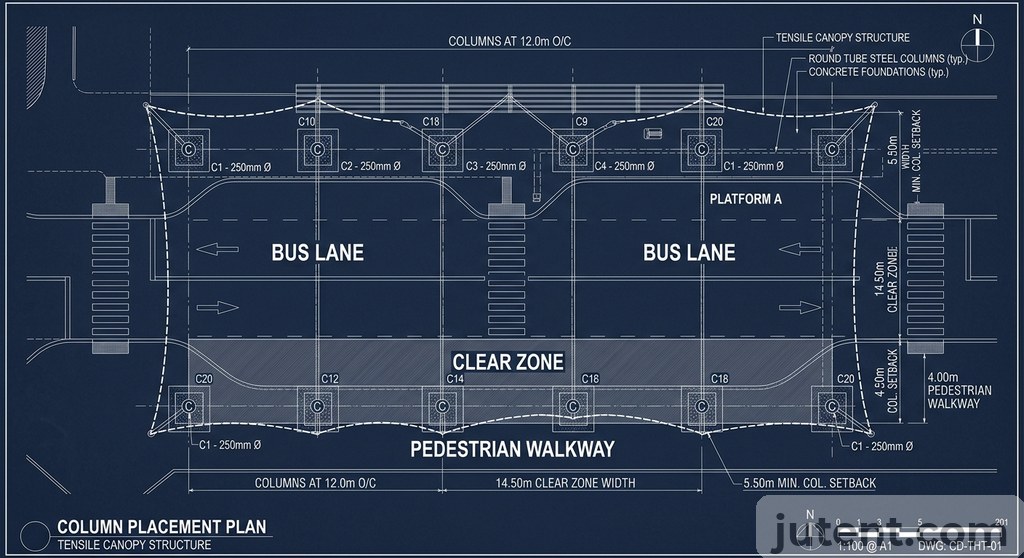
Для получения подробных рекомендаций по расстоянию между пролетами на линейных платформах обратитесь к нашему Навес для автобусной станции руководству. В большинстве муниципальных проектов сетка 12 м × 12 м обеспечивает оптимальный баланс между затратами на фундамент, весом стали и пространством для пассажиропотока.
Ветровая нагрузка: что должны выдерживать навесы транзитных узлов
Ветровая нагрузка определяет размеры основной стали и уровни предварительного напряжения мембраны. Публичный тентовый навес для транзита действует как огромный парус; он должен быть спроектирован так, чтобы выдерживать как давление вниз, так и сильные подъемные силы, возникающие у открытых конструкций.
Финальные технические значения должны быть подтверждены в соответствии с инженерными требованиями конкретного проекта и местными строительными нормами.
Подъемная сила является критической точкой разрушения для легких кровель. Чтобы противодействовать этому, мембрана должна быть двояковыгнутой (антикластической). Такая геометрия гарантирует, что когда ветер давит на одну ось, противоположная ось сопротивляется нагрузке. Мембрана обычно предварительно напрягается до 2,5–3,0 кН/м во время монтажа. Если предварительное напряжение слишком низкое, ткань будет колебаться при сильном ветре, что приведет к быстрой усталости конструктивных соединений и последующему разрыву по периметральным пластинам. В спецификациях должна быть четко указана требуемая скорость ветра на основе местных строительных норм, а не общих оценок.
Размещение колонн: Минимизация препятствий для пассажиропотока
Размещение колонн — это решение по организации движения, прежде чем оно станет конструктивным. В растяжимой кровле транспортного объекта любое препятствие на уровне земли создает узкое место для пешеходного движения и риск столкновения для маневрирующих транспортных средств.
Наиболее эффективной стратегией является опора по периметру. Вынося колонны к внешним краям автобусных полос или пассажирских островков, центральный вестибюль остается полностью свободным. Когда промежуточные колонны неизбежны из-за экстремальных пролетов, их необходимо интегрировать в существующие мертвые зоны, например, между рядами сидений, киосками по продаже билетов или подпорными стенами.
Консольные конструкции часто указываются для посадочных платформ. Один ряд задних колонн может поддерживать навес с вылетом от 5 до 8 метров, обеспечивая полную защиту от непогоды для пассажиров на посадке, оставляя полосу подъезда автобусов полностью свободной от конструктивных опор.
Однако консоли создают высокие крутящие нагрузки в основании. 6-метровый консольный навес, спроектированный для ветровой зоны 150 км/ч, обычно требует железобетонного фундамента размером не менее 2,5 м × 2,5 м × 1,0 м глубиной на каждую колонну. Подрядчики должны проверить, что существующая ширина платформы и расположение подземных коммуникаций могут вместить эти размеры фундамента, прежде чем принимать решение в пользу консольной конструкции.
Вопросы технического обслуживания для навесов транзитных остановок с высокой проходимостью
Транспортные узлы являются зонами с высоким уровнем загрязнения. Выхлопы дизельных двигателей, тормозная пыль и городской смог быстро накапливаются на поверхностях кровли. Спецификация мембранного материала напрямую определяет периодичность обслуживания и долгосрочную визуальную привлекательность объекта.
Планирование бюджета должно основываться на типе конструкции, свободном пролете, ветровой нагрузке, классе мембраны, тоннаже стали и объеме проекта. Для получения точного коммерческого предложения на условиях EXW, FOB, CIP или DDU сначала необходимо рассмотреть размеры проекта и инженерные требования.
Мембрана из ПВДФ (поливинилиденфторида) плотностью 1050 г/м² имеет низкофрикционное верхнее покрытие, отталкивающее грязь. Дождевая вода естественным образом смывает большинство поверхностных загрязнений. Техническое обслуживание сводится к ежегодной мойке под низким давлением с использованием воды и мягкого неабразивного моющего средства, что позволяет транспортному управлению снизить эксплуатационные расходы.
оцинковано методом горячего погружения с минимальной толщиной покрытия 85 мкм (ISO 1461) и финишным покрытием из эпоксидной краски морского класса
Если вы рассматриваете технические варианты, обратитесь к нашей команде за последним техническим паспортом и стандартными материалами для данного типа конструкции.
Получите расценки на навес для автобусной остановки
FAQ
- Каков максимальный пролет для тентового навеса транзитного узла?
- Тентовые навесы могут перекрывать пролеты от 15 до 30 м между опорами в зависимости от конструктивной формы. Эти конструкции имеют значительное преимущество в снижении веса по сравнению с традиционной сталью, что позволяет создавать более широкие безопорные зоны, критически важные для эффективного пассажиропотока и схем движения автобусов. Такая возможность минимизирует препятствия на уровне земли, что является ключевым фактором для транспортных объектов, где каждая опора создает потенциальное узкое место. Для конкретных применений, таких как посадочные платформы, консольные конструкции могут обеспечивать свесы от 5 до 8 м, полностью освобождая подъездные полосы.
- Как обслуживаются тентовые навесы транзитных узлов?
- Мембрана из ПВДФ требует минимального ухода — периодической очистки водой и мягким моющим средством. В условиях высокого загрязнения транспортных узлов мембрана из ПВДФ плотностью 1050 г/м² имеет низкофрикционное верхнее покрытие, которое эффективно отталкивает грязь и позволяет дождевой воде естественным образом смывать большинство поверхностных загрязнений. Это сокращает техническое обслуживание до ежегодной мойки под низким давлением, значительно снижая эксплуатационные расходы по сравнению со стандартным ПВХ, который деградирует и требует агрессивной химической очистки. Кроме того, все основные и второстепенные стальные конструкции должны быть оцинкованы методом горячего погружения с минимальной толщиной покрытия 85 мкм (ISO 1461) и иметь финишное покрытие из эпоксидной краски морского класса для предотвращения коррозии в слабокислой среде, вызванной выхлопными газами.