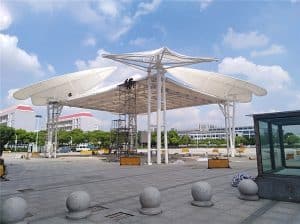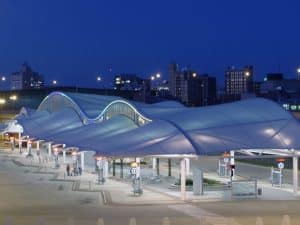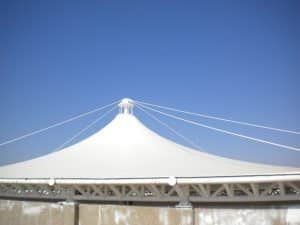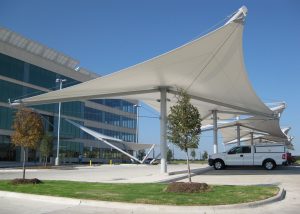

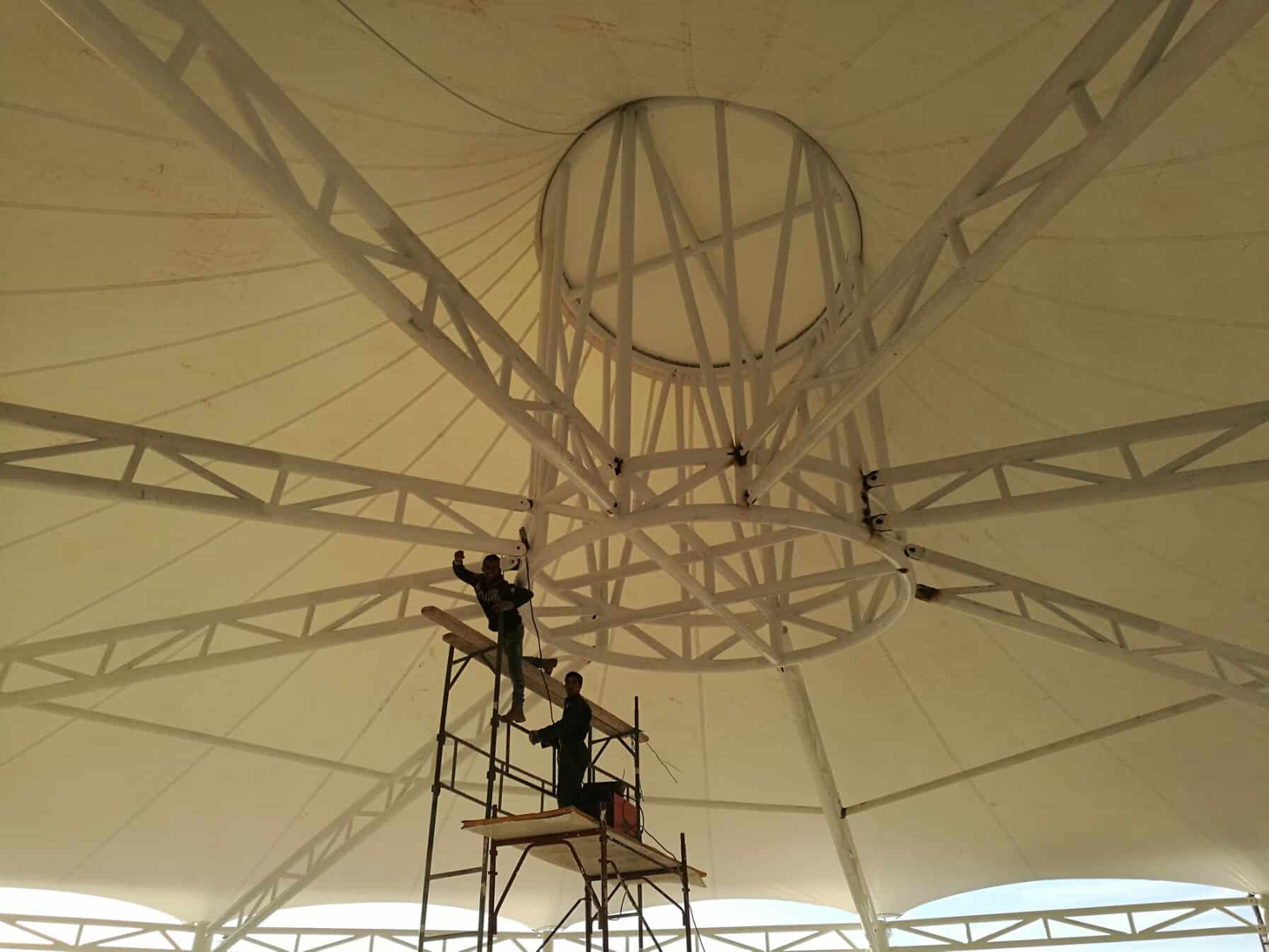
The installation of a tensile structure follows a clear and controlled process. Each step is designed to ensure safety, performance, and long-term durability. From early design to on-site construction, every stage plays an important role in the success of a tensile fabric structure project.
Step 1: Primary Design and Site Evaluation
The first step in tensile structure installation is primary design. This phase usually begins with a site visit or a detailed review of photographs and drawings of the installation area.
Based on the site conditions and the client’s functional needs, the design team develops a roof form that meets both aesthetic and structural requirements. Budget considerations are also included at this stage to ensure a practical solution.
For roof replacement or membrane reskin projects, existing steel and support elements are carefully evaluated. Components that meet structural standards may be reused, while others are replaced. When working with existing structures, a 3D survey is required to ensure accuracy and proper integration of the new membrane system.
Step 2: Design and Engineering Review
The design and engineering review phase ensures that the tensile structure can be efficiently fabricated and installed. Engineers and construction specialists review the concept to optimize structure behavior, connection details, and installation sequence.
Initial concept sketches are shared with the client for feedback and early approval. Once confirmed, a detailed 3D model is developed, allowing the client to clearly understand the final form of the membrane tensile structure. After approval, a full components list is prepared, shop drawings are completed, and membrane patterning begins.
Step 3: Tensile Structure Production and Fabrication
The production process includes material procurement, fabrication, and pre-assembly. Most steel components used in a tensile structure system are custom-made to meet project-specific requirements. Precision laser cutting, forming, and welding are used to ensure accuracy and strength.
Surface treatment for steel parts is selected during the design stage, based on corrosion conditions and application needs. Options may include galvanization, epoxy coating, or powder coating. Cable systems, turnbuckles, bolts, and tensioning hardware are also defined during design and assembled under strict quality control.
Membrane material selection is equally important. Fabric weight, color, and performance characteristics are chosen according to engineering demands and client preferences. The membrane is fabricated in a controlled factory environment using high-quality RF welding equipment, following manufacturer guidelines to ensure strong and consistent welds.
During membrane fabrication, pattern accuracy and shaping are closely monitored. Weld strength, reinforcement areas, and integrated elements such as pockets, rings, and grommets are checked throughout the process. Once completed, membrane panels are folded according to the installation plan, packed in protective PE bags, and prepared for shipping along with a complete bill of materials.
Step 4: On-Site Construction and Installation
The final stage of tensile structure construction takes place on site. A project manager coordinates with the client and other trades, including concrete foundation teams, to ensure smooth progress.
Before installation begins, site access, safety fencing, equipment placement, and staging areas are confirmed. If an existing structure is present, dismantling work is completed first. The steel framework and cable system are then installed, followed by the membrane.
The membrane is unfolded directly onto the structure and tensioned using both compression and tension methods. During this process, special attention is given to fabric alignment and wrinkle control. Proper tension distribution across the entire structure ensures a clean finish, stable performance, and long-term reliability.