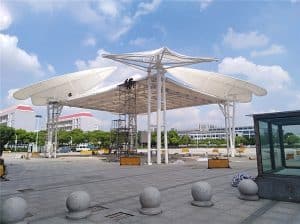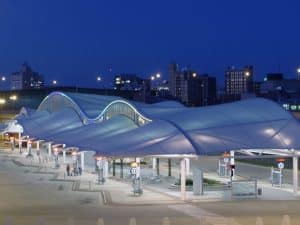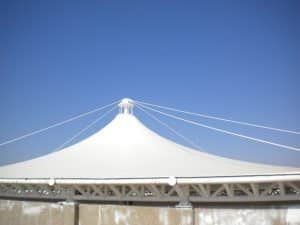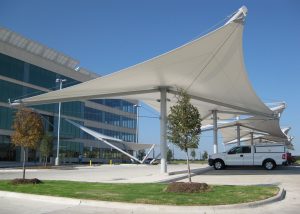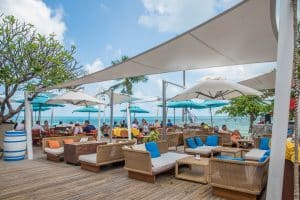

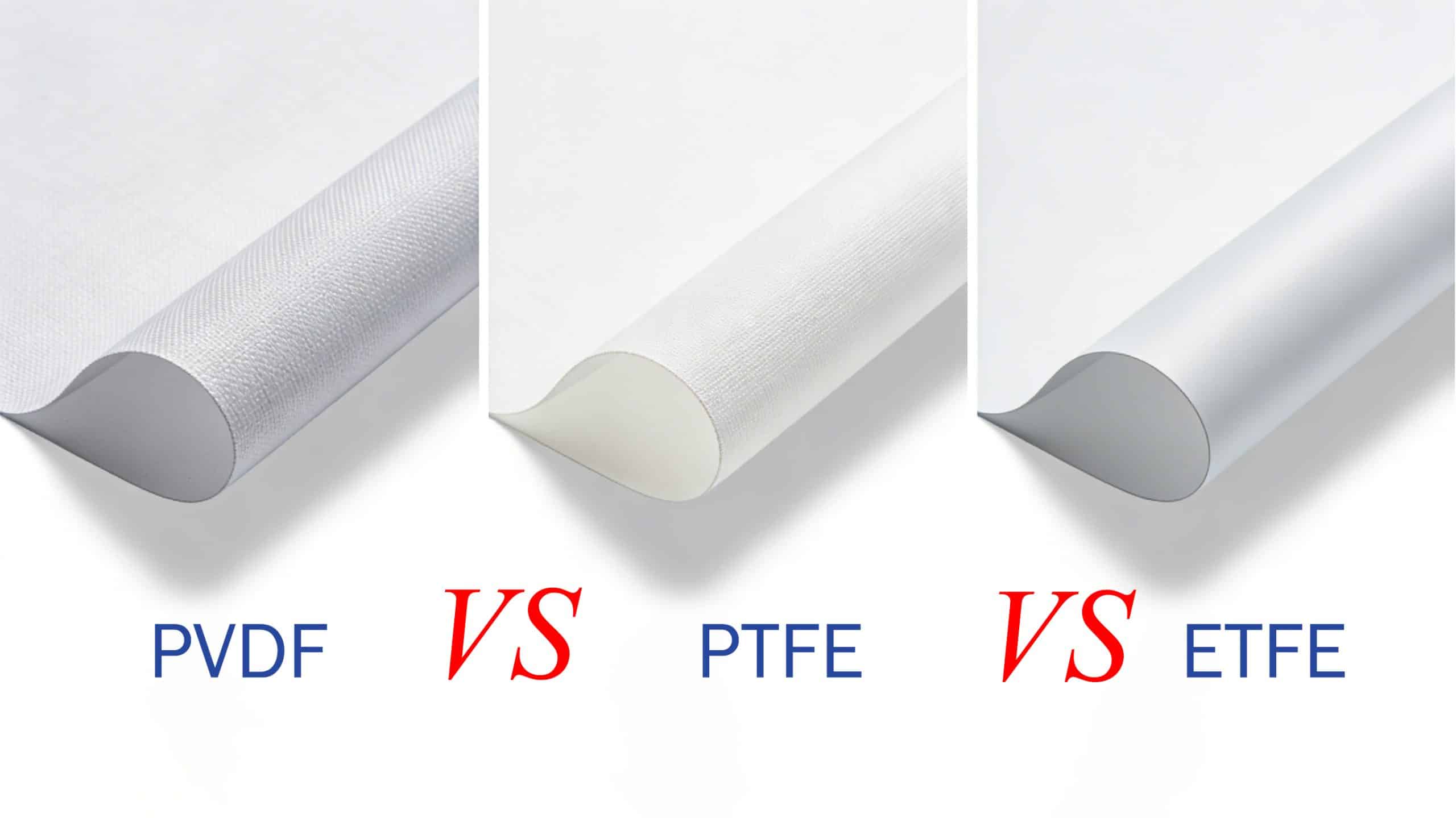
Tensile membrane structures are no longer niche architectural elements. They have become a mainstream solution for sports venues, transportation hubs, commercial spaces, landscapes, and industrial facilities.
From an engineering perspective, the real value of tensile membranes lies in their material performance—service life, weather resistance, maintenance cost, and visual stability over time. Among all options, PVC, PTFE, and ETFE remain the three most widely applied membrane materials, each suited to different project scenarios and performance requirements.
- Tensile membranes are widely used due to long service life, short production cycles, and high cost-efficiency
- PVC, PTFE, and ETFE are the three core membrane material systems in modern projects
- Each material performs differently in durability, self-cleaning, light transmission, and climate adaptability
- Correct material selection directly affects maintenance cost, aging behavior, and structural performance
Why Tensile Membrane Materials Are Used Across So Many Scenarios
With rising living standards, architectural spaces are expected to deliver both functional performance and visual expression. Tensile membrane structures meet this demand by combining lightweight construction, large-span capability, and distinctive aesthetics.
From stadium roofs to transit canopies and landscape pavilions, membrane structures offer:
- Long service life
- Strong resistance to heat and cold
- High design flexibility
- Artistic and visually pleasing forms
From an engineering standpoint, membrane materials also allow faster fabrication cycles compared to traditional roofing systems, helping reduce overall project timelines.
1. PVC Membrane Material
A Cost-Effective Choice for General Outdoor Structures
PVC (Polyvinyl Chloride) membrane is one of the most commonly used tensile materials, especially in commercial canopies, parking shades, and landscape structures.
Material Composition and Performance
PVC membranes are formulated by adding plasticizers, anti-aging agents, UV absorbers, stabilizers, lubricants, pigments, and impact modifiers.
- Good toughness and ductility
- Acceptable weather resistance
- Resistance to oxidants, reducing agents, and certain acids
However, from a material aging perspective, plasticizers may gradually migrate or evaporate, which can cause brittleness over time if not properly protected.
Surface Coating: PVDF Protection
To improve durability, PVC membranes are typically coated with PVDF (polyvinylidene fluoride).
- Strong abrasion and corrosion resistance
- Excellent UV and fading resistance
- Self-cleaning performance in harsh outdoor environments
This surface treatment significantly extends the usable life of PVC membranes in real-world conditions.
Engineering Use & Maintenance Notes
- Be protected from scratches and surface abrasion
- Be stored in clean, dry environments
- Avoid solvent-based cleaners (alcohol, acetone, rosin, etc.)
Routine cleaning can be done with clean water and soft cloths. Organic contaminants such as bird droppings can be removed using water or mild detergent.
2. PTFE Membrane Material
High-End Performance for Long-Term Landmark Structures
PTFE (Polytetrafluoroethylene) membranes are widely used in stadiums, airports, exhibition halls, and permanent public buildings where long-term stability is critical.
Exceptional Chemical and Weather Resistance
- Strong acids and alkalis
- Corrosive industrial environments
- Common solvents such as alcohol, gasoline, and ketones
Unlike PVC, PTFE contains no plasticizers, antioxidants, or UV absorbers, meaning its properties remain stable over decades.
UV Resistance and Aging Performance
From a structural durability viewpoint, PTFE does not age or become brittle under UV exposure. It maintains mechanical performance even after prolonged outdoor use.
Self-Cleaning Surface Behavior
PTFE’s molecular structure, sealed by fluorine atoms, results in extremely low surface energy (approximately 18.5 N/m).
- Minimal adhesion of dust and pollutants
- Strong water repellency
- Excellent self-cleaning performance
PTFE Whitening Phenomenon Explained
PTFE membranes are typically glass fiber fabrics coated with PTFE. During manufacturing, coating temperatures exceed 400°C, causing the base fabric to appear brown initially.
- Southern regions: ~4 months
- Northern regions: ~6 months
For indoor or interior applications, pre-bleached PTFE membranes are recommended to ensure visual consistency.
3. ETFE Membrane Material
Ultra-Lightweight Solutions for Transparent Architecture
ETFE (Ethylene Tetrafluoroethylene) membranes are increasingly used in iconic roofs, atriums, and multi-layer cushion systems.
High Light Transmittance
ETFE films can achieve up to 95% light transmittance. Through surface printing or patterning, designers can precisely control solar gain and glare.
Self-Cleaning and Low Maintenance
ETFE has naturally low surface adhesion, allowing dust to be washed away by rain.
Fire Performance and Mechanical Strength
- Fire rating: DIN 4102 B1
- Melting temperature: ~200°C
- Does not self-ignite
- High tensile strength and tear resistance
Long-Term Use and Design Flexibility
ETFE is suitable for permanent, multi-layer detachable roof systems, with a service life of 30 years or more. Multiple colors can be customized.
Tensile Membrane Materials Comparison
| Parameter | PVC Membrane | PTFE Membrane | ETFE Membrane |
|---|---|---|---|
| Typical Service Life | 10–15 years | 25–30+ years | 30+ years |
| Light Transmittance | 10–30% (with PVDF) | 10–15% | Up to 95% |
| Surface Coating | PVDF | PTFE on glass fiber | None required |
| Self-Cleaning Ability | Medium | Excellent | Excellent |
| UV Resistance | Good | Outstanding | Outstanding |
| Fire Rating | B1 | A2 / Non-combustible | B1 |
| Structural Weight | Medium | Heavy | Extremely Light |
| Maintenance Frequency | Medium | Very Low | Very Low |
| Typical Applications | Canopies, parking shades | Stadiums, terminals | Transparent roofs |
Engineering note: These values represent typical industry ranges. Final performance depends on fabric grade, coating system, climate conditions, and structural detailing.
How Engineers Use This Comparison in Real Projects
- Short- to mid-term outdoor structures often favor PVC membranes
- Permanent landmark buildings prioritize PTFE membranes
- Daylight-driven architectural spaces rely on ETFE membranes
This comparison table is commonly used during early-stage feasibility studies before detailed structural calculations begin.
Final Thoughts: Choosing the Right Tensile Membrane Material
- PVC offers cost efficiency and flexibility
- PTFE delivers unmatched durability
- ETFE enables transparency and lightweight design
Selecting the right membrane material requires a balanced evaluation of climate conditions, structural demands, maintenance expectations, and architectural intent. When chosen correctly, tensile membranes become a long-term asset rather than a short-term solution.