
In modern transportation infrastructure, shade is no longer a decorative add-on. For gas stations, toll plazas, and traffic control facilities, shading systems directly affect operational efficiency, safety, and long-term maintenance costs. This is why fabric membrane shade sails have become a preferred solution across transportation projects worldwide.
Compared with traditional concrete or steel roofing, tensile membrane structures provide faster installation, lighter structural loads, and greater architectural freedom, making them especially suitable for high-traffic environments.
- Lightweight membrane structures reduce foundation load and construction time
- PVDF and PTFE fabrics offer different lifespan and budget options
- Wide-span designs improve traffic flow and operational safety
- Modern membrane forms enhance facility identity and visual recognition
Functional Shade Solutions for High-Traffic Facilities
Transportation facilities operate under continuous vehicle movement and strict safety regulations. Any construction activity must minimize disruption while maintaining normal operations. Traditional roof systems often require heavy foundations and long construction cycles, increasing both cost and downtime.
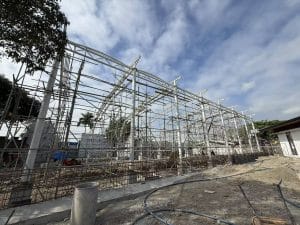
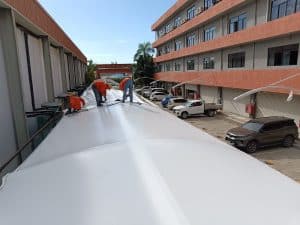
Fabric membrane structures are engineered to solve these challenges. Their lightweight steel-and-membrane systems significantly reduce foundation requirements, while prefabricated components enable rapid on-site installation.
Design Flexibility That Serves Both Function and Identity
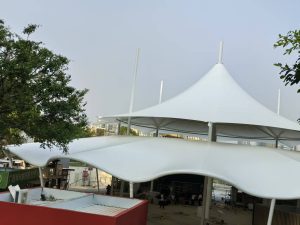
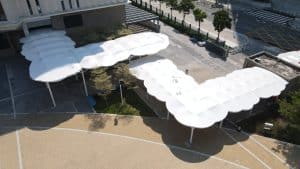
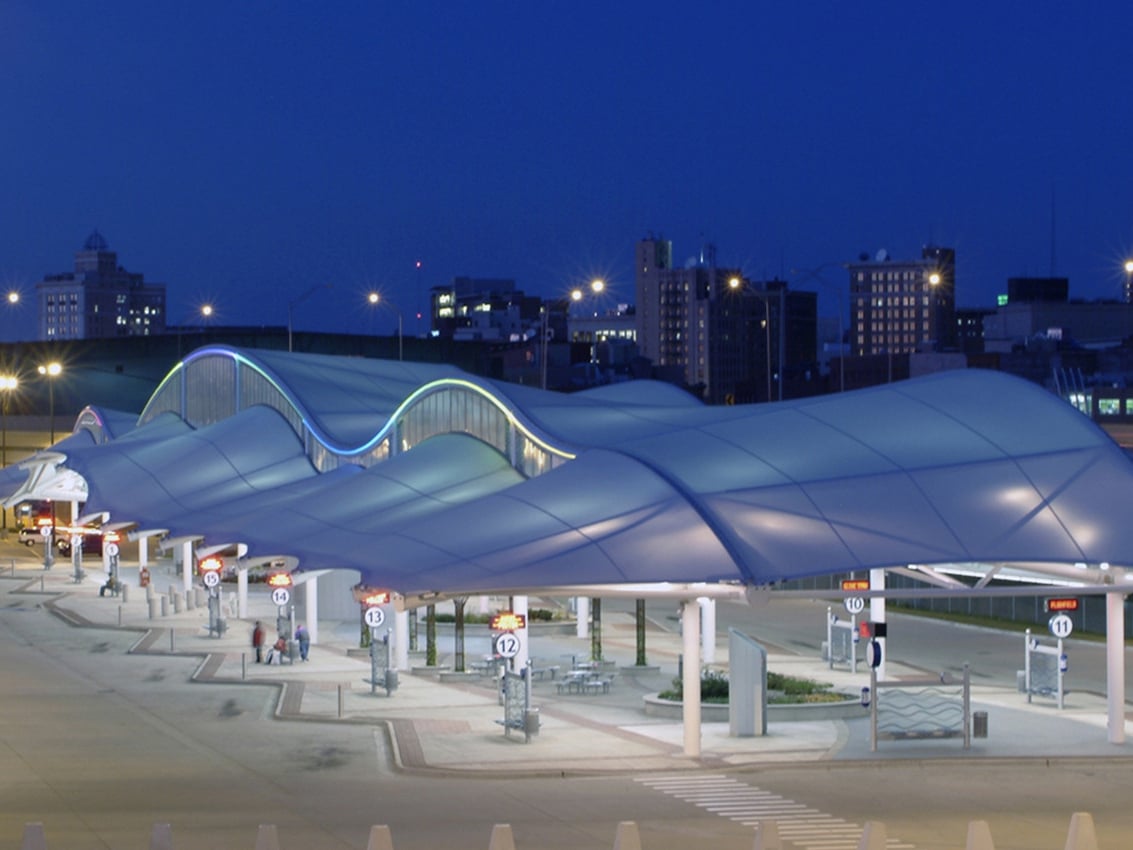
One of the most visible advantages of fabric membrane shade sails is their ability to break away from rigid, box-shaped roofing. Membrane structures work in tension, enabling curved, flowing forms that are both structurally efficient and visually striking.
For gas stations, open-span membrane canopies improve visibility and circulation, while protecting fueling equipment and vehicles from sun exposure. For toll stations, wide-span membrane roofs provide unobstructed coverage across multiple lanes, supporting smoother traffic flow and easier monitoring.
Material Performance and Service Life
The long-term performance of a membrane structure depends largely on fabric selection. In transportation projects, durability, fire resistance, and weather stability are key decision factors.
| Fabric Type | Typical Lifespan | Key Characteristics | Common Applications |
|---|---|---|---|
| PVDF-Coated Fabric | 10–15 Years | Cost-effective, UV-resistant, flexible | Gas stations, temporary or mid-term facilities |
| PTFE-Coated Fiberglass | 25+ Years | Permanent material, high fire resistance, excellent durability | Major toll stations, long-term infrastructure projects |
Why Membrane Structures Are Replacing Traditional Roof Systems
Across the transportation sector, more facilities are shifting from conventional roofing systems to membrane structures. This transition is driven by the need for faster construction, lower life-cycle costs, and adaptable architectural solutions.
Self-cleaning fabric surfaces reduce maintenance requirements, while fire-resistant properties and structural flexibility make membrane systems suitable for both new construction and renovation projects.
Conclusion: A Strategic Choice for Modern Transportation Facilities
Fabric membrane shade sails represent more than an architectural trend. They are a strategic infrastructure solution that balances performance, efficiency, and design. By integrating structural engineering principles with architectural creativity, membrane systems support safer operations and long-term asset value.
With over a decade of industry experience, Jutent provides engineered membrane solutions tailored to the real demands of transportation facilities, delivering reliable performance without compromising visual impact.