

“`html
كانت شمس الظهيرة تضرب بقوة على الملاعبالملعب الجديد الذي تم تركيبه، بألوانه الزاهية التي تدعو للاستخدام، لكن أسطحه كانت تزداد دفئًا عند اللمس. كان مدير مشروع المجلس المحلي، وهو يتفحص المشهد، يعلم أن القطعة الأخيرة من اللغز كانت حاسمة: الظل. كانت الميزانية ضيقة، والمساحة كبيرة، والحاجة إلى حماية متينة وفعالة من الأشعة فوق البنفسجية أمر بالغ الأهمية. لم يكن السؤال إذا كان توفير الظل، بل كيف. Was a series of individual الملاعب shade sails sufficient, or did the project demand the engineered elegance and expansive coverage of a tensile membrane structure (canopy)? This common dilemma highlights the critical design factors that differentiate these two popular shade solutions, impacting everything from initial cost to long-term performance and safety.
ما هي أشرعة الظل للملاعب وما ليست عليه
A شراع ظل للملعب is a fabric structure tensioned between multiple anchor points, typically poles or existing building facades, to create a shaded area. These sails are usually made from high-density polyethylene (HDPE) knitted fabric, which allows for air circulation, reducing heat buildup underneath. They are characterized by their often organic, free-form shapes, which can add an aesthetic appeal to a الملاعب. The primary function of a commercial shade sail playground is to provide UV protection and reduce ambient temperature, making play areas safer and more comfortable for children. They are a cost-effective solution for covering smaller, discrete areas, offering flexibility in design and installation. [IMAGE: شراع ظل الملعب]
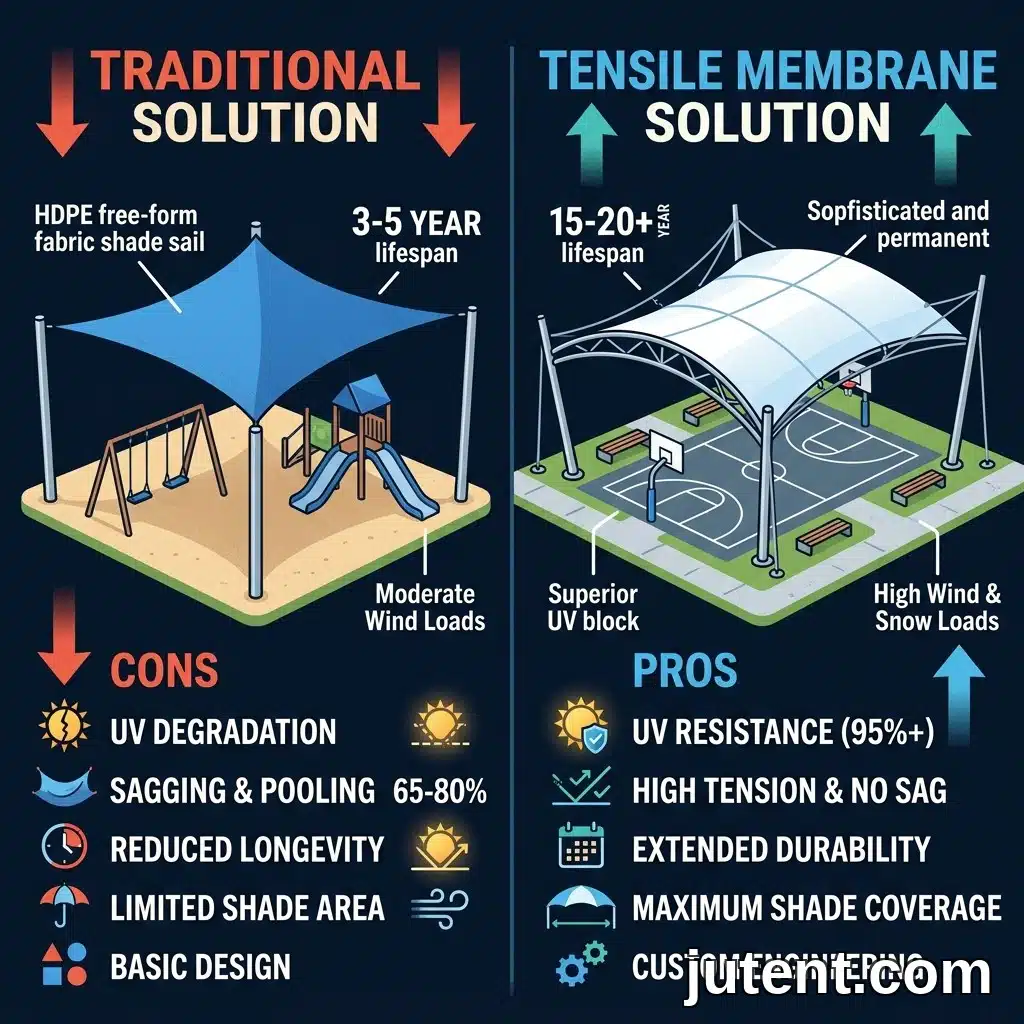
However, it's crucial to understand what a شراع ظل للملعب هي غير. It is not a rigid, fully enclosed structure, nor is it designed for extreme weather conditions without specific engineering. Unlike a tensile canopy, which often features a reliable steel framework and a more durable, waterproof membrane, a shade sail relies on the tension of its fabric and the strength of its anchor points. While effective for sun protection, most standard shade sails are not fully waterproof, meaning they will not provide complete shelter from rain. Their design also means they typically require removal in very high winds or during winter in areas prone to heavy snow, unless specifically engineered for such loads. For more information on playground shade options, visit our dedicated page: Compare playground shade structure options and costs
قيود الامتداد: ما هو الحجم الأقصى لشراع ظل الملعب؟
The size and span of a شراع ظل للملعب are inherently limited by the material properties of the shade cloth and the engineering principles governing its tensioning. While individual shade sails can be custom-fabricated, التظليل التجاري للملاعب عادةً ما تكون مساحة الأشرعة محدودة بحجم أقصى للوحة يبلغ حوالي 6م × 6م. تجاوز هذا البعد باستخدام قماش التظليل القياسي يزيد بشكل كبير من خطر تمدد القماش وترهله وتمزقه تحت أحمال الرياح، مما يضر بفعالية وسلامة الهيكل. غالبًا ما تتطلب المساحات الأكبر استخدام أشرعة متعددة متداخلة، مما قد يؤدي إلى مشاكل تصريف معقدة وزيادة عدد أعمدة الدعم اللازمة، مما قد يسبب فوضى في مساحة اللعب.
المظلات الشدية، على النقيض من ذلك، هي هياكل هندسية مصممة لامتدادات أكبر بكثير. باستخدام أغشية عالية القوة مثل PVDF أو PTFE، مدعومة بهياكل فولاذية موثوقة (Q235B، Q355B)، يمكنها تغطية مساحات شاسعة بدون دعامات وسيطة. وهذا يسمح بمناطق لعب غير معوقة وحرية أكبر في التصميم. على سبيل المثال، يمكن لمظلة شدية واحدة أن تمتد بسهولة لمسافة 20م × 30م أو أكثر، وهو إنجاز مستحيل لشراع ظل واحد هيكل شراع الظل. الاختيار بين مجموعة من أشرعة الظل الصغيرة ومظلة شدّية واحدة واسعة يعتمد على مساحة التغطية المطلوبة، والجمالية المرغوبة، وأهداف المتانة طويلة المدى. بناءً على خبرة Jutent في أكثر من 400 مشروع في أكثر من 30 دولة، غالبًا ما تتضح فعالية تكلفة المظلة الشدّية للمساحات التي تتجاوز 100 متر مربع، مما يوفر عمرًا افتراضيًا وأداءً فائقين.

| الميزة | شراع ظل للملعب | المظلة الشدّية (PVDF/PTFE) |
|---|---|---|
| أقصى امتداد نموذجي | ~6م × 6م لكل لوح | 20م × 30م+ (هيكل واحد) |
| مادة القماش | قماش HDPE محبوك | غشاء معماري مطلي بـ PVDF أو PTFE |
| مقاوم للماء؟ |
متى تختار شراع الظل ومتى تختار المظلة الشدّية
اتخاذ القرار بين شراع ظل الملعب والمظلة الشدّية يتضمن موازنة عدة عوامل رئيسية تتعلق بنطاق المشروع والميزانية والمتانة والوظيفة المطلوبة.
اختر شراع ظل الملعب عندما:
- Budget is a primary constraint for smaller areas: Playground shade sails are generally more cost-effective for covering smaller, discrete play zones.
- Coverage area is limited: If you only need to shade a specific piece of equipment or a small seating area (typically under 36 m² per sail), individual sails are a viable option.
- Aesthetics prioritize a light, airy feel: The free-form, often colorful nature of shade sails can add a playful aesthetic.
- Seasonal removal is acceptable: In areas with extreme winter weather or very high seasonal winds, removable sails may be practical.

اختر المظلة الشدّية عندما:
- Coverage area exceeds 100 m²: For larger playgrounds, sports courts, or campus walkways, a single tensile canopy is more cost-effective per square meter than multiple sails.
- Year-round weather protection is required: Tensile canopies are fully waterproof and engineered for permanent installation in all seasons.
- Long-term value matters: With a service life of 15-25+ years (vs. 5-10 years for shade sails), tensile canopies offer lower total cost of ownership.
- Wind load compliance is critical: For cyclone-prone regions or areas with strict building codes, engineered tensile canopies provide documented wind load calculations.
- Unobstructed play space is needed: Single-span canopies eliminate the support poles required by multiple sails, creating safer, more open play zones.
For budget planning, tensile canopy costs typically range from $40-$90/m² EXW for PVDF, while commercial shade sails cost $20-$50/m² EXW. However, when factoring in 15+ year service life vs. 5-10 year replacement cycles, the tensile canopy often proves more economical for areas over 100 m².
Final Recommendation
For most commercial playground projects exceeding 100 m², a tensile canopy delivers better long-term value, superior weather protection, and lower maintenance costs than multiple shade sails. Request a project-specific cost comparison from Jutent to see the difference for your site.
“`


