
“`html
المناخ عبر الفلبين وماليزيا وإندونيسيا يفرض أساسًا هندسيًا صارمًا للهياكل الصناعية. عند تحديد مواصفات مظلة رصيف التحميل، يتطلب جنوب شرق آسيا من المهندسين مراعاة طرفين متناقضين: أحمال رياح إعصار من الفئة الخامسة تتجاوز 250 كم/ساعة وإشعاع أشعة فوق بنفسجية بمؤشر 12+ على مدار العام. المظلات التجارية القياسية المصممة للمناطق المعتدلة تفشل بشكل روتيني في هذه المنطقة خلال ثلاث سنوات. تشمل أنماط الفشل الشائعة انفصال غشاء PVC، وتجمع المياه الهيدروستاتيكي تحت الأمطار الموسمية الغزيرة، وانحناء الإطار الفولاذي تحت قص الرياح الديناميكي. بالنسبة لمشغلي الخدمات اللوجستية، تعطل هذه الإخفاقات الهيكلية سلاسل التوريد، وتعرض البضائع الحساسة للرطوبة للخطر، وتخلق مخاطر انزلاق شديدة لموظفي الرافعات الشوكية الذين يعملون على ساحات خرسانية مبللة.
يتطلب تحديد مظلة مقاومة للأعاصير حسابات دقيقة للأحمال الديناميكية الهوائية، واختيارًا متخصصًا للمواد، والالتزام الصارم بالمعايير الإقليمية مثل الكود الإنشائي الوطني للفلبين (NSCP) أو SNI الإندونيسي. لا يمكن للمقاولين الاعتماد على مجموعات التوريد العامة فقط؛ بل يجب تصميم الإطار الإنشائي خصيصًا لموقع المشروع مع مراعاة فئة التعرض الساحلي، وقدرة تحمل التربة، والخلوص التشغيلي. يوضح هذا الدليل المواصفات الدقيقة التي يحتاجها المقاولون ومديرو المرافق لشراء مظلة عالية الشد متوافقة تحمي البضائع دون إعاقة مركبات النقل الثقيلة (HGVs) أو عمليات منصة التحميل.
متطلبات حمل الرياح للأعاصير في جنوب شرق آسيا
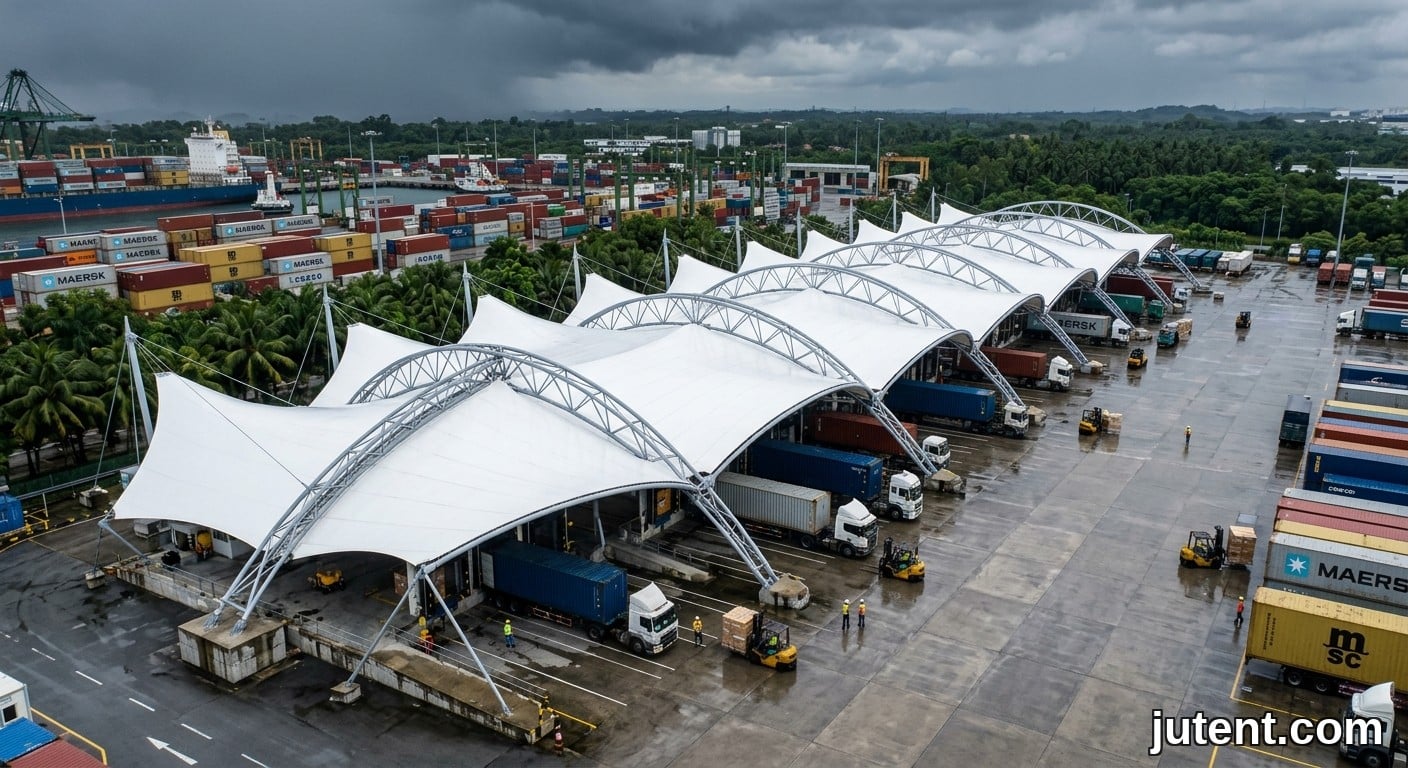
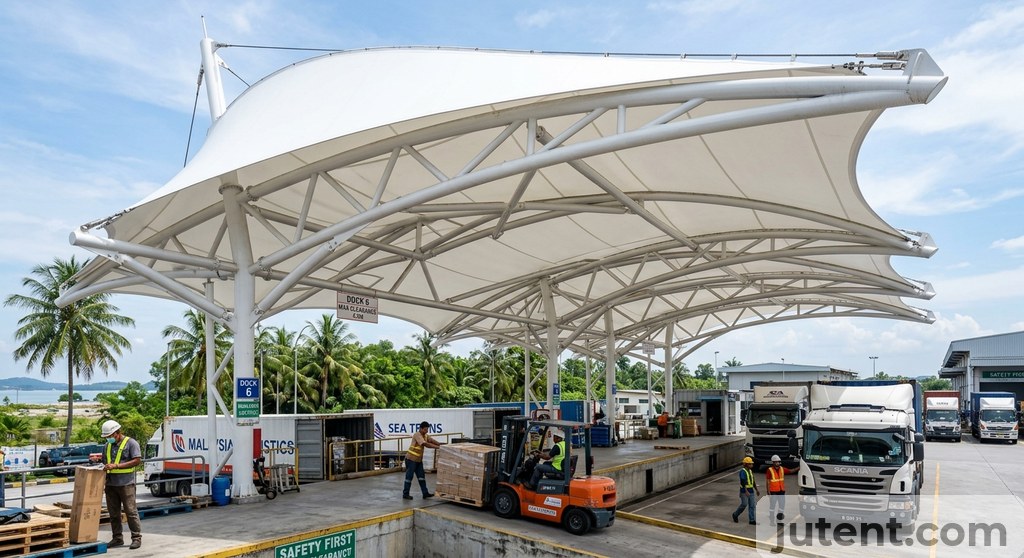
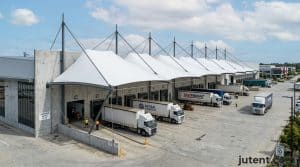
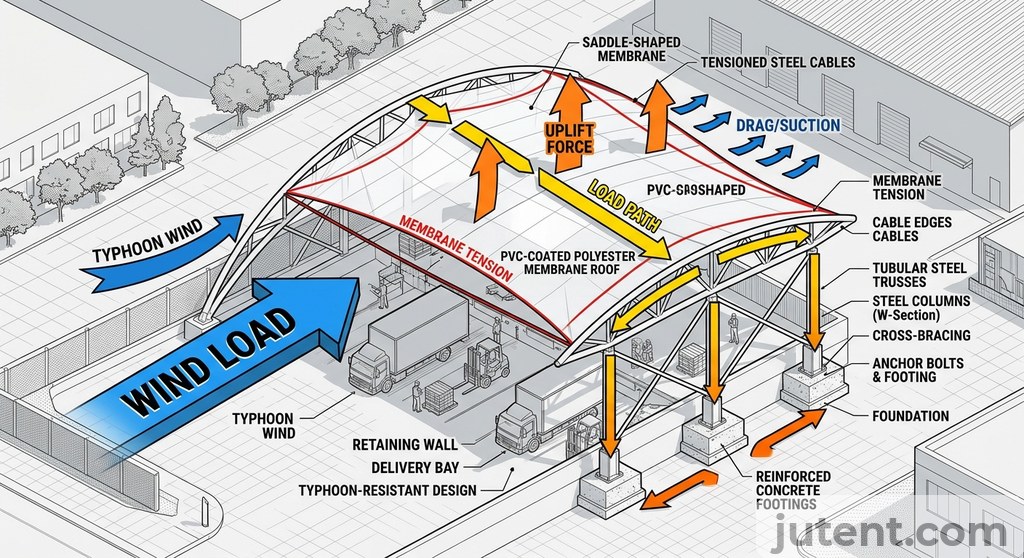
Wind load dictates the primary steel sizing for any مظلة رصيف التحميل in the Philippines. The National Structural Code of the Philippines (NSCP) requires coastal industrial structures to withstand design wind speeds of 200 to 250 km/h. A مظلة رصيف التحميل in Malaysia or Indonesia faces slightly lower baseline wind speeds, typically engineered to 120–160 km/h depending on coastal exposure, but sudden monsoon squalls still demand rigid moment connections and heavy-duty anchoring.
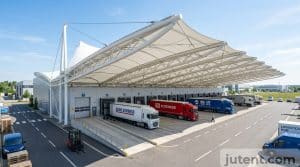
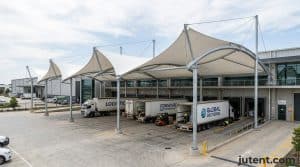
لتلبية هذه الأحمال القصوى دون إعاقة أنصاف أقطار دوران الشاحنات، يتطلب الإطار الإنشائي مقاطع فولاذية كبيرة. تتطلب مظلة متعددة الخلجان بعرض 20 مترًا أعمدة رئيسية باستخدام مقاطع مربعة مجوفة (SHS) بحجم 200×200×8 مم أو عوارض I مكافئة، مثبتة بقواعد متصلة بشكل صلب بقواعد خرسانية مسلحة. الهياكل الشدية المدعومة بالكابلات فعالة جدًا هنا، حيث ينقل الغشاء المشدود إجهاد الرياح بكفاءة إلى الإطار الفولاذي الرئيسي بدلاً من مقاومة ضغط الرياح بشكل ثابت.
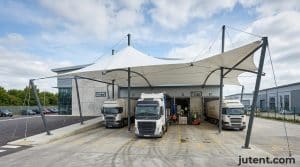
يجب على المقاولين التأكد من أن تصميم المظلة يتكامل مباشرة مع أرصفة التحميل without clashing with dock levelers, impact bumpers, or truck reversing zones. Standard clearance height is 5.5 meters to accommodate high-cube shipping containers. Specifying a typhoon rated مظلة رصيف التحميل requires submitting site-specific wind calculations and finite element analysis (FEA) reports to local authorities before foundation pouring begins.
الحماية من الأشعة فوق البنفسجية في المناخات الاستوائية: متطلبات درجة الغشاء
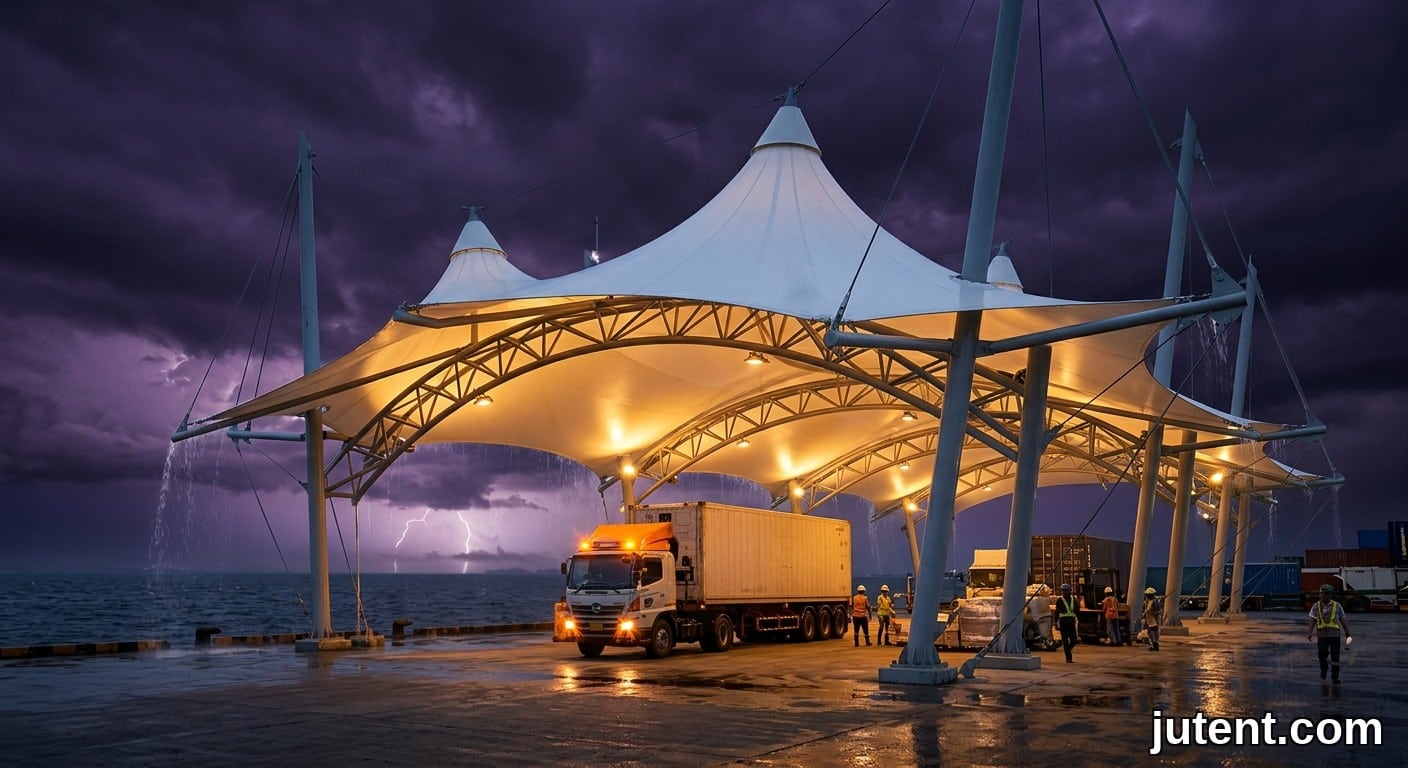
A 1050g/㎡ PVDF membrane — a type of tensile membrane structure with a fluorocarbon coating — is the minimum viable specification for tropical industrial applications. Unlike standard PVC fabric, PVDF reflects UV radiation rather than absorbing it, which is why it's the preferred material for loading dock canopies in high-UV regions.
خطأ المواصفات الذي نراه غالبًا في المناخات الاستوائية هو اختيار PVDF بوزن 950 جم/م² بدلاً من 1050 جم/م² لتقليل النفقات الرأسمالية الأولية. فرق السعر حوالي 3–5 دولار/م². فرق العمر الافتراضي هو 5–8 سنوات. الحساب لا يدعم التوفير. عند وزن 1050 جم/م²، يحافظ الغشاء على قوته الشد ضمن 10% من المواصفات الأصلية بعد 15 عامًا من التعرض لأشعة الشمس الاستوائية.
PVDF vs. PTFE: Which Tensile Membrane for Tropical Loading Docks?
PVDF is cost-effective for industrial canopies, offering excellent UV resistance and self-cleaning properties at a lower price point. PTFE, on the other hand, is a permanent, fire-rated structure that can last over 30 years but comes at a significantly higher cost. For most loading dock applications in Southeast Asia, PVDF provides the best balance of durability and budget, while PTFE is reserved for high-profile, fire-critical installations.
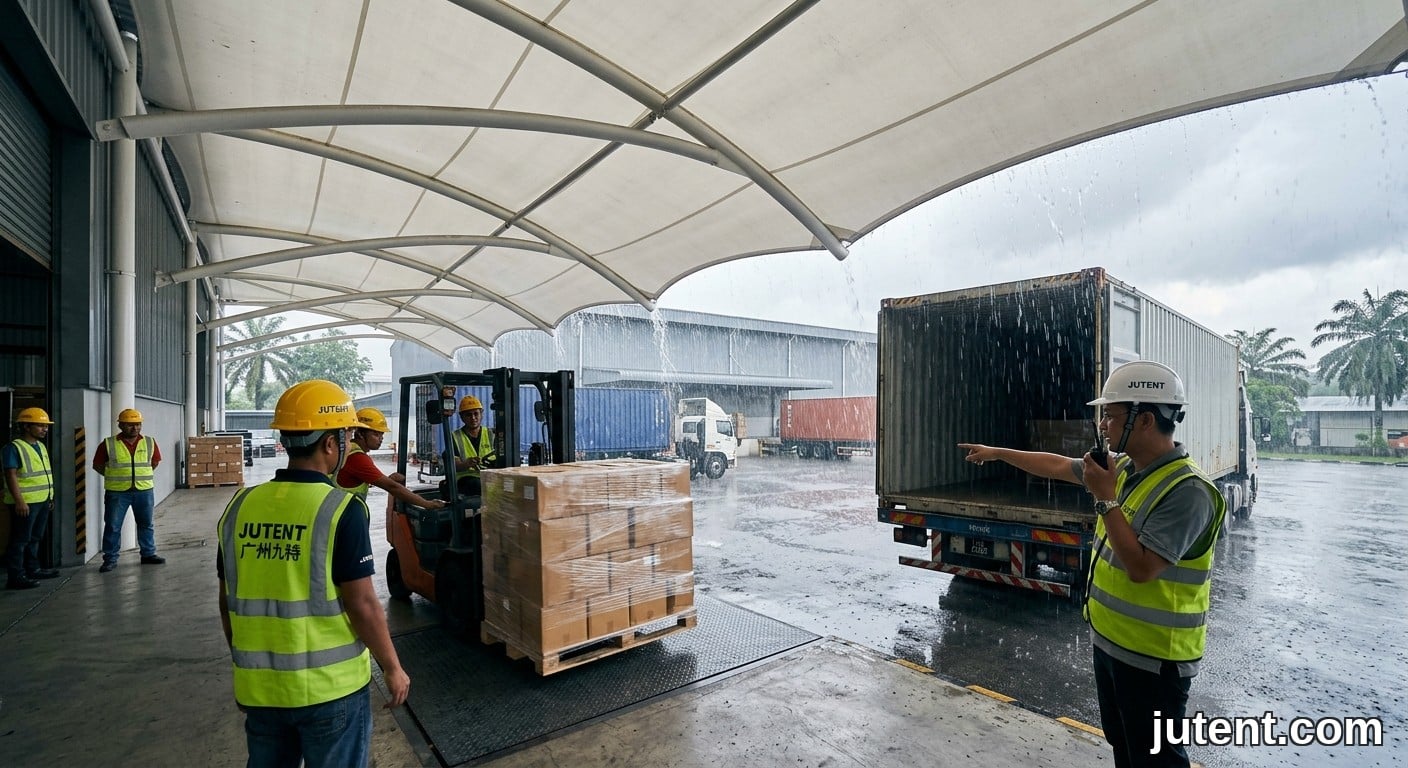
بالنسبة لـ مظلة رصيف التحميل in Indonesia, where high humidity pairs with intense sun, the self-cleaning properties of the PVDF topcoat prevent fungal growth and dirt accumulation from diesel exhaust. Contractors reviewing procurement options should consult our loading dock canopy tensile structure guide for detailed specifications to verify the exact membrane coating thickness and anti-wicking treatments. The fabric must be tensioned to a minimum of 2.5 kN/m to prevent wind flutter, which accelerates wear on the coating and compromises the structural integrity of the entire canopy system.
تصميم الصرف للبيئات عالية الأمطار
Monsoon seasons in Southeast Asia deliver rainfall intensities frequently exceeding 150mm per hour during peak weather events. A loading dock canopy must shed this water instantly to prevent membrane ponding, which adds catastrophic dead load to the steel structure. Water weighs 1,000 kg per cubic meter; even a 50mm deep pond over a standard 10m × 10m structural bay adds 5,000 kg of unintended dead load, enough to permanently yield the st
“`