
“`html
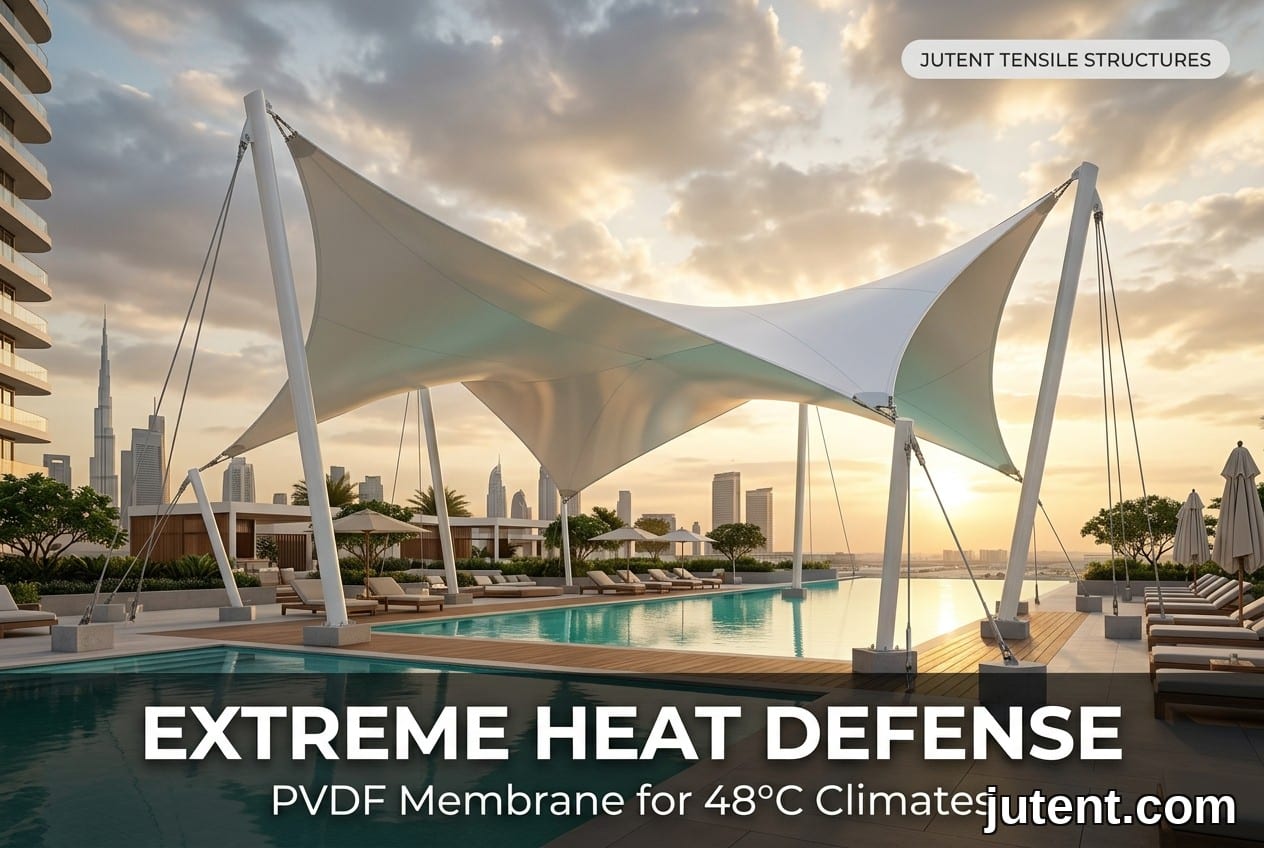
دبي، يوليو. تصل درجات الحرارة المحيطة إلى 48 درجة مئوية، وتتجاوز درجات حرارة السطح على الفولاذ المكشوف 65 درجة مئوية، ويظل مؤشر الأشعة فوق البنفسجية عند 11+ لمدة ستة أشهر من السنة. تحديد hotel tensile canopy design guide for PVDF and PTFE membranes Middle East contractors can actually warrant requires abandoning standard European or North American material assumptions. A heat resistant مظلة شد فندقية in this region is not merely about architectural aesthetics; it is about preventing rapid thermal degradation, managing membrane pre-stress loss under extreme heat, and ensuring wind load compliance across open coastal or desert exposures.
When a hospitality client invests in outdoor shading for pool decks, dining areas, or entrance drop-offs, they expect a structure that maintains its structural integrity and pristine appearance for decades, not just a few seasons. Standard specifications often fail to account for the aggressive combination of high salinity, blowing sand, and relentless solar radiation unique to the Gulf. This guide details the exact engineering specifications required for a مظلة شد فندقية UAE, Saudi Arabia, and Qatari projects demand to prevent premature failure. We will cover membrane selection, structural steel protection, and the specific municipal wind load codes that dictate foundation sizing, giving contractors the exact numbers needed to get the specification right before going to tender.
Gulf Climate: Why Standard Hotel Tensile Canopy (张拉膜结构) Specs Don't Apply for PVDF/PTFE Membranes
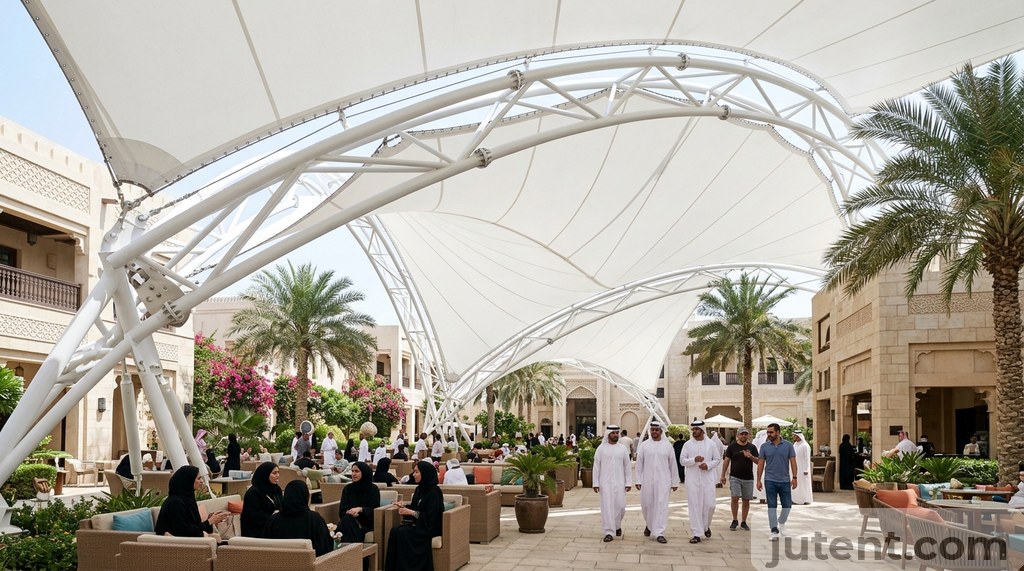
تفرض بيئة التشغيل في دول مجلس التعاون الخليجي قرارات هيكلية ومادية تتجاوز بكثير متطلبات التظليل القياسية. عندما يحدد المقاول هيكل ترفيهي فندقي لمنتجع فاخر في الدوحة أو أبو ظبي، فإن نمط الفشل الأساسي نادرًا ما يكون التآكل الميكانيكي - بل هو التدهور الحراري الشديد.
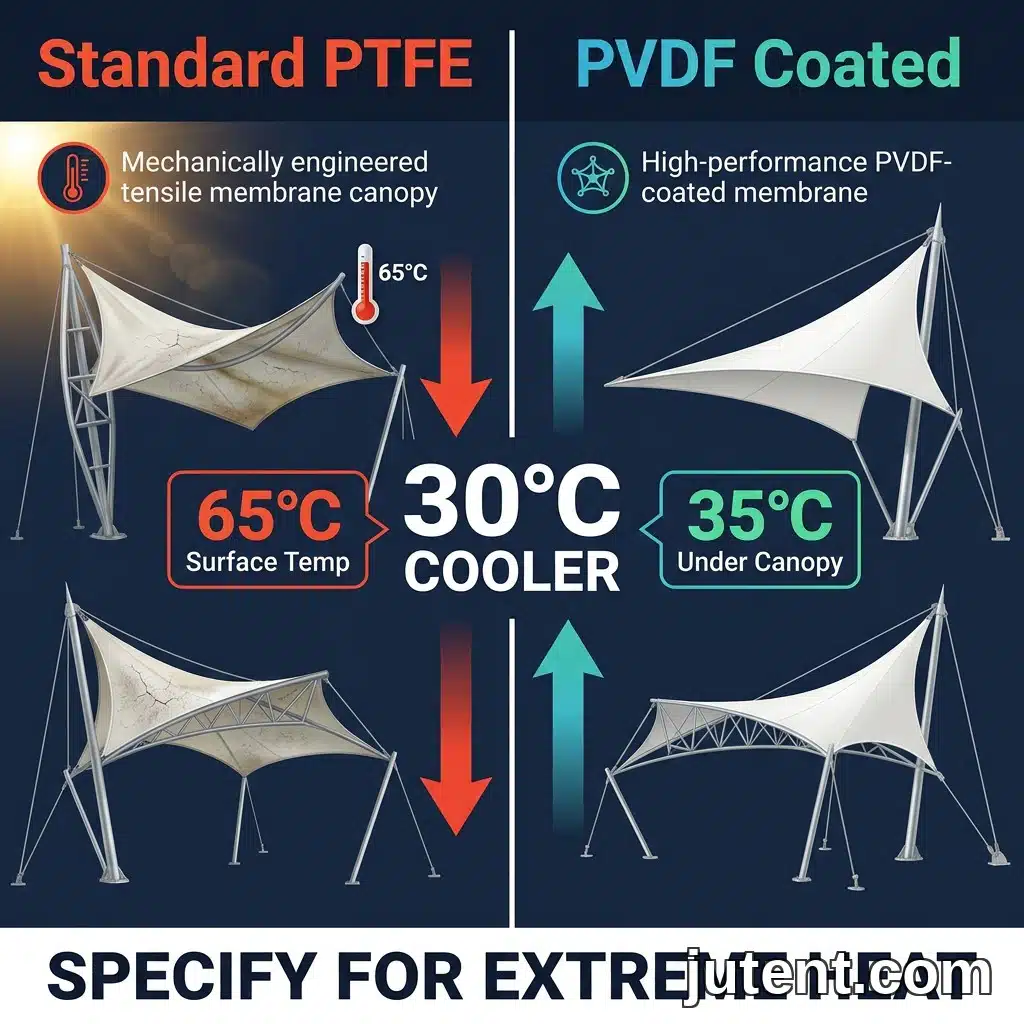
Standard 700g/㎡ to 900g/㎡ PVC membranes (without PVDF coating) fail rapidly in the Gulf—within 24 to 36 months—due to plasticizer migration. Premium PVDF-coated membranes (1050g/㎡) last 15-20 years, while PTFE membranes last 25-30 years. At 45°C ambient temperatures, the plasticizers in lower-grade PVC migrate to the surface. Within 24 to 36 months, the membrane becomes brittle, loses its self-cleaning properties, and begins to discolor from accumulated dust and sand. The extreme diurnal temperature shift—dropping from 45°C during the day to 25°C at night—causes constant expansion and contraction. If the steel frame and tensioning hardware are not engineered for this daily thermal cycling, the membrane loses its pre-stress, leading to dangerous ponding during rare but intense winter rainstorms.
Typical specifications use Q235B or Q355B steel. For Gulf coastal projects, we recommend hot-dip galvanized Q355B steel with minimum 85 microns coating thickness to resist salt spray corrosion., 1050 g/㎡ PVDF or PTFE membrane as standard, and SS304 stainless accessories, with higher grades available when the project requires them.
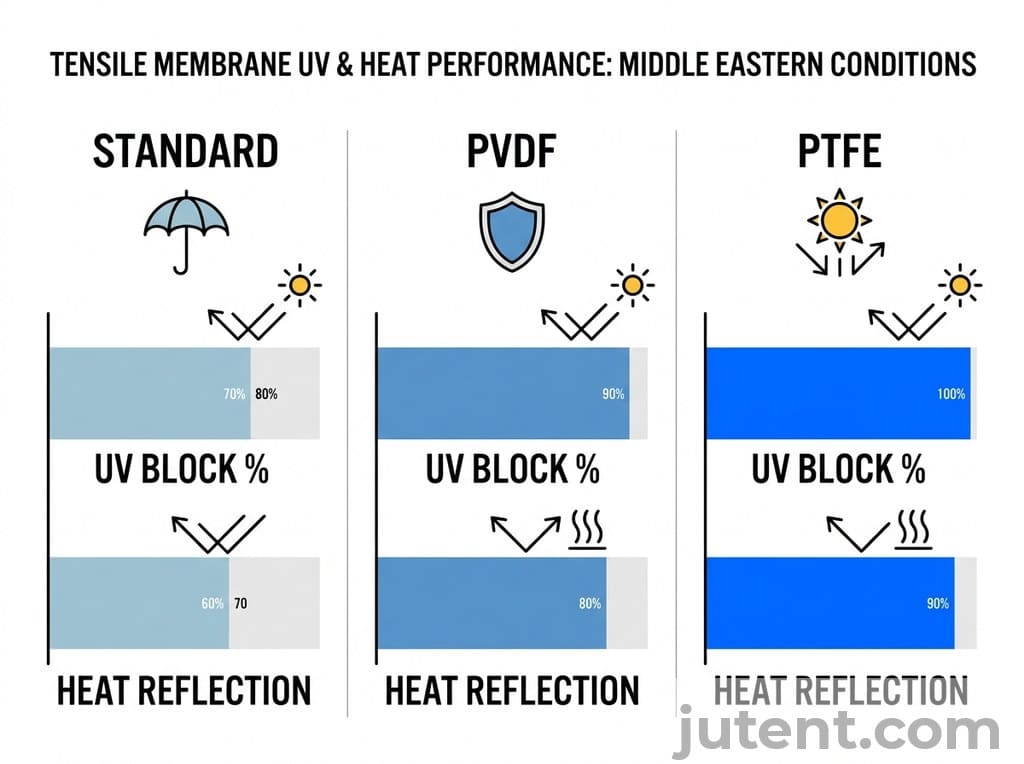
حماية من الأشعة فوق البنفسجية والحرارة: درجة الغشاء لمشاريع الخليج
يجب وصف الحماية من التآكل وعمر الخدمة وفقًا لنظام الحماية المختار وبيئة المشروع وظروف الصيانة، وليس كضمان غير مشروط لعمر الخدمة.
يجب أن يعتمد تخطيط الميزانية على نوع الهيكل، والامتداد الحر، وتصنيف الرياح، ودرجة الغشاء، وحمولة الفولاذ، ونطاق المشروع. للحصول على عرض أسعار دقيق لشروط EXW أو FOB أو CIP أو DDU، يجب مراجعة أبعاد المشروع والمتطلبات الهندسية أولاً.
For detailed structural sizing and material comparisons, contractors should consult our Hotel Tensile Canopy Guide. The membrane specification must also mandate a highly reflective white finish to minimize solar heat gain. Premium PVDF membranes reflect up to 73% of solar energy. This thermal rejection lowers the ambient temperature in the shaded zone below, a baseline requirement for guest comfort in luxury hospitality settings.
حمل الرياح: معايير الإمارات والسعودية
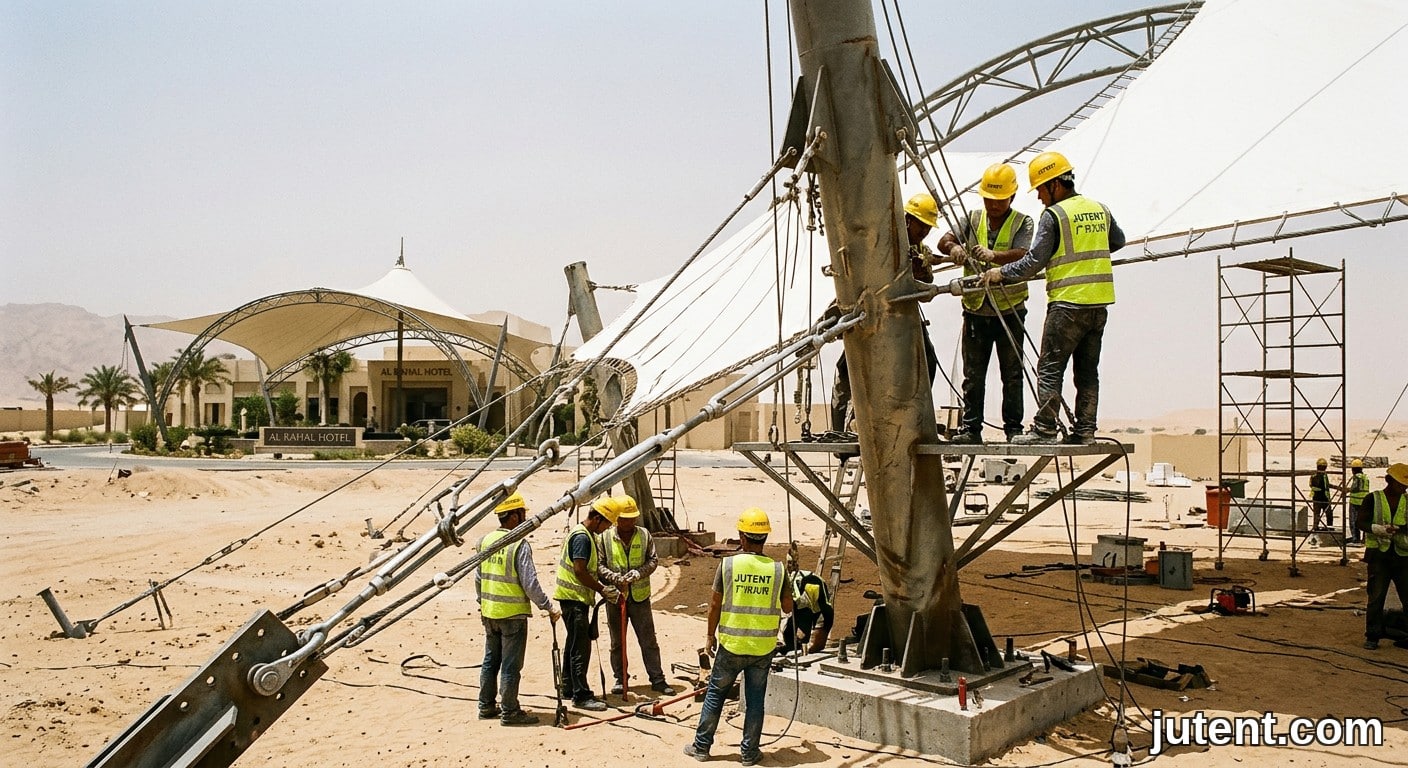
While extreme heat is the primary driver of material degradation, wind dictates the steel tonnage and foundation sizing. A مظلة شد فندقية Saudi Arabia or UAE project must comply with strict local municipal codes, which have become increasingly rigorous regarding open-sided structures.
يجب وصف خبرة الشركة من خلال خبرة التصدير الموثقة وقدرة دعم المشروع بدلاً من الحكايات غير المدعومة عن المشاريع.
In Saudi Arabia, the Saudi Building Code (SBC 301) governs structural loading. SBC 301 Chapter 6 (based on ASCE 7-16) addresses wind loads for tensile structures. For a resort in Jeddah or the Red Sea development area, wind loads must account for sudden coastal squalls. We frequently see contractors under-specify the base plate thickness and anchor bolt embedment depth during the initial tender phase. A standard 400-square-meter conical canopy in these high-wind zones typically requires 25mm to 30mm thick base plates and M24 or M30 chemical anchors embedded at least 400mm into the reinforced concrete footings to safely resist the massive uplift generated by the membrane's aerodynamic profile.
مرجع الحالة: مشاريع في منطقة الخليج
Across 420+ projects globally, including extensive work in extreme climates, the most common installation error we see in the Middle
“`