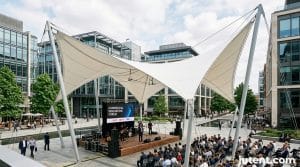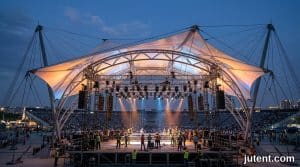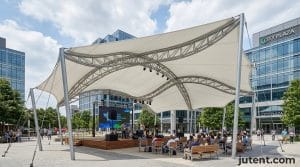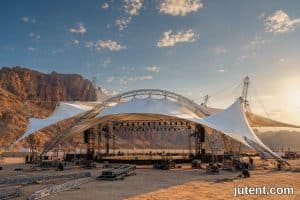

Every amphitheater للمستودع in hot-arid climates must handle peak summer ambient temperatures exceeding 48°C, membrane surface temperatures surpassing 80°C, and extreme UV radiation (UVI 11+). Standard Eurocode or IBC specifications require careful adaptation for these localized environmental loads. This guide covers what structural engineers and contractors in such regions must specify to prevent premature membrane degradation and ensure strict structural compliance.
For a complete overview of tensile membrane structure types suitable for large venues, see our guide on amphitheater roof structure تصميم.
تحديد مظلة لمكان ترفيهي عام واسع النطاق يتطلب هندسة إنشائية دقيقة. يجب أن يضمن الشكل الهندسي خطوط رؤية بصرية وصوتية غير معاقة مع نقل قوى الرياح عالية السرعة بأمان - والتي غالبًا ما تتفاقم بسبب رياح الشمال الإقليمية - إلى الأساسات. في منطقة الخليج، تتعقد هذه المتطلبات الأساسية بسبب دورات التمدد الحراري الشديدة، وتآكل الجسيمات الناتج عن العواصف الرملية، والرطوبة الساحلية عالية الملوحة. خطأ في المواصفات هنا لا يؤدي فقط إلى تدهور جمالي؛ بل يؤدي إلى فقدان سريع لشد الغشاء، وتآكل الفولاذ الناتج عن الكلوريد، واحتمال فشل هيكلي خلال السنوات الثلاث الأولى من التشغيل. عدم حساب الديناميكيات الحرارية المحددة لشبه الجزيرة العربية يؤدي إلى هيكل يتطلب صيانة مستمرة ويشكل مخاطر جسيمة على السلامة العامة.
Contractors must navigate a rigorous matrix of local building codes, advanced material performance metrics, and specialized tensioning techniques. Relying on generic shade structure designs is a guaranteed path to project rejection during municipal or national building code approval phases. This article details the exact PTFE and advanced PVDF material grades, structural steel sizing parameters, and code compliance factors required for successful project delivery in the Gulf climate, providing the precise engineering data needed before going to tender.
Desert Climate: Why Standard Amphitheater Tensile Canopy Specs Don't Apply
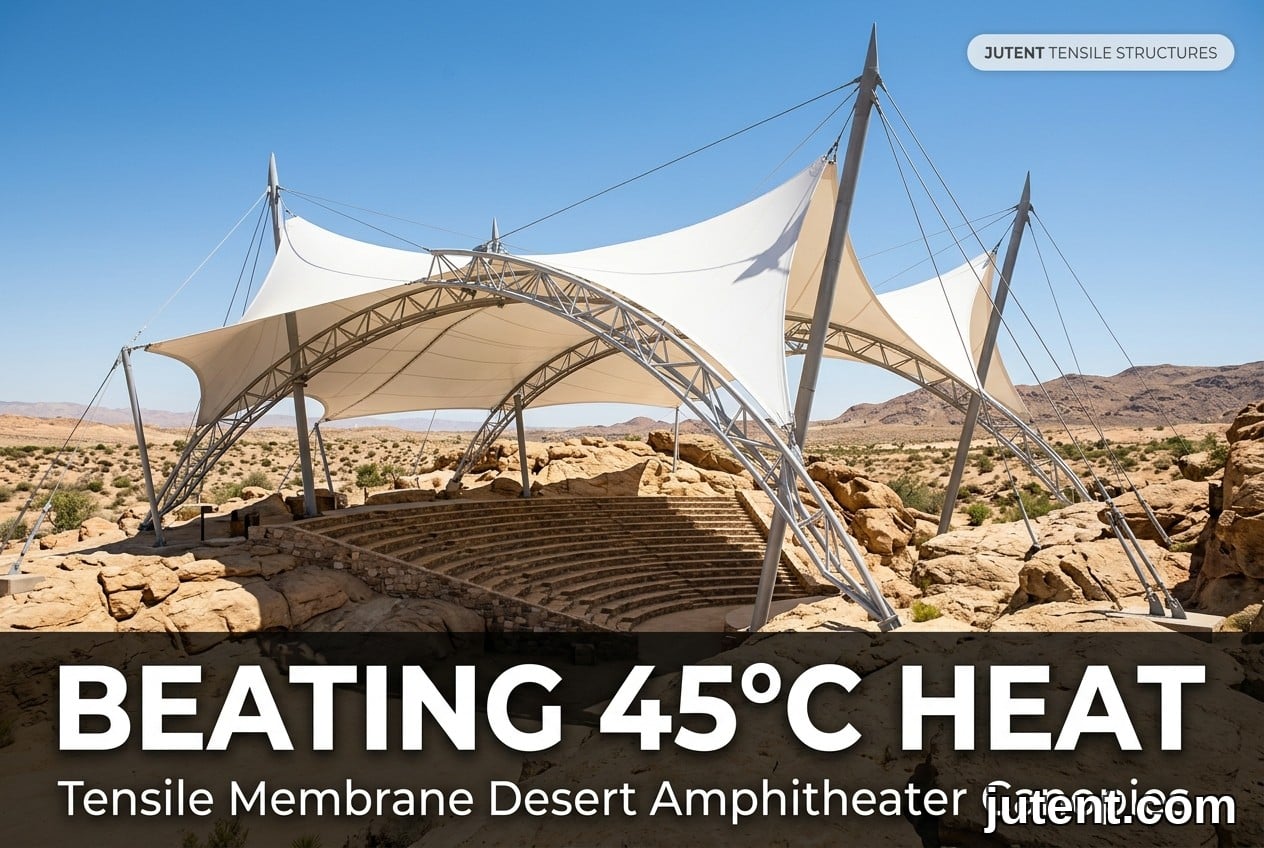
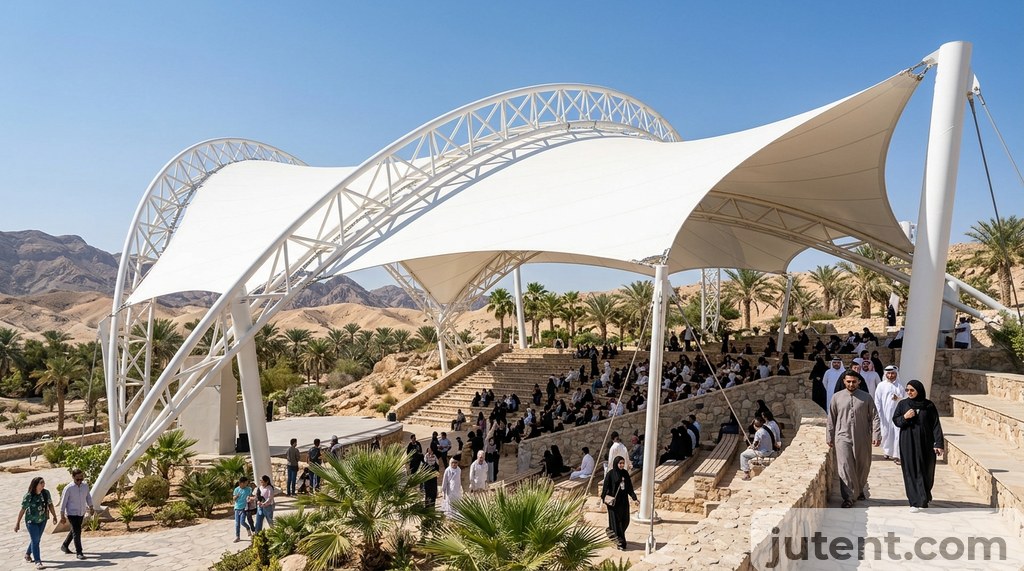
بيئة التشغيل في مجلس التعاون الخليجي (GCC) تكسر الافتراضات القياسية للهندسة المعمارية الشدية. هيكل المدرج المفتوح المصمم للمناخات المعتدلة يعتمد على خطوط أساسية للتمدد الحراري والتعرض للأشعة فوق البنفسجية تفشل في الشرق الأوسط.
While summer ambient temperatures frequently exceed 45°C, the critical metric for a tensile membrane is surface temperature, which reaches 75°C to 80°C under direct solar load. At these extremes, standard 650g/㎡ to 850g/㎡ PVC membranes suffer rapid plasticizer migration. The chemical agents providing flexibility evaporate, causing the material to embrittle, lose pre-stress tension, and tear under wind loads. Engineers must calculate the primary steel's thermal expansion coefficient alongside the membrane's elongation properties to maintain tautness across 40°C day-night temperature swings.
The region also presents severe abrasive conditions. Airborne sand driven by Shamal winds acts as sandpaper against the membrane. Without a correctly specified topcoat, this abrasion strips the protective layer, exposing the base scrim to UV degradation and moisture ingress. In coastal cities like Doha, Abu Dhabi, and Dubai, high atmospheric salinity combines with sand abrasion to accelerate corrosion on steel members and tensioning hardware. Standard hot-dip galvanizing requires a minimum zinc thickness of 85 microns and should be supplemented with a marine-grade epoxy topcoat system for coastal installations.
UV and Heat Protection: Membrane Grade for Desert Projects
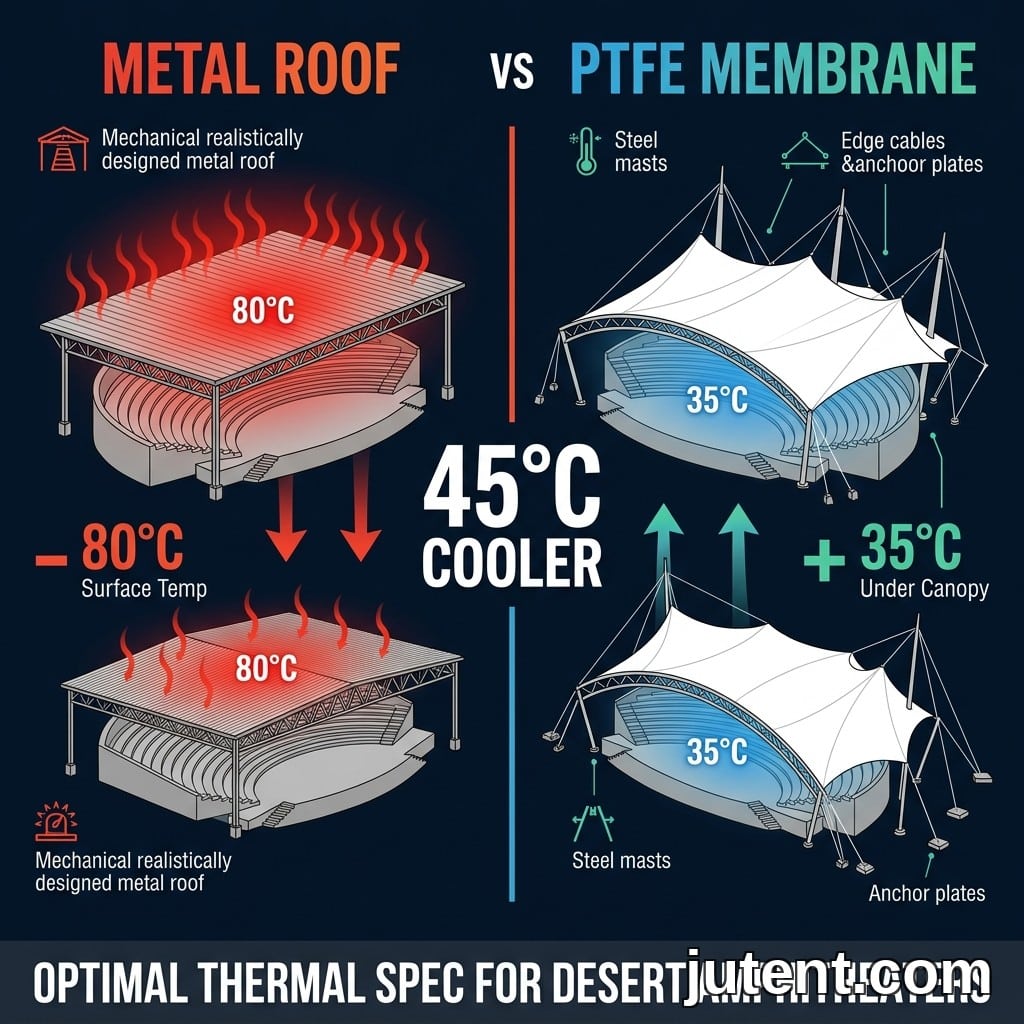
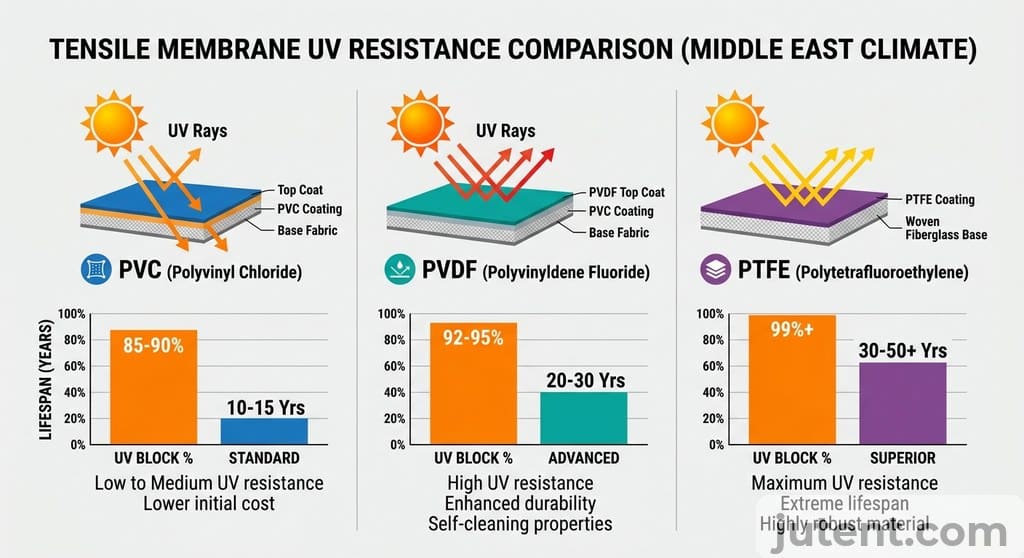
يتعامل PVDF أو PTFE عالي الجودة مع 100% من مشاريع منطقة الخليج. طلاء PVC الأكريليكي القياسي مناسب فقط للهياكل المؤقتة بعمر تصميم أقل من 24 شهرًا.
لعمر افتراضي يتراوح بين 15 و20 عامًا، حدد غشاء PVDF بوزن 1050 جم/م² إلى 1200 جم/م². اشترط طبقة علوية عالية التركيز من ثاني أكسيد التيتانيوم (TiO2) لتعكس الأشعة فوق البنفسجية بدلاً من امتصاصها. يخفض ذلك درجات حرارة السطح، ويخفف من التدهور الحراري، ويبرد الجمهور بالأسفل. يتطلب PVDF عالي الجودة أيضًا لحامًا عالي التردد متخصصًا لضمان أن قوة التماس تطابق النسيج الأساسي، مما يمنع الفشل تحت الحرارة المحيطة العالية.
بالنسبة للمشاريع البارزة التي تتطلب عمر تصميم يزيد عن 25 عامًا، فإن الألياف الزجاجية المطلية بـ PTFE (بولي تترافلوروإيثيلين) هي المواصفة النهائية. PTFE خامل كيميائيًا ومحصن ضد التدهور الناتج عن الأشعة فوق البنفسجية. على الرغم من ارتفاع التكلفة الأولية للمواد بنسبة 40% إلى 60% مقارنة بـ PVDF، إلا أنه يقاوم التقصف تحت الحرارة الشديدة. يبيض بشكل طبيعي إلى اللون الأبيض اللامع تحت ضوء الشمس، محافظًا على انعكاسية شمسية عالية.
When reviewing an Amphitheater Tensile Canopy Guide, explicitly state the required tensile strength retention. A compliant membrane for hot-arid climates should maintain at least 90% of its original tensile strength after 10 years of exposure to UV Index 11+ conditions, as verified by ASTM D751 or equivalent testing. Lower retention risks structural sagging.
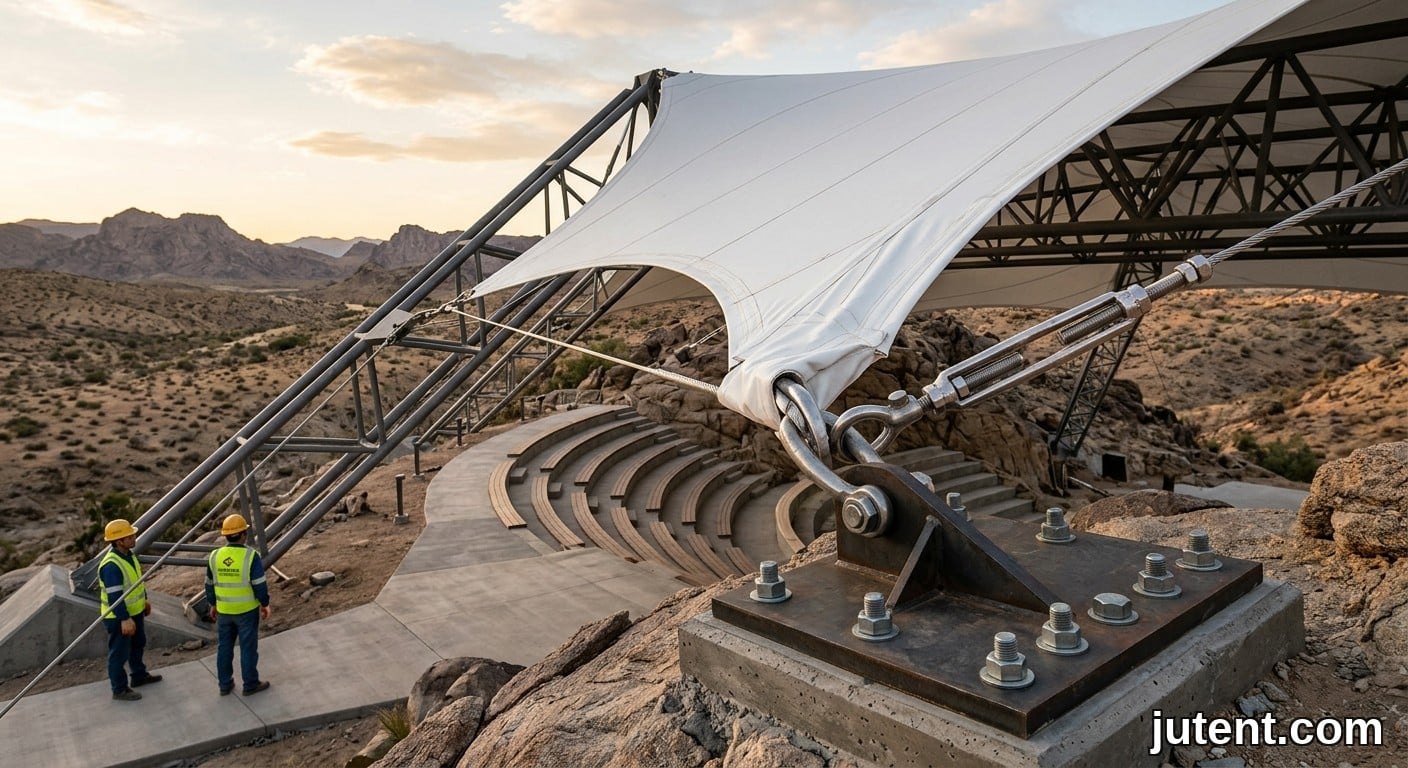
Compare PVDF vs PTFE membrane options for your project in our detailed material comparison.
حمل الرياح: معايير الإمارات والسعودية
Wind engineering dictates primary steel sizing and foundation design for any amphitheater tensile canopy UAE or Saudi project. Open-sided amphitheaters generate high uplift forces during wind events, r