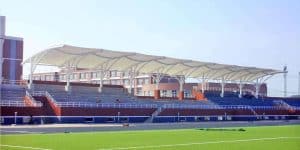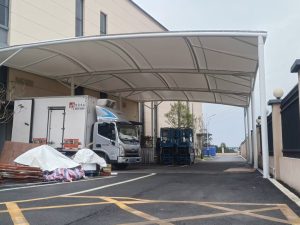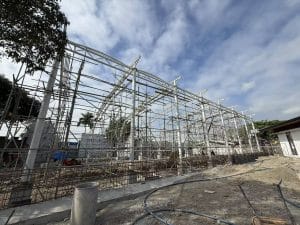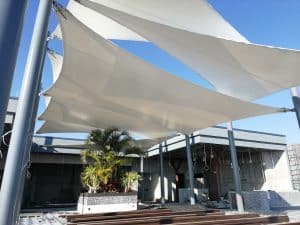

The Structural Realities of High-Traffic Facilities
Transportation infrastructure—from regional toll plazas to international airport drop-off zones—demands strict adherence to safety regulations and operational continuity. Prolonged construction cycles create unacceptable traffic bottlenecks and revenue loss. This operational reality is driving procurement managers to specify a modern transport hub roofing system over conventional concrete or heavy steel canopies.
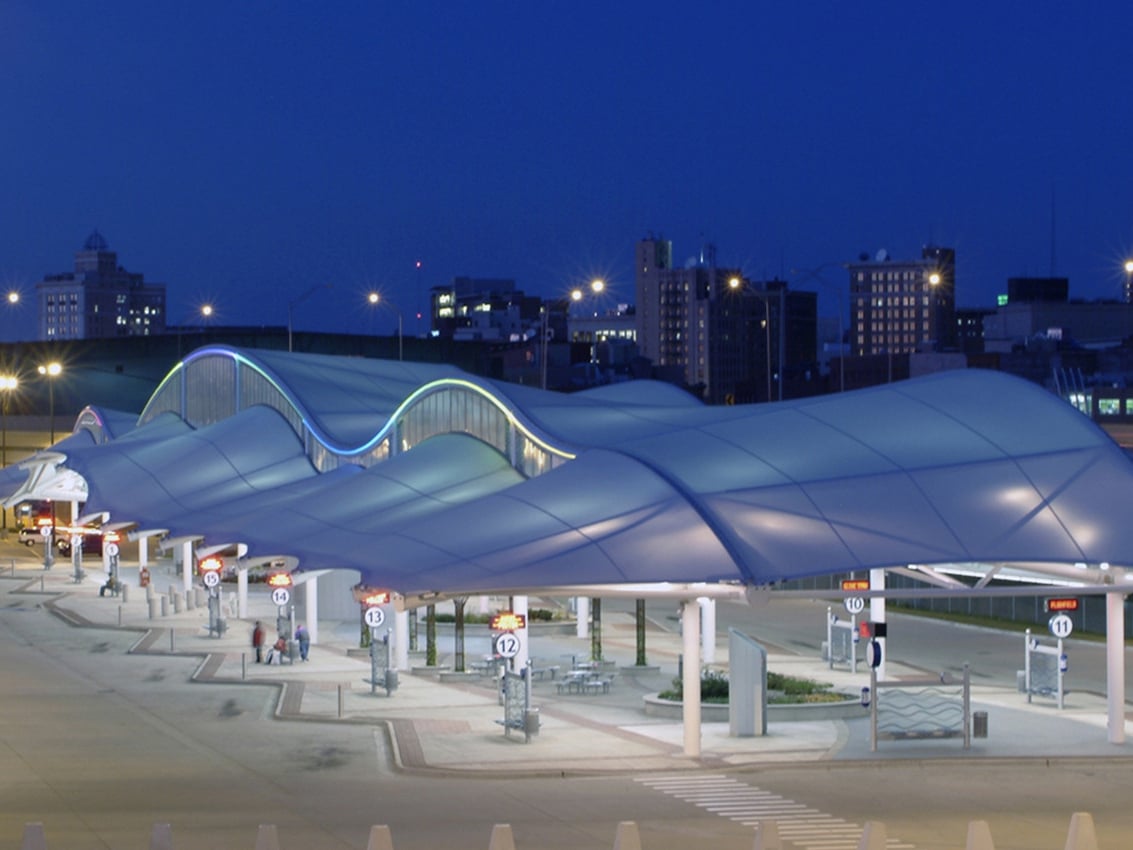
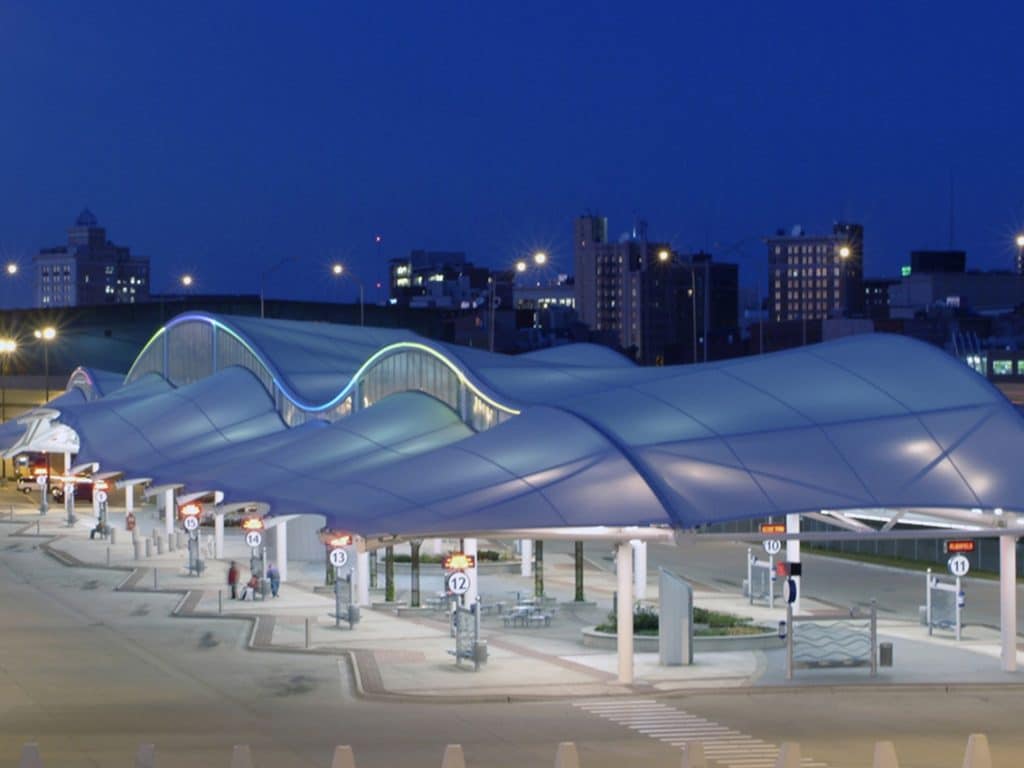
By engineering systems that transfer loads through tension rather than rigid mass, a tensile transport roof significantly reduces the required structural steel tonnage. This translates directly into minimized foundation requirements, faster on-site assembly, and virtually zero disruption to active transit lanes.
Cost Breakdown: Fabric vs Metal Roofs for Bus Terminals
When evaluating fabric vs metal roofs for bus terminals or railway platforms, comparing only the initial square-meter price creates an incomplete financial picture. True procurement strategy must account for shipping, groundworks, and lifecycle efficiency.
- Shipping Consolidation: Architectural membranes are fabricated off-site and folded for transit. This allows a specialized tensile transport roof manufacturer to pack massive square footage into standard shipping containers, bypassing the exorbitant oversized freight costs associated with rigid metal panels.
- Foundation Savings: The drastically lower dead load of fabric architecture limits the need for deep, intensive concrete footings, directly driving down the overall bus terminal shelter cost per unit.
- Operational Overhead: High light-transmission fabrics allow for daylight harvesting, creating naturally lit, energy efficient station roofing systems that drastically reduce daytime electrical consumption.
Material Specification: Assessing Life Cycle Costs
Selecting the appropriate architectural membrane dictates the canopy's maintenance schedule and capital expenditure lifespan. Facility managers must carefully weigh the life cycle cost of PTFE vs PVC for airports and transit hubs.
| Membrane Specification | Structural Lifespan | Key Engineering Attributes |
|---|---|---|
| Long-life PVC transit membrane (PVDF Coated) |
15 - 20 Years | Highly flexible, cost-effective, easily welded on-site. Ideal for mid-term infrastructure, parking canopies, and modular bus shelters. |
| PTFE membrane for transit hubs (Teflon Coated Fiberglass) |
30+ Years | Extreme chemical and UV resistance, Class-A fire rating, highly self-cleaning. The definitive choice for permanent airport terminals and grand railway stations. |
Common Mistakes to Avoid in Transport Hub Roofing Tenders
Procuring large-span architectural structures involves complex engineering variables. Failing to address these in the planning phase leads to hidden costs and structural failures.
- Underestimating Aerodynamic Forces: Open-sided structures act as large sails. Ignoring specific airport terminal roof wind load requirements for cantilevered designs can result in fabric tearing or steel node fatigue during extreme weather events.
- Overlooking Local Pollution Factors: Designing airport curbside canopy systems without accounting for heavy exhaust fumes leads to rapid discoloration. Specifying standard acrylic top-coats instead of premium PVDF or TiO2 treatments guarantees inflated long-term cleaning expenses.
- Poor Drainage Engineering: Flat or under-tensioned fabric areas will suffer from water ponding. A proper transport hub roofing tender must demand precise 3D form-finding to ensure automated runoff and integrated siphonic drainage systems within the steel columns.
Secure Your Infrastructure Investment
A reliable transportation canopy balances architectural form with rigorous structural engineering. Partnering with a specialized manufacturer ensures your project meets local building codes, withstands environmental stresses, and is delivered within a strict operational timeframe.