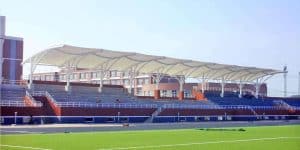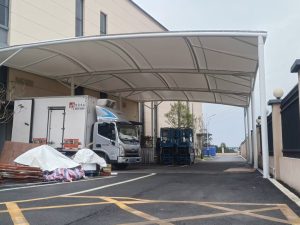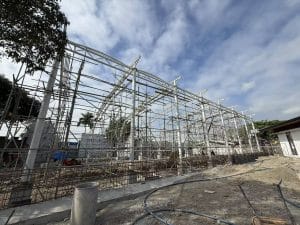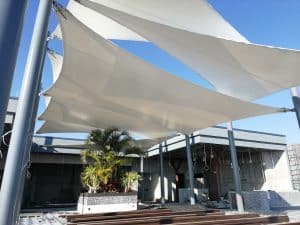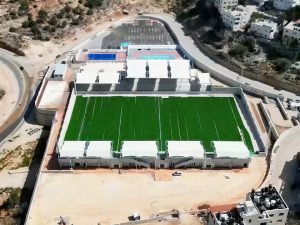

Designing an architectural membrane system in a high-solar, coastal desert environment like Sharm El-Sheikh requires a rigorous structural response. Extreme ultraviolet (UV) radiation, highly corrosive saline-alkali air, and complex wind load dynamics mean a commercial canopy can no longer function as a passive shading element. It must be engineered as an active environmental control and structural tensioning system, leveraging form-finding software to achieve massive, column-free spans while maintaining long-term material integrity.
Thermal Dynamics & Advanced Material Specification
To combat the intense heat of the Sinai Peninsula, structural engineers bypass standard shade cloths in favor of heavy-duty architectural membrane materials, specifically 1050g/㎡ PVDF-coated polyester or PTFE fiberglass. From a thermodynamic perspective, these specific titanium-dioxide coatings deliver a high Solar Reflectance Index (SRI). They reflect approximately 70% of incident solar thermal energy before it penetrates the structure.
While the fabric roof system absorbs roughly 17% of the heat, only about 13% is transmitted to the space below. Simultaneously, the membrane permits up to 20% light transmittance. This creates a highly functional shopping mall canopy or resort walkway that is flooded with soft, diffused daylight, eliminating glare and drastically reducing daytime lighting loads without the greenhouse heating effect associated with glass atriums.
Managing Coastal Wind Loads with Double Curvature
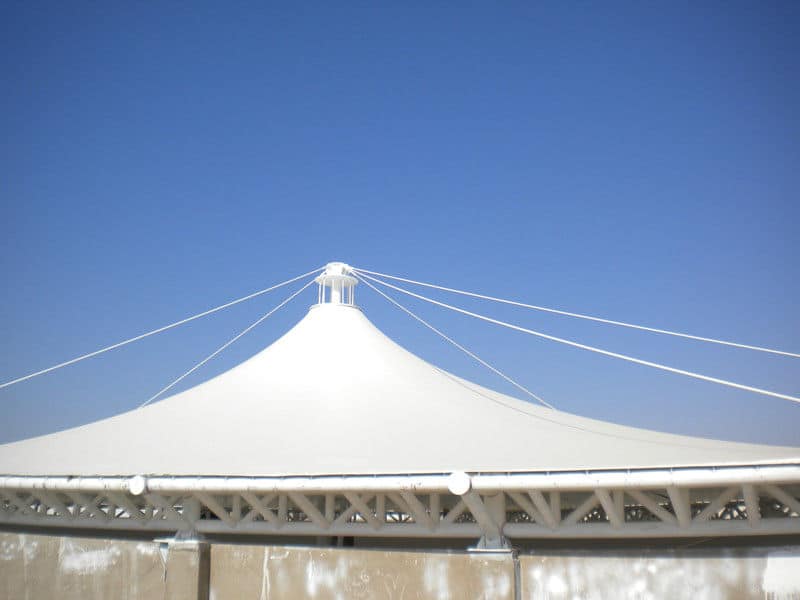
The Red Sea coastline subjects structures to persistent, high-velocity wind turbulence. To prevent fabric flutter and premature fatigue at the connection nodes, a tensile plaza roof relies entirely on pre-tensioned, anticlastic (double-curved) geometries—such as hyperbolic paraboloids or conic forms.
This dual curvature ensures the membrane is tensioned in opposite directions. When dynamic wind uplifts or down-drafts occur, the load is immediately resolved into pure axial forces. These forces are then safely transferred through stainless steel edge cables into the primary Q355B hot-dip galvanized steel sub-structure, ensuring zero localized stress accumulation even during severe coastal storms.
Maximizing ROI with Large-Span, Column-Free Architecture
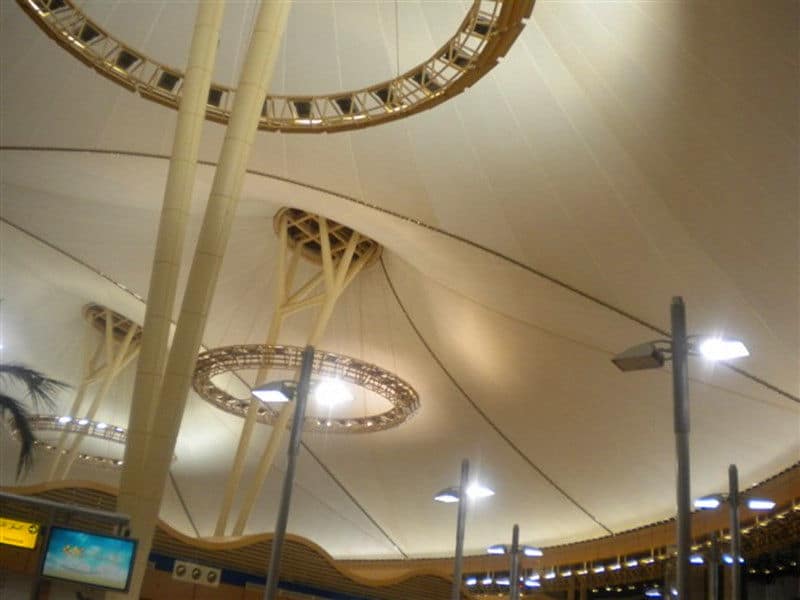
Traditional rigid roofing requires intrusive, heavy load-bearing columns that disrupt pedestrian flow and limit spatial flexibility. In contrast, an engineered commercial membrane roof weighs approximately 1 to 1.5 kg/m². This extraordinary strength-to-weight ratio allows structural engineers to span distances exceeding 50 meters without intermediate support.
For developers and architects, this translates to maximum usable square footage. Whether deploying a retail shading system, an expansive outdoor dining pavilion, or a statement mall entrance canopy, the column-free footprint accelerates installation timelines and significantly improves the commercial viability of the site.
Strict Compliance: Fire Resistance & Seismic Stability
In high-density public spaces, safety compliance drives design. Modern PVDF and PTFE structural fabrics are inherently flame-retardant, rigorously tested to meet international fire protection standards (such as DIN 4102 B1/A2 and NFPA 701). In the event of a fire, the membrane will melt locally rather than propagate flames or release burning droplets.
Furthermore, the extreme lightweight nature of these structures provides a distinct advantage in seismic engineering. Because the mass of a fabric canopy is a fraction of steel-and-concrete alternatives, inertial forces during an earthquake are negligible. The flexible tensioned system easily absorbs seismic displacement, offering unparalleled structural reliability.
- Reflects up to 70% solar heat via premium PVDF / TiO2 coatings.
- Engineered Q355B galvanized steel frames withstand severe coastal wind loads.
- Large-span capability ensures 100% column-free commercial spaces.
- Meets DIN 4102 B1/A2 international fire safety compliances.