

For contractors in Nigeria, Kenya, South Africa, and other African markets, sourcing a sports structure d'ombrage de tribunal locally often means limited options and high prices. The demand for modern, durable, and aesthetically pleasing sports facilities is growing across the continent, driven by urbanisation, increased investment in education, and a rising interest in sports. However, local manufacturing capabilities for specialised tensile structures often struggle to meet this demand in terms of scale, material quality, and design complexity. This gap frequently leads contractors to explore international sourcing, particularly from established manufacturers in China, who offer competitive pricing, advanced engineering, and a proven track record in delivering large-scale projects globally. Understanding the practicalities of importing these structures is key to successfully delivering projects that meet international standards and client expectations.
Why African Contractors Source Tensile Structures from China
The primary drivers for African contractors to import tensile structures from China are a combination of cost-effectiveness, access to advanced engineering, and a wider range of high-quality materials. Local fabrication often faces challenges such as limited access to specific membrane types (like high-grade PVDF or PTFE), specialised steel processing equipment, and experienced tensile structure design engineers. This can result in higher production costs, longer lead times, and designs that may not fully optimise for local climate conditions or architectural aspirations.
Les fabricants chinois, comme Jutent Engineering, bénéficient d'économies d'échelle, de chaînes d'approvisionnement efficaces et d'une vaste expérience dans la fabrication de structures de tension complexes. Cela leur permet d'offrir des prix plus compétitifs pour les structures d'ombrage de terrains de sport à grande portée. Ils fournissent un accès à des matériaux certifiés, notamment de l'acier de qualité Q235B et Q355B avec des traitements de surface approuvés comme l'apprêt riche en zinc époxy + couche de finition acrylique ou la galvanisation à chaud, ainsi que des membranes haute performance telles que le PVDF 1050 g/m² (garantie de 10 ans, durée de vie de 15+ ans) ou le PTFE (garantie de 15 ans, durée de vie de 25+ ans). Ces spécifications de matériaux sont souvent difficiles à égaler localement. Basé sur l'expérience de Jutent dans plus de 400 projets dans plus de 30 pays, l'importation garantit que les entrepreneurs peuvent livrer des projets non seulement rentables, mais aussi répondant à des normes internationales strictes de qualité et de durabilité, cruciales pour l'environnement exigeant africain.
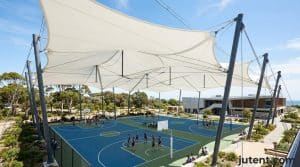
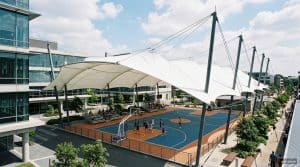
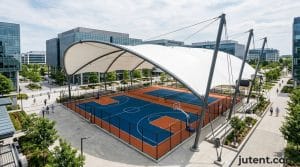
Sport Court Shade
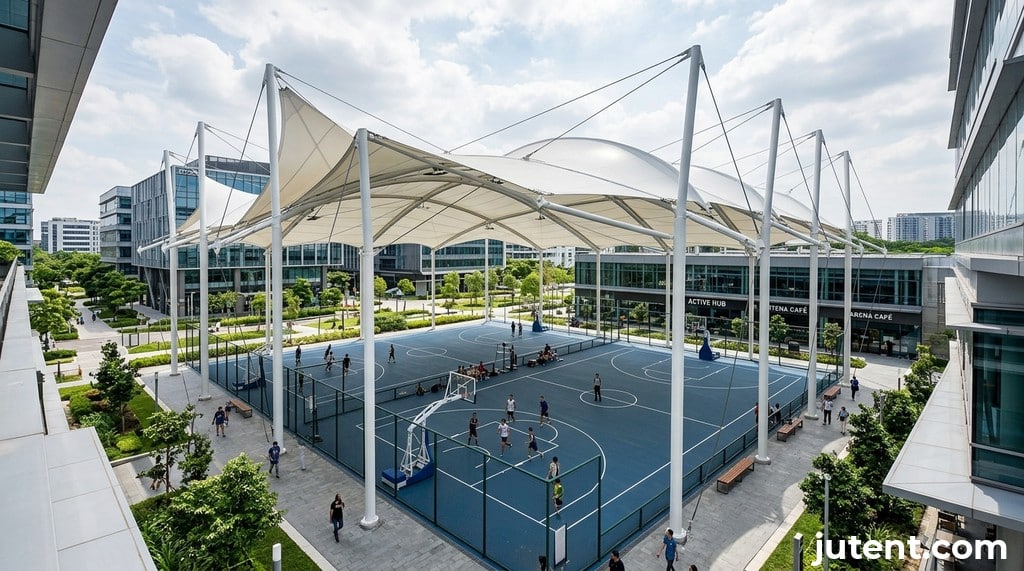
What to Specify When Importing: Membrane Grade, Steel, and Documentation
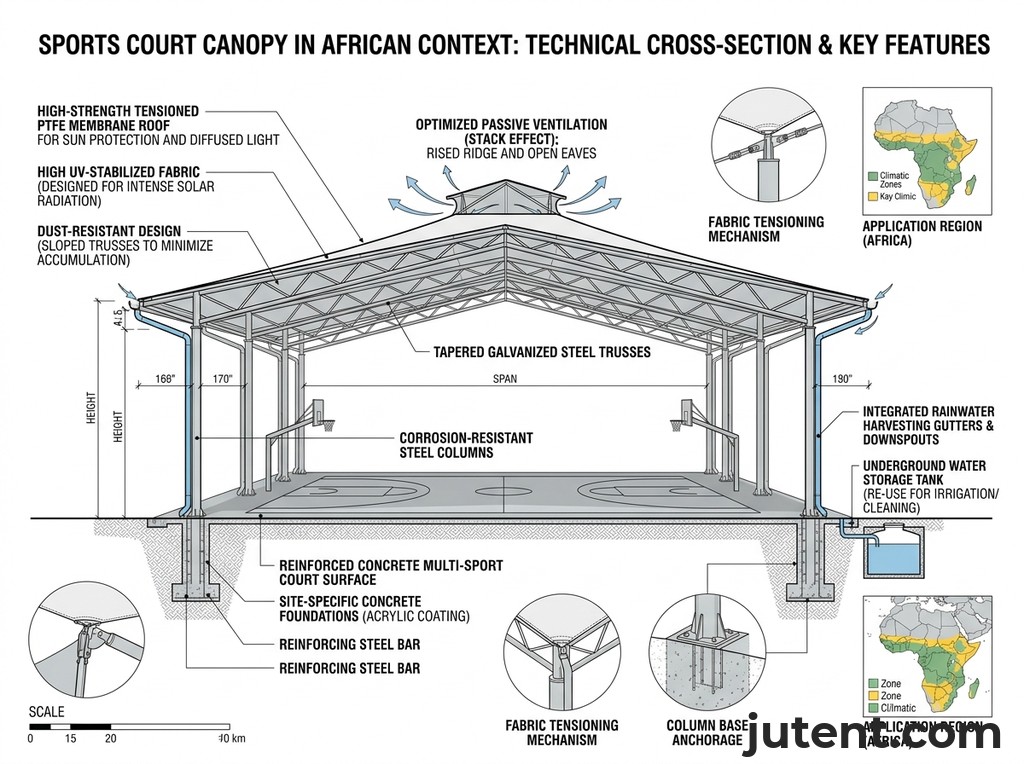
When importing a sports structure d'ombrage de tribunal, precise specification is paramount to ensure the final product meets project requirements and local conditions. The choice of membrane grade is critical for longevity and performance. PVDF membranes are a popular choice due to their excellent UV resistance, self-cleaning properties, and a typical 10-year warranty with a 15+ year service life. For projects requiring superior durability and extreme weather resistance, PTFE membranes offer a 15-year warranty and a 25+ year service life, though at a higher cost (add ~$20/m² to PVDF range). The membrane weight, typically 1050 g/m², should be specified to withstand wind loads and UV exposure common in Africa.
Steel specifications are equally important. Jutent uses Q235B and Q355B grade steel, which offers excellent structural integrity. For surface treatment, specifying hot-dip galvanizing or an epoxy zinc-rich primer + fluorocarbon topcoat is essential for corrosion protection in humid or coastal African environments. SS304 is standard for fittings, with SS316 available as an optional upgrade for enhanced corrosion resistance.
Une documentation complète est essentielle pour une importation et une installation fluides. Cela comprend des plans de conception détaillés, des calculs de structure (tenant compte des charges de vent et sismiques locales), des spécifications de matériaux et une nomenclature complète. Pour les projets d'exportation, Jutent peut fournir des plans de conception, des calculs, des spécifications de matériaux, des manuels d'installation et une assistance à distance gratuite, sous réserve de la portée du projet et des conditions contractuelles. Ces documents sont cruciaux pour obtenir les permis de construire locaux et garantir la conformité avec les codes du bâtiment régionaux, qui varient considérablement en Afrique.
Tensile Shade Structures Sports Courts Guide
Shipping and Logistics: How Structures Are Packed and Delivered to African Ports
The logistics of shipping large tensile structures from China to African ports are streamlined through efficient packing and containerisation. Jutent specialises in optimising the packing process to minimise shipping costs and ensure the safe arrival of all components. Steel structural elements are precisely cut to container-friendly lengths and then flat-packed. This method maximises container space, reducing the number of containers required and, consequently, the overall shipping expense. All steel components are clearly marked according to the installation drawings for easy identification upon arrival.
Membrane panels, which are custom-fabricated to the exact project dimensions, are carefully folded and packed into robust, protective crates or heavy-duty bags. This prevents damage during transit and ensures the membrane arrives in pristine condition. Smaller components, such as cables, connectors, bolts (SS304 standard, SS316 optional), and tensioning hardware, are organised into clearly labelled boxes. A thorough packing list accompanies every shipment, detailing the contents of each package, which is essential for customs clearance and inventory management at the destination port.
Un conteneur maritime standard de 20 pieds peut généralement accueillir une toiture de terrain de sport de 400 à 600 m², selon la complexité de la conception et le volume de la charpente métallique. Pour les projets plus importants, plusieurs conteneurs ou des conteneurs de 40 pieds sont utilisés. Jutent travaille avec des compagnies maritimes réputées pour livrer dans les principaux ports africains tels que Durban, Mombasa, Lagos et Tema, fournissant des informations de suivi et aidant à la préparation des documents d'expédition nécessaires pour faciliter un processus douanier fluide.
Installation Support: What the Manufacturer Provides Remotely
Successful installation of a tensile structure, especially for contractors new to this specific type of construction, relies heavily on clear guidance and support from the manufacturer. Jutent Engineering understands the complexities involved and provides thorough remote installation support to African contractors, ensuring projects are completed efficiently and correctly.
Upon shipment, every project includes a detailed, step-by-step installation manual. This manual features clear diagrams, component lists, and safety guidelines, designed to be easily understood by local construction teams. The manual outlines the sequence of assembly, from erecting the steel framework to tensioning the membrane, and provides specific instructions for handling the specialised materials.
Au-delà de la documentation, Jutent propose une assistance à distance gratuite. Cela implique généralement des canaux de communication directs, tels que des appels vidéo, des e-mails et des applications de messagerie, où l'équipe sur site de l'entrepreneur peut consulter les ingénieurs expérimentés de Jutent. Cela permet une résolution de problèmes en temps réel, la clarification des instructions et une vérification visuelle de l'avancement. Les ingénieurs peuvent examiner des photos ou des vidéos du site, fournir un retour immédiat et guider l'équipe face à tous les défis rencontrés. Cette assistance à distance est inestimable pour garantir l'intégrité structurelle et la qualité esthétique de la structure d'ombrage du terrain de sport installée. Pour les projets nécessitant un niveau plus élevé de supervision directe, une supervision sur site par un ingénieur de Jutent est disponible en tant que service payant, offrant des conseils pratiques et un contrôle qualité.
Comparaison des coûts : fabrication importée vs. locale sur les principaux marchés africains
When considering a sports court shade structure, contractors in Africa often weigh the costs of importing against local fabrication. While local options might seem appealing due to proximity, a detailed cost comparison often reveals the economic advantages of importing from specialised manufacturers like Jutent.
Local fabrication in markets like Nigeria, Kenya, or South Africa can incur significant costs due to several factors. These include the higher price of specialised materials (high-grade PVDF or PTFE membranes, certified structural steel), limited access to advanced fabrication machinery, and the relatively smaller scale of local operations. This often results in higher per-unit costs and longer lead times for custom tensile structures. local expertise in complex tensile engineering may be scarce, potentially leading to less optimised designs or higher labour costs for specialised tasks.
Importing from China, conversely, benefits from economies of scale and efficient production processes. For a standard PVDF membrane, simple form sports court canopy, the EXW (Ex Works) price from Jutent typically ranges from $40–$70/m². For more complex forms, this might be $60–$90/m². PTFE membranes would add approximately $20/m² to these ranges. While these prices are EXW and do not include shipping, customs duties, or local transport, the overall landed cost often remains highly competitive.
| Facteur de coût | Fabrication locale (Afrique) | Importation de Chine (Jutent) |
| :————————– | :————————————————————————————————————————————————————————————————————————————————————————————————————————————————————————————————————————————————————————————————————————————————————————————————————————————————————————————————————————————————————————————————————————————————————————————————————————————————————————————————————————————————————————————————————————————————————————————————————————————————————————————————————————————————————————————————————————————————————————————————————————————————————————————————————————————————————————————————————————————————————————————————————————————————————————————————————————————————————————————————————————————————————————————————————————————————————————————————————————————————————————————————————————————————————————————————————————————————————————————————————————————————————————————————————————————————————————————————————————————————————————————————————————————————————————————————————————————————————————————————————————————————————————————————————————————————————————————————————————————————————————————————————————————————————————————————————————————————————————————————————————————————————————————————————————————————————————————————————————————————————————————————————————————————————————————————————————————————————————————————————————————————————————————————————————————————————————————————————————————————————————————————————————————————————————————————————————————————————————————————————————————————————————————————————————————————————————————————————————————————————————————————————————————————————————————————————————————————————————————————————————————————————————————————————————————————————————————————————————————————————————————————————————————————————————————————————————————————————————————————————————————————————————————————————————————————————————————————————————————————————————————————————————————————————————————————————————————————————————————————————————————————————————————————————————————————————————————————————————————————————————————————————————————————————————————————————————————————————————————————————————————————————————————————————————————————————————————————————————————————————————————————————————————————————————————————————————————————————————————————————————————————————————————————————————————————————————————————————————————————————————————————————————————————————————————————————————————————————————————————————————————————————————————————————————————————————————————————————————————————————————————————————————————————————————————————————————————————————————————————————————————————————————————————————————————————————————————————————————————————————————————————————————————————————————————————————————————————————————————————————————————————————————————————————————————————————————————————————————————————————————————————————————————————————————————————————————————————————————————————————————————————————————————————————————————————————————————————————————————————————————————————————————————————————————————————————————————————————————————————————————————————————————————————————————————————————————————————————————————————————————————————————————————————————————————————————————————————————————————————————————————————————————————————————————————————————————————————————————————————————————————————————————————————————————————————————————————————————————————————————————————————————————————————————————————————————————————————————————————————————————————————————————————————————————————————————————————————————————————————————————————————————————————————————————————————————————————————————————————————————————————————————————————————————————————————————————————————————————————————————————————————————————————————————————————————————————————————————————————————————————————————————————————————————————————————————————————————————————————————————————————————————————————————————————————————————————————————————————————————————————————————————————————————————————————————————————————————————————————————————————————————————————————————————————————————————————————————————————————————————————————————————————————————————————————————————————————————————————————————————————————————————————————————————————————————————————————————————————————————————————————————————————————————————————————————————————————————————————————————————————————————————————————————————————————————————————————————————————————————————————————————————————————————————————————————————————————————————————————————————————————————————————————————————————————————————————————————————————————————————————————————————————————————————————————————————————————————————————————————————————————————————————————————————————————————————————————————————————————————————————————————————————————————————————————————————————————————————————————————————————————————————————————————————————————————————————————————————————————————————————————————————————————————————————————————————————————————————————————————————————————————————————————————————————————————————————————————————————————————————————————————————————————————————————————————————————————————————————————————————————————————————————————————————————————————————————————————————————————————————————————————————————————————————————————————————————————————————————————————————————————————————————————————————————————————————————————————————————————————————————————————————————————————————————————————————————————————————————————————————————————————————————————————————————————————————————————————————————————————————————————————————————————————————————————————————————————————————————————————————————————————————————————————————————————————————————————————————————————————————————————————————————————————————————————————————————————————————————————————————————————————————————————————————————————————————————————————————————————————————————————————————————————————————————————————————————————————————————————————————————————————————————————————————————————————————————————————————————————————————————————————————————————————————————————————————————————————————————————————————————————————————————————————————————————————————————————————————————————————————————————————————————————————————————————————————————————————————————————————————————————————————————————————————————————————————————————————————————————————————————————————————————————————————————————————————————————————————————————————————————————————————————————————————————————————————————————————————————————————————————————————————————————————————————————————————————————————————————————————————————————————————————————————————————————————————————————————————————————————————————————————————————————————————————————————————————————————————————————————————————————————————————————————————————————————————————————————————————————————————————————————————————————————————————————————————————————————————————————————————————————————————————————————————————————————————————————————————————————————————————————————————————————————————————————————————————————————————————————————————————————————————————————————————————————————————————————————————————————————————————————————————————————————————————————————————————————————————————————————————————————————————————————————————————————————————————————————————————————————————————————————————————————————————————————————————————————————————————————————————————————————————————————————————————————————————————————————————————————————————————————————————————————————————————————————————————————————————————————————————————————————————————————————————————————————————————————————————————————————————————————————————————————————————————————————————————————————————————————————————————————————————————————————————————————————————————————————————————————————————————————————————————————————————————————————————————————————————————————————————————————————————————————————————————————————————————————————————————————————————————————————————————————————————————————————————————————————————————————————————————————————————————————————————————————————————————————————————————————————————————————————————————————————————————————————————————————————————————————————————————————————————————————————————————————————————————————————————————————————————————————————————————————————————————————————————————————————————————————————————————————————————————————————————————————————————————————————————————————————————————————————————————————————————————————————————————————————————————————————————————————————————————————————————————————————————————————————————————————————————————————————————————————————————————————————————————————————————————————————————————————————————————————————————————————————————————————————————————————————————————————————————————————————————————————————————————————————————————————————————————————————————————————————————————————————————————————————————————————————————————————————————————————————————————————————————————————————————————————————————————————————————————————————————————————————————————————————————————————————————————————————————————————————————————————————————————————————————————————————————————————————————————————————————————————————————————————————————————————————————————————————————————————————————————————————————————————————————————————————————————————————————————————————————————————————————————————————————————————————————————————————————————————————————————————————————————————————————————————————————————————————————————————————————————————————————————————————————————————————————————————————————————————————————————————————————————————————————————————————————————————————————————————————————————————————————————————————————————————————————————————————————————————————————————————————————————————————————————————————————————————————————————————————————————————————————————————————————————————————————————————————————————————————————————————————————————————————————————————————————————————————————————————————————————————————————————————————————————————————————————————————————————————————————————————————————————————————————————————————————————————————————————————————————————————————————————————————————————————————————————————————————————————————————————————————————————————————————————————————————————————————————————————————————————————————————————————————————————————————————————————————————————————————————————————————————————————————————————————————————————————————————————————————————————————————————————————————————————————————————————————————————————————————————————————————————————————————————————————————————————————————————————————————————————————————————————————————————————————————————————————————————————————————————————————————————————————————————————————————————————————————————————————————————————————————————————————————————————————————————————————————————————————————————————————————————————————————————————————————————————————————————————————————————————————————————————————————————————————————————————————————————————————————————————————————————————————————————————————————————————————————————————————————————————————————————————————————————————————————————————————————————————————————————————————————————————————————————————————————————————————————————————————————————————————————————————————————————————————————————————————————————————————————————————————————————————————————————————————————————————————————————————————————————————————————————————————————————————————————————————————————————————————————————————————————————————————————————————————————————————————————————————————————————————————————————————————————————————————————————————————————————————————————————————————————————————————————————————————————————————————————————————————————————————————————————————————————————————————————————————————————————————————————————————————————————————————————————————————————————————————————————————————————————————————————————————————————————————————————————————————————————————————————————————————————————————————————————————————————————————————————————————————————————————————————————————————————————————————————————————————————————————————————————————————————————————————————————————————————————————————————
FAQ
- How are tensile shade structures shipped to Africa from China?
- Steel components are cut to container-friendly lengths and flat-packed. Membrane panels are folded and packed separately. A standard 20ft container can typically carry a 400–600m² sports court canopy. Jutent provides a detailed packing list and installation guide with every shipment.
- What import duties apply to tensile structures in African countries?
- Les droits de douane varient selon les pays. Le Nigeria applique généralement 5–10 % sur les structures en acier ; le Kenya 0–10 % selon le code SH. Jutent fournit une documentation sur le code SH pour aider à minimiser l'exposition aux droits de douane.
Tell us your project location in Africa and we'll provide a cost comparison and logistics plan.
 English
  Français
  Español de México
  Bahasa Melayu
  Tiếng Việt
  Português do Brasil
  Русский
  ไทย
ไทย  العربية