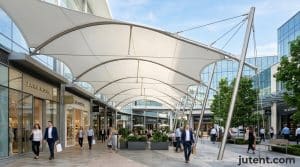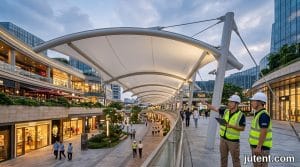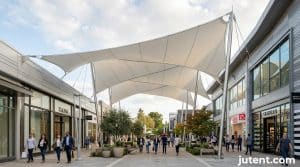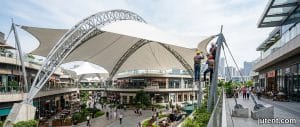

La planification budgétaire doit être basée sur le type de structure, la portée libre, la résistance au vent, le grade de membrane, le tonnage d'acier et la portée du projet. Pour un devis précis EXW, FOB, CIP ou DDU, les dimensions du projet et les exigences d'ingénierie doivent être examinées en premier.
Lorsque les promoteurs demandent un cheminement piéton couvert, les estimations initiales omettent souvent de prendre en compte les charges techniques spécifiques au site, les améliorations de matériaux ou la différence entre une simple installation par boulonnage et une fondation complexe. Obtenir les chiffres dès le départ évite les retards liés à l'ingénierie de valeur plus tard dans le calendrier du projet et garantit que la structure finale répond à la fois aux exigences esthétiques et fonctionnelles. Ce guide décompose les principaux facteurs de coût, fournit des fourchettes de prix réalistes et explique exactement ce qui fait passer le chiffre de la base à l'extrémité supérieure de la gamme, vous permettant ainsi d'établir un auvent de passage piétonnier commercial budget dès le premier jour.
Les 5 facteurs qui déterminent le coût des auvents de passage piéton commercial
Cinq variables principales dictent le coût final auvent de passage piétonnier commercial prix : poids de la charpente métallique, qualité de la membrane, exigences de fondation, spécifications de charge de vent et périmètre d'installation.
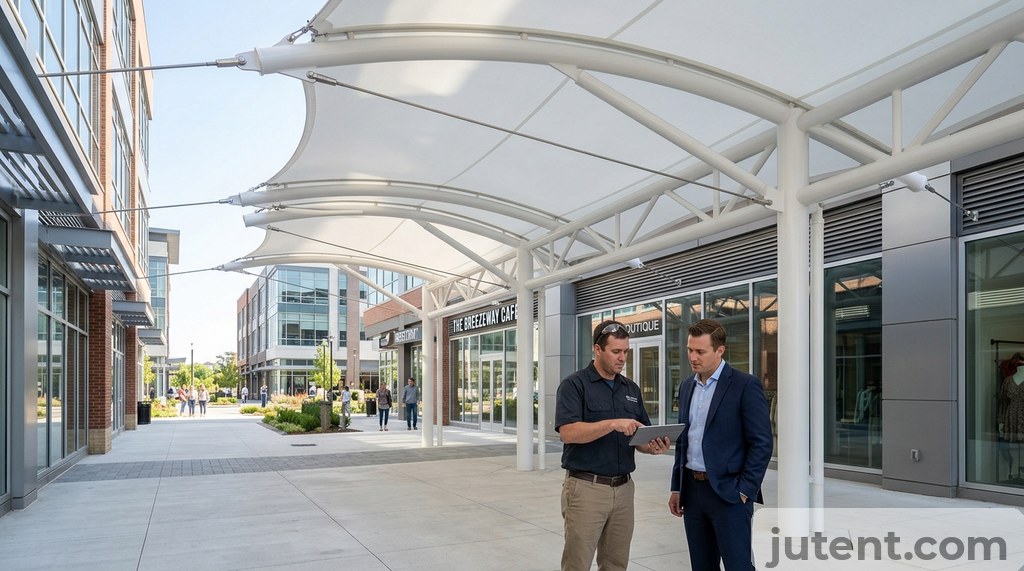
Les valeurs techniques finales doivent être confirmées par rapport aux exigences d'ingénierie spécifiques au projet et aux conditions du code local.
La sélection de la membrane représente la deuxième variable la plus importante, représentant 20 à 30 % du coût des matériaux. Le matériel de tension joue également un rôle ; spécifier des câbles de bord en acier inoxydable de qualité marine 316 au lieu de câbles galvanisés standard augmente le budget du matériel mais empêche la rouille de s'infiltrer sur la durée de vie de la structure.
Le dimensionnement des fondations dicte le budget restant. Les entrepreneurs spécifiant les allées piétonnes commerciales doivent tenir compte de la différence entre le boulonnage de plaques d'assise sur une dalle en béton armé existante et l'excavation et le coulage de nouvelles semelles de 800mm × 800mm × 1000mm. Une faible capacité portante du sol nécessite une excavation plus profonde, ajoutant des coûts cachés avant même que l'acier n'arrive sur le site.
Coût par échelle de projet : petites vs grandes applications
Les économies d'échelle influencent fortement le coût auvent de passage piétonnier commercial commercial au mètre carré. Les applications à grande échelle permettent un taux unitaire plus faible grâce à une découpe optimisée de l'acier, un modelage continu de la membrane et une réduction des déchets d'installation dans l'usine de fabrication.
Pour une petite application—comme un auvent d'entrée de 15 m × 3 m—le coût d'approvisionnement se situe souvent à l'extrémité supérieure de la fourchette de 50 à 70 $/m². L'ingénierie, les détails et le temps de réglage de la machine restent fixes quelle que soit la courte portée, ce qui signifie que ces frais généraux sont répartis sur une empreinte beaucoup plus petite.
Conversely, a large application—like a 150m × 4m continuous retail promenade—pushes the supply cost closer to the $25–$40/m² baseline. In these projects, standardizing a repeating 5m bay spacing allows for mass production of identical steel trusses and membrane panels. This repetition drastically reduces the engineering cost per square metre and maximizes shipping efficiency, allowing components to pack tightly into a 40ft High Cube container.
Comme détaillé dans notre Auvent de passage piétonnier commercial Guide, les promoteurs planifiant des parcs commerciaux multiphasés devraient se procurer le lot d'auvents dans le cadre d'un contrat unique. Diviser une passerelle de 200 m en quatre commandes distinctes de 50 m augmente généralement le budget total des matériaux et de l'expédition de 12 à 18 % en raison des phases d'installation redondantes.
Grade de membrane : comment le choix du matériau affecte le budget
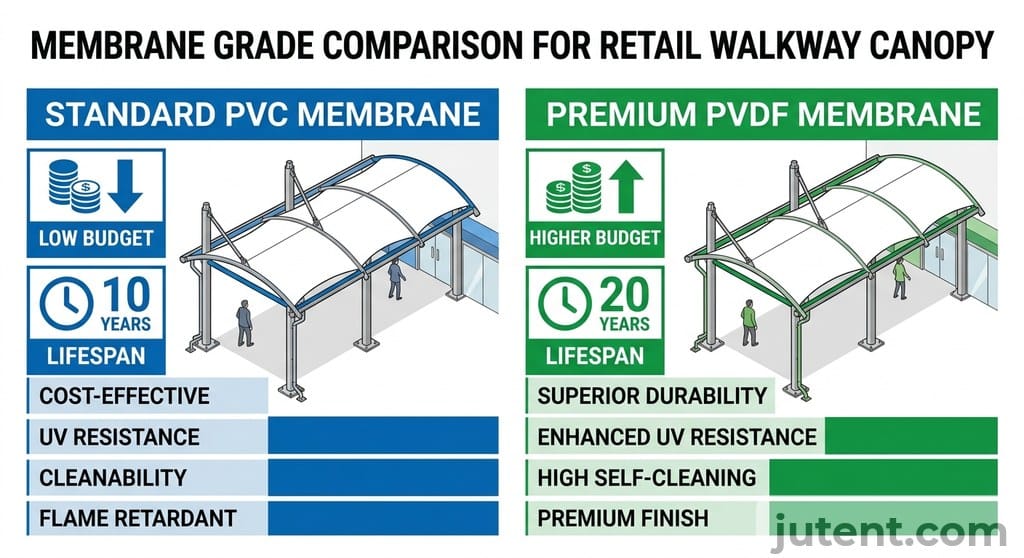
La spécification de la membrane dicte directement à la fois le budget initial auvent de passage piétonnier commercial et le cycle de maintenance à long terme. La décision se résume au poids, au revêtement de surface et à la durée de vie requise.
Une membrane standard en PVDF de 750 g/m² est la référence pour les passerelles commerciales, offrant une durée de vie de 10 à 12 ans et maintenant un coût initial bas. Cependant, spécifier une membrane en PVDF plus lourde de 1050 g/m² augmente le coût du tissu d'environ 3 à 5 $/m² tout en prolongeant la durée de vie à 15–20 ans. La couche de surface fluorocarbonée plus épaisse offre également des propriétés autonettoyantes supérieures, réduisant les coûts d'entretien annuels.
Sur la base de l'expérience de Jutent dans plus de 400 projets dans plus de 30 pays, des problèmes de spécification similaires apparaissent souvent lorsque des hypothèses de stade précoce sont faites avant que les conditions d'ingénierie soient confirmées.
Pour les environnements commerciaux haut de gamme nécessitant un classement au feu de classe 1 ou une durée de vie de conception de 25 ans ou plus sans remplacement, le PTFE est la spécification requise. Cette mise à niveau du matériau double généralement la partie membrane du budget et nécessite une manipulation spécialisée lors de l'installation pour éviter de plisser le tissu de base en fibre de verre. Le PTFE exige également une quincaillerie de tension plus lourde, augmentant légèrement le budget acier.
Fourniture seule vs Fourniture et installation : comprendre la différence de prix
Les entrepreneurs doivent clairement définir le périmètre d'approvisionnement dès le début, car la différence entre un kit de fourniture seule et un contrat complet de fourniture et d'installation modifie considérablement le prix final de la passerelle commerciale.
Un contrat de fourniture uniquement couvre l'ingénierie, la fabrication et la livraison de l'acier principal, de la quincaillerie de tension et de la membrane. Cela coûte généralement entre 25 et 70 $/m² départ usine. L'entrepreneur assume la responsabilité de la préparation du site, du coulage des fondations, du montage de l'acier et de la mise en tension de la membrane. Cette voie est très rentable pour les entrepreneurs principaux qui disposent déjà de grutiers, d'équipements de levage et d'une gestion de site en place.
Un contrat de fourniture et d'installation transfère le risque de montage au spécialiste de la toile. Cela ajoute au budget la main-d'œuvre, les déplacements, la location d'équipement (comme une grue de 20 tonnes ou des nacelles ciseaux) et les frais de gestion de chantier. L'installation ajoute généralement 30 à 60 $/m² au projet. Travailler dans des environnements de vente au détail en activité augmente encore ce coût, car les équipes de nuit et les cordons progressifs réduisent la productivité quotidienne.
Le système préfabriqué est conçu pour simplifier l'assemblage sur site, et Jutent peut fournir des dessins, des manuels et des conseils d'installation à distance gratuits. Pour les projets plus complexes, des installateurs expérimentés ou un support de supervision sur site peuvent être organisés sur demande.
Comment obtenir un devis précis
Pour passer d'un budget approximatif à un prix de fabrication fixe, les entrepreneurs doivent fournir quatre points de données spécifiques à l'équipe d'ingénierie. Les demandes vagues génèrent des devis gonflés ; les données précises génèrent des prix optimisés.
Premièrement, fournissez les dimensions exactes : longueur totale, largeur et hauteur de dégagement requise. Une hauteur de dégagement de 3 m nécessite une masse de colonnes en acier significativement inférieure à celle d'un dégagement de 4,5 m conçu pour accueillir des véhicules de livraison ou un accès d'urgence.
Pour les projets d'exportation dans les régions à vents forts ou à forte exposition, la structure doit être conçue selon le code local applicable et vérifiée par rapport aux conditions de charge spécifiques au projet.
Troisièmement, définissez la forme structurelle préférée. Une passerelle en porte-à-faux nécessite des plaques de base plus lourdes et des fondations plus grandes pour résister aux moments de renversement par rapport à une voûte en berceau symétrique à double colonne. Fournir un rapport de sol préliminaire permet également d'éviter les surprises concernant le coût des fondations.
Précisez la préférence de qualité de membrane (par exemple, 1050g/㎡ PVDF) et la finition acier requise (galvanisation à chaud ou peinture époxy).
Si vous souhaitez une référence budgétaire précise pour ce projet, partagez vos dimensions, votre zone de vent et votre type de membrane préféré avec notre équipe.
Obtenez votre devis pour auvent de passage piétonnier commercial
FAQ
- Quel est le coût au mètre carré pour un auvent de passerelle commerciale ?
- Le coût d'approvisionnement varie généralement de 25 à 70 $/m² départ usine, selon la forme structurelle et la qualité de la membrane. Ce chiffre couvre l'ingénierie, la fabrication et la livraison de l'acier primaire, de la quincaillerie de tension et de la membrane, l'entrepreneur gérant le montage sur site. Des facteurs tels que la forme structurelle choisie, comme une conception en porte-à-faux par rapport à une voûte en berceau symétrique, et la hauteur libre requise influencent considérablement la masse d'acier et donc le coût. La qualité de la membrane joue également un rôle crucial ; par exemple, une membrane en PVDF de 1050g/㎡ ajoute 3 à 5 $/m² par rapport à une base de 750g/㎡, tandis que le PTFE peut doubler le budget membrane pour les applications haut de gamme.
- Quelles informations dois-je fournir pour obtenir un devis précis pour une marquise de passage piéton ?
- Les dimensions du projet, l'emplacement (pour la charge de vent), la forme structurelle préférée et la préférence de qualité de membrane sont essentiels pour un devis précis. Fournir des dimensions exactes, y compris la longueur totale, la largeur et la hauteur libre requise, a un impact direct sur la masse d'acier nécessaire. L'emplacement précis du projet est essentiel pour calculer les exigences locales de charge de vent et de neige, ce qui détermine le dimensionnement des éléments structurels et la conception des fondations. Définir la forme structurelle préférée, comme une conception en porte-à-faux ou en voûte en berceau, influence les exigences de fondation et les spécifications de l'acier. Enfin, spécifier la qualité de la membrane (par exemple, 1050g/㎡ PVDF) et la finition acier souhaitée garantit que le devis initial est précis à 5 % près du coût de fabrication final, évitant ainsi les dépassements de budget.