
“`html
Vous planifiez un stade canopy de grandstand budget ? Ce guide décompose le coût au mètre carré pour les structures en membrane tendue en porte-à-faux, haubanées et arquées, y compris les prix PVDF vs PTFE, les coûts d'installation fourniture seule vs clé en main, et les informations exactes dont vous avez besoin pour un devis précis.
Les 6 facteurs qui déterminent le coût d'une canopée de gradins
Six variables principales dictent le structure d'auvent de tribune prix final. La forme structurelle et la profondeur de la portée sont les facteurs de coût les plus lourds, suivis par le choix de la membrane, les exigences de charge de vent, la complexité des fondations et l'étendue de la fourniture.
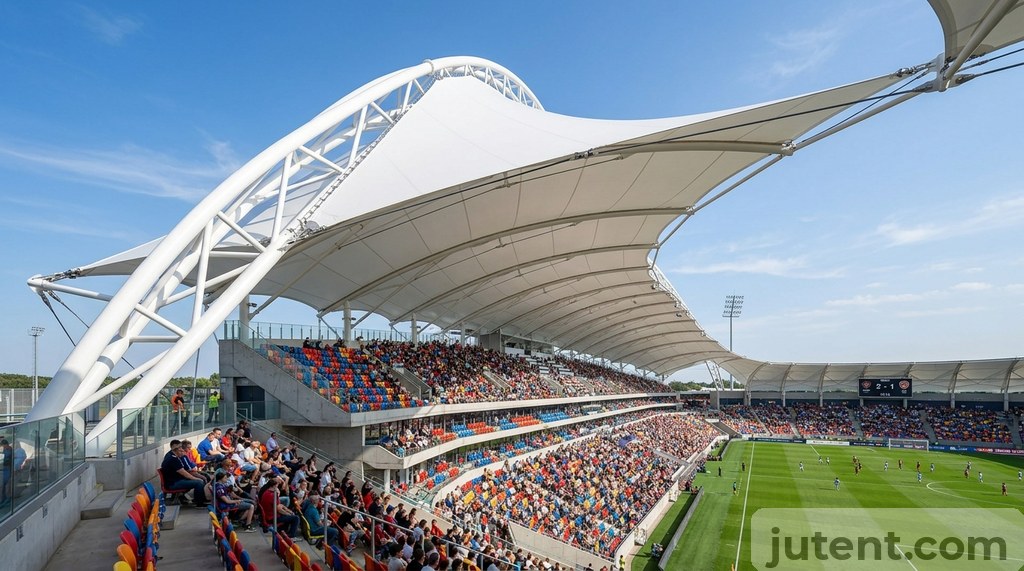
- Forme structurelle : Une conception simple poteau-poutre est la plus économique. Les structures en porte-à-faux, qui éliminent les poteaux avant pour préserver les lignes de vue, nécessitent des sections d'acier plus lourdes et des fondations plus profondes, augmentant les coûts de 30 à 50 %.
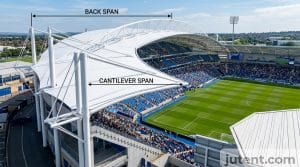
- Profondeur de la portée : La distance entre la colonne arrière et le bord avant de l'avant-toit détermine le tonnage d'acier. Un porte-à-faux de 12 mètres nécessite exponentiellement plus d'acier qu'un porte-à-faux de 8 mètres pour résister à la déflexion sous l'effet du soulèvement dû au vent.
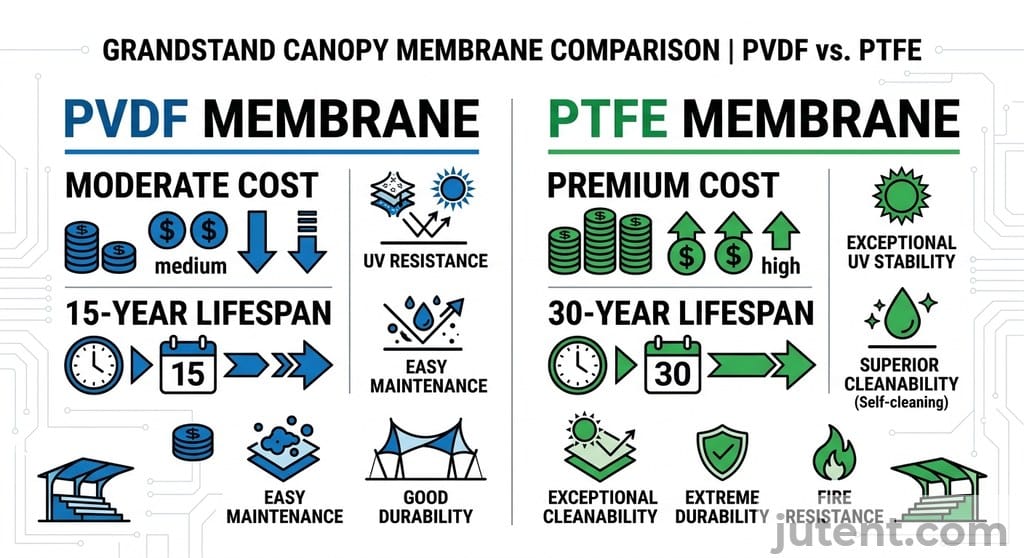
- Qualité de la membrane : Passer d'un PVDF standard à un PTFE augmente le coût du matériau de membrane d'environ 2,5 fois, bien que cela prolonge la durée de vie de conception au-delà de 25 ans.
Les valeurs techniques finales doivent être confirmées par rapport aux exigences d'ingénierie spécifiques au projet et aux conditions du code local. - Exigences de fondations : Une faible capacité portante du sol nécessite des pieux plus profonds ou des semelles plus grandes, ce qui augmente les coûts de génie civil.
- Étendue de la fourniture : Fourniture uniquement Canopy de grandstand Le kit transfère le risque d'installation à l'entrepreneur local, réduisant ainsi le prix d'usine initial par rapport à une installation clé en main complète.
Coût au mètre carré d'un auvent de tribune : Porte-à-faux vs Haubané vs Arquée
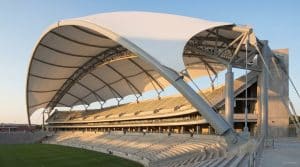
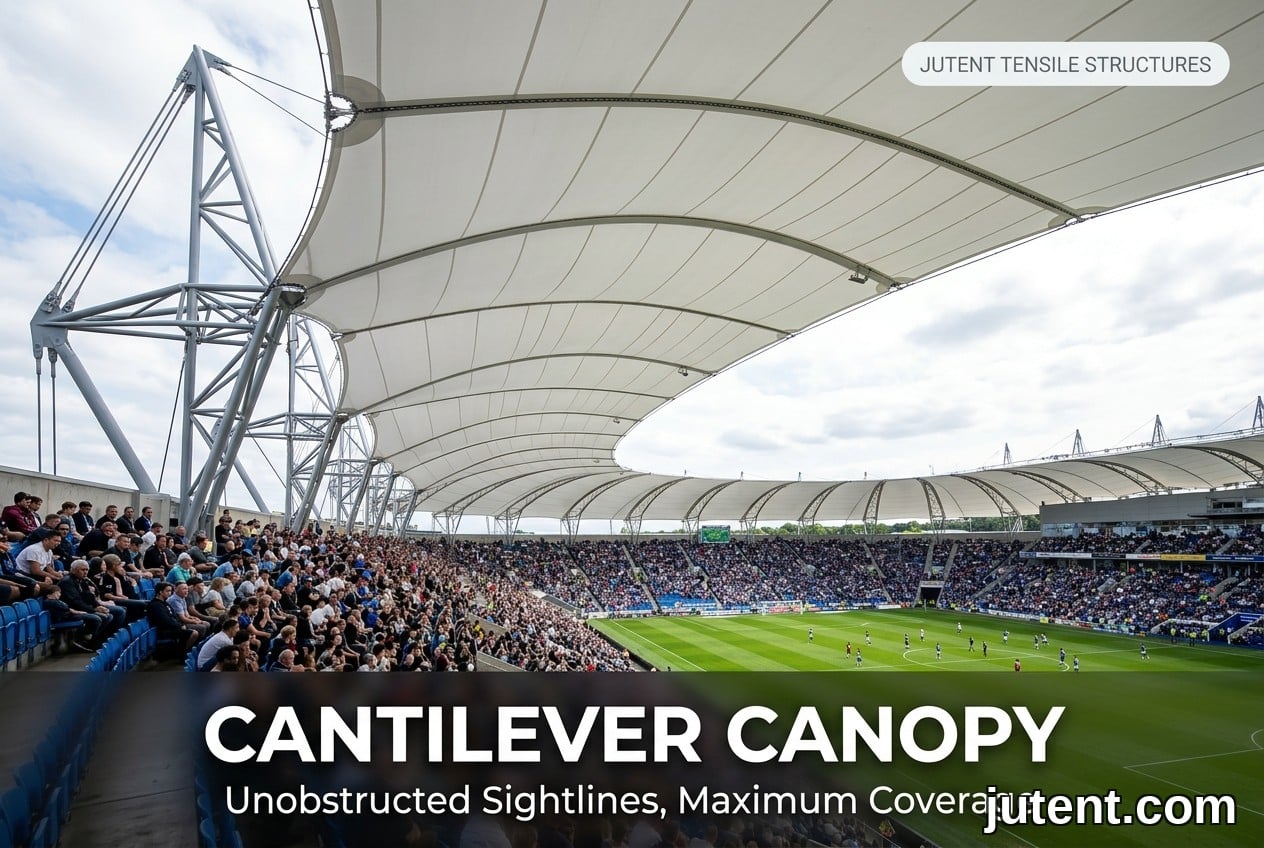
Un auvent en porte-à-faux canopy de grandstand est une structure en membrane tendue soutenue uniquement à l'arrière, éliminant les poteaux avant pour une vue dégagée pour les spectateurs. Cette conception est courante pour les structures d'ombrage de stades et les couvertures de gradins.
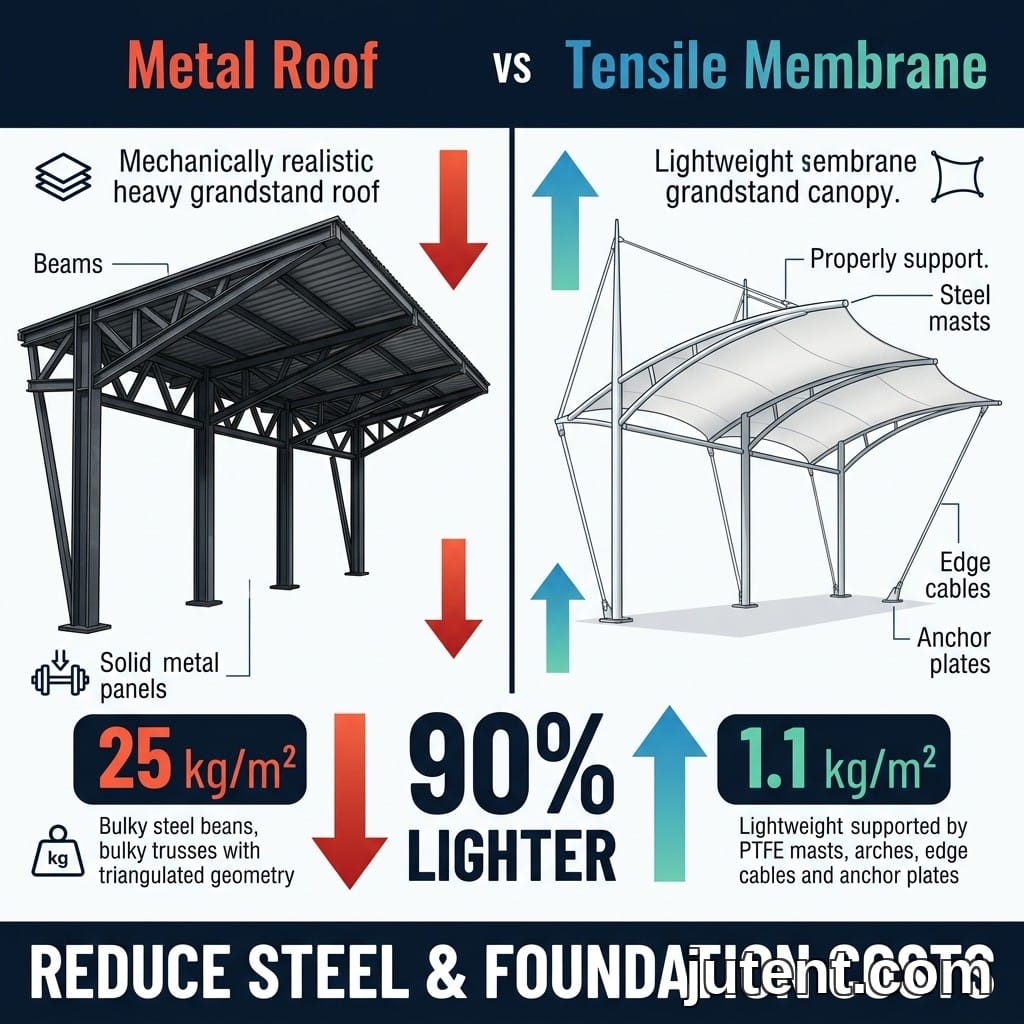
La géométrie architecturale de la toiture détermine le tonnage d'acier, qui représente 60 à 70 % du coût total des matériaux.
Structures en porte-à-faux : C'est la norme de l'industrie pour les stades car elle supprime les colonnes avant, garantissant une vue dégagée pour les spectateurs. Cependant, soutenir un toit de 10 à 15 mètres entièrement depuis l'arrière nécessite des colonnes primaires massives (souvent des CHS de 400 mm de diamètre ou plus) et des connexions à moment fort à la base. Attendez-vous à un auvent de stade coût par m² de 90 à 120 $ départ usine pour cette configuration.
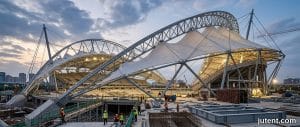
Structures haubanées : L'utilisation de câbles en acier inoxydable à haute résistance pour soutenir le bord avant de la toiture réduit la masse d'acier nécessaire dans les poutres primaires. Cette forme est très efficace pour les grandes portées dépassant 15 mètres. Le coût au mètre carré est similaire à celui d'un cantilever, mais il devient plus économique à plus grande échelle en raison de la réduction significative du poids de la structure en acier.
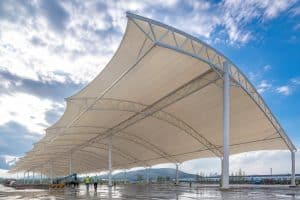
Structures en arche ou à poteaux et poutres : L'option la plus rentable pour les terrains de sport communautaires et les gradins scolaires. En plaçant des colonnes à l'avant et à l'arrière, les sections en acier peuvent être considérablement plus légères. Les coûts varient généralement de 55 à 75 $/m². Pour des comparaisons de coûts détaillées, consultez notre guide sur la membrane PVDF vs PTFE pour les auvents de stade.
Impact du grade de membrane : Différence de coût PVDF vs PTFE
Le choix de la membrane est la deuxième variable la plus importante dans une toit de gradins coût. La décision se résume au budget initial par rapport à la durée de vie requise et à la conformité incendie.
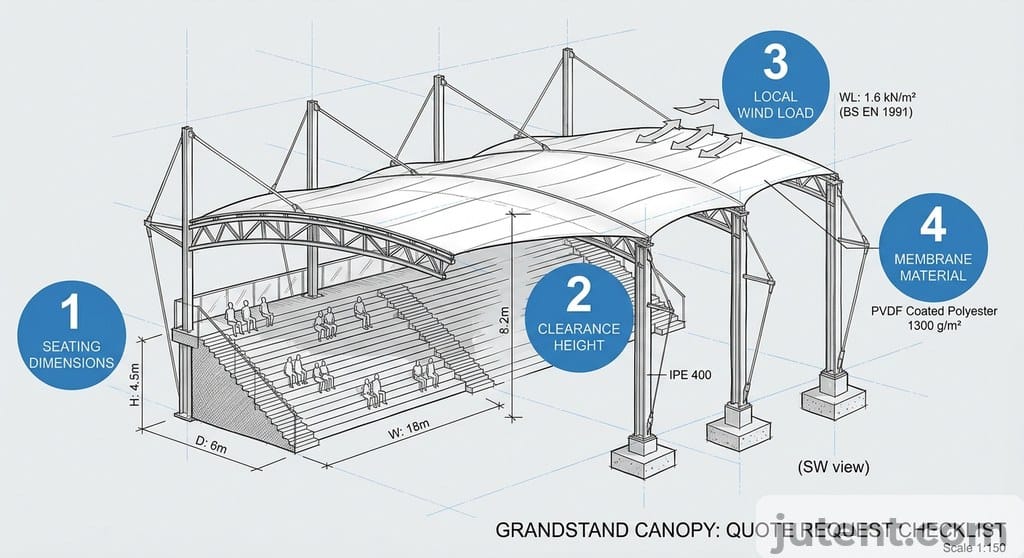
Les valeurs techniques finales doivent être confirmées par rapport aux exigences d'ingénierie spécifiques au projet et aux conditions du code local.
PTFE (Polytétrafluoroéthylène) : La fibre de verre tissée enduite de PTFE est le choix premium pour les grands stades internationaux. Elle offre une durée de vie de plus de 25 ans, un classement au feu de classe 1 et des propriétés autonettoyantes supérieures. Cependant, le PTFE est cassant avant la mise en tension, nécessite une manipulation spécialisée et exige une soudure au fer à haute température. Spécifier du PTFE augmente généralement la part de la membrane dans le budget de 150 à 200 % par rapport au PVDF standard.
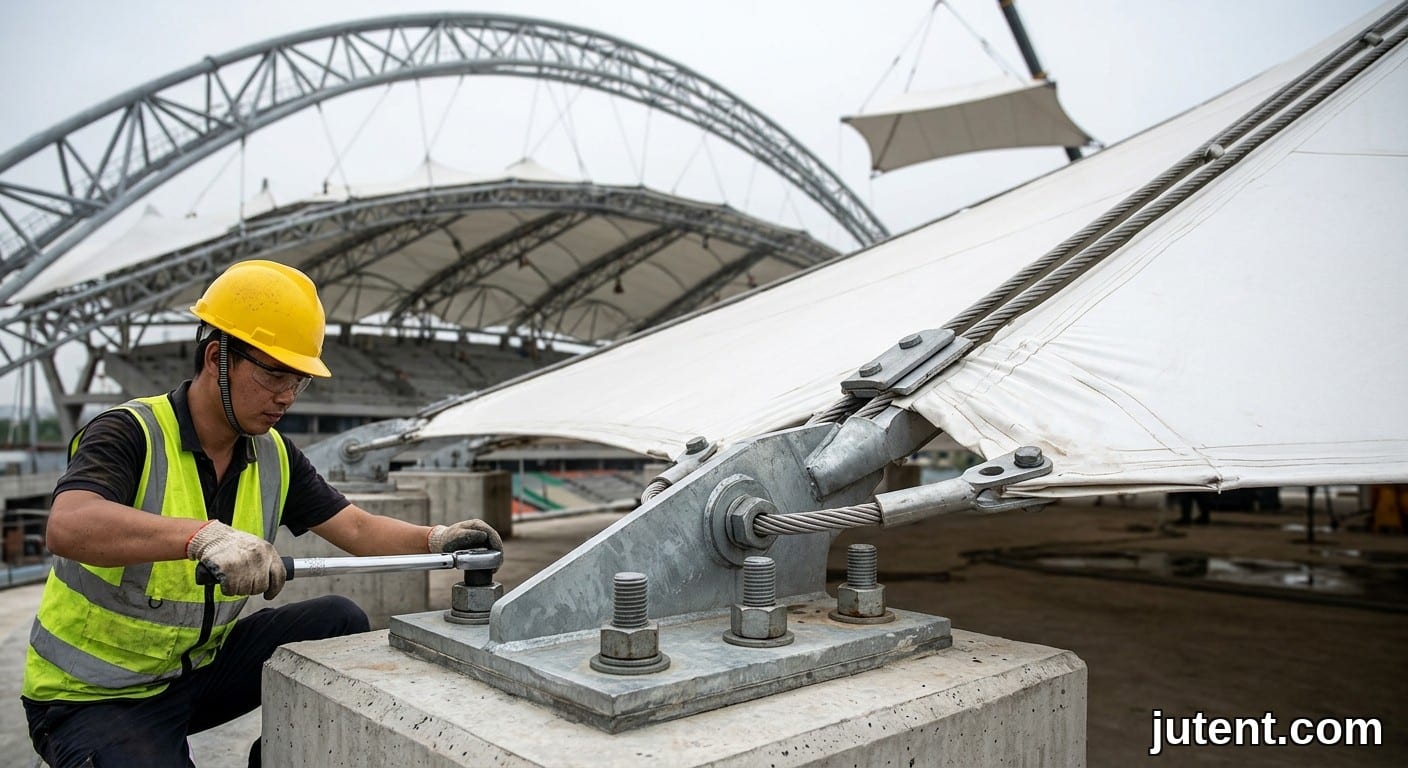
Sur la base de l'expérience de Jutent dans plus de 400 projets dans plus de 30 pays, des problèmes de spécification similaires apparaissent souvent lorsque des hypothèses de stade précoce sont faites avant que les conditions d'ingénierie soient confirmées.
Fourniture seule vs Fourniture et installation : comprendre la différence de prix
Les entrepreneurs doivent clairement définir le modèle d'approvisionnement lors de la phase d'appel d'offres, car cela modifie considérablement le prix indiqué et la répartition des risques.
La planification budgétaire doit être basée sur le type de structure, la portée libre, la résistance au vent, la qualité de la membrane, le tonnage d'acier et la portée du projet. Pour un devis EXW, FOB, CIP ou DDU précis, le pr
“`