
“`html
Planning a stadium grandstand canopy budget? This guide breaks down the cost per square metre for cantilever, cable-stayed, and arched tensile membrane structures, including PVDF vs PTFE pricing, supply-only vs turnkey installation costs, and the exact information you need for an accurate quote.
The 6 Factors That Drive Grandstand Canopy Cost
Six primary variables dictate the final grandstand shade structure price. Structural form and span depth are the heaviest cost drivers, followed by membrane selection, wind load requirements, foundation complexity, and supply scope.
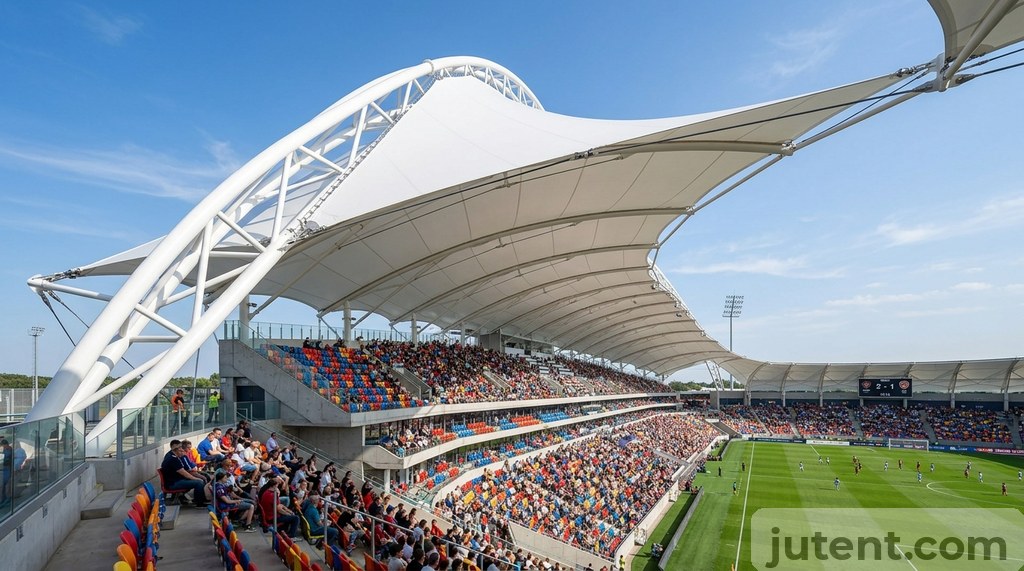
- Structural Form: A simple post-and-beam design is the most economical. Cantilever structures, which eliminate front columns to preserve sightlines, require heavier steel sections and deeper foundations, increasing costs by 30–50%.
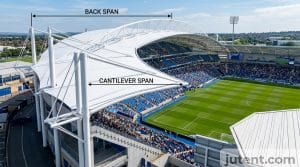
- Span Depth: The distance from the rear column to the front drip edge dictates the steel tonnage. A 12-metre cantilever requires exponentially more steel than an 8-metre cantilever to resist deflection under wind uplift.
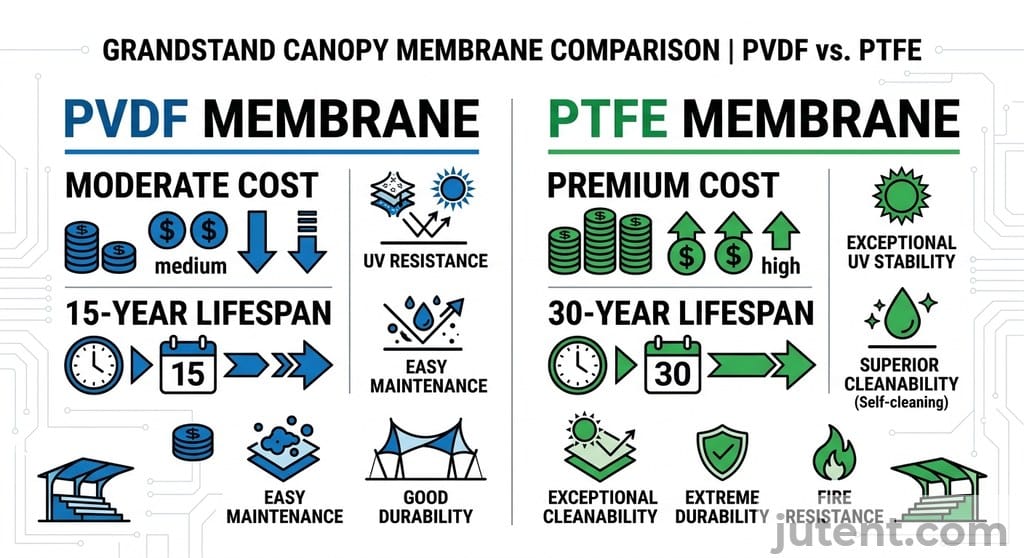
- Membrane Grade: Upgrading from standard PVDF to PTFE increases the membrane material cost by roughly 2.5x, though it extends the design life past 25 years.
The final technical values should be confirmed against the project-specific engineering requirements and local code conditions. - Foundation Requirements: Poor soil bearing capacity requires deeper piles or larger pad footings, shifting civil costs upward.
- Supply Scope: A supply-only Grandstand Canopy kit shifts installation risk to the local contractor, lowering the upfront factory price compared to a full turnkey installation.
Grandstand Canopy Cost per Square Metre: Cantilever vs Cable-Stayed vs Arched
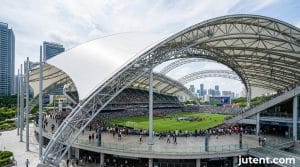
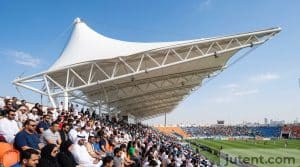
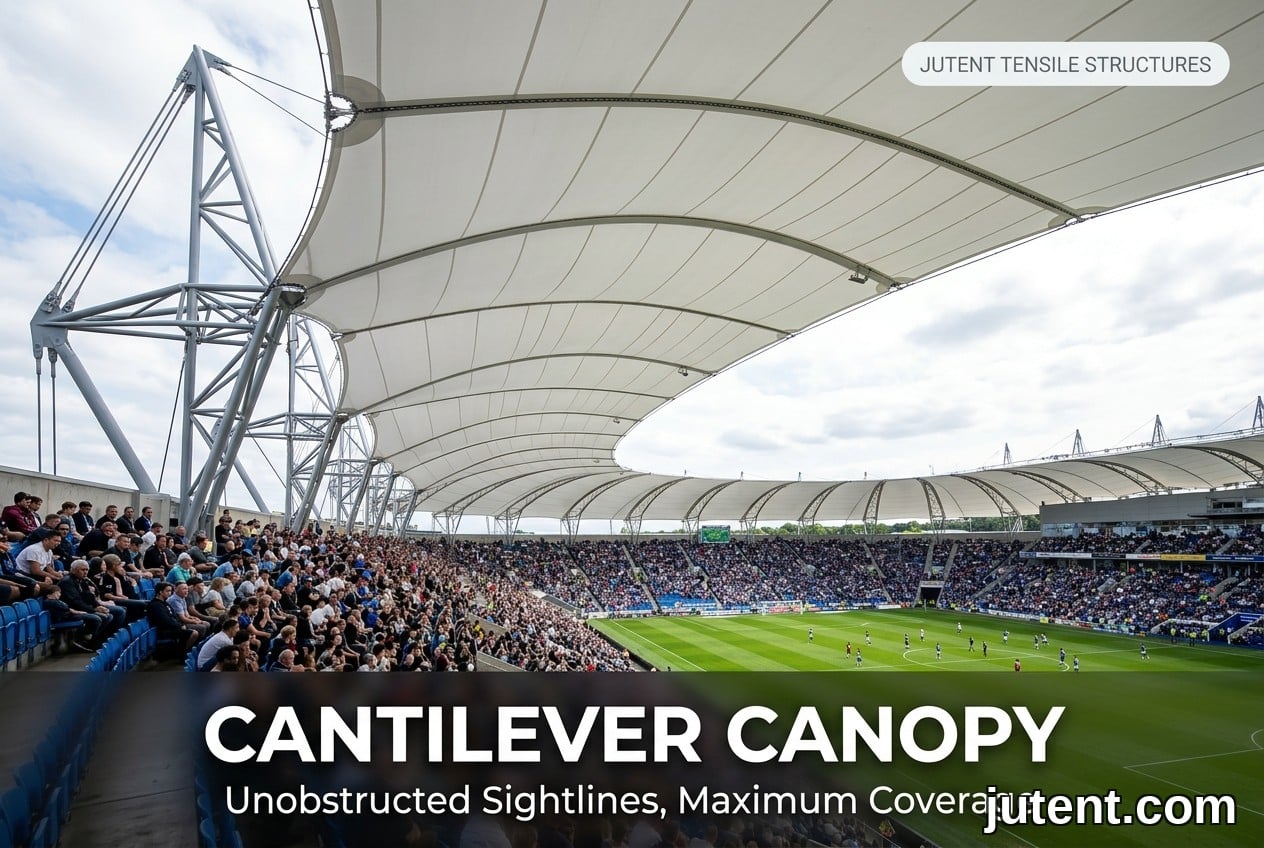
A cantilever grandstand canopy is a tensile membrane structure supported only from the rear, eliminating front columns for unobstructed spectator views. This design is common for stadium shade structures and bleacher covers.
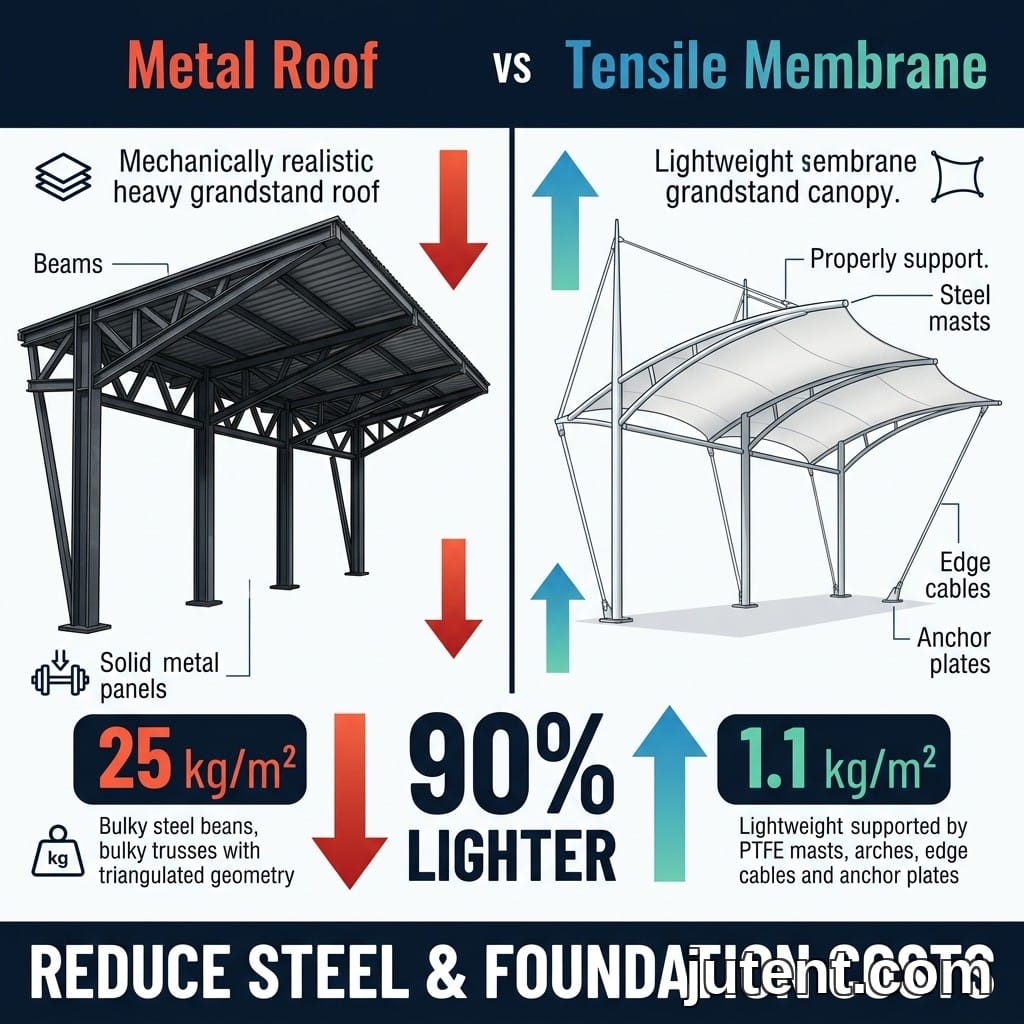
The architectural geometry of the roof dictates the steel tonnage, which makes up 60–70% of the total material cost.
Cantilever Structures: This is the industry standard for stadiums because it removes front columns, ensuring unobstructed views for spectators. However, supporting a 10-metre to 15-metre roof entirely from the rear requires massive primary columns (often 400mm+ diameter CHS) and heavy moment connections at the base. Expect a stadium canopy cost per sqm of $90–$120 ex-factory for this configuration.
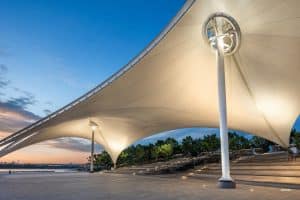
Cable-Stayed Structures: Using high-tensile stainless steel cables to support the front edge of the canopy reduces the required steel mass in the primary beams. This form is highly efficient for deep spans exceeding 15 metres. The cost per square metre is similar to a cantilever, but it becomes more economical at larger scales due to the significant reduction in structural steel weight.
Arched or Post-and-Beam Structures: The most cost-effective option for community sports fields and school bleachers. By placing columns at both the front and rear, the steel sections can be significantly lighter. Costs typically range from $55–$75/m². For detailed cost comparisons, see our guide on PVDF vs PTFE membrane for stadium canopies.
Membrane Grade Impact: PVDF vs PTFE Cost Difference
Membrane selection is the second largest variable in a tensile grandstand roof cost. The decision comes down to upfront budget versus required design life and fire compliance.
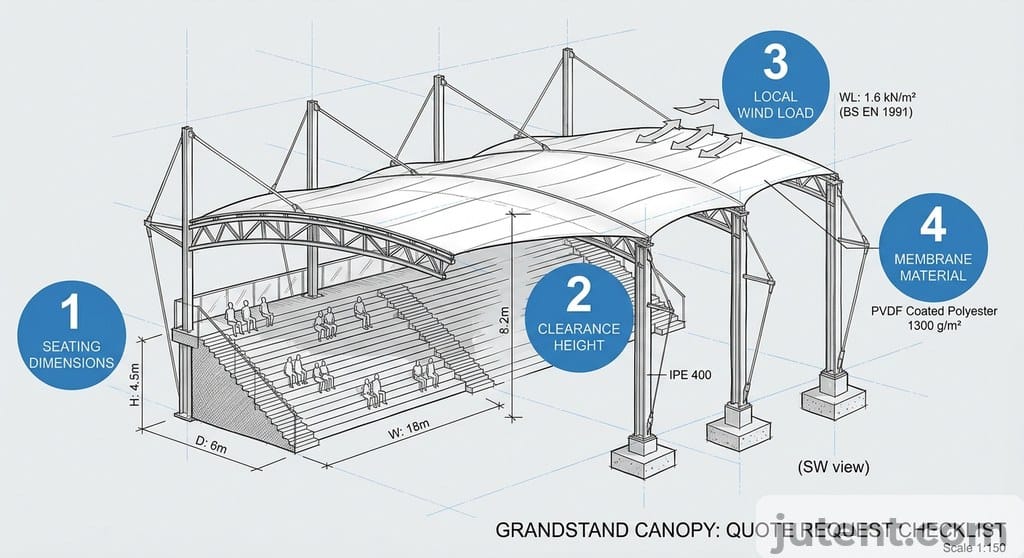
The final technical values should be confirmed against the project-specific engineering requirements and local code conditions.
PTFE (Polytetrafluoroethylene): Woven fiberglass coated with PTFE is the premium choice for major international stadiums. It offers a 25+ year lifespan, Class 1 fire rating, and superior self-cleaning properties. However, PTFE is brittle before tensioning, requires specialized handling, and demands high-temperature iron welding. Specifying PTFE typically increases the membrane portion of the budget by 150–200% compared to standard PVDF.
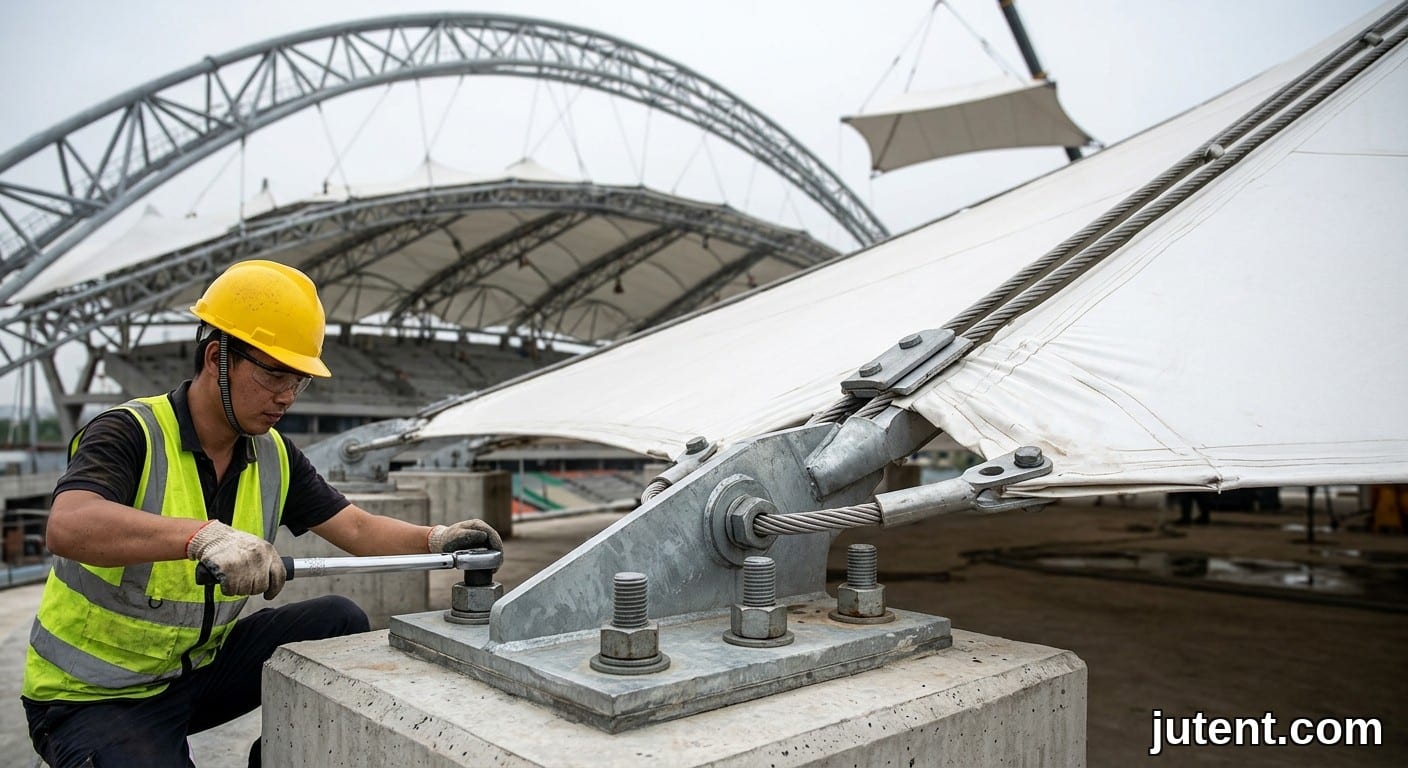
Based on Jutent's experience across 400+ projects in 30+ countries, similar specification issues often appear when early-stage assumptions are made before the engineering conditions are confirmed.
Supply-Only vs Supply-and-Install: Understanding the Price Difference
Contractors must clearly define the procurement model during the tender phase, as it drastically alters the quoted price and risk distribution.
Budget planning should be based on structure type, clear span, wind rating, membrane grade, steel tonnage, and project scope. For an accurate EXW, FOB, CIP, or DDU quotation, the pr
“`