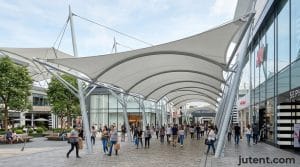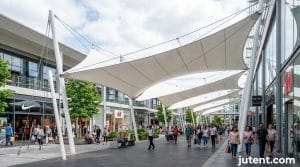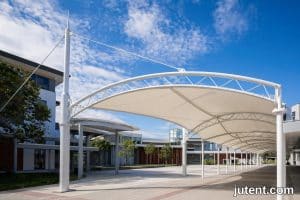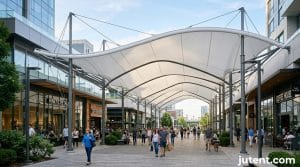

A significant challenge for campus development projects involves accurately budgeting for essential infrastructure like covered walkways. The total school walkway canopy cost can range from $8,000 for a 50-meter run to over $20,000 for an extensive 100-meter campus walkway system. Understanding how much does a school walkway canopy cost requires a clear breakdown of the factors driving these differences. This guide details the critical budget drivers and provides realistic cost expectations for your next school covered walkway project. While this guide focuses on school walkways, the same cost principles apply to retail walkway canopies and shopping mall walkway structures.
School Walkway Canopy Manufacturer Guide: Contractor Supply & Budget Tips
Determining the school covered walkway price involves evaluating several key factors. These elements directly influence material specifications, design complexity, and installation effort.
- Walkway Length and Width: Longer and wider walkways naturally require more material and structural components, increasing overall cost. A standard 3-meter wide walkway will cost less per m² than a 4-meter wide variant due to increased structural requirements and membrane surface area.
- Structural Form: The chosen design—such as a simple barrel vault, cantilevered, or complex conic tensile structure—impacts steel tonnage, fabrication complexity, and engineering input.
- Membrane Type and Grade: Material selection is critical. Standard Type II PVC membrane with a PVDF topcoat offers excellent durability. High-performance options, like PTFE-coated fiberglass, increase material costs but extend service life and UV resistance. A waterproof school walkway canopy is standard with most membrane types, but UV resistance varies.
- Site Conditions and Location: Geotechnical considerations for foundations, site accessibility for equipment, and local wind/snow load requirements (e.g., ASCE 7 or Eurocodes) influence structural design and cost. Projects in remote areas incur higher logistics expenses.
- Installation Complexity: Factors like required height clearance, existing infrastructure obstructions, and the need for specialized lifting equipment affect labor hours and installation costs.
Cost by Walkway Length: Short Run vs Long Campus Walkway System
Walkway length is a primary driver of the total project budget. While unit costs often decrease slightly with scale due to economies in fabrication and mobilization, the overall investment grows significantly with length. Note that Jutent's minimum project scope is 100 m² of membrane area. For a standard 3-meter wide walkway, this corresponds to a minimum run of approximately 34 meters; wider walkways qualify at shorter lengths (e.g., a 4m wide walkway qualifies from 25 meters).
| Walkway Length | Typical Supply Cost (Ex-Factory, 3m wide) |
|---|---|
| 50 meters | $8,000 – $10,000 |
| 100+ meters | $15,700 – $20,000+ |
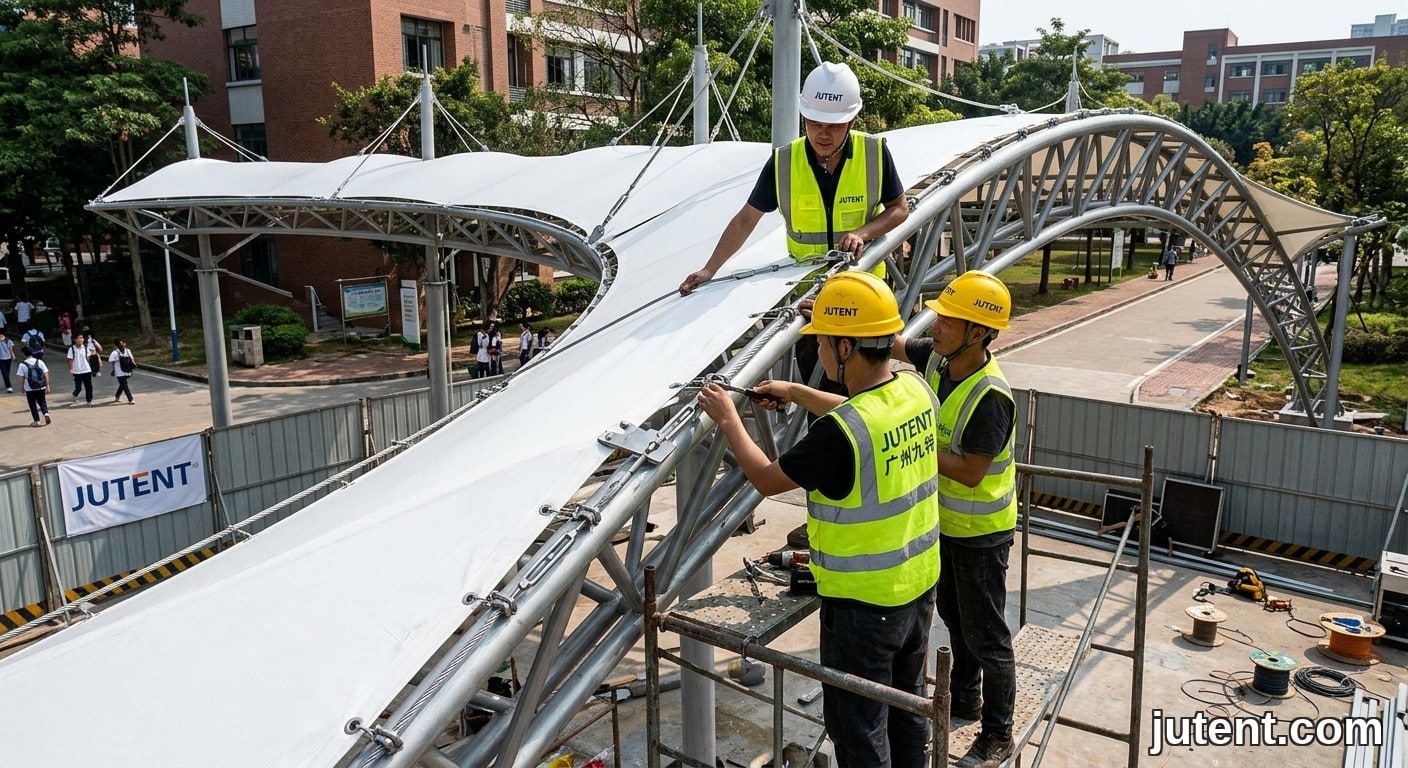
These figures represent a 3-meter wide barrel vault design using a Type II PVDF-coated PVC membrane. A longer campus walkway system often involves multiple segments, connections to existing buildings, and more complex foundation work. For instance, a 100-meter system might comprise two 50-meter sections, each requiring independent foundations and careful alignment. This modular approach can streamline fabrication but requires precise site coordination.

Structural Form: How Tensile vs Hip Roof Affects the Budget
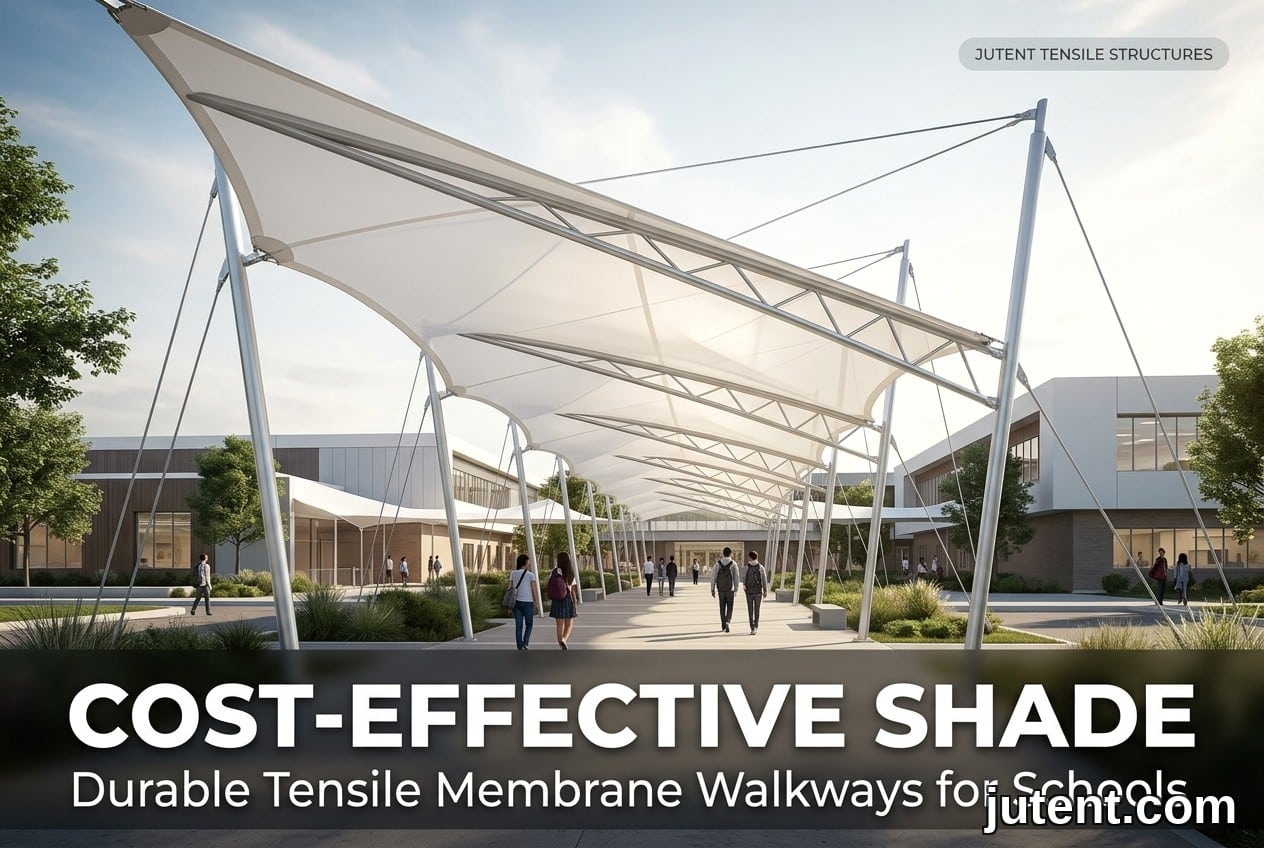
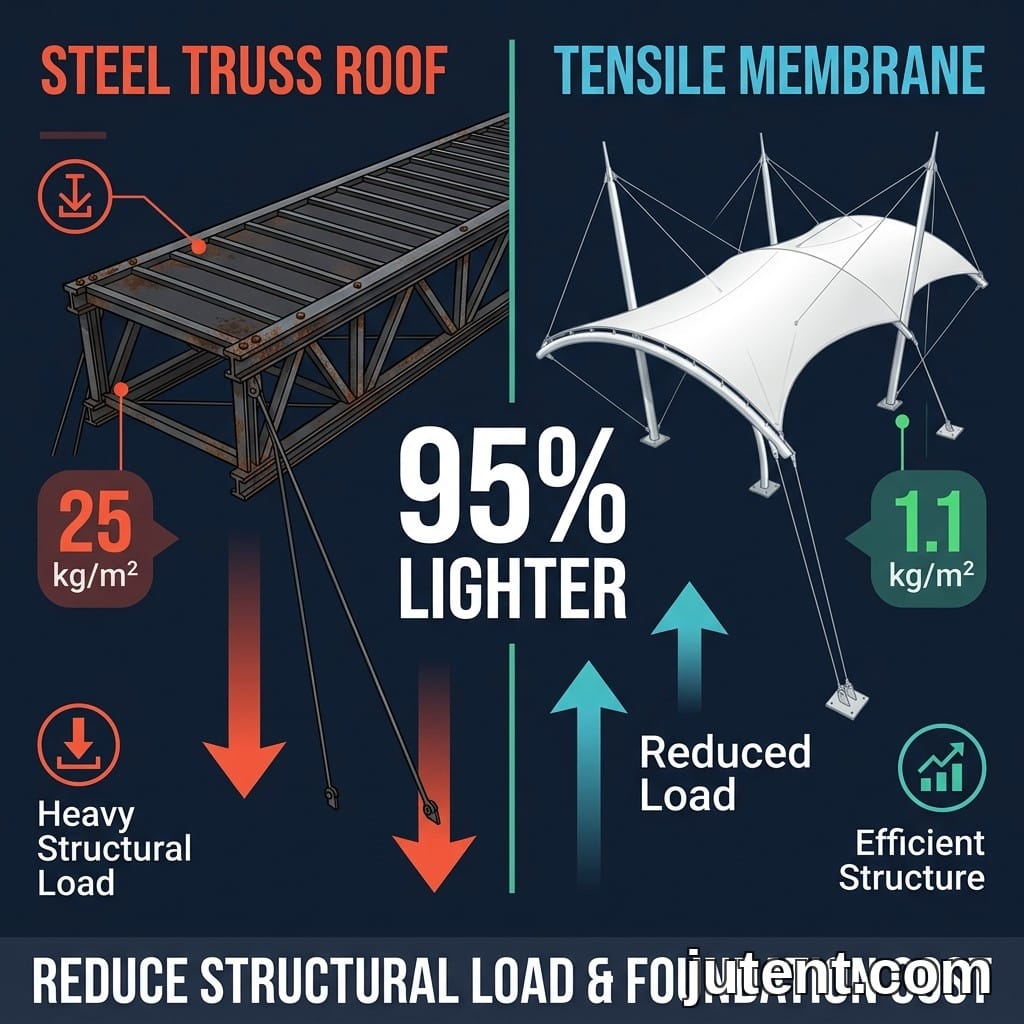
The choice of structural form significantly impacts the school walkway tensile canopy cost. Tensile membrane structures, known for their architectural flexibility and light appearance, differ in cost profile from traditional hip roof designs.
A simple barrel vault tensile structure, often supported by steel columns at regular intervals, offers a cost-effective solution. Its design optimizes material usage and simplifies fabrication. For a standard PVDF-coated PVC membrane in a simple barrel vault form, the supply cost typically ranges from $40–$70/m² ex-factory, depending on wind load requirements and site conditions.
More complex tensile forms, such as conic structures or custom architectural shapes, increase the budget. Conic designs involve more intricate steelwork, greater membrane patterning complexity, and specialized fabrication. For complex conic or high-wind-rated structures, the supply cost rises to $60–$90/m² ex-factory, reflecting increased engineering hours, more precise component manufacturing, and higher material waste during membrane cutting. Upgrading to a PTFE-coated fiberglass membrane adds approximately $20/m² to the above ranges.
In a school walkway project in Southeast Asia, where high humidity and UV exposure are constant, specifying a Type III