
For contractors in Nigeria, Kenya, and South Africa, sourcing an outdoor หลังคาเวที locally often means limited options and high prices. The logistical challenges, material availability, and specialized fabrication expertise required for large-span tensile structures can make local procurement difficult. This often leads to compromises on design, durability, or budget. Here's how importing from China works in practice for performance venue projects, offering a viable alternative that balances quality, cost-effectiveness, and design flexibility for the unique demands of the African continent.
Why African Contractors Source Stage Canopies from China
The demand for high-quality, durable outdoor stage canopies in Africa is growing, driven by a vibrant events industry, cultural festivals, and increasing infrastructure development. However, local manufacturing capabilities for specialized tensile structures often face limitations. These include the availability of high-grade structural steel and advanced membrane materials, as well as the specialized engineering expertise required for complex designs. This scarcity often results in higher local prices and fewer design choices, pushing project timelines and budgets.
Chinese manufacturers, like Jutent Engineering, offer a compelling solution. They provide access to a vast supply chain of certified materials, advanced fabrication techniques, and a proven track record in delivering large-scale tensile structures globally. This translates into competitive pricing without compromising on quality or structural integrity. For instance, a standard 1050 g/m² PVDF membrane, offering a 10-year warranty and 15+ years service life, is readily available. the ability to produce custom designs that meet specific aesthetic and functional requirements, from intricate festival stages to reliable concert venues, is a significant advantage. Based on Jutent's experience across 400+ projects in 30+ countries, importing allows African contractors to access world-class engineering and materials that might otherwise be cost-prohibitive or unavailable domestically. This approach ensures projects benefit from global standards in safety and durability, crucial for structures exposed to diverse African climates. หลังคาเวที
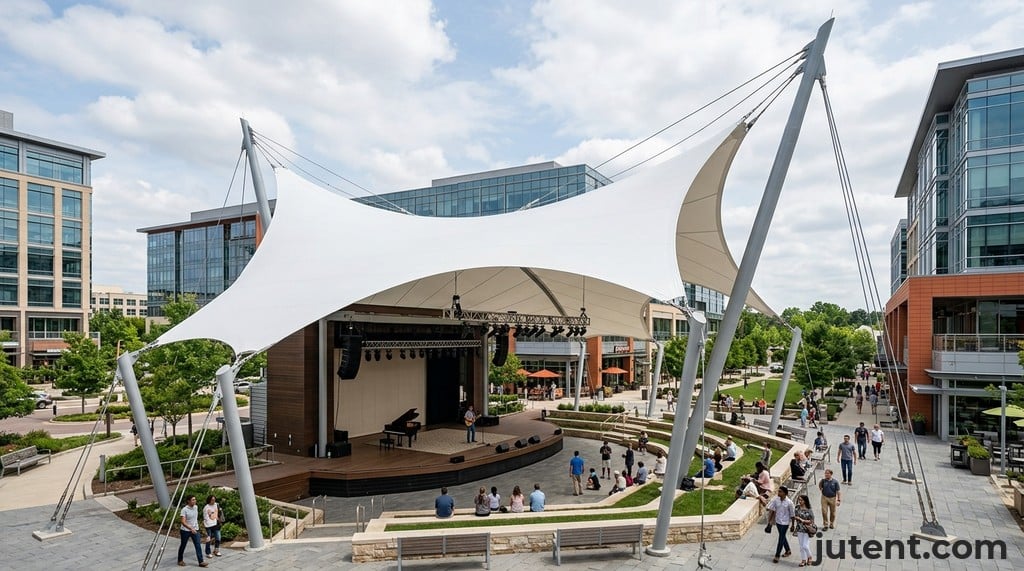
สิ่งที่ต้องระบุเมื่อนำเข้า: เกรดเมมเบรน เหล็ก และเอกสารประกอบ
When importing an outdoor หลังคาเวที, precise specifications are paramount to ensure the structure meets local building codes, environmental conditions, and project requirements. The primary components to specify are the membrane material, the structural steel, and the necessary documentation for import and local approval.
เกรดเมมเบรน
The choice of membrane material is critical for durability and performance in Africa's varied climates.
* เมมเบรน PVDF: A common choice, typically 1050 g/m², offering excellent UV resistance and self-cleaning properties. It comes with a 10-year warranty and a service life of 15+ years. For simple forms, expect costs around $40–$70/m², while complex forms might range from $60–$90/m².
* เมมเบรน PTFE: For projects requiring superior longevity and extreme weather resistance, PTFE is an upgrade. It adds approximately $20/m² to the PVDF range, offers a 15-year warranty, and boasts a service life of 25+ years. PTFE is particularly suitable for coastal regions or areas with intense solar radiation due to its exceptional resistance to degradation.
ข้อกำหนดเหล็ก
Structural steel forms the backbone of the canopy. Jutent Engineering primarily uses Q235B and Q355B steel grades, known for their strength and weldability.
* การรักษาพื้นผิว: For African conditions, hot-dip galvanizing is highly recommended for maximum corrosion protection, especially in humid or coastal environments. Alternatively, an epoxy zinc-rich primer followed by a fluorocarbon topcoat or an acrylic topcoat provides reliable protection.
* Stainless Steel: For connections and specific components, SS304 is standard, with SS316 available as an optional upgrade for enhanced corrosion resistance in highly corrosive environments.
เอกสารประกอบ
Accurate and thorough documentation is essential for smooth import and local permitting. For export projects, Jutent can provide design drawings, calculations, material specifications, installation manuals, and free remote guidance, subject to project scope and contract terms. These documents are crucial for demonstrating compliance with local engineering standards and facilitating customs clearance. Typical technical values should always be written conservatively and described as subject to project design, ensuring flexibility while maintaining safety standards. Outdoor Stage Canopy คำแนะนำ
Shipping to African Ports: How Stage Structures Are Packed and Delivered
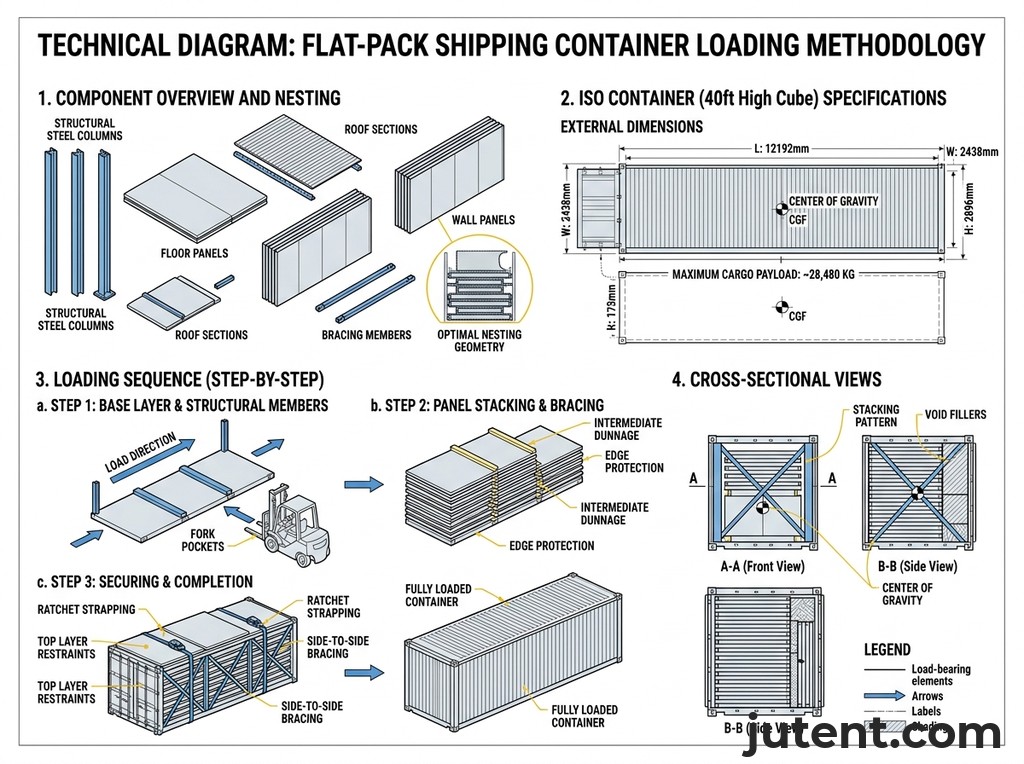
The logistics of shipping large tensile structures from China to African ports require meticulous planning and specialized packing to ensure all components arrive safely and intact. The process is designed to optimize container space, protect materials from transit damage, and facilitate efficient unloading and assembly on site.
Packing Methodology
Steel components, including columns, beams, and connection plates, are carefully flat-packed. This method maximizes space utilization within shipping containers, reducing the overall number of containers required and thus lowering shipping costs. Each steel piece is individually wrapped or bundled to prevent scratching and abrasion during transit. Smaller components, such as cables, tensioning hardware, and fasteners (typically SS304 standard, with SS316 optional), are securely boxed and labeled.
Membrane panels, whether PVDF or PTFE, are rolled onto reliable cores and then carefully wrapped in protective layers to shield them from moisture, dust, and physical damage. This prevents creasing or tearing, which could compromise the membrane's integrity and aesthetic appeal. All packages are clearly marked with contents and corresponding project identifiers to simplify inventory management upon arrival.
Container Loading and Delivery
A standard 20ft shipping container can typically accommodate a stage canopy ranging from 150m² to 250m², depending on the complexity of the structure and the density of the steel components. For larger projects, 40ft containers or multiple containers may be used. Jutent Engineering coordinates with reputable shipping lines to ensure reliable transit to major African ports such as Durban (South Africa), Lagos (Nigeria), Mombasa (Kenya), and Tema (Ghana).
Upon arrival at the destination port, contractors are responsible for customs clearance and onward transport to the project site. Jutent provides all necessary shipping documentation, including packing lists, bills of lading, and certificates of origin, to assist with this process. While Jutent offers free remote guidance for installation, on-site supervision is available as a paid service, providing expert assistance during the critical assembly phase. This end-to-end approach ensures that even complex structures can be delivered and erected efficiently across the continent.
การเปรียบเทียบต้นทุน: การนำเข้า vs การผลิตในท้องถิ่นในตลาดสำคัญของแอฟริกา
When considering an outdoor stage canopy project in Africa, a detailed cost comparison between importing from China and local fabrication is essential. While local options might seem appealing due to proximity, the reality often reveals significant cost advantages and quality benefits when sourcing internationally.
Local Fabrication Challenges and Costs
In countries like South Africa, Nigeria, and Kenya, local fabrication of large-span tensile structures often faces several hurdles:
* ความพร้อมของวัสดุ: High-grade structural steel (Q235B, Q355B) and specialized tensile membranes (PVDF, PTFE) may need to be imported by local fabricators, adding to their costs and lead times.
* Expertise and Equipment: Specialized engineering, design software, and fabrication equipment for tensile structures are not universally available, leading to higher labor costs for skilled personnel or compromises in design complexity.
* Economies of Scale: Local manufacturers may not benefit from the economies of scale that large Chinese factories do, resulting in higher unit costs.
* การควบคุมคุณภาพ: Ensuring consistent quality for both materials and fabrication can be more challenging without established international certifications like ISO 9001 and SGS.
These factors often push local fabrication costs for a PVDF membrane, simple form structure (e.g., 100-200m²) to upwards of $80–$120/m², and potentially higher for complex designs or PTFE membranes.
Import Advantages and Costs from China
Importing from China, particularly from manufacturers like Jutent, offers a more competitive pricing structure:
* Direct Material Sourcing: Access to a global supply chain ensures competitive pricing for high-quality materials.
* Economies of Scale: Large production volumes allow for lower manufacturing costs per square meter.
* Specialized Expertise: Decades of experience in tensile structure engineering and fabrication ensure efficient production.
* Transparent Pricing:
* โครงสร้างเมมเบรนเทนไซล์ (เหล็กน้อยที่สุด): $30–$50/ตร.ม.
* เมมเบรน PVDF รูปทรงเรียบง่าย: $40–$70/ตร.ม.
* เมมเบรน PVDF รูปทรงซับซ้อน: $60–$90/ตร.ม.
* PTFE membrane: add ~$20/m² to PVDF range.
* These prices are EXW (Ex Works) per m² for projects with a minimum scope of 100 m².
While shipping costs and import duties need to be factored in, the significant difference in EXW prices often makes the total landed cost from China more economical. For example, a 150m² PVDF simple form canopy might cost $6,000–$10,500 EXW from China, compared to potentially $12,000–$18,000 or more for local fabrication before considering quality and warranty differences. The 1-year overall project warranty, coupled with 10-year (PVDF) or 15-year (PTFE) membrane warranties, further adds value.
คำถามที่พบบ่อย
- Q: How are outdoor stage canopies shipped to Africa from China?
- A: Steel components are flat-packed into containers, optimizing space and protecting materials during transit. Membrane panels are rolled onto cores and carefully wrapped. A standard 20ft container can typically carry a 150–250m² stage canopy, depending on its design and material density. All packages are clearly labeled for efficient inventory management upon arrival at major African ports like Durban, Lagos, or Mombasa.
- Q: What import duties apply to stage canopy structures in African countries?
- A: Import duties vary significantly by country across Africa. These duties are typically calculated based on the Harmonized System (HS) code of the goods and the declared value. Jutent provides thorough HS code documentation, along with detailed material specifications and certificates of origin, to help contractors accurately assess and potentially minimise duty exposure in their specific African market. It is advisable for contractors to consult with local customs brokers for precise duty calculations.
แจ้งตำแหน่งที่ตั้งโครงการของคุณในแอฟริกา แล้วเราจะจัดทำการเปรียบเทียบต้นทุนและแผนการขนส่งให้