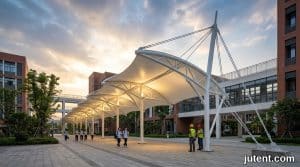

Ở các vùng ven biển thường xuyên có bão, nhà cung cấp mái hiên lối đi trường học phải chịu được gió 250 km/h. Ở vùng nhiệt đới, nó phải đối mặt với chỉ số UV 11+ quanh năm. Ở khu vực mưa nhiều, nó phải thoát được 300mm lượng mưa gió mùa hàng tháng mà không gây quá tải hệ thống thoát nước của khuôn viên trường. A nhà cung cấp mái hiên lối đi trường học Lắp đặt tại Đông Nam Á không phải là một tấm che nắng tiêu chuẩn—đó là một tài sản kết cấu chính đòi hỏi kỹ thuật cụ thể cho thời tiết khắc nghiệt. Hướng dẫn này bao gồm những gì các nhà thầu ở Philippines, Malaysia và Indonesia cần chỉ định cho lối đi có mái che trường học các dự án để đảm bảo sự tồn tại của kết cấu, tuổi thọ của màng, và tuân thủ quy định địa phương trước khi nộp hồ sơ dự thầu. Dựa vào các khái niệm kiến trúc chung chung thay vì dữ liệu kỹ thuật cụ thể theo khu vực sẽ đảm bảo việc vượt ngân sách trong giai đoạn mua sắm. Hiểu được các cấp độ vật liệu chính xác và tải trọng kết cấu cần thiết sẽ bảo vệ lợi nhuận dự án của bạn.
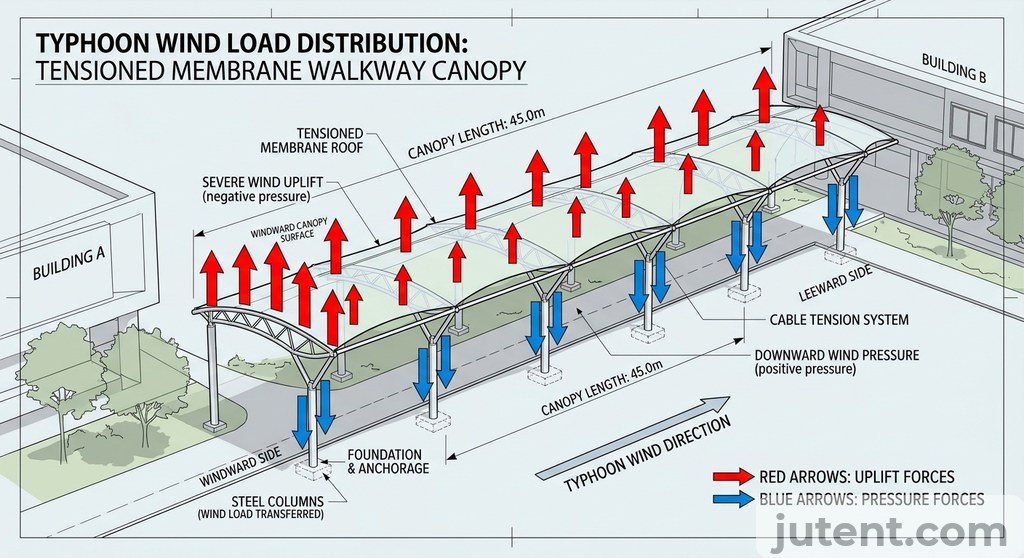
Yêu cầu về tải trọng gió cho mái che lối đi trong trường học ở khu vực thường xuyên có bão
Luôn xác minh tính toán tải trọng gió với kỹ sư kết cấu có giấy phép cho vị trí dự án cụ thể của bạn.
Kinh nghiệm của công ty nên được mô tả thông qua kinh nghiệm xuất khẩu đã được xác minh và năng lực hỗ trợ dự án, thay vì những giai thoại dự án không có cơ sở.
Ở những khu vực có nguy cơ bão vừa phải, tốc độ gió thiết kế thường dao động từ 120 km/h đến 160 km/h tùy thuộc vào khoảng cách đến bờ biển và quy chuẩn xây dựng địa phương. Luôn xác minh vùng gió cụ thể cho vị trí dự án của bạn., các nhà thầu thường chỉ định cột SHS 100×100×4mm sử dụng thép mác Q355B (hoặc tương đương S355JR) cho vùng gió mạnh, đảm bảo độ bền chảy đáp ứng các tính toán tải trọng kết cấu yêu cầu. Chi tiết kết nối yêu cầu dung sai nghiêm ngặt trên tất cả các khu vực. Phần cứng căng màng phải sử dụng ty ren và cáp thép không gỉ cấp hàng hải 316 để ngăn rung động do gió gây mỏi các điểm kết nối trong suốt vòng đời của kết cấu.
Mái che lối đi chống tia UV: Yêu cầu về cấp độ màng cho trường học nhiệt đới
Lập kế hoạch ngân sách cần tính đến các yêu cầu kỹ thuật cụ thể của địa điểm và điều kiện quy chuẩn địa phương.
Lập kế hoạch ngân sách nên dựa trên loại kết cấu, nhịp thông thủy, cấp độ gió, cấp độ màng, trọng lượng thép và phạm vi dự án. Để có báo giá chính xác EXW, FOB, CIP hoặc DDU, cần xem xét trước các kích thước dự án và yêu cầu kỹ thuật.
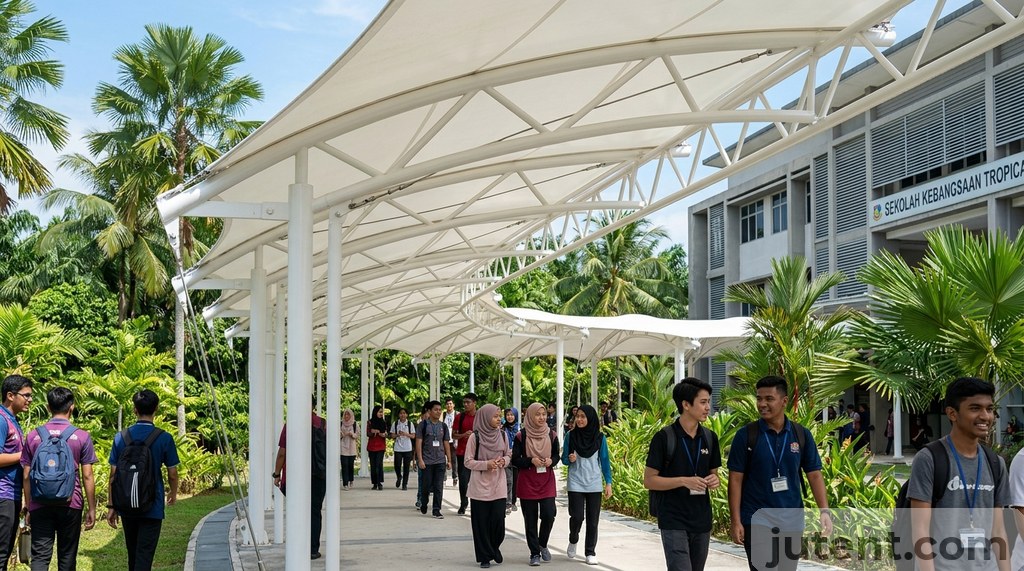
Để so sánh chi tiết vật liệu, vui lòng tham khảo Hướng dẫn chi tiết về mái che lối đi trường học để so sánh vật liệu. Ngoài độ bền, màng polyester phủ PVDF 1050g/㎡ (trọng lượng vải nền 900g/㎡ với lớp phủ PVDF 150g/㎡) đạt chỉ số UPF 50+, chặn 98% bức xạ UV có hại. Đây là yêu cầu quan trọng về sức khỏe và an toàn cho học sinh khi di chuyển giữa các dãy phòng học. Màng cũng cần chỉ rõ loại có độ xuyên sáng cao (thường từ 12% đến 15% truyền sáng) để loại bỏ nhu cầu chiếu sáng nhân tạo vào ban ngày, giúp giảm đáng kể chi phí năng lượng vận hành của trường trong suốt vòng đời công trình.
Kết cấu mái che lối đi chống thấm: Thiết kế thoát nước cho trường học ở khu vực mưa lớn
Đông Nam Á trải qua mùa gió mùa dữ dội, với tốc độ mưa cao điểm thường xuyên vượt quá 100mm mỗi giờ. Một lối đi có mái che trường học thông số kỹ thuật Malaysia phải tích hợp hệ thống thoát nước chủ động để ngăn ngừa đọng nước trên màng và bảo vệ học sinh khỏi dòng chảy mạnh khi di chuyển giữa các lớp học.
Cách tiếp cận tiêu chuẩn là để nước chảy tràn ra khỏi các mép mái che là không thể chấp nhận được trong môi trường trường học, vì nó tạo ra nguy cơ trượt ngã nghiêm trọng trên các lối đi bê tông liền kề và làm xói mòn cảnh quan xung quanh. Thay vào đó, màng căng phải được thiết kế với độ dốc tối thiểu 15 độ để tăng tốc dòng nước về phía các điểm thu gom được chỉ định.
Ở mép dưới của màng, nước được dẫn vào hệ thống máng xối liên tục bằng nhôm hoặc thép, thường có kích thước rộng 150mm để xử lý dòng chảy tốc độ cao. Từ máng xối, nước chảy xuống qua các ống thoát nước PVC giấu kín được tích hợp bên trong các cột thép chính. Đối với lối đi bộ tiêu chuẩn rộng 3 mét, một ống thoát nước đường kính 100mm đặt cách nhau 6 mét là đủ để xử lý lưu lượng mưa cao điểm vào mùa mưa mà không bị tràn.
Để ngăn chặn tắc nghẽn do lá cây và mảnh vụn trong khuôn viên, hệ thống máng xối phải bao gồm lưới chắn lá bằng thép không gỉ. Đế của mỗi ống thoát nước ở cột phải được kết nối trực tiếp với hệ thống thoát nước mưa ngầm của trường học, đảm bảo bề mặt lối đi bộ luôn khô ráo và an toàn trong những trận mưa lớn vào buổi chiều.
Yêu cầu về giấy phép mái che lối đi trường học cho khu vực nhiệt đới
Xin giấy phép xây dựng cho một mái che lối đi trường học Philippines dự án ở khu vực thường xuyên có bão đòi hỏi tài liệu kỹ thuật cụ thể đáp ứng chính quyền xây dựng địa phương. Hồ sơ không thể dựa vào hình ảnh kiến trúc chung chung; cần có tính toán kết cấu có đóng dấu ướt chứng minh tuân thủ tuyệt đối NSCP.
Kinh nghiệm của công ty nên được mô tả thông qua kinh nghiệm xuất khẩu đã được xác minh và năng lực hỗ trợ dự án, thay vì những giai thoại dự án không có cơ sở.
Tại một số thị trường Đông Nam Á, việc phê duyệt qua hội đồng thành phố địa phương yêu cầu tuân thủ nghiêm ngặt các quy định xây dựng quốc gia.