

“`html
A tensile membrane structure is a lightweight architectural system that uses a flexible fabric membrane (such as PVDF-coated PVC or PTFE) stretched over a steel frame to create large, column-free covered spaces. For hotel applications, these canopies provide elegant, weather-resistant shade for entrances, pool areas, and outdoor dining. A hotel tensile canopy in Southeast Asia operates under two non-negotiable environmental constraints: Category 5 typhoon wind loads and extreme tropical UV degradation. For engineering contractors in the Philippines, Malaysia, and Indonesia, specifying a membrane structure for a resort entrance, poolside lounge, or outdoor dining area goes far beyond standard architectural shading. It requires designing for dynamic wind uplift exceeding 250 km/h, managing monsoon rainfall rates of 100mm per hour, and surviving year-round UV Index 12+ exposure without material breakdown.
Standard commercial shade structures engineered for temperate climates will fail in this region—often within the first three years of deployment. Under severe lateral wind pressure, undersized steel frames will deflect. Simultaneously, standard membranes will suffer from thermal creep and permanently elongate under the tropical heat, resulting in a critical loss of prestress. Furthermore, base plates and tensioning hardware will rapidly corrode in the salt-laden, high-humidity coastal air typical of C5 marine environments. Whether covering a porte-cochère or a central courtyard, the structural physics remain unforgiving.
This guide details the exact structural sizing, architectural membrane grades (such as PTFE and PVDF-coated PVC), and drainage capacities required to engineer a resilient, typhoon-rated system. We also answer common contractor questions about tensile canopy lifespan (15-20 years with proper PVDF specification) and typical cost ranges for Southeast Asian projects. By adhering to these technical baselines, contractors can ensure their hospitality projects meet local wind codes, withstand the region's severe climate, and maintain the pristine, high-tension aesthetic demanded by luxury hotel brands.
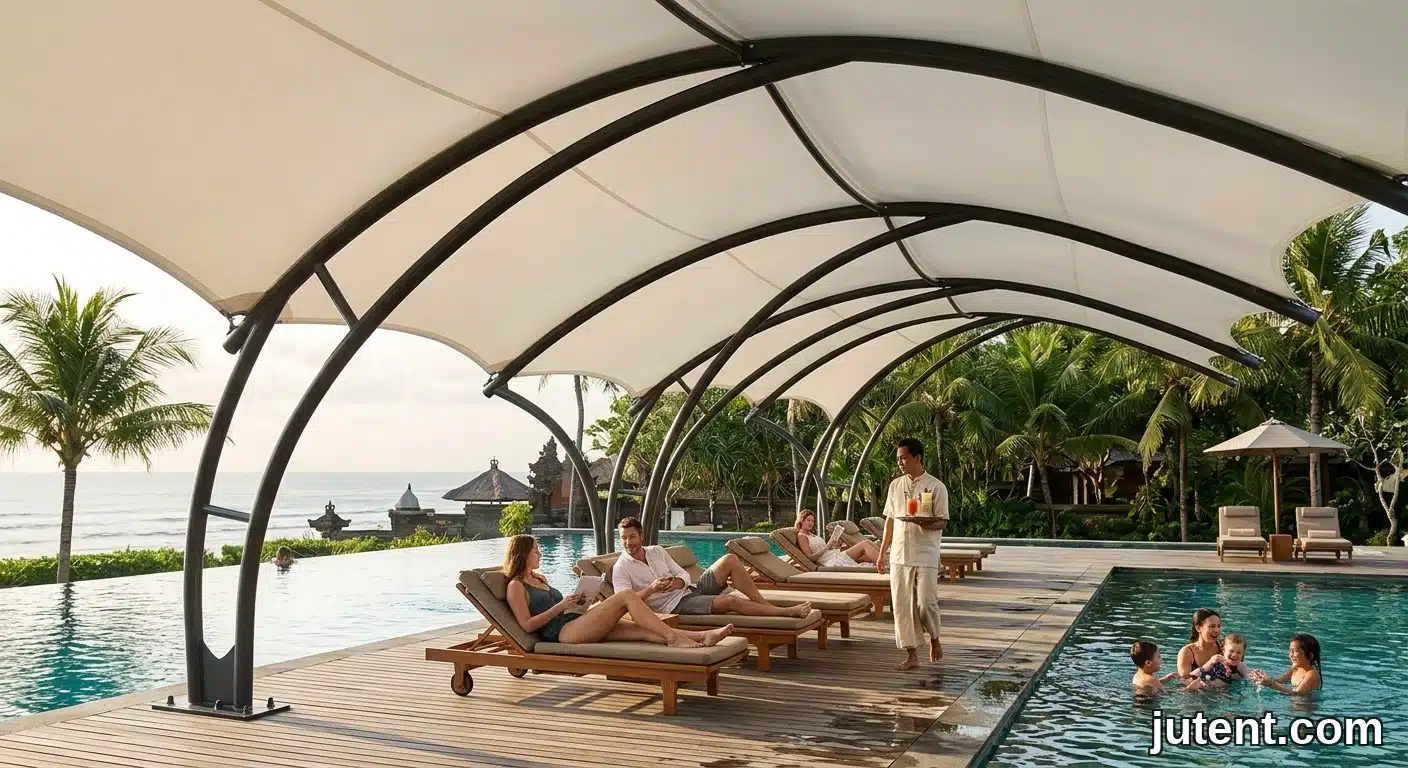
Typhoon Wind Load Requirements in Southeast Asia

Wind load determines the primary steel sizing, connection detailing, and foundation depth for any Hotel Leisure structure in this region. A hotel tensile canopy in the Philippines must comply with the National Structural Code of the Philippines (NSCP), mandating design wind speeds ranging from 200 km/h (Zone III) to 250 km/h (Zone IV) for coastal and island provinces. Always verify the specific wind zone for your project location with the latest NSCP edition.
For these lateral loads, structural steel specifications exceed standard commercial canopies. A typical 15m × 10m hotel drop-off canopy rated for 250 km/h requires primary columns sized at a minimum of 200×200×8mm Square Hollow Section (SHS) using Q355B high-strength structural steel (equivalent to S355JR per EN 10025 or ASTM A572 Grade 50). Standard 150×150×6mm columns risk structural failure under these forces.
Base plate connections require equivalent upgrades. A typhoon-rated hotel tensile canopy utilizes 25mm to 30mm thick steel base plates with at least six M24 chemical anchors per column. While a 400mm embedment depth is the baseline, poor coastal soil conditions often necessitate deeper pile foundations to resist 250 km/h uplift forces.

Contractors building a hotel tensile canopy Malaysia or Indonesia face lower baseline wind requirements—typically 120 to 150 km/h based on coastal exposure. The steel frame must remain rigid enough to prevent deflection that could tear the tensioned membrane during storms.
UV Protection in Tropical Climates: Membrane Grade Requirements

Southeast Asia experiences year-round UV Index levels of 12 or higher. This intense solar radiation rapidly degrades standard architectural fabrics, causing discoloration, micro-cracking, and eventual loss of tensile strength.
For a hotel tensile canopy in Malaysia, Indonesia, or the Philippines, 1050g/㎡ PVDF (Polyvinylidene Fluoride) is the baseline membrane specification. The fluorocarbon surface layer reflects UV radiation rather than absorbing it, allowing the fabric to maintain its structural integrity, self-cleaning properties, and bright white aesthetic for a functional lifespan of 15 to 20 years, backed by a standard 10-12 year material warranty against UV degradation and micro-cracking. The high-gloss finish of a premium PVDF membrane also provides a critical self-cleaning function. In regions with high humidity and airborne particulate matter, this prevents the buildup of mold and dirt, ensuring the canopy requires minimal maintenance from the hotel's facility management team.

The specification error we see most often in tropical climates is selecting 950g/㎡ PVDF instead of 1050g/㎡ to reduce cost. The price difference is approximately $3–5/㎡. The lifespan difference is 5–8 years. The math does not support the saving.
When reviewing a Hotel Tensile Canopy Guide, contractors must verify the membrane's base polyester yarn density. A true 1050g/㎡ architectural fabric utilizes a 1000×1000 denier panama weave. This high-density base fabric provides the mechanical tear resistance necessary to withstand the localized stress at the membrane corner plates during high wind events. Lower-grade fabrics will elongate permanently under tropical heat, leading to irreversible ponding, aesthetic degradation, and eventual structural failure.
Drainage Design for High-Rainfall Environments
Monsoon seasons in Southeast Asia deliver extreme rainfall intensities exceeding 100mm per hour. A hotel tensile canopy in Indo
“`


