
“`html
Typhoon-Rated Industrial Tensile Structure: Warehouse Canopies for Southeast Asia
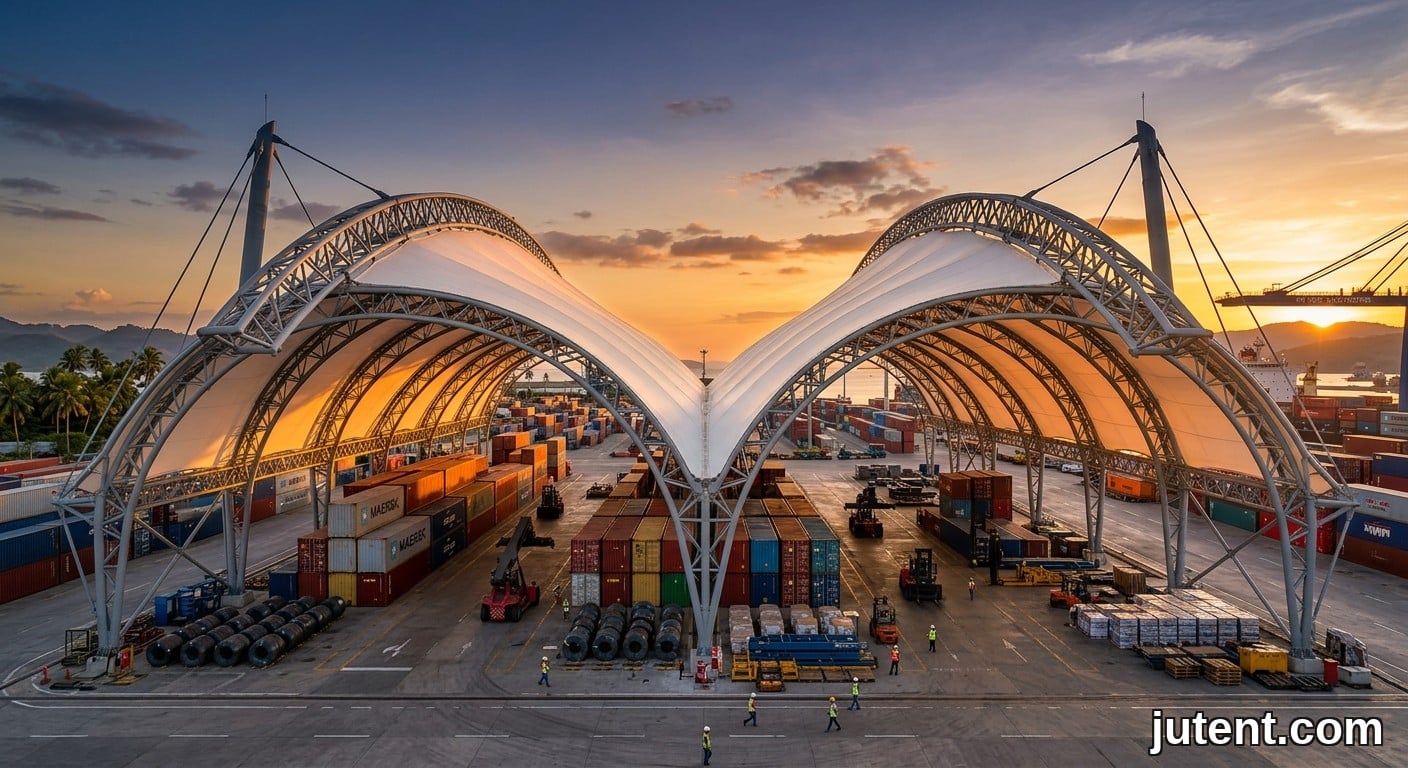
A warehouse tensile canopy in Southeast Asia must solve three problems that most temperate-zone specifications never address: typhoon-rated wind loads, sustained tropical UV degradation, and drainage volumes that can exceed 200 mm per hour during monsoon events. Contractors and procurement managers in the Philippines, Malaysia, Vietnam, and Indonesia regularly encounter these challenges when sourcing from suppliers who lack regional design experience. This guide covers the critical engineering decisions — from wind load calculation methods and membrane grade selection to drainage geometry and steel surface treatment — so that your next warehouse tensile canopy project in Southeast Asia is specified correctly from the start and built to last.
What Is a Tensile Membrane Structure for Warehouses?
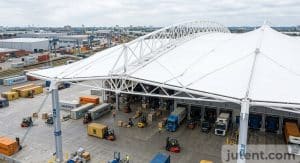
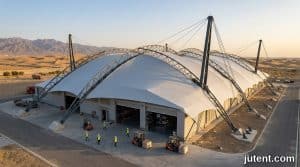
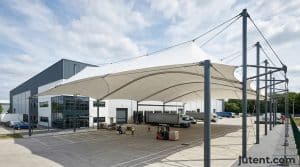
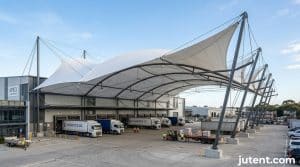
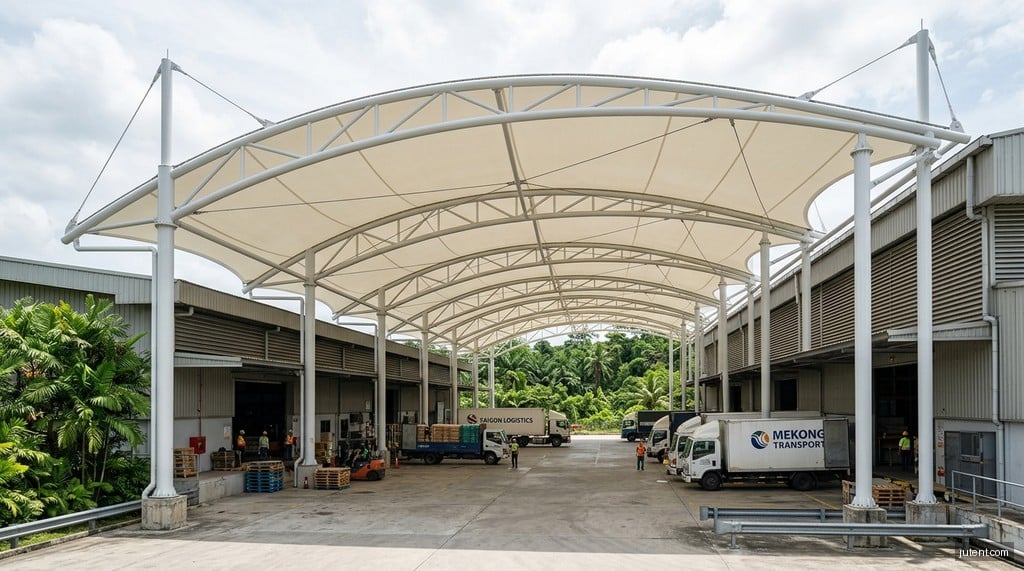
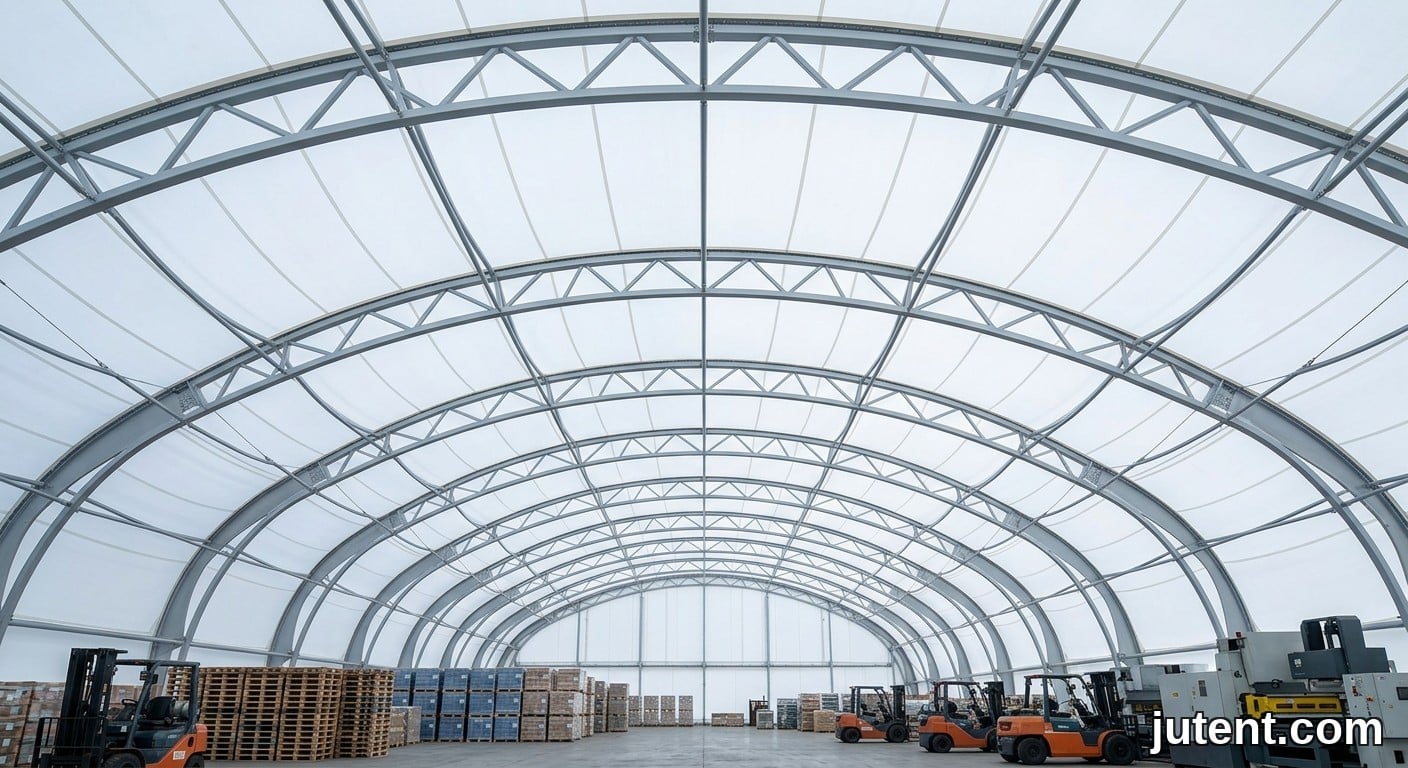
A tensile membrane structure for warehouses uses a flexible fabric membrane stretched over a steel framework to create a large, column-free covered space. Unlike traditional rigid roofing, the membrane is held in tension, allowing for lightweight, long-span designs that are ideal for industrial storage and logistics operations. For a deeper technical explanation, visit our dedicated page on what is a tensile membrane structure.
Typhoon Wind Load Requirements in Southeast Asia
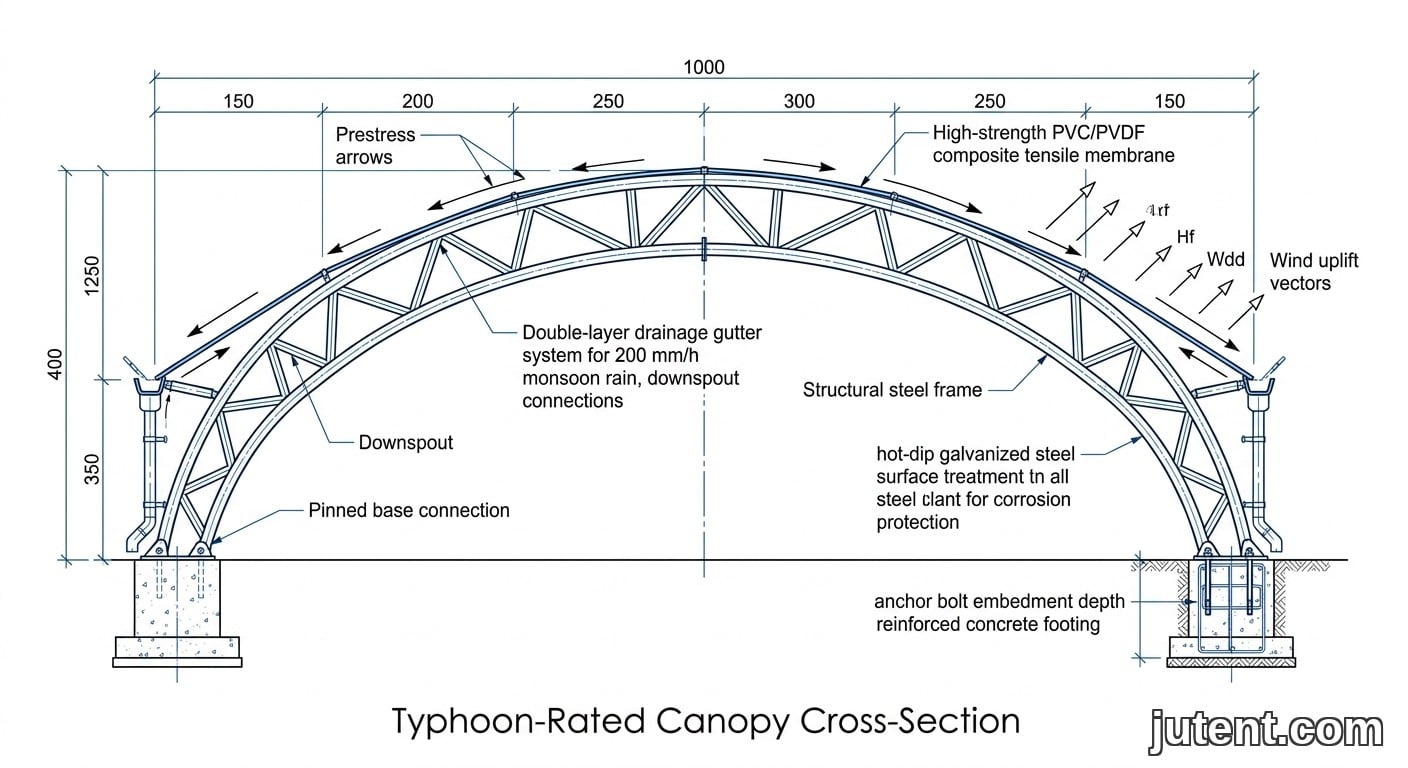
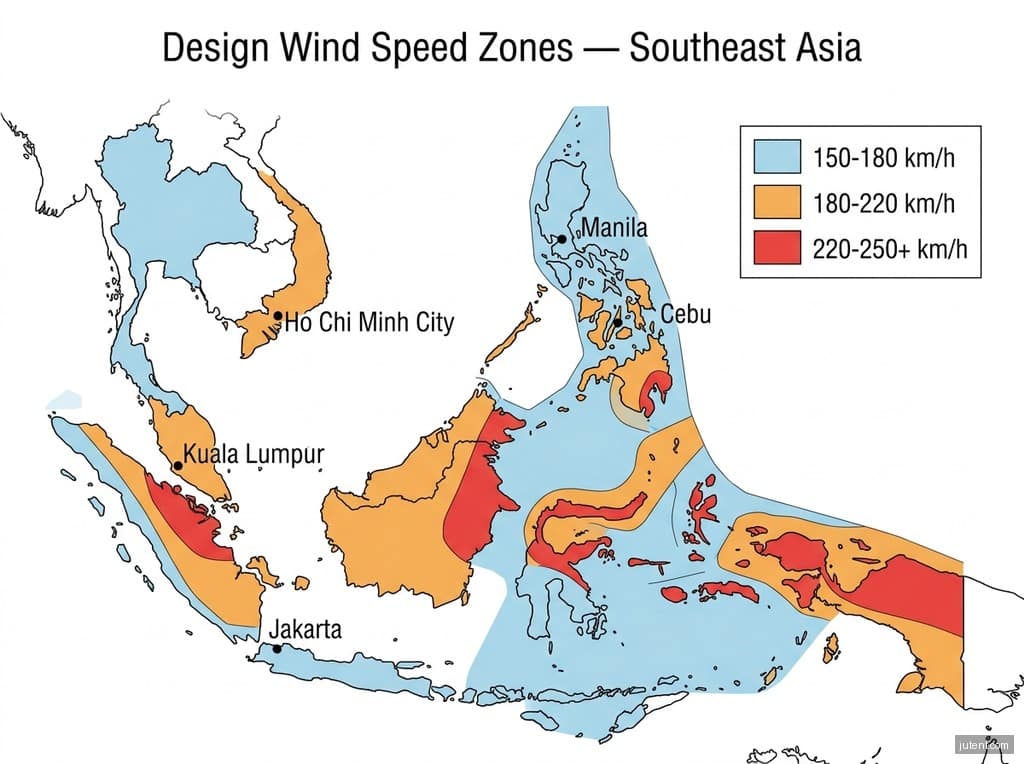
Designing a warehouse tensile canopy for Southeast Asia means confronting some of the world's most extreme wind events. Typhoons, known as tropical cyclones or hurricanes in other regions, bring devastating wind speeds that can exert immense pressure on large surface areas like warehouse roofs. Local building codes, such as the National Structural Code of the Philippines (NSCP), are explicit about the design wind speeds required, often exceeding 200 km/h in many coastal areas. Ignoring these specifications is not an option; it risks structural failure, property damage, and significant safety hazards.
Engineers must perform detailed wind load analysis, considering factors like the building's height, location (coastal vs. inland), terrain category, and the canopy's geometry. The structural steel framework – typically Q235B or Q355B – must be engineered to withstand these dynamic forces, with connections and foundations designed for uplift and lateral loads. Anchorage systems, including foundation bolts and plates, are critical components that transfer these forces safely to the ground. Based on Jutent's experience across 400+ projects in 30+ countries, we consistently specify heavy-section steel members and connection details to meet or exceed regional typhoon-rated standards. For export projects, Jutent can provide design drawings, calculations, material specifications, installation manuals, and free remote guidance, subject to project scope and contract terms.
UV Protection in Tropical Climates: Membrane Grade Requirements
The tropical sun in Southeast Asia delivers an unrelenting dose of ultraviolet (UV) radiation, which can rapidly degrade conventional materials. For a warehouse tensile canopy, the membrane is the primary shield against these elements, making its UV resistance paramount. Standard PVC membranes, while cost-effective for some applications, often lack the long-term UV stability required for this region, leading to premature material degradation, discolouration, and loss of mechanical properties.
High-performance membranes like PVDF (Polyvinylidene Fluoride) and PTFE (Polytetrafluoroethylene) are essential for tropical climates. PVDF membranes, such as Jutent's standard 1050 g/m² option, offer excellent UV resistance, maintaining their integrity and aesthetic appeal for 15+ years. PTFE membranes provide even greater longevity, with a service life exceeding 25 years and superior resistance to environmental factors. The choice between PVDF and PTFE depends on the project's budget, desired lifespan, and specific environmental exposures. Both types feature advanced surface treatments that reflect a significant portion of solar radiation, helping to reduce heat build-up underneath the canopy – a crucial benefit for warehouse operations in hot climates.
Warehouse Tensile Canopy Guide
Drainage Design for High-Rainfall Environments
Southeast Asia experiences some of the highest annual rainfall totals globally, often delivered in intense, short bursts. Effective drainage design for a warehouse tensile canopy is not merely an add-on; it's a fundamental engineering requirement to prevent water ponding, structural overload, and potential damage to stored goods. Inadequate drainage can lead to significant issues, including membrane stretching, corrosion of steel components, and even collapse under extreme water loads.
The design must account for peak rainfall intensity, which varies by location but can be substantial. Gutter systems, downspouts, and internal drainage channels must be sized appropriately to handle these volumes. The membrane's form itself plays a critical role; hyperbolic paraboloid (hypar) or conical shapes naturally shed water more effectively than flatter designs. Jutent engineers meticulously calculate catchment areas and flow rates to specify the correct gutter dimensions and downpipe diameters, typically using SS304 stainless steel for durability and corrosion resistance. Slopes within the membrane design are carefully co
Frequently Asked Questions
- What wind speed can a typhoon-rated warehouse tensile canopy withstand?
- Jutent designs warehouse tensile canopies to meet regional building codes, with typical design wind speeds of 200–250 km/h for coastal Southeast Asia. Specific wind load calculations are performed for each project based on local code requirements and site conditions.
- How does humidity affect a tensile membrane structure in tropical climates?
- High humidity accelerates corrosion of steel components and can promote biological growth on membrane surfaces. Jutent addresses this by specifying hot-dip galvanized or stainless steel for all structural elements and using anti-fungal, anti-algal surface treatments on PVDF and PTFE membranes.
- What is the lifespan of a PVDF membrane in a warehouse canopy?
- Jutent's standard 1050 g/m² PVDF membrane has a service life of 15+ years in tropical climates, with UV-resistant surface treatment that prevents degradation.
- How much does a warehouse tensile canopy cost in Southeast Asia?
- Cost depends on span, membrane grade (PVDF vs PTFE), and steel specification. For a typical 2,000 m² canopy with PVDF membrane and typhoon-rated steel, budget approximately $45–$65 per m², excluding foundation and installation. Contact Jutent for a project-specific quote.
“`