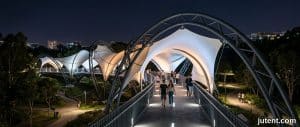
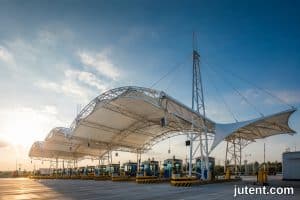
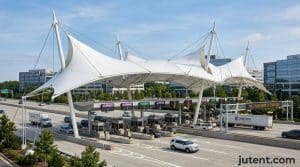
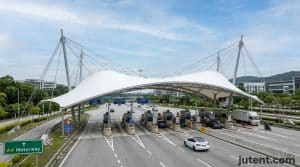
Not every tensile structure manufacturer can deliver a toll station canopy with the wind rating and documentation your project requires. Here's what to verify before signing. This guide applies equally to highway toll canopies, gas station canopy tensile structures, and EV charging station canopies.
Why Your Toll Booth Canopy Manufacturer Selection Matters for Wind Load Compliance
Selecting the right toll station canopy manufacturer is a critical decision that directly impacts project safety, longevity, and regulatory compliance. A toll station canopy is more than just a shelter; it's a structural element exposed to significant environmental stresses, particularly wind loads. Failure to specify and procure a canopy engineered to local conditions can lead to structural instability, costly repairs, and potential safety hazards. For contractors and procurement managers, this means a thorough due diligence process is non-negotiable. You need a supplier who can demonstrate proven engineering capabilities, verifiable material quality, and a reliable production and logistics chain. This is especially true for large-scale infrastructure projects where the consequences of structural failure are severe. Verifying a manufacturer's technical documentation, quality certifications, and project experience ensures that the final structure meets all required standards and performs reliably over its intended service life. Based on Jutent's experience across 400+ toll plaza tensile canopy projects in 30+ countries, overlooking these details can result in significant project delays and budget overruns. Toll Gas Stations
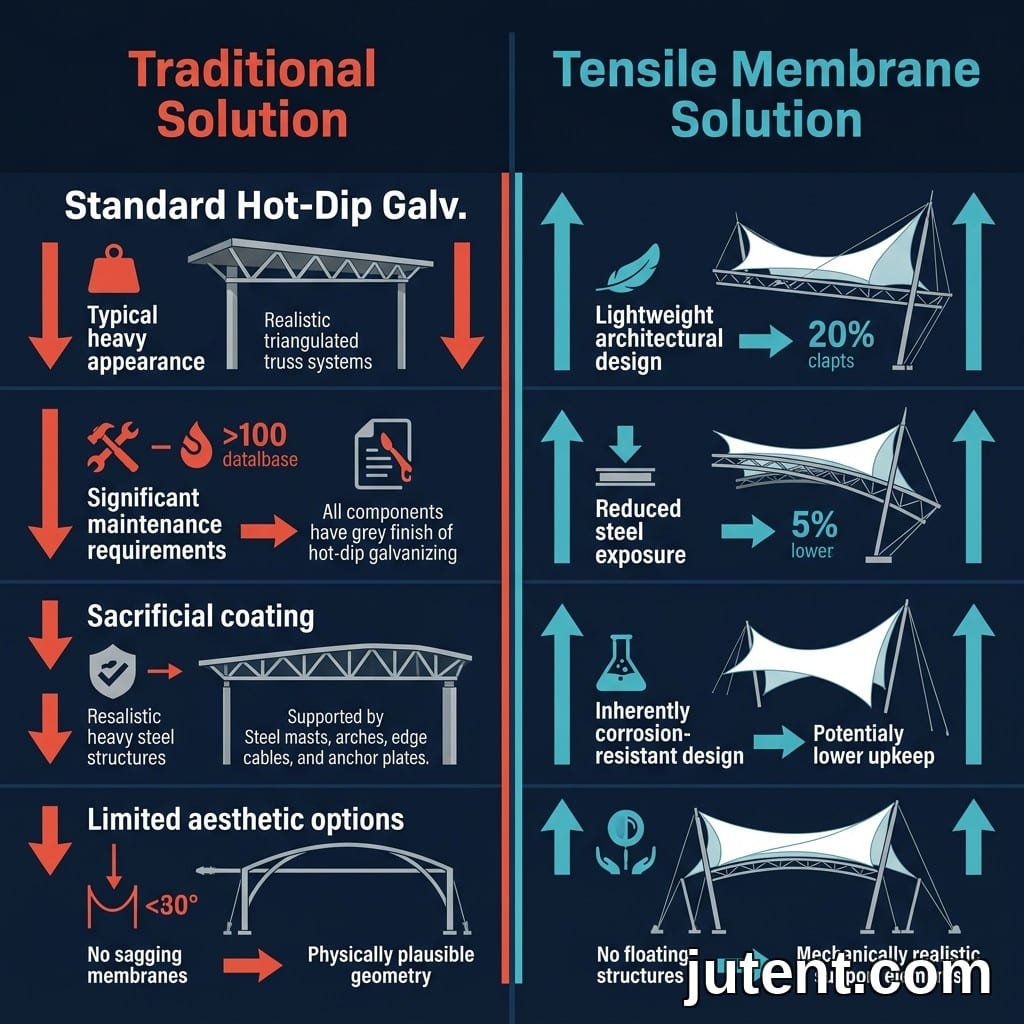
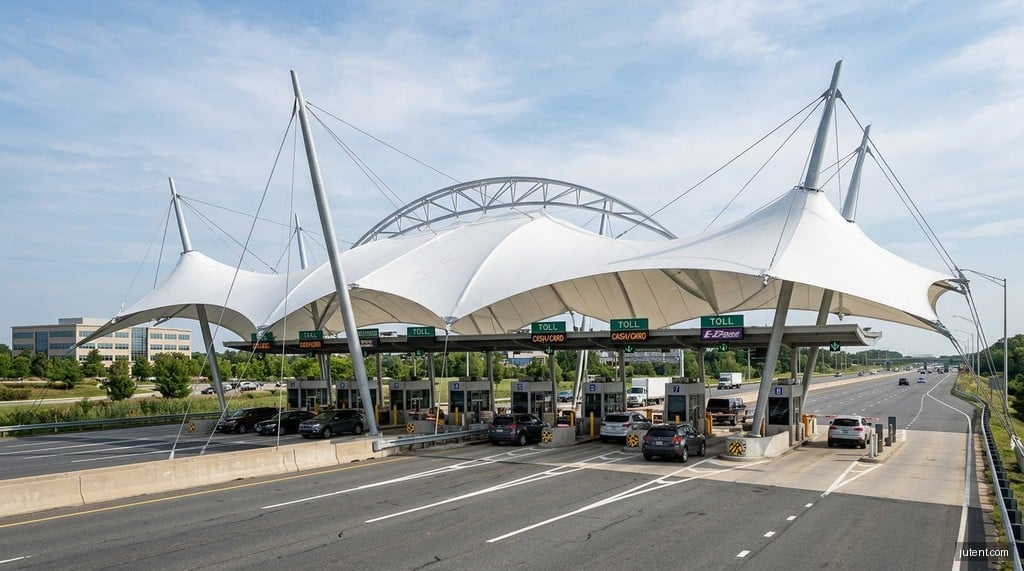
Engineering Capability: Wind Load and Structural Calculations
The structural integrity of a toll station canopy hinges on precise engineering calculations, particularly concerning wind load. Different geographic regions have varying wind speed requirements, and a reputable toll station canopy manufacturer must be able to design structures that withstand these specific forces. This involves detailed finite element analysis (FEA) and structural modeling. When evaluating a potential toll station canopy supplier, request complete engineering drawings and structural calculation reports. These documents should clearly outline the design parameters, material specifications (e.g., Q235B or Q355B steel grades), connection details, and the methodology used to determine wind resistance. For export projects, Jutent can provide design drawings, calculations, material specifications, installation manuals, and free remote guidance, subject to project scope and contract terms. Verify that the calculations are performed by qualified structural engineers and, if necessary, can be reviewed and stamped by a local registered engineer in your project's jurisdiction. A manufacturer's ability to provide transparent, verifiable engineering data is a primary indicator of their technical competence and commitment to safety. About
Membrane Brand and Test Certificates: What to Ask For
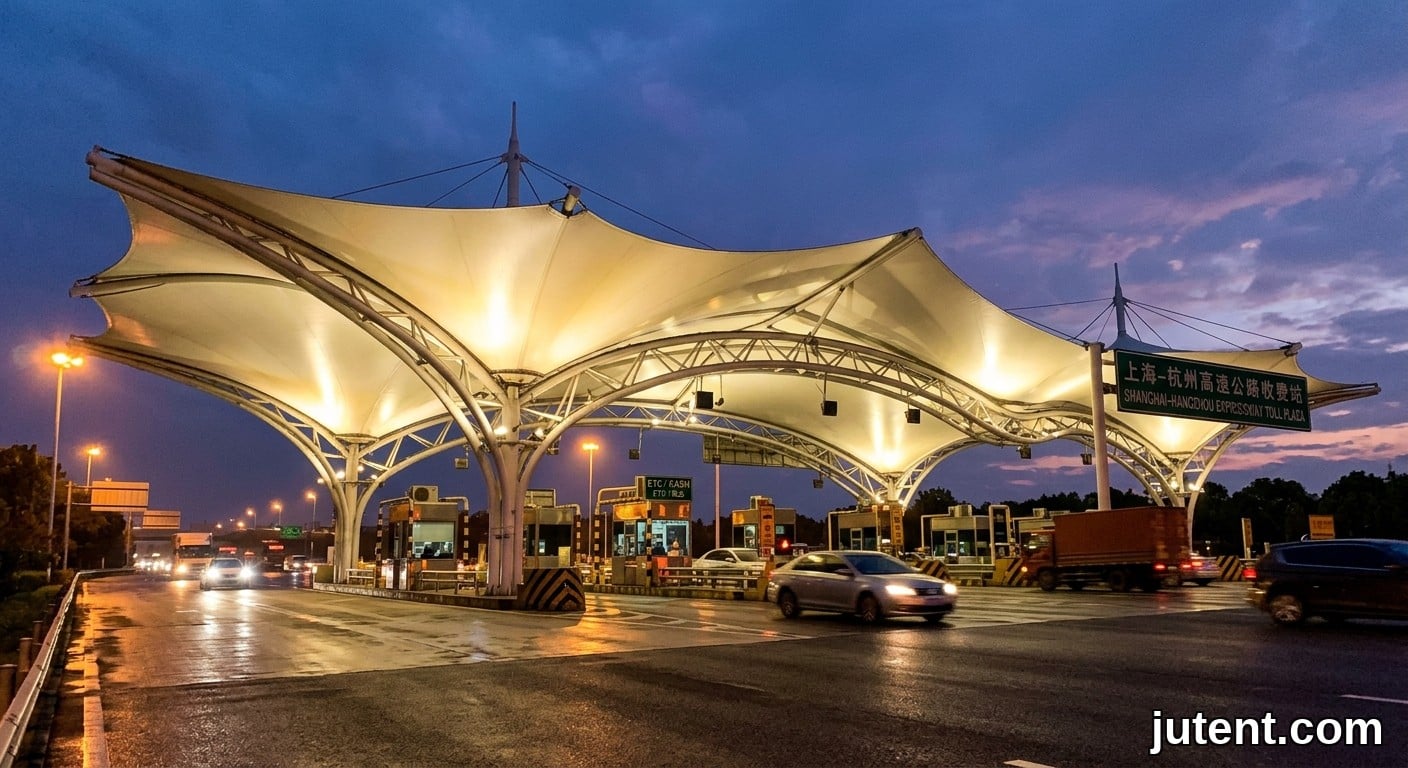
The tensile membrane is a key component of any toll station canopy, and its quality directly affects the structure's durability and performance. When engaging with a toll station canopy manufacturer, inquire about the specific membrane brands they use and demand corresponding test certificates. Reputable manufacturers will typically use high-quality PVDF or PTFE membranes, often with a standard weight of 1050 g/m². For PVDF membranes, expect a 10-year warranty and a service life of 15+ years. For PTFE membranes, a 15-year warranty and 25+ years service life are standard.
Key certificates to request include:
* Tensile Strength Test Reports: Verifying the membrane's ability to withstand tension without tearing.
* Tear Strength Test Reports: Confirming resistance to propagation of tears.
* Fire Retardancy Certificates: Essential for safety and compliance with building codes.
* UV Resistance Test Reports: Demonstrating the membrane's ability to resist degradation from sunlight.
* Self-Cleaning Property Certificates: For PVDF and PTFE, this indicates the membrane's ability to shed dirt and maintain appearance.
Always confirm that the certificates are current and directly correspond to the membrane material proposed for your project. A reliable toll station canopy factory will readily provide this documentation, ensuring transparency and material quality.
Production Lead Time and Logistics
Underst