
“`html
The sweltering heat and sudden, torrential downpours are a daily reality for contractors and developers across Southeast Asia. For sports facilities, this means specifying structures that not only provide essential shade but also stand resilient against the region's unique environmental challenges. From the Philippines' typhoon alley to Malaysia's humid coasts and Indonesia's high-rainfall zones, a standard sports court shade structure simply won't suffice. Engineering for extreme wind loads, relentless UV radiation, intense humidity, and efficient drainage is paramount. This article details the critical specifications required for sports court shade structures in tropical Southeast Asia, ensuring longevity and safety for your projects.
Typhoon Wind Load Requirements: Philippines, Malaysia, and Indonesia
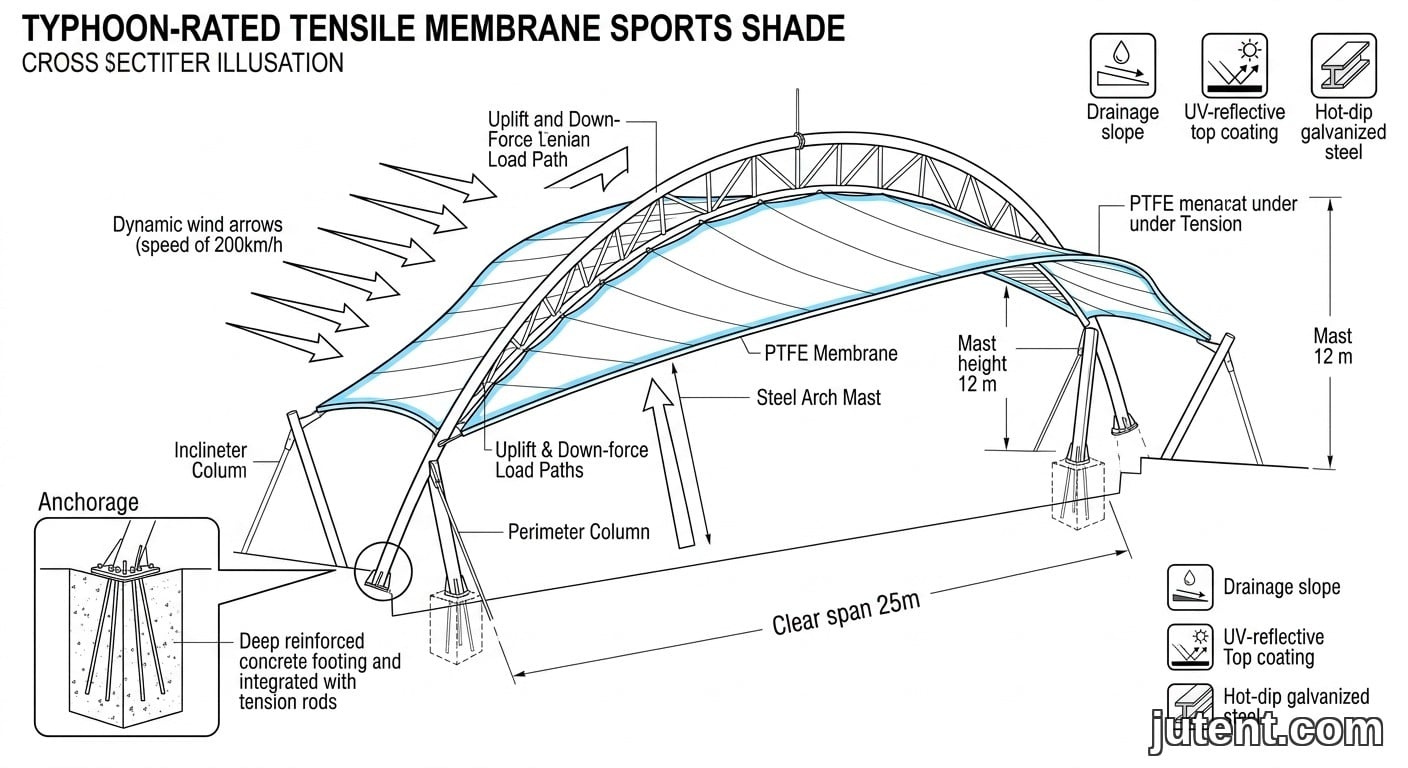
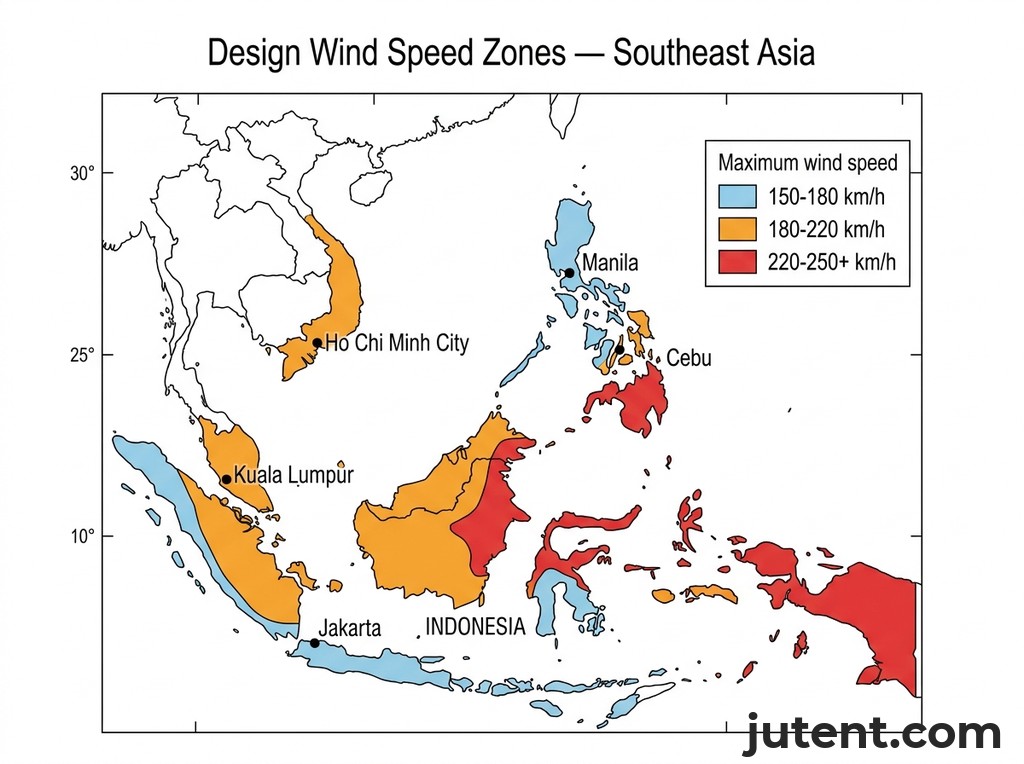
Designing a sports court shade structure in typhoon-prone regions like the Philippines, Malaysia, and parts of Indonesia demands a rigorous approach to wind load calculations. Unlike standard designs, these structures must withstand extreme wind speeds that can exceed 200 km/h. In the Philippines, the National Structural Code of the Philippines (NSCP) mandates specific design wind speeds, often ranging from 200–250 km/h, depending on the exact location and its proximity to coastal areas or known typhoon paths. Malaysia's Uniform Building By-Laws (UBBL) also specify wind load criteria, which, while perhaps not as universally high as the Philippines, still require careful consideration for coastal and exposed sites. Indonesia, with its vast archipelago, presents varying wind load requirements, but the potential for severe storms necessitates reliable engineering.
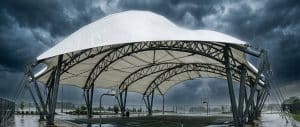
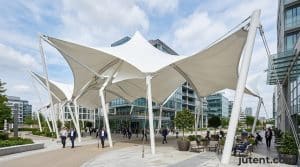
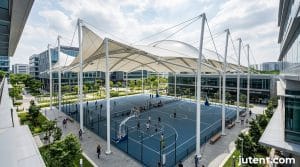
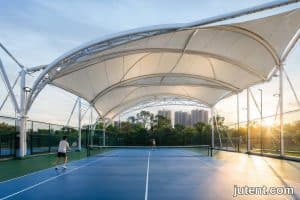
Jutent Engineering, with extensive experience across hundreds of projects in multiple countries, designs sports court canopies to meet or exceed these regional requirements. This involves detailed structural analysis using advanced software, considering factors like wind pressure coefficients, terrain categories, and the structure's height and geometry. The steel framework, typically Q235B or Q355B grade, is engineered for maximum stability, with connections designed to resist uplift and lateral forces. The tensile membrane itself, usually 1050 g/m² PVDF, is anchored securely to distribute loads effectively and prevent tearing or detachment during high winds. Specifying a sports court shade structure in these regions means prioritizing structural integrity above all else. Sport Court Shade
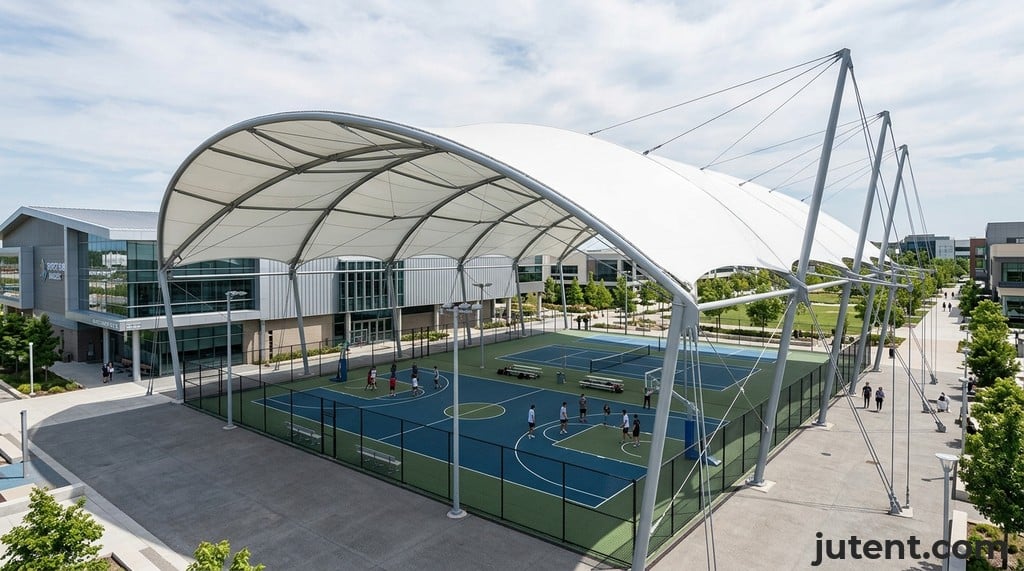
UV and Humidity: How Tropical Conditions Affect Membrane Longevity
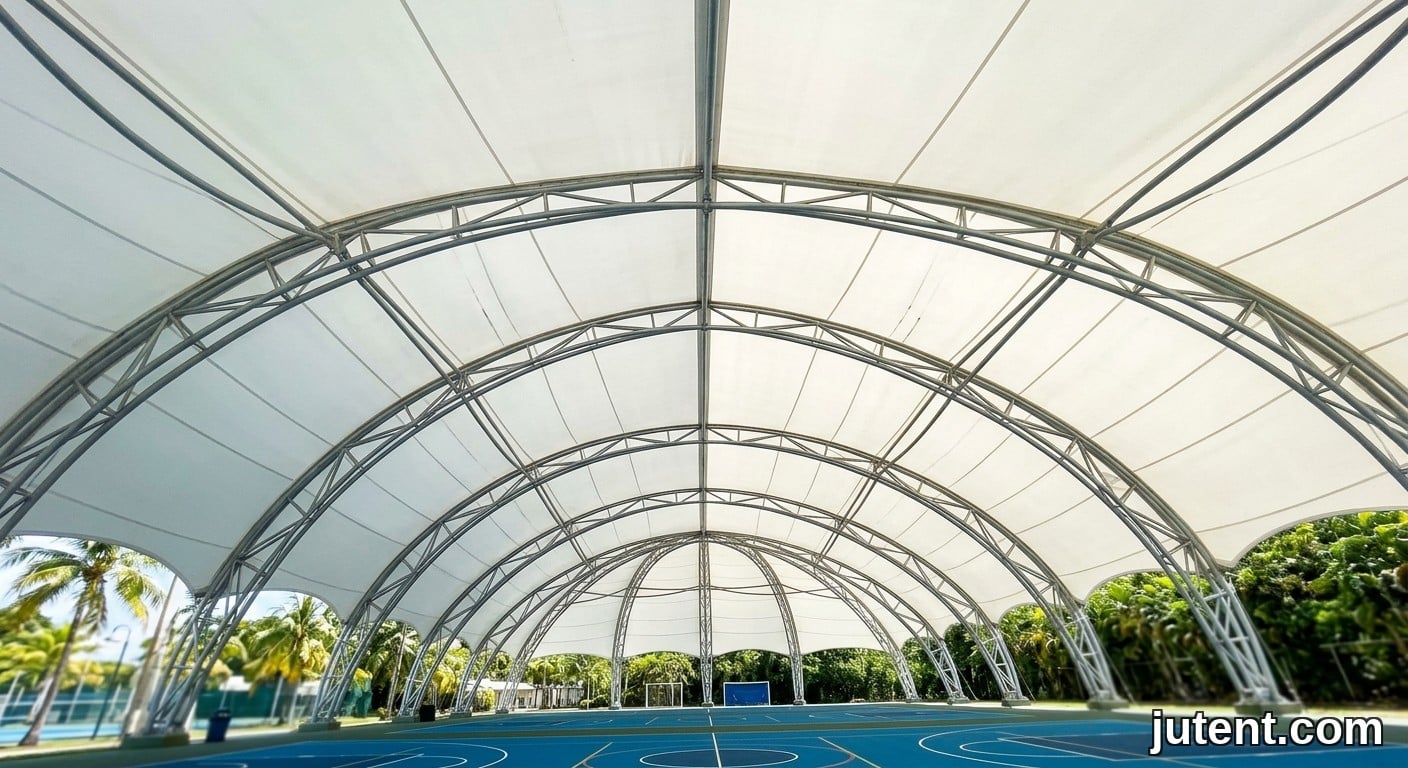
The intense tropical sun in Southeast Asia delivers high levels of ultraviolet (UV) radiation, which can significantly degrade many materials over time. For sports court shade structures, the membrane material is particularly vulnerable. Standard PVC membranes, without proper surface treatment, can become brittle, discolored, and lose strength when exposed to prolonged UV. This is why Jutent exclusively specifies high-performance PVDF (Polyvinylidene Fluoride) or PTFE (Polytetrafluoroethylene) membranes for projects in this region.
PVDF membranes offer excellent UV resistance, with a typical service life of 10–15 years and a 10-year warranty. Their smooth, non-stick surface also resists dirt accumulation and fungal growth, common issues in humid environments. For even greater longevity and performance, PTFE membranes provide a 20–25 year warranty and a service life exceeding 25 years, making them ideal for projects demanding the utmost durability.
Drainage Design for High-Rainfall Environments
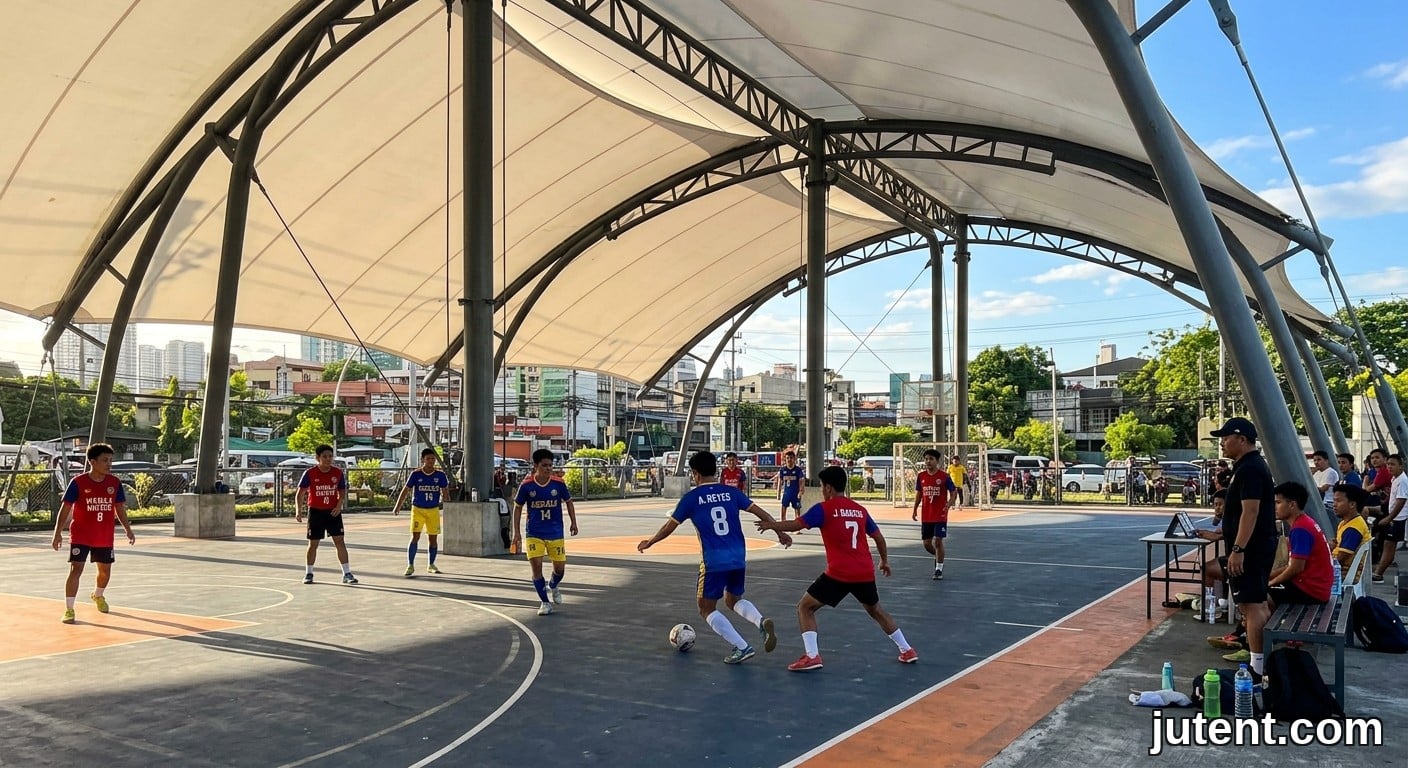
Southeast Asia is renowned for its heavy rainfall, often characterized by sudden, intense downpours that can quickly overwhelm inadequate drainage systems. For sports court shade structures, effective drainage design is not merely a convenience; it's a critical engineering requirement to prevent ponding on the membrane, structural overload, and water damage to the court below.
Tensile membrane structures inherently shed water due to their curved forms. However, the design must carefully consider the volume of water expected. Jutent's designs incorporate specific strategies for high-rainfall environments. This includes:
- Optimized Membrane Curvature: Ensuring suffici
“`