
“`html
“`html
“`html
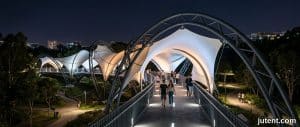
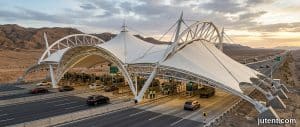
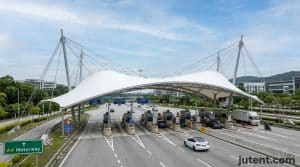
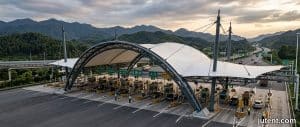
For contractors in Nigeria, Kenya, and South Africa, sourcing a toll booth canopy or toll plaza tensile canopy locally often means limited options and high prices. Here's how importing from China works in practice.
Why African Contractors Source Toll Station Canopy from China
The demand for modern, durable infrastructure across Africa, particularly for essential services like toll stations, is rapidly growing. However, local fabrication options for specialized tensile structures, such as toll station canopies, often present significant challenges. These include limited access to high-grade materials, a scarcity of specialized fabrication expertise, and higher overall costs due to smaller production scales and less efficient supply chains. This reality drives many African contractors to look internationally, with China emerging as a primary sourcing hub. (Learn more about what a tensile membrane structure is and how it works.)
Chinese manufacturers offer a compelling combination of competitive pricing, advanced manufacturing capabilities, and a proven track record in producing large-scale tensile structures. For a toll station canopy Africa project, this means access to a wider range of design options, superior material quality (such as 1050 g/m² PVDF or PTFE membranes), and the ability to meet stringent international standards. Based on Jutent's extensive project experience across multiple countries, importing from China, particularly from established manufacturers with a proven track record like Jutent, provides access to economies of scale, efficient production processes, and competitive pricing, ensuring a higher quality product within a predictable budget. This approach mitigates the risks associated with local sourcing limitations, providing a reliable path to project success for a toll station canopy South Africa, toll station canopy Nigeria, or toll station canopy Kenya installation. Toll Station Canopy Specifications: Membrane Grade, Steel Quality, and Documentation
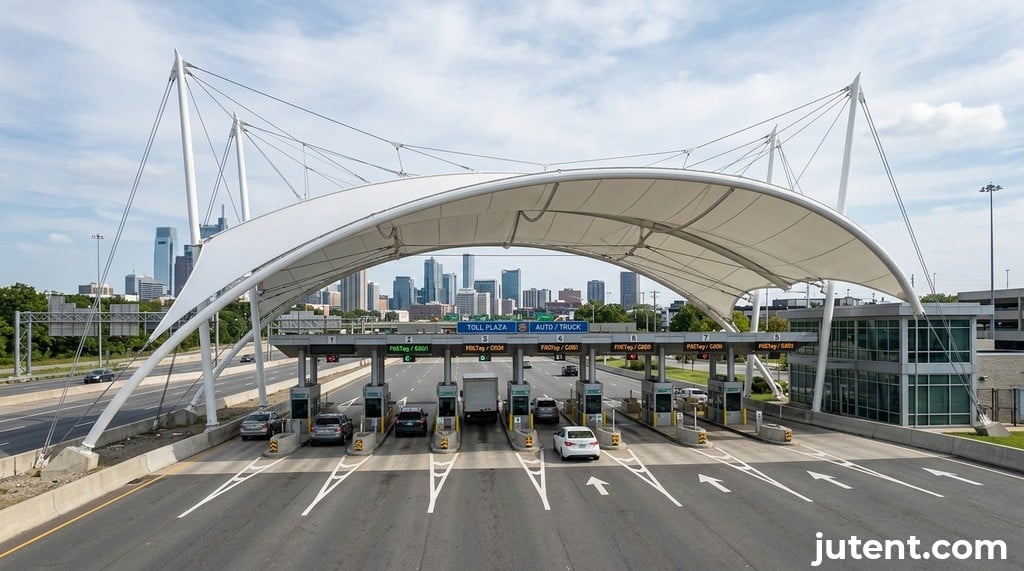
What to Specify When Importing: Membrane Grade, Steel, and Documentation
When importing a toll station canopy Africa structure, precise specifications are crucial to ensure the final product meets local requirements and environmental conditions. The primary components to focus on are the membrane grade, steel specifications, and thorough documentation. Whether you need a toll station canopy or a toll plaza tensile canopy, the specifications remain critical for project success.
For the membrane, PVDF (Polyvinylidene Fluoride) and PTFE (Polytetrafluoroethylene) are the industry standards for durability and longevity. A 1050 g/m² PVDF membrane typically offers a 5-10 year warranty and a 10-15 year service life, depending on local climate conditions. For projects demanding extreme durability and a longer lifespan, a PTFE membrane typically offers a 10-15 year warranty and a 20-25+ year service life, making it ideal for long-term infrastructure projects. These membranes are engineered to resist UV radiation, high temperatures, and heavy rainfall, common challenges in African climates. Learn more about the differences between PVDF and PTFE membranes in our complete guide.
Steel components, typically Q235B or Q355B grades. For toll station canopies, Q355B is recommended for main columns and primary beams due to higher load-bearing requirements, while Q235B is suitable for secondary bracing and purlins., require specific surface treatments to prevent corrosion. Approved treatments include epoxy zinc-rich primer + acrylic topcoat, epoxy zinc-rich primer + fluorocarbon topcoat, or hot-dip galvanizing. These treatments are essential for the steel's service life in corrosive coastal or humid environments. For export projects, Jutent can provide design drawings, calculations, material specifications, installation manuals, and free remote guidance, subject to project scope and contract terms. This documentation is vital for local permitting and structural integrity verification. For most projects, SS304 fittings are suitable. For coastal or high-humidity environments, we recommend SS316 as a standard upgrade for enhanced corrosion resistance. Toll Station Canopy Guide
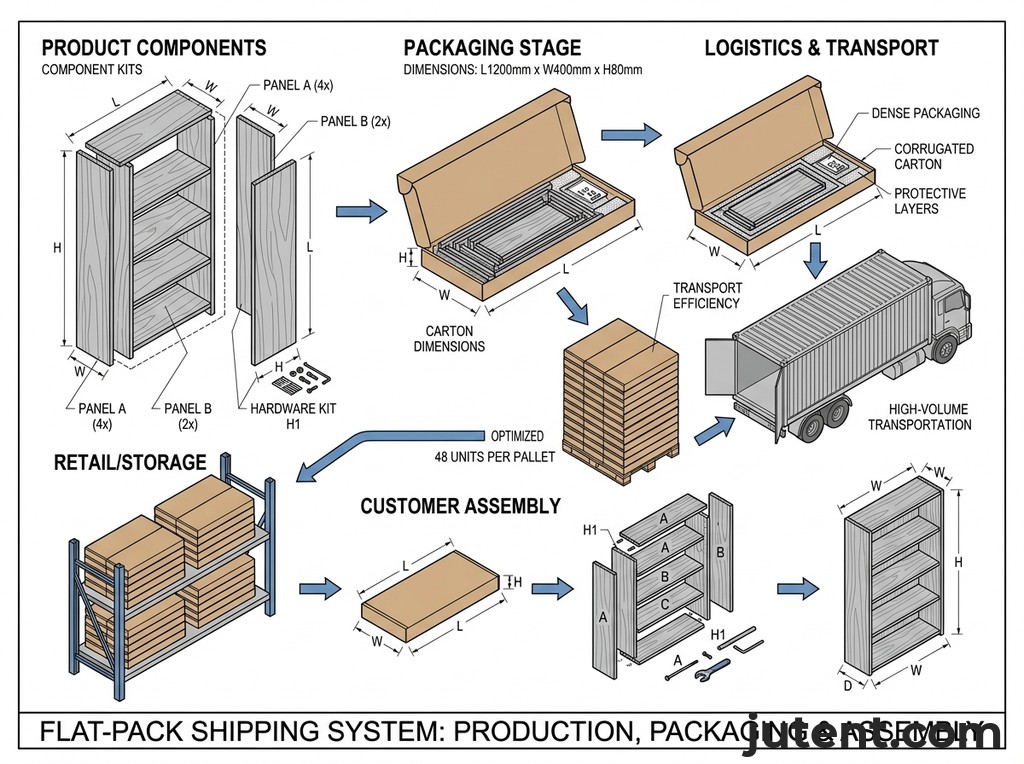
Shipping to African Ports: How Structures Are Packed
The logistics of shipping large tensile structures from China to African ports are meticulously planned to ensure safe and cost-effective delivery. The primary method involves flat-packing all steel components and carefully rolling membranes for containerization. This approach maximizes container space and minimizes shipping costs.
Steel structural elements, including columns, beams, and connection plates, are precisely fabricated, pre-drilled, and then disassembled for flat-packing. Each component is clearly marked according to the installation drawings, simplifying assembly on-site. For a step-by-step breakdown, see our tensile membrane structure installation guide. Surface t
“`
Ready to move forward? Contact Jutent with your project details and we'll guide you through every step.
Get Your Toll Plaza Canopy Quote
Compare Costs for Your African Project
Request Toll Station Canopy Pricing