
“`html
تصميم المسرح الخارجي خارجي يؤثر على الصوتيات، وأداء الرياح، وخطوط الرؤية، والصرف — وليس فقط الجماليات. هذه القرارات الخمسة لها التأثير الأكبر على ما إذا كان الهيكل يعمل بالفعل لفناني الأداء والجمهور. يجب على المهندسين المعماريين والمقاولين الذين يتعاملون مع مشروع خارجي خارجي مراعاة هذه العوامل الحاسمة منذ البداية لضمان هيكل وظيفي وآمن وجذاب بصريًا. بناءً على خبرة Jutent في أكثر من 400 مشروع في أكثر من 30 دولة، فإن إهمال أي من هذه العناصر يمكن أن يؤدي إلى تحديات كبيرة أثناء التركيب والتشغيل.
Decision 1: Amphitheater Roof Geometry — How Shape Affects Acoustics and Wind Load
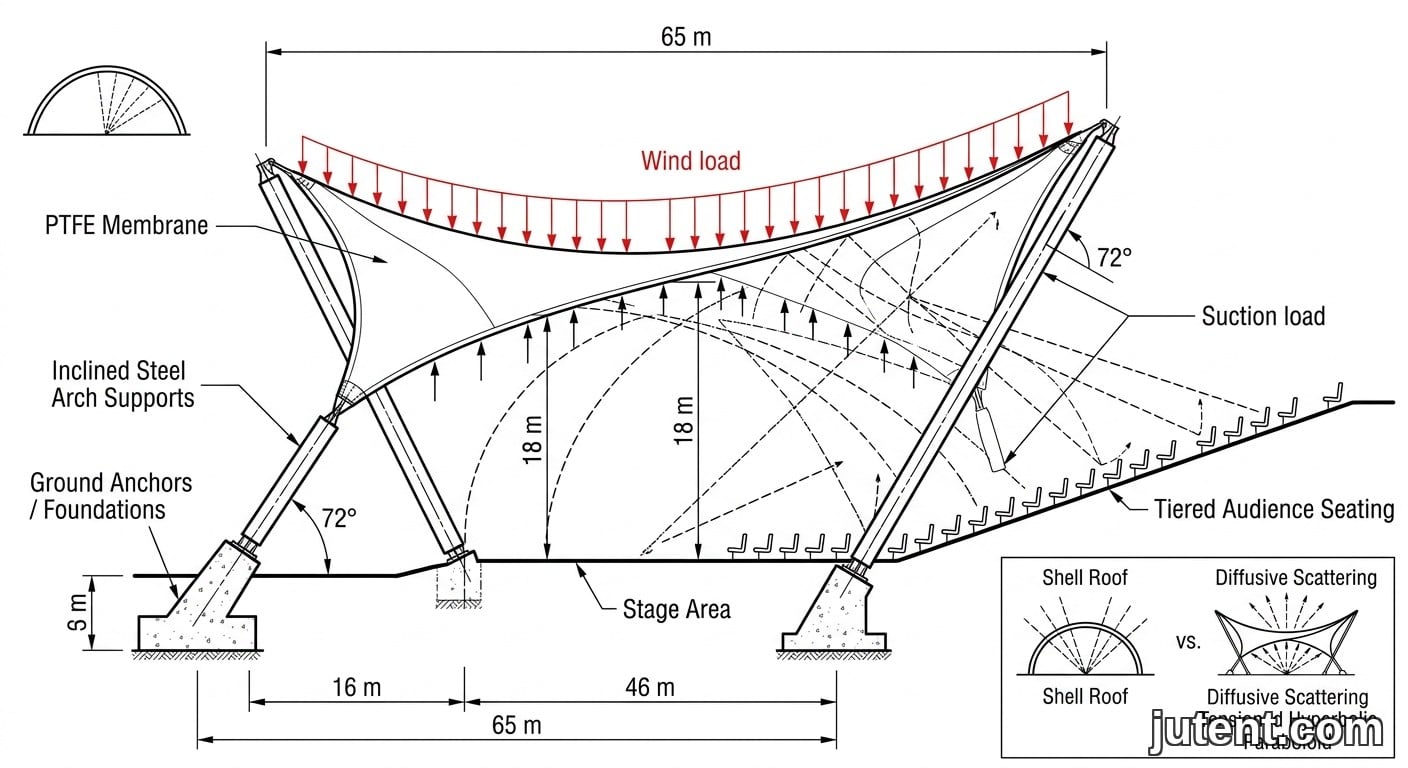
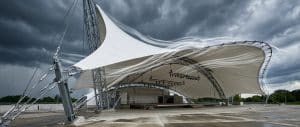
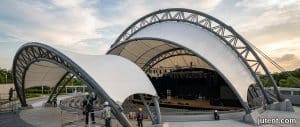
The chosen geometry for an amphitheater roof or open-air theatre canopy is fundamental, influencing both acoustic performance and structural integrity against wind. Different shapes interact with sound waves and air currents in distinct ways. For instance, a simple barrel vault or hyperbolic paraboloid can offer excellent structural stability and natural drainage, but their curved surfaces might diffuse sound more than a flatter, tensioned cone or arch. Conversely, a more enclosed, shell-like structure can provide better sound reflection towards the audience, but may also present a larger surface area for wind to act upon, necessitating more reliable structural support.
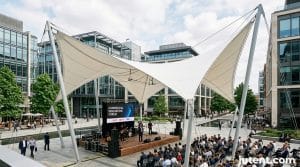
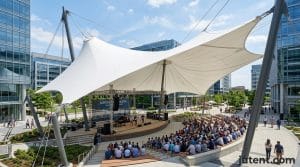
Wind load is a primary engineering consideration. Complex geometries with multiple peaks and valleys, while visually striking, can create intricate aerodynamic patterns that require detailed computational fluid dynamics (CFD) analysis to accurately predict forces. Simpler forms, such as conical or hypar shapes, often distribute wind loads more predictably, simplifying structural calculations and potentially reducing the amount of steel required. The choice of geometry also dictates the membrane's tensioning requirements; a well-tensioned membrane in a stable form is less prone to fluttering and noise under wind conditions. The goal is to select a geometry that balances acoustic needs with structural efficiency and resistance to local wind conditions, ensuring the stage remains a safe and effective performance space. For fixed amphitheater shade structures in public parks or community spaces, the geometry must also consider sightlines from tiered seating.
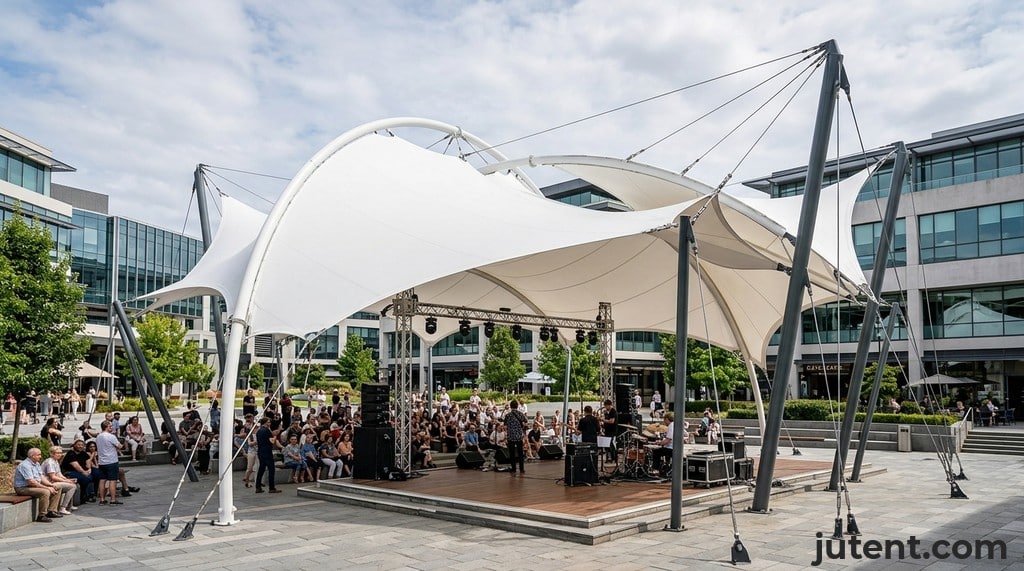
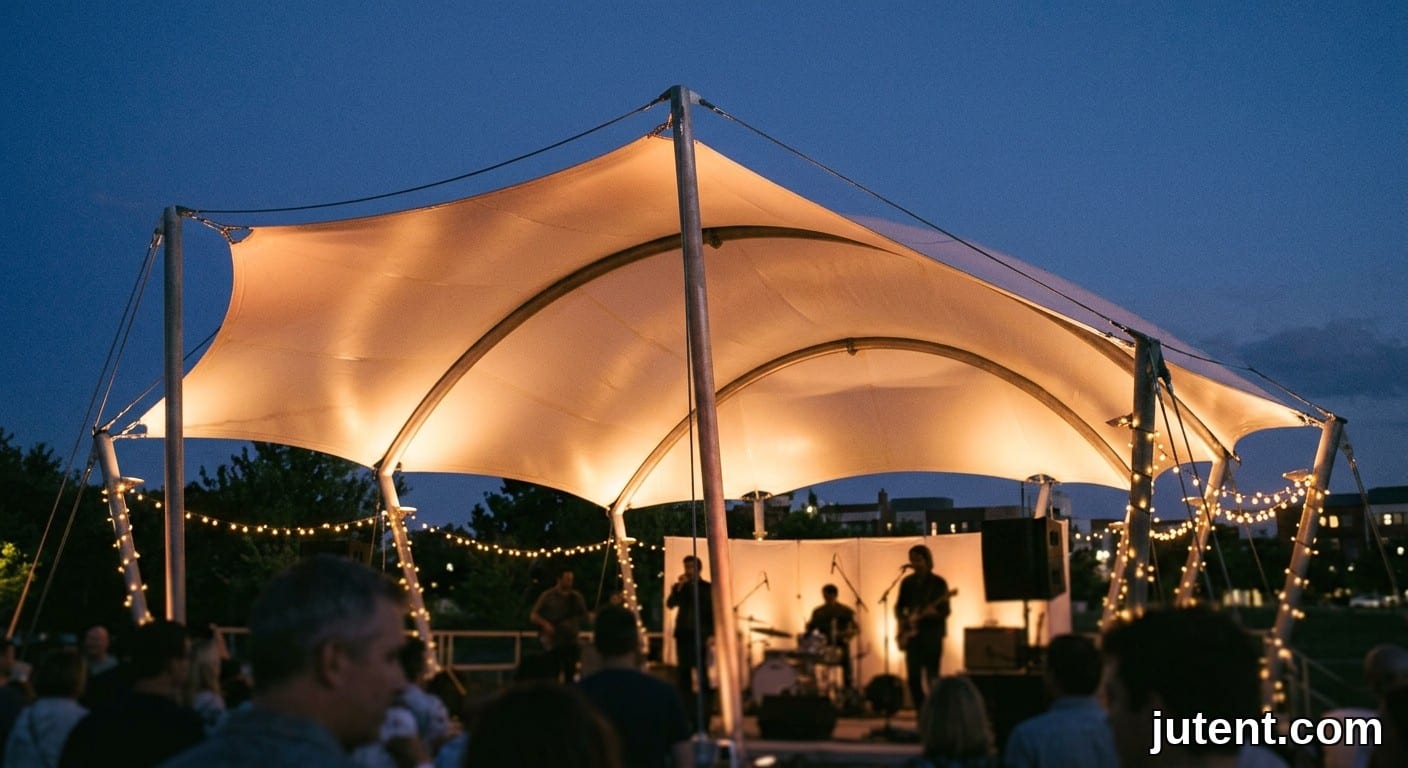
القرار 2: الارتفاع — تحقيق التوازن بين رؤية المؤدي والتعرض للرياح
The height of an outdoor خارجي is a critical design parameter that directly impacts performer visibility, audience sightlines, and the structure's susceptibility to wind. A canopy that is too low can obstruct views from the back rows or upper tiers, diminishing the audience experience. It can also create a cramped feeling for performers and limit the vertical space needed for lighting rigs and set pieces. Conversely, a canopy that is too high, while offering unobstructed views, exposes a larger surface area to wind forces, increasing the structural demands on the supporting framework.
يجب أن يستوعب الحد الأدنى للارتفاع فوق منصة المسرح ليس فقط المؤدين بل أيضًا جميع معدات المسرح الضرورية، بما في ذلك الجمالونات الإضاءة، وأنظمة الصوت، وأي تجهيزات مسرحية معلقة. يجب دائمًا كتابة القيم التقنية النموذجية بشكل متحفظ ووصفها بأنها خاضعة لتصميم المشروع، لكن الحد الأدنى الشائع للارتفاع الصافي للعروض المجتمعية هو 5 أمتار فوق مستوى المسرح. بالنسبة للإنتاجات الأكبر أو تلك التي تتطلب تجهيزات معلقة معقدة، قد يحتاج هذا الارتفاع إلى زيادة كبيرة. يجب أن يأخذ التصميم الهيكلي في الاعتبار عزوم الانحناء وقوى الرفع المتزايدة المرتبطة بالارتفاعات الأكبر. وهذا غالبًا ما يعني تحديد مقاطع فولاذية أثقل (Q235B أو Q355B) وأساسات أكثر متانة. يُعد النظر الدقيق في ظروف الرياح السائدة في الموقع وقوانين البناء المحلية أمرًا ضروريًا لتحديد الارتفاع الأمثل الذي يوازن بين المتطلبات الوظيفية والسلامة الهيكلية والفعالية من حيث التكلفة.
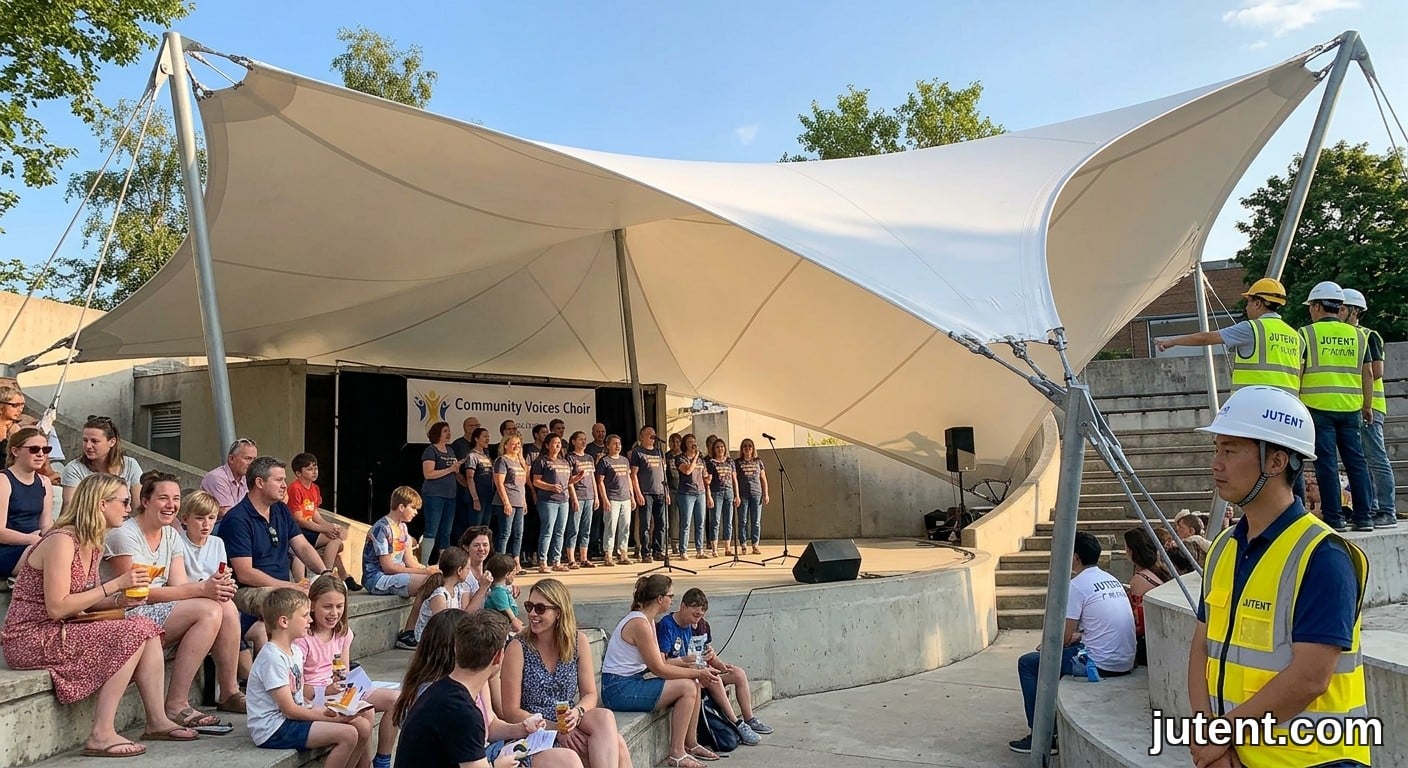
See Our Complete Outdoor مظلة المسرح Design Guide for Amphitheaters
القرار 3: ميل الغشاء — تصريف المياه ومنع التجمع
يُعتبر ميل أو انحدار الغشاء الشدّي أمرًا بالغ الأهمية لتصريف المياه بشكل فعال ومنع التجمّع. يحدث التجمّع عندما تتجمع مياه الأمطار على سطح الغشاء، مما يُحدث انخفاضات يمكن أن تتراكم فيها أوزان كبيرة. يمكن لهذا الحمل الساكن أن يُجهد نسيج الغشاء وهيكله الداعم بشكل زائد، مما قد يؤدي إلى تشوه دائم، أو إجهاد المادة، أو حتى فشل كارثي. يضمن ميل الغشاء المُصمّم بشكل صحيح تدفق مياه الأمطار بكفاءة بعيدًا عن المظلة، مما يمنع تراكمها.
For most tensile membrane structures, a minimum pitch of 1:10 (or 10%) is generally recommended to facilitate adequate runoff. However, the exact pitch required depends on the membrane material, surface texture, and the overall geometry of the canopy. Complex forms with multiple valleys or low points require careful detailing of drainage channels and scuppers to direct water away from critical areas. Engineers must consider the membrane's elasticity and potential for deflection under load when calculating the effective pitch. In regions with heavy rainfall or snow, the pitch may need to be
“`