
“`html
The design of an outdoor stage canopy affects acoustics, wind performance, sightlines, and drainage — not just aesthetics. These five decisions have the biggest impact on whether the structure actually works for performers and audiences. Architects and contractors approaching an outdoor stage canopy project must consider these critical factors from the outset to ensure a functional, safe, and visually appealing structure. Based on Jutent's experience across 400+ projects in 30+ countries, overlooking any of these elements can lead to significant challenges during installation and operation.
Decision 1: Amphitheater Roof Geometry — How Shape Affects Acoustics and Wind Load
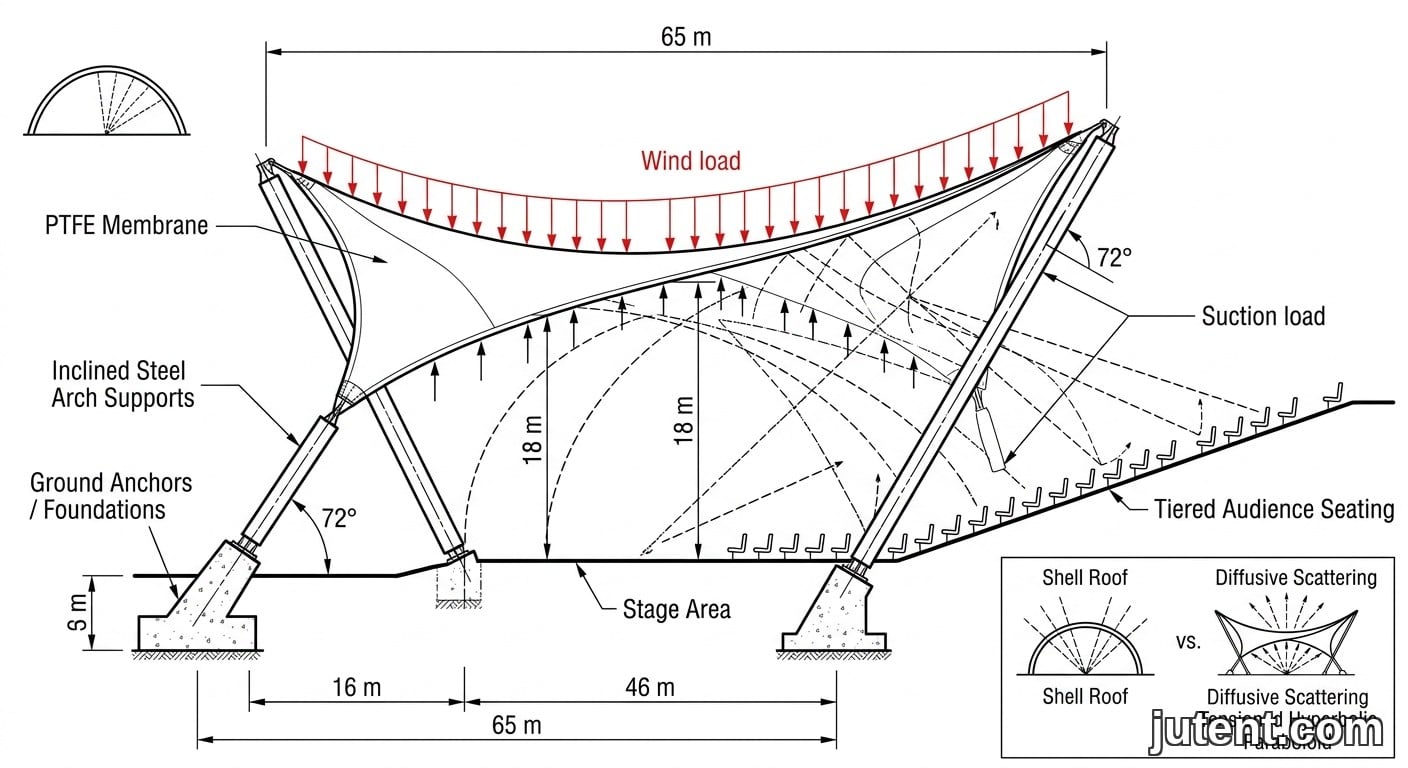
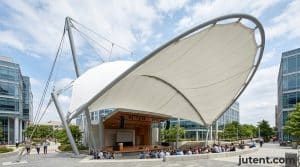
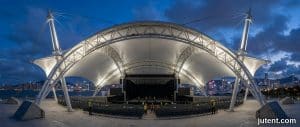
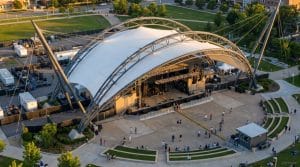
The chosen geometry for an amphitheater roof or open-air theatre canopy is fundamental, influencing both acoustic performance and structural integrity against wind. Different shapes interact with sound waves and air currents in distinct ways. For instance, a simple barrel vault or hyperbolic paraboloid can offer excellent structural stability and natural drainage, but their curved surfaces might diffuse sound more than a flatter, tensioned cone or arch. Conversely, a more enclosed, shell-like structure can provide better sound reflection towards the audience, but may also present a larger surface area for wind to act upon, necessitating more reliable structural support.
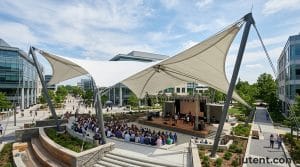
Wind load is a primary engineering consideration. Complex geometries with multiple peaks and valleys, while visually striking, can create intricate aerodynamic patterns that require detailed computational fluid dynamics (CFD) analysis to accurately predict forces. Simpler forms, such as conical or hypar shapes, often distribute wind loads more predictably, simplifying structural calculations and potentially reducing the amount of steel required. The choice of geometry also dictates the membrane's tensioning requirements; a well-tensioned membrane in a stable form is less prone to fluttering and noise under wind conditions. The goal is to select a geometry that balances acoustic needs with structural efficiency and resistance to local wind conditions, ensuring the stage remains a safe and effective performance space. For fixed amphitheater shade structures in public parks or community spaces, the geometry must also consider sightlines from tiered seating.
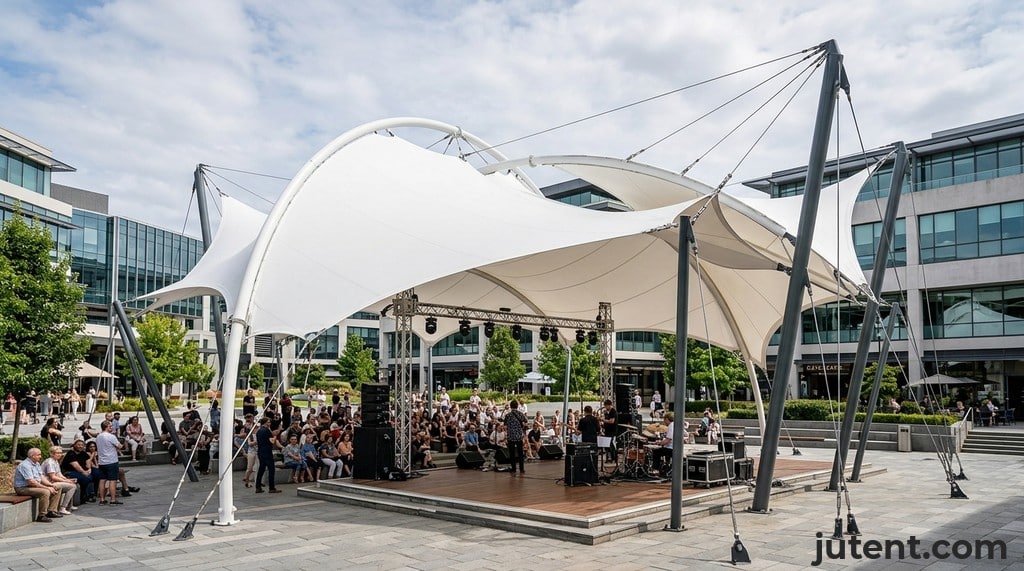
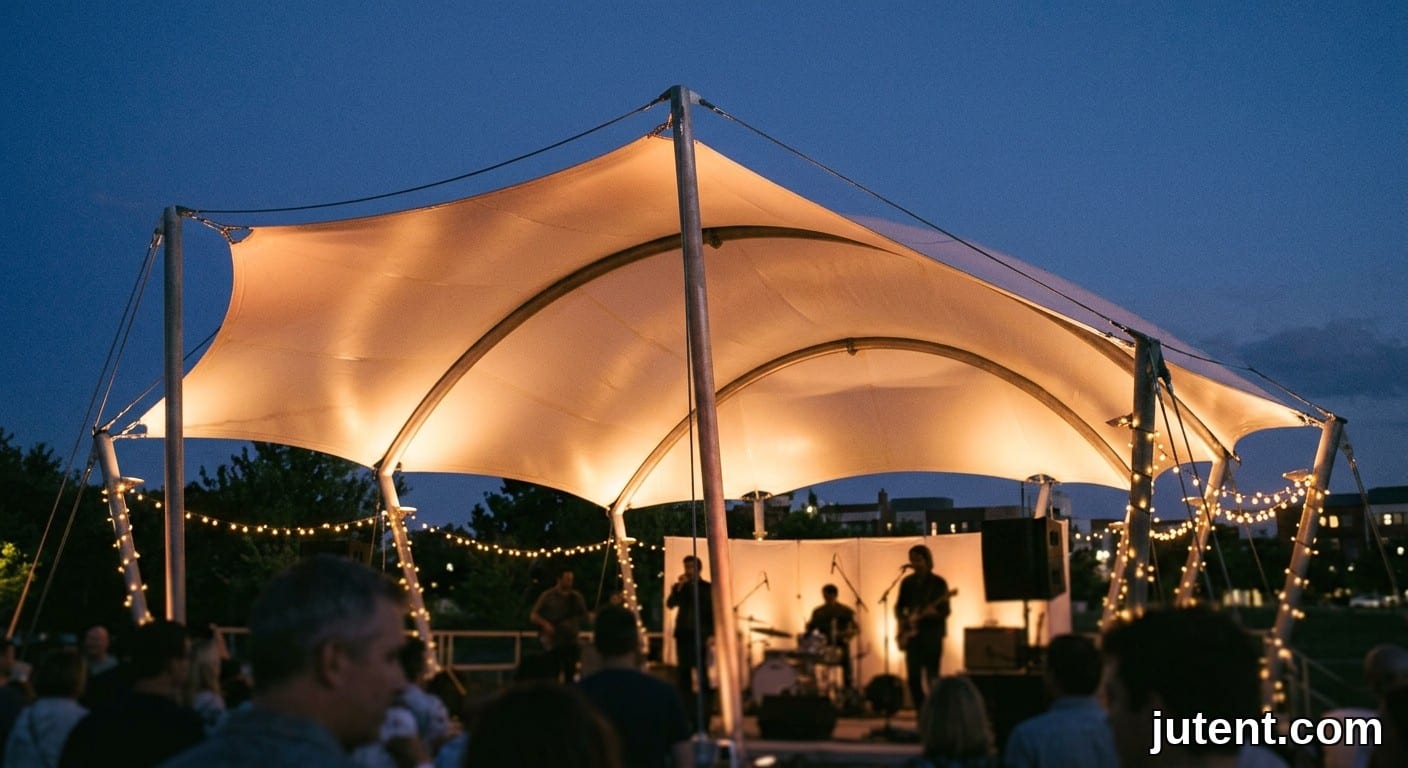
Decision 2: Height — Balancing Performer Visibility and Wind Exposure
The height of an outdoor stage canopy is a critical design parameter that directly impacts performer visibility, audience sightlines, and the structure's susceptibility to wind. A canopy that is too low can obstruct views from the back rows or upper tiers, diminishing the audience experience. It can also create a cramped feeling for performers and limit the vertical space needed for lighting rigs and set pieces. Conversely, a canopy that is too high, while offering unobstructed views, exposes a larger surface area to wind forces, increasing the structural demands on the supporting framework.
The minimum height above the stage deck must accommodate not only performers but also all necessary stage equipment, including lighting trusses, sound systems, and any theatrical rigging. Typical technical values should always be written conservatively and described as subject to project design, but a common minimum clear height for community performances is 5 meters above the stage level. For larger productions or those requiring complex aerial rigging, this height may need to be significantly increased. The structural design must account for the increased bending moments and uplift forces associated with greater heights. This often means specifying heavier steel sections (Q235B or Q355B) and more substantial foundations. Careful consideration of the site's prevailing wind conditions and local building codes is essential to determine an optimal height that balances functional requirements with structural safety and cost-effectiveness.
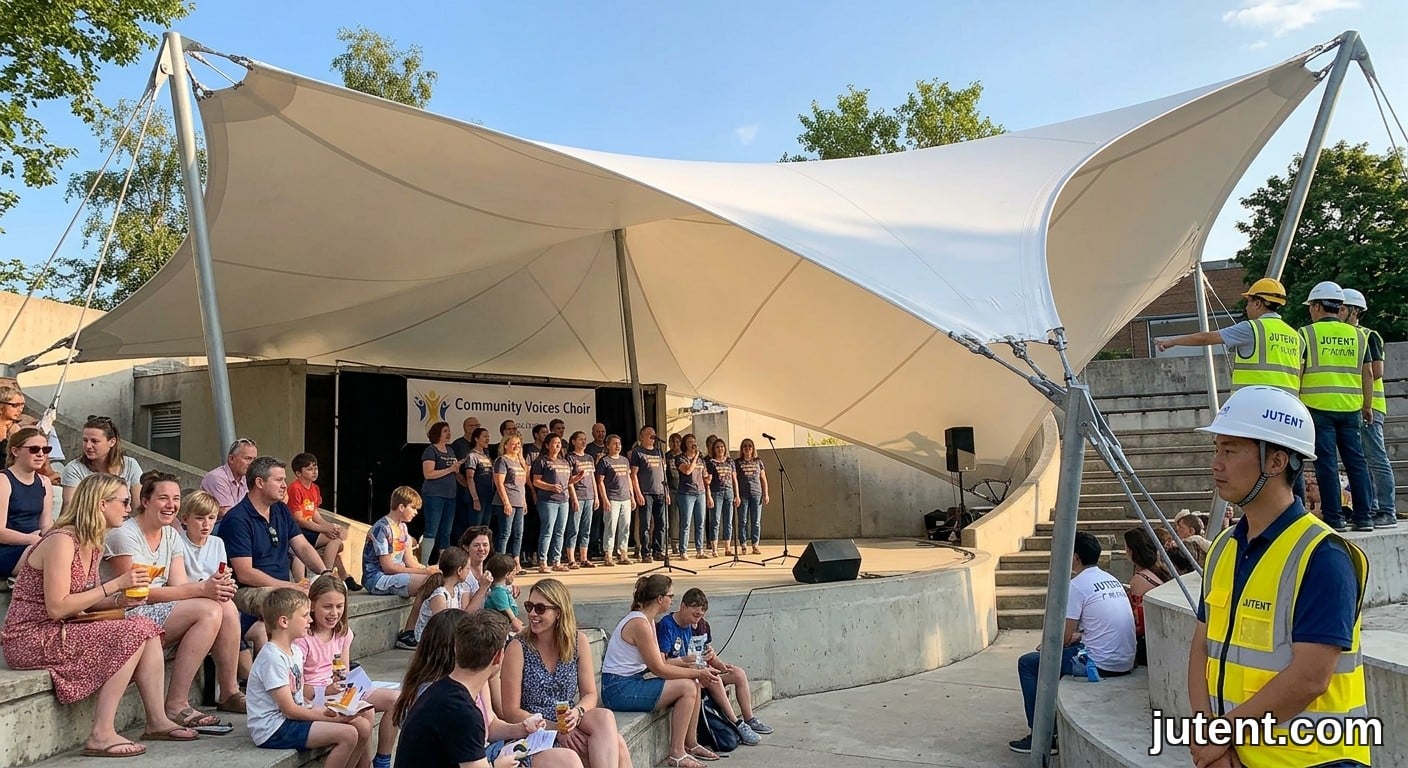
See Our Complete Outdoor Stage Canopy Design Guide for Amphitheaters
Decision 3: Membrane Pitch — Drainage and Ponding Prevention
The pitch, or slope, of the tensile membrane is paramount for effective drainage and the prevention of ponding. Ponding occurs when rainwater collects on the membrane surface, creating depressions that can accumulate significant weight. This static load can overstress the membrane fabric and its supporting structure, potentially leading to permanent deformation, material fatigue, or even catastrophic failure. A properly designed membrane pitch ensures that rainwater flows efficiently off the canopy, preventing accumulation.
For most tensile membrane structures, a minimum pitch of 1:10 (or 10%) is generally recommended to facilitate adequate runoff. However, the exact pitch required depends on the membrane material, surface texture, and the overall geometry of the canopy. Complex forms with multiple valleys or low points require careful detailing of drainage channels and scuppers to direct water away from critical areas. Engineers must consider the membrane's elasticity and potential for deflection under load when calculating the effective pitch. In regions with heavy rainfall or snow, the pitch may need to be
“`