
“`html
A coastal outdoor event venue developer needed a 25m × 15m concert stage tensile membrane canopy capable of supporting 4,500 kg of suspended lighting and line-array audio equipment. The site's coastal location required a 250 km/h design wind load under local building codes. That combination of heavy point loads and extreme wind uplift ruled out standard aluminum truss systems and pushed the specification toward a custom-engineered tensile membrane structure with a heavy-duty steel primary frame.
حفلة موسيقية خارجي يجب أن تتحمل أحمال التعليق للإضاءة والصوت، وتتحمل أحداث الرياح العاتية، وتبدو احترافية. يغطي هذا الدليل ما يحتاج منظمي الفعاليات والمقاولون إلى تحديده لهياكل المسرح الموسيقي الدائمة وشبه الدائمة، لضمان السلامة والأداء قبل طرح المشروع للمناقصة.
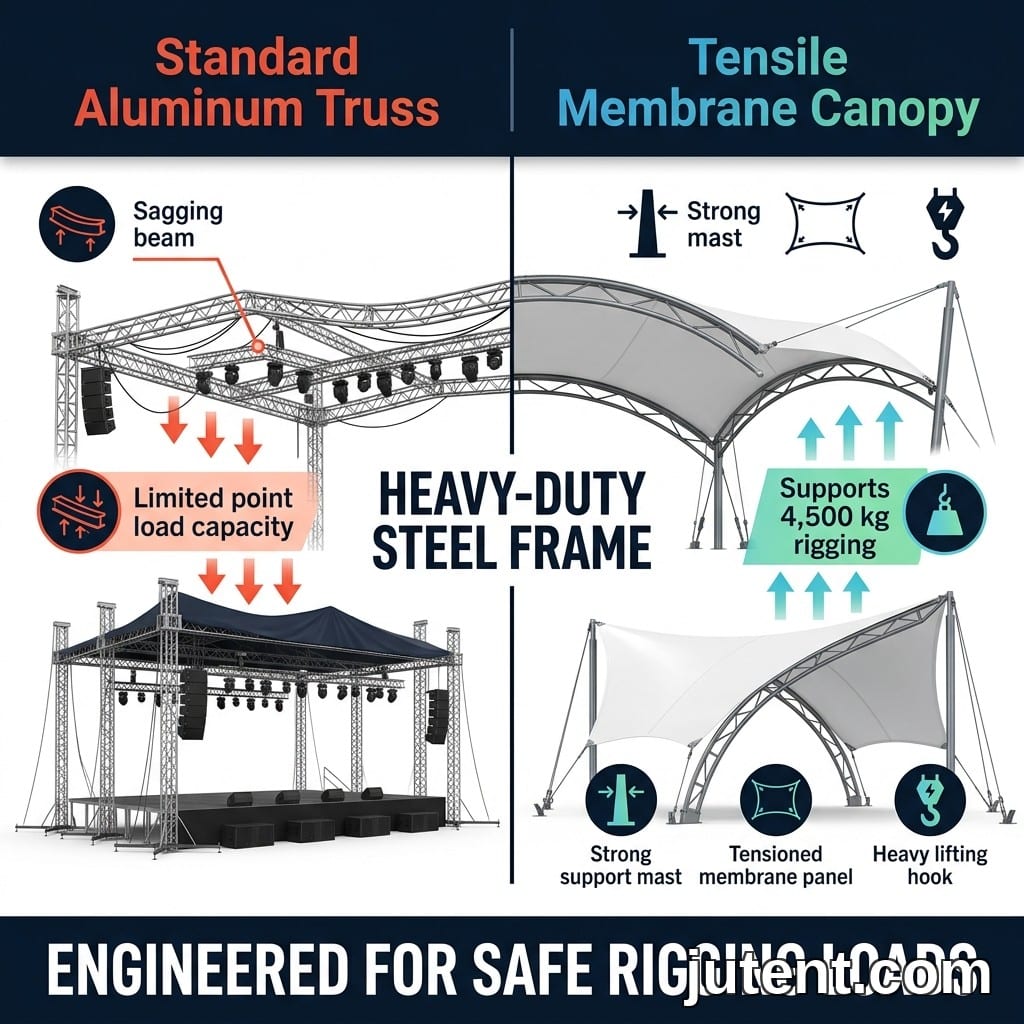
ما الذي يجعل هندسة مظلة المسرح الموسيقي مختلفة
هياكل التظليل القياسية تحمل فقط وزنها الذاتي وأحمال البيئة. سقف المسرح الموسيقي المشدود مختلف جوهريًا: فهو يعمل كشبكة تحمل رئيسية للمعدات الخارجية. يجب أن تأخذ الهندسة في الاعتبار الأحمال النقطية الديناميكية الناتجة عن تركيبات الإضاءة المتحركة، ومكبرات الصوت الخطية الثقيلة، والرافعات الآلية، مع الحفاظ على الاستقرار الهيكلي تحت ظروف الرياح الشديدة.
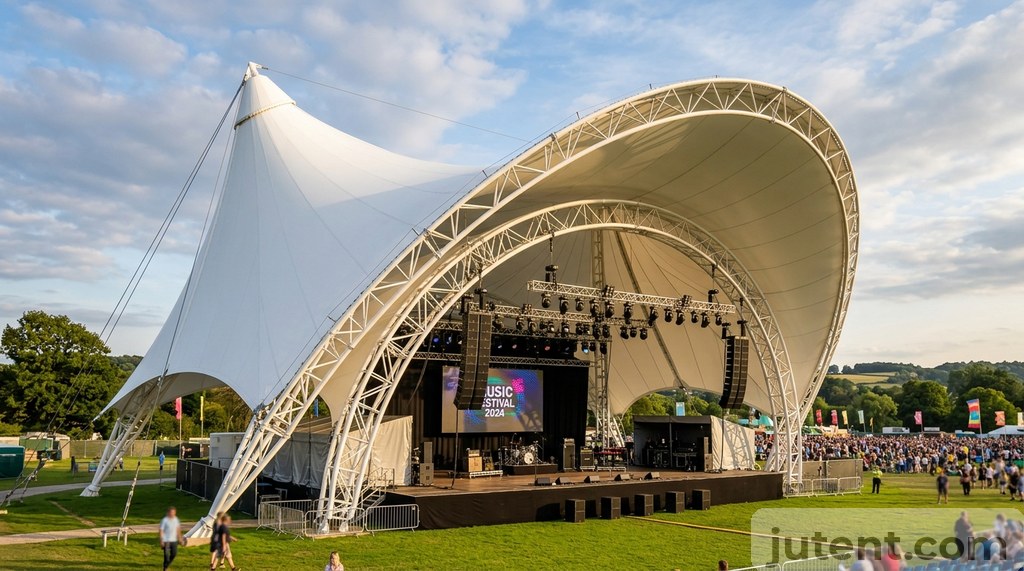
Clearance height dictates the structural geometry and steel tonnage. A standard community stage requires 6m to 8m of vertical clearance, while a music festival خارجي often demands 10m to 14m to accommodate complex lighting rigs, automated trusses, and large LED video walls. As the height increases, the wind catchment area expands exponentially, requiring significantly larger primary steel members. For example, a 12m-high canopy spanning 20m typically requires 350×350×10mm SHS (Square Hollow Section) columns to control lateral deflection during a storm event.
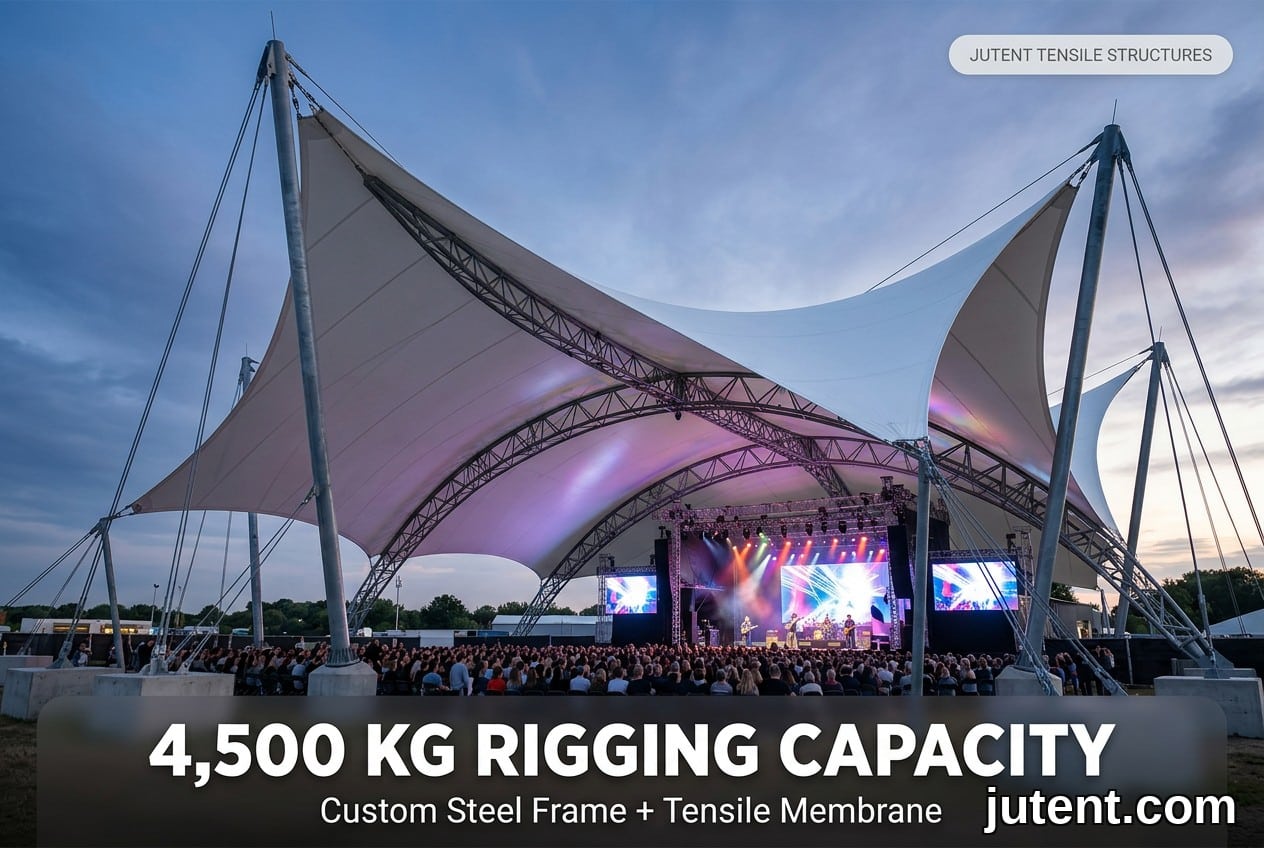
يجب على المقاولين الذين يحددون أغطية المسارح توفير الوزن الدقيق للمعدات وتوزيعها في وقت مبكر من مرحلة التصميم. إضافة قدرة التجهيزات إلى هيكل شد مكتمل أمر مستحيل هيكليًا دون إضافة أنظمة دعم أرضية ثانوية، مما يلغي الغرض المعماري للمظلة ذات الامتداد الواضح. يجب تفصيل الفولاذ الأساسي بنقاط ربط متكاملة ومقدرة للحمل من اليوم الأول.
مواصفات حمل الرفع: مقدار الحمولة وأين تذهب
Define total suspended weight and specific point loads before engineering. Concert stage canopy rigging systems divide loads into three categories: front-of-house audio (line arrays), overhead lighting trusses, and rear video screens.
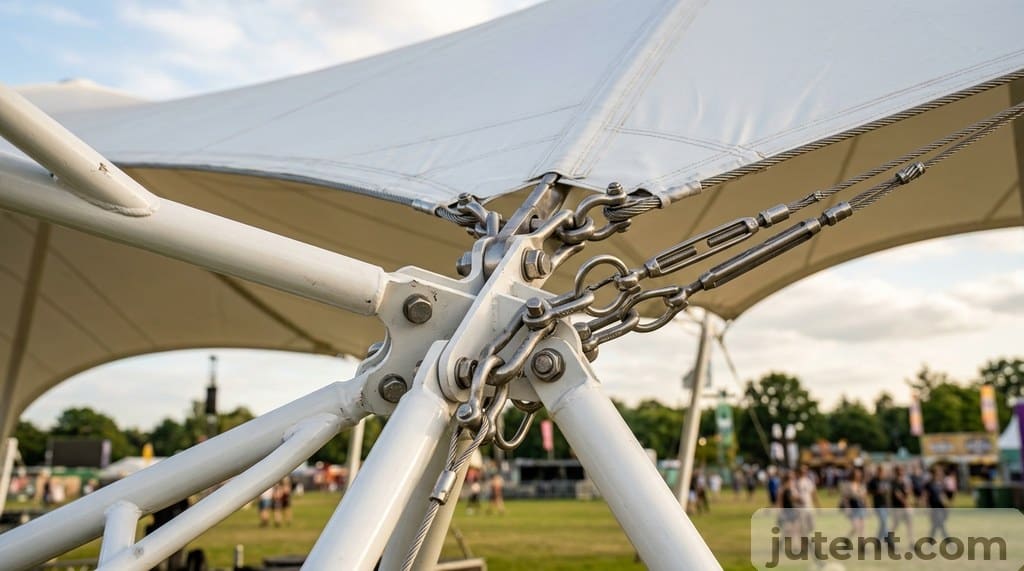
تتطلب المدرجات البلدية متوسطة الحجم سعة رفع قياسية تتراوح بين 3000 كجم و5000 كجم. يتم توزيع ذلك عبر 10 إلى 15 نقطة مخصصة، كل منها مصمم لحمل عمل آمن (SWL) يتراوح بين 250 كجم و500 كجم. تتطلب الأماكن التجارية واسعة النطاق سعة تصل إلى 15000 كجم، مما يستلزم استخدام إطارات فضائية ثقيلة أو هياكل جمالونية عميقة بدلاً من الإطارات البسيطة.
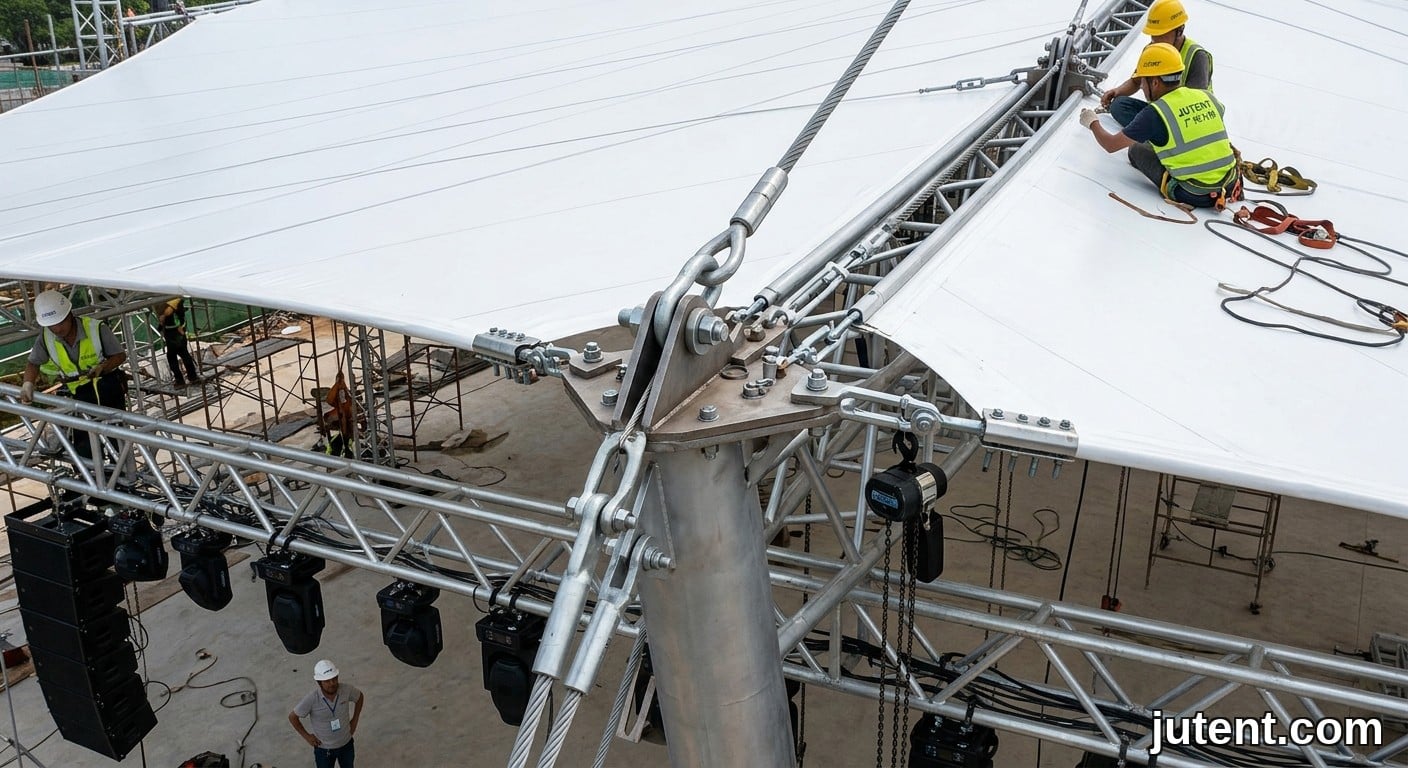
Across 420+ projects in 30+ countries, the most common specification error is ignoring the dynamic load of motorized hoists. A 500 kg static load exerts higher forces when chain motors start or stop. Engineers apply a dynamic amplification factor—typically 1.2 to 1.4—to all motorized rigging points. Contractors consulting an Outdoor مظلة المسرح Guide must ensure rigging points weld directly to the primary steel structure, never the secondary membrane framework. These points use 20mm to 25mm thick steel eye plates, fully penetration welded and tested via magnetic particle inspection (MPI) before galvanizing.
أداء الرياح: ما يجب أن تتحمله مظلات المسرح الموسيقي
Wind uplift is the governing environmental load for an outdoor مظلة مسرح حفلات موسيقية. The open-front design acts as a wind trap, translating horizontal gusts into upward forces on the roof structure and foundations.
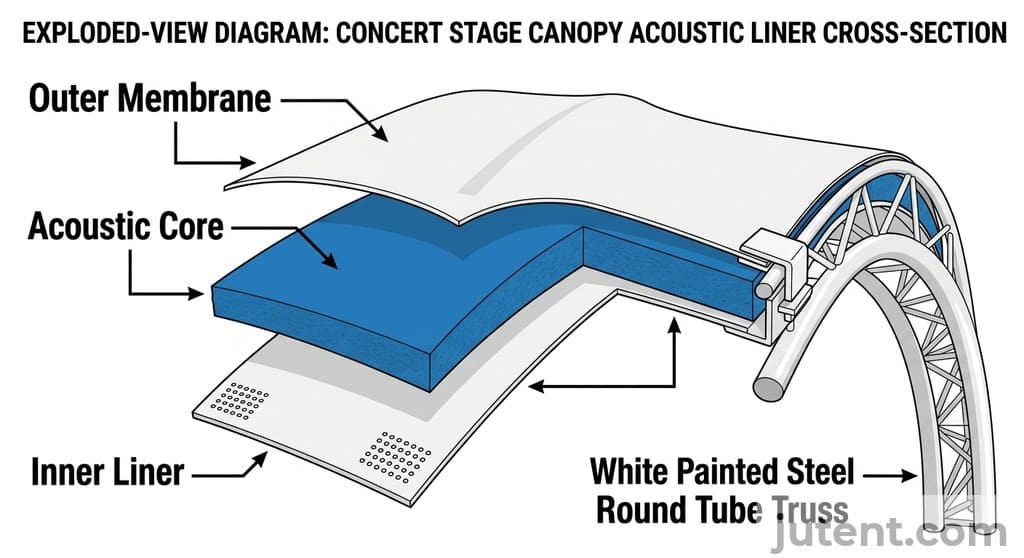
Design wind speeds dictate membrane specifications and foundation sizing. Standard inland structures are engineered for 160 km/h (45 m/s) basic wind speeds, while coastal or hurricane-prone zones require 250 km/h (70 m/s) or higher. To resist these forces, the tensile membrane requires precise pre-stressing. A standard 1050g/㎡ PVDF membrane
“`