“`html
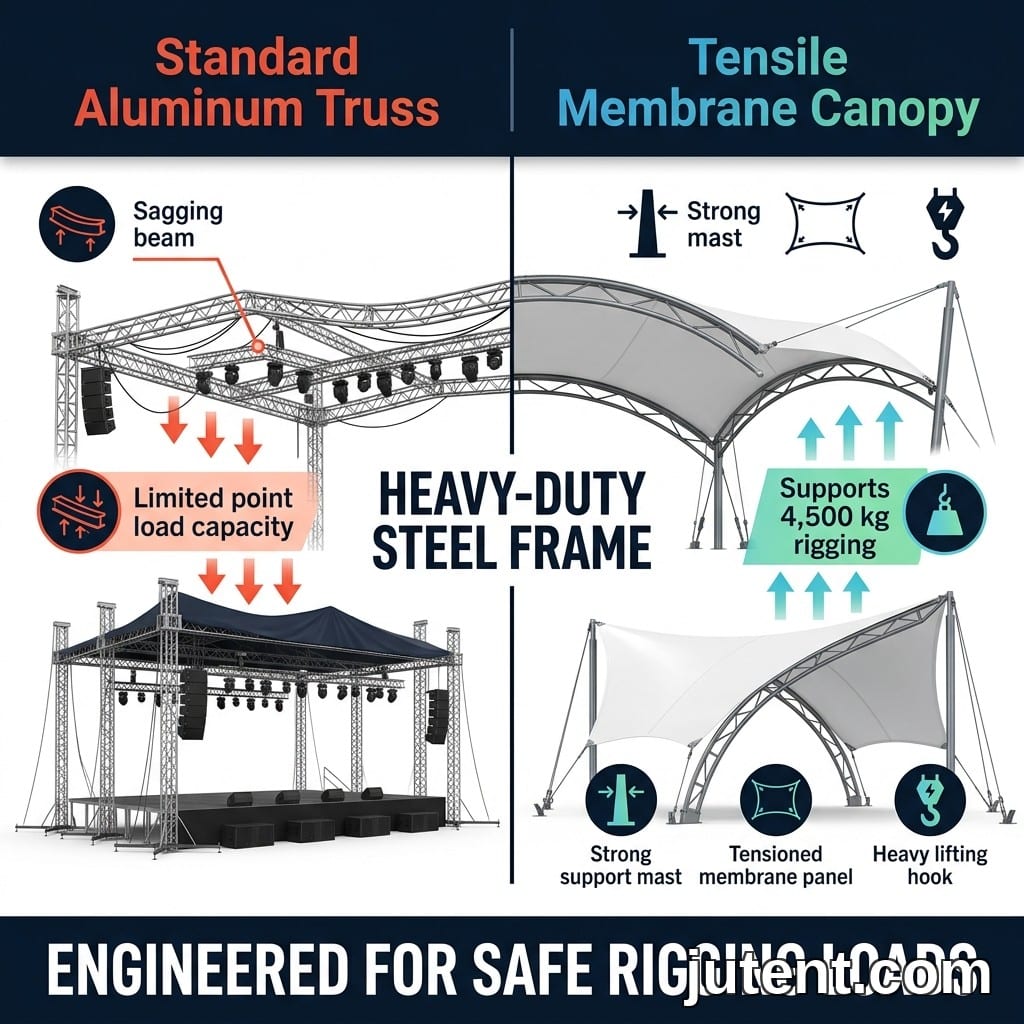
A coastal outdoor event venue developer needed a 25m × 15m concert stage tensile membrane canopy capable of supporting 4,500 kg of suspended lighting and line-array audio equipment. The site's coastal location required a 250 km/h design wind load under local building codes. That combination of heavy point loads and extreme wind uplift ruled out standard aluminum truss systems and pushed the specification toward a custom-engineered tensile membrane structure with a heavy-duty steel primary frame.
A concert stage canopy must handle rigging loads for lighting and sound, survive high wind events, and look professional. This guide covers what event venues and contractors need to specify for permanent and semi-permanent concert stage structures, ensuring safety and performance before the project goes to tender.
What Makes Concert Stage Canopy Engineering Different
Standard shade structures only carry their own dead weight and environmental loads. A concert stage tensile roof is fundamentally different: it functions as a primary load-bearing grid for third-party equipment. The engineering must account for dynamic point loads from moving light fixtures, heavy line-array speakers, and motorized hoists, all while maintaining structural stability under severe wind uplift.
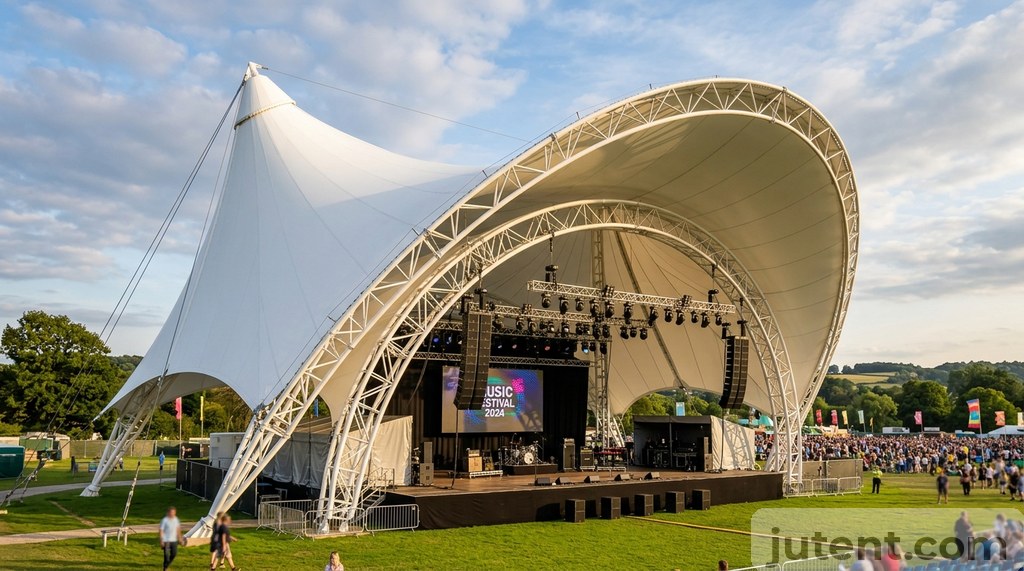
Clearance height dictates the structural geometry and steel tonnage. A standard community stage requires 6m to 8m of vertical clearance, while a music festival stage canopy often demands 10m to 14m to accommodate complex lighting rigs, automated trusses, and large LED video walls. As the height increases, the wind catchment area expands exponentially, requiring significantly larger primary steel members. For example, a 12m-high canopy spanning 20m typically requires 350×350×10mm SHS (Square Hollow Section) columns to control lateral deflection during a storm event.
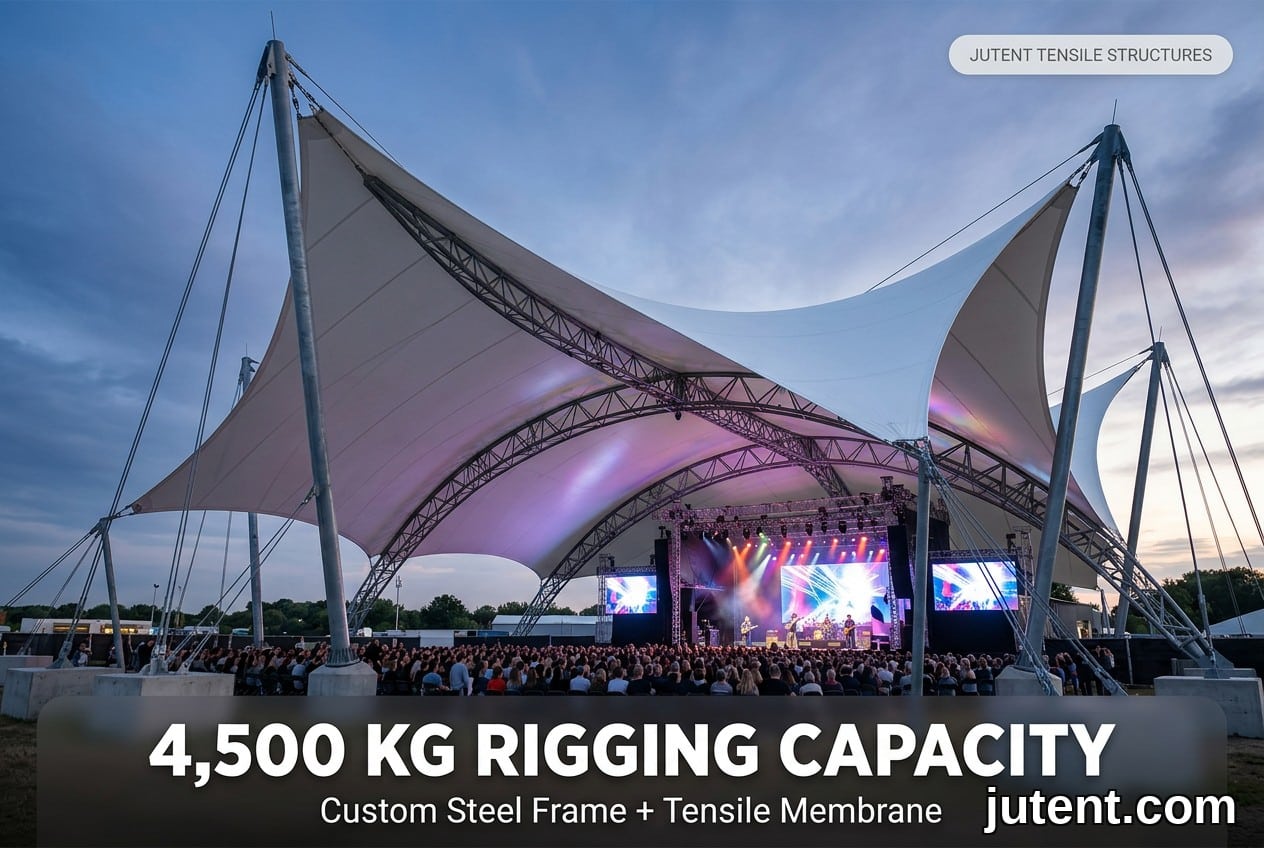
Contractors specifying Stage Covers must provide the exact equipment weight and distribution early in the design phase. Retrofitting rigging capacity to a completed tensile structure is structurally impossible without adding secondary ground-supported truss systems, which defeats the architectural purpose of a clear-span canopy. The primary steel must be detailed with integrated, load-rated attachment points from day one.
Rigging Load Specification: How Much Load and Where It Goes
Define total suspended weight and specific point loads before engineering. Concert stage canopy rigging systems divide loads into three categories: front-of-house audio (line arrays), overhead lighting trusses, and rear video screens.
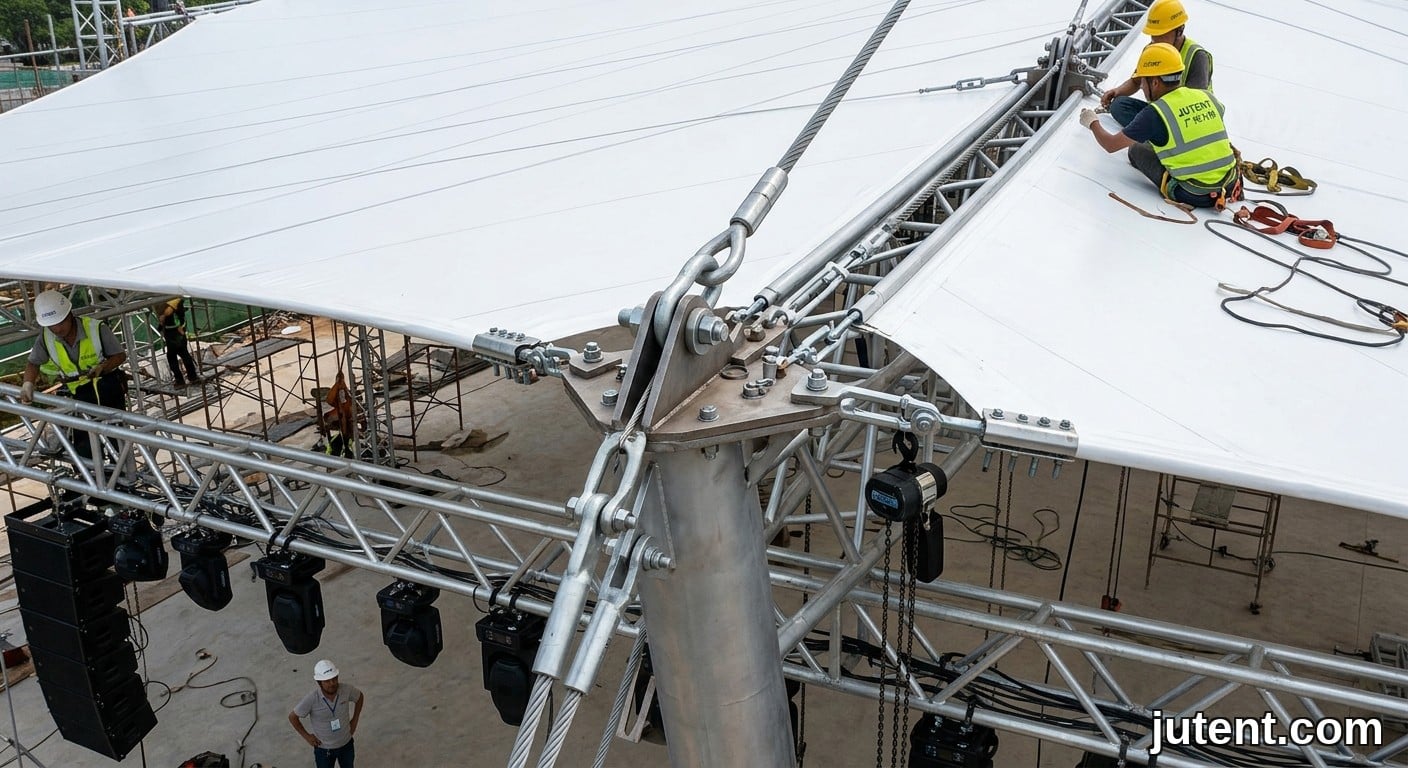
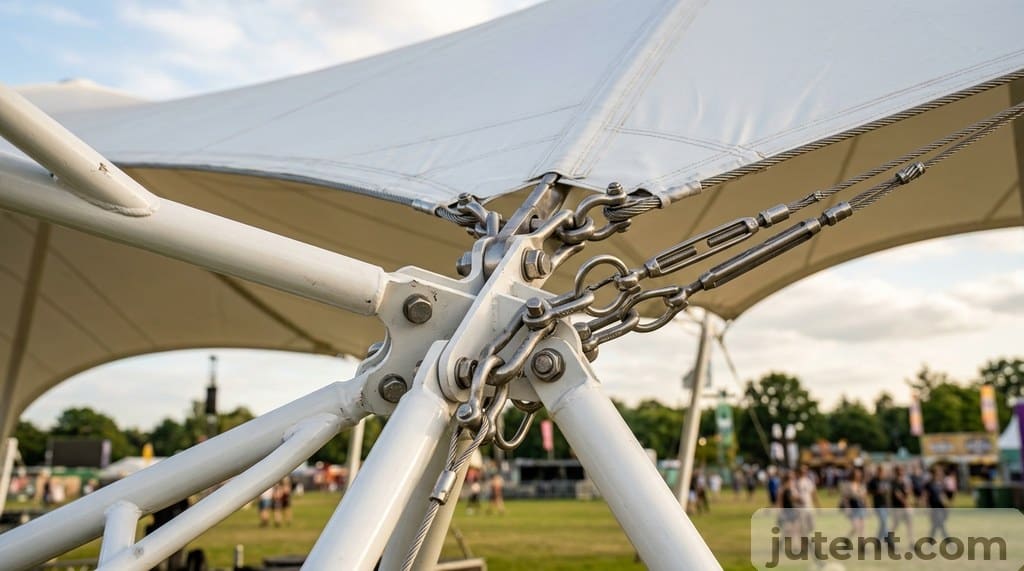
Mid-size municipal amphitheaters require a standard rigging capacity of 3,000 kg to 5,000 kg. This distributes across 10 to 15 dedicated points, each engineered for a 250 kg to 500 kg Safe Working Load (SWL). Large-scale commercial venues require up to 15,000 kg capacity, necessitating heavy-duty space frames or deep truss primary structures instead of simple portal frames.
Across 420+ projects in 30+ countries, the most common specification error is ignoring the dynamic load of motorized hoists. A 500 kg static load exerts higher forces when chain motors start or stop. Engineers apply a dynamic amplification factor—typically 1.2 to 1.4—to all motorized rigging points. Contractors consulting an Outdoor Stage Canopy Guide must ensure rigging points weld directly to the primary steel structure, never the secondary membrane framework. These points use 20mm to 25mm thick steel eye plates, fully penetration welded and tested via magnetic particle inspection (MPI) before galvanizing.
Wind Performance: What Concert Stage Canopies Need to Withstand
Wind uplift is the governing environmental load for an outdoor concert stage canopy. The open-front design acts as a wind trap, translating horizontal gusts into upward forces on the roof structure and foundations.
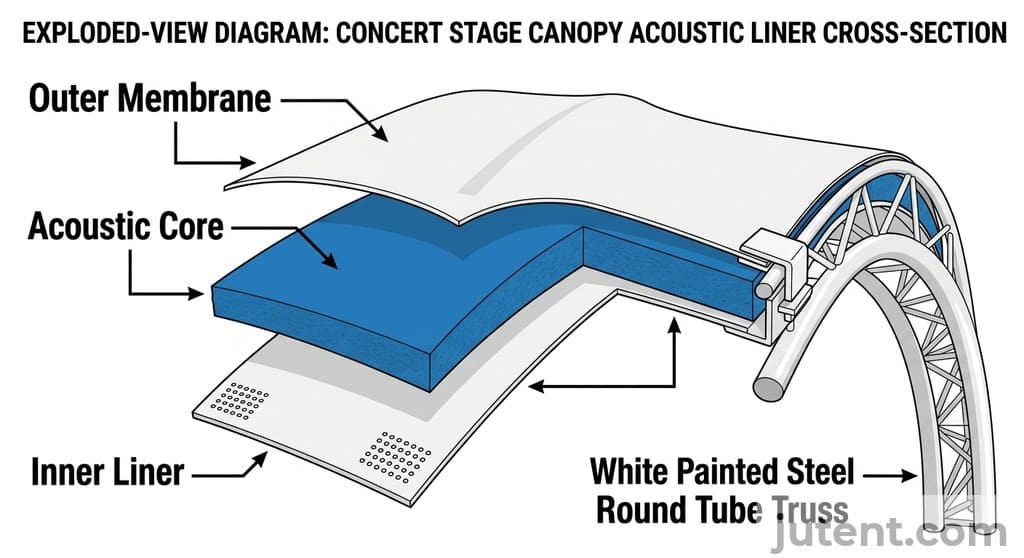
Design wind speeds dictate membrane specifications and foundation sizing. Standard inland structures are engineered for 160 km/h (45 m/s) basic wind speeds, while coastal or hurricane-prone zones require 250 km/h (70 m/s) or higher. To resist these forces, the tensile membrane requires precise pre-stressing. A standard 1050g/㎡ PVDF membrane
“`