
Not every tensile structure manufacturer can deliver an outdoor stage canopy with the rigging capacity, wind rating, and documentation that performance venues require. Here's what to verify before signing a contract with an outdoor stage canopy manufacturer.
Why Stage Canopy Manufacturer Selection Is Different from Standard Shade Structures
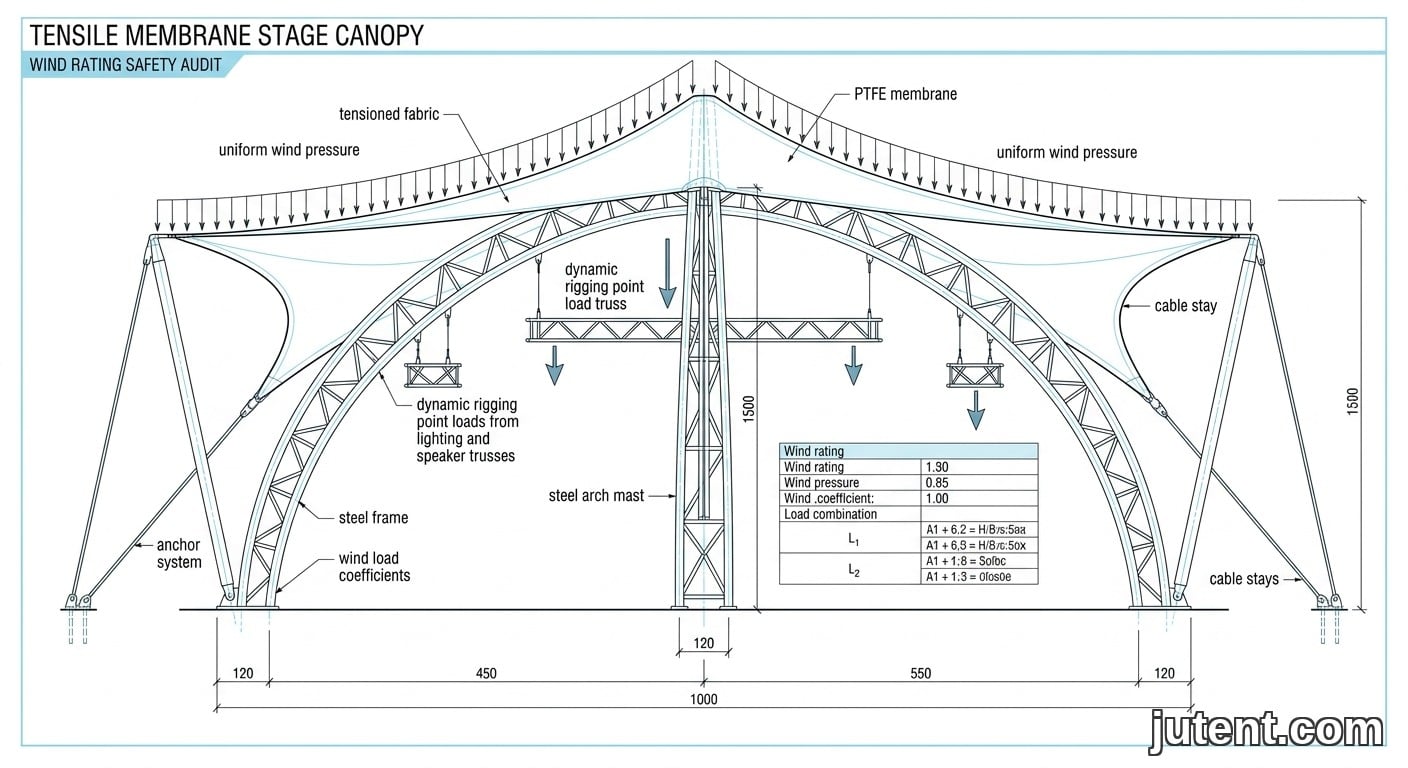
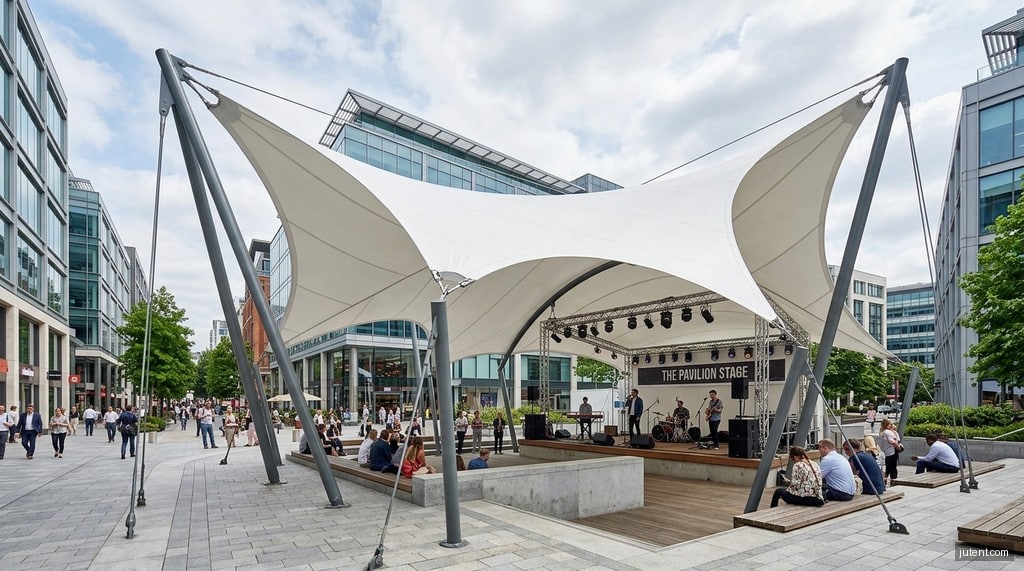
Selecting an outdoor stage canopy manufacturer requires a far more rigorous due diligence process than choosing a supplier for a standard shade structure. While both involve tensile membrane technology, the operational demands and safety criticalities of a stage canopy are distinct. Standard shade structures primarily focus on sun protection and aesthetic integration, with structural loads typically limited to basic wind and snow. An outdoor stage canopy, however, must accommodate dynamic live loads from rigging for lighting, sound, and video equipment, often exceeding several tons. This necessitates precise engineering for point loads and distributed loads, which many general tensile structure suppliers are not equipped to handle.
stage canopies are frequently exposed to higher wind speeds and require reliable structural integrity to protect both performers and audiences. The consequences of structural failure in a stage environment are severe, making verifiable engineering, material quality, and project documentation paramount. A specialized stage cover supplier understands the nuances of temporary and semi-permanent installations, including rapid deployment considerations and compliance with international safety standards. This distinction in application demands a manufacturer with proven expertise in performance-specific tensile structures, not just general architectural canopies.
Stage Canopy Engineering Capability: Rigging Loads and Wind Uplift
The core differentiator for a competent outdoor stage canopy manufacturer lies in their engineering capability, specifically their ability to accurately calculate complex rigging loads and withstand significant wind uplift. This is not a trivial exercise; it requires specialized structural analysis software and experienced engineers proficient in tensile membrane dynamics. When evaluating a potential stage canopy factory, request detailed examples of their load calculation methodologies. These should include:
- Rigging Point Load Calculations: Demonstrating how they account for concentrated loads from lighting trusses, speaker arrays, and video screens, including dynamic factors.
- Distributed Load Analysis: Showing how the membrane and supporting structure handle the overall weight of suspended equipment.
- Wind Load Analysis: Providing detailed computational fluid dynamics (CFD) or wind tunnel test data, or calculations based on relevant building codes (e.g., ASCE 7, Eurocode) for the specified project location's wind zone. This must include uplift forces, which are often more critical for canopies than downward pressure.
- Snow Load Calculations: If applicable to the project's geographic location.
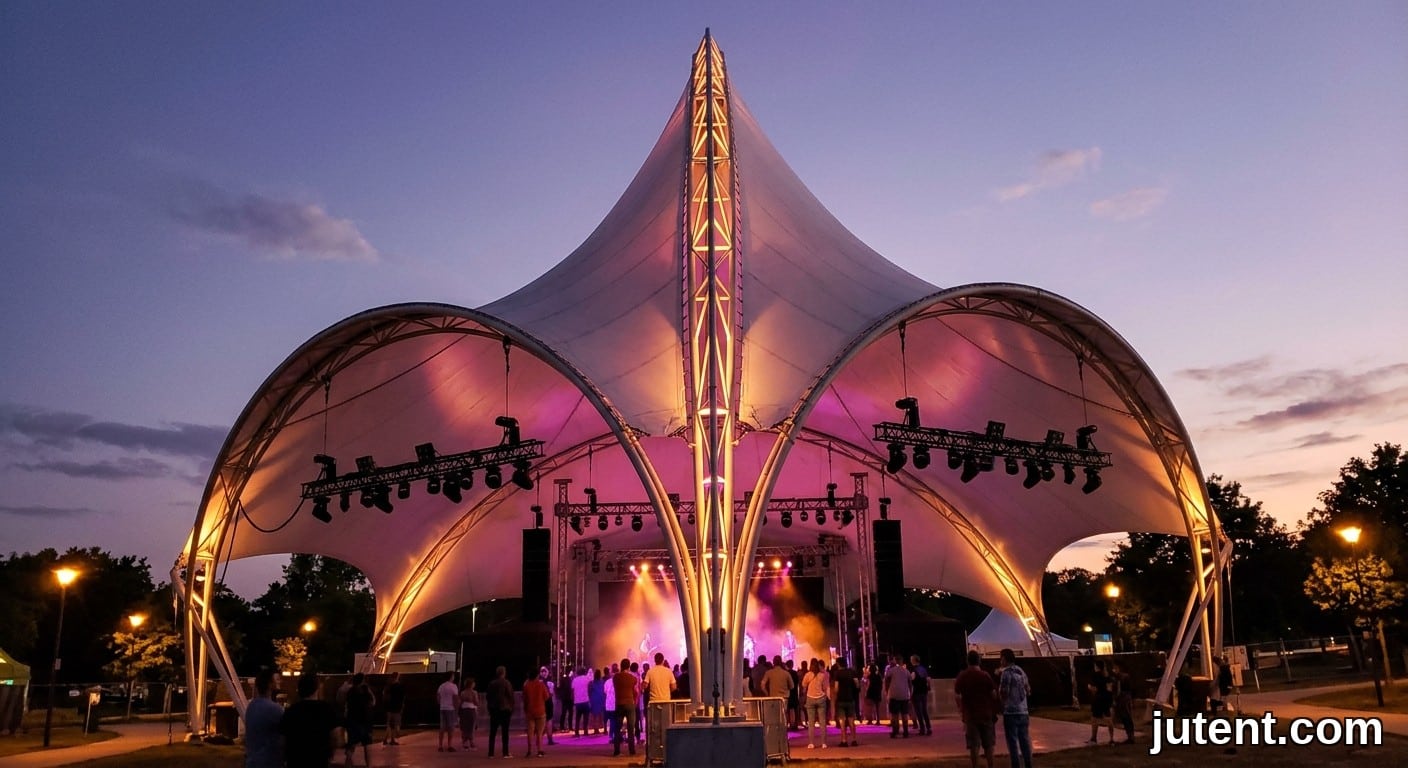
A reputable tensile stage canopy manufacturer China will provide these calculations as part of their design submission, often reviewed and approved by an in-house engineering team. Based on Jutent's experience across 400+ projects in 30+ countries, verifying these engineering documents is non-negotiable. Ensure they can provide a structural report that clearly outlines the design parameters, material properties, and safety factors applied. This level of detail confirms their ability to design a structure that is not only aesthetically pleasing but also structurally sound and safe for performance use.
About
Membrane Brand and Test Certificates: What to Ask For
The membrane is the skin of your stage canopy, and its quality directly impacts durability, weather resistance, and safety. When engaging with an outdoor stage canopy OEM, always request specific information and documentation regarding the membrane material. Do not accept generic descriptions.
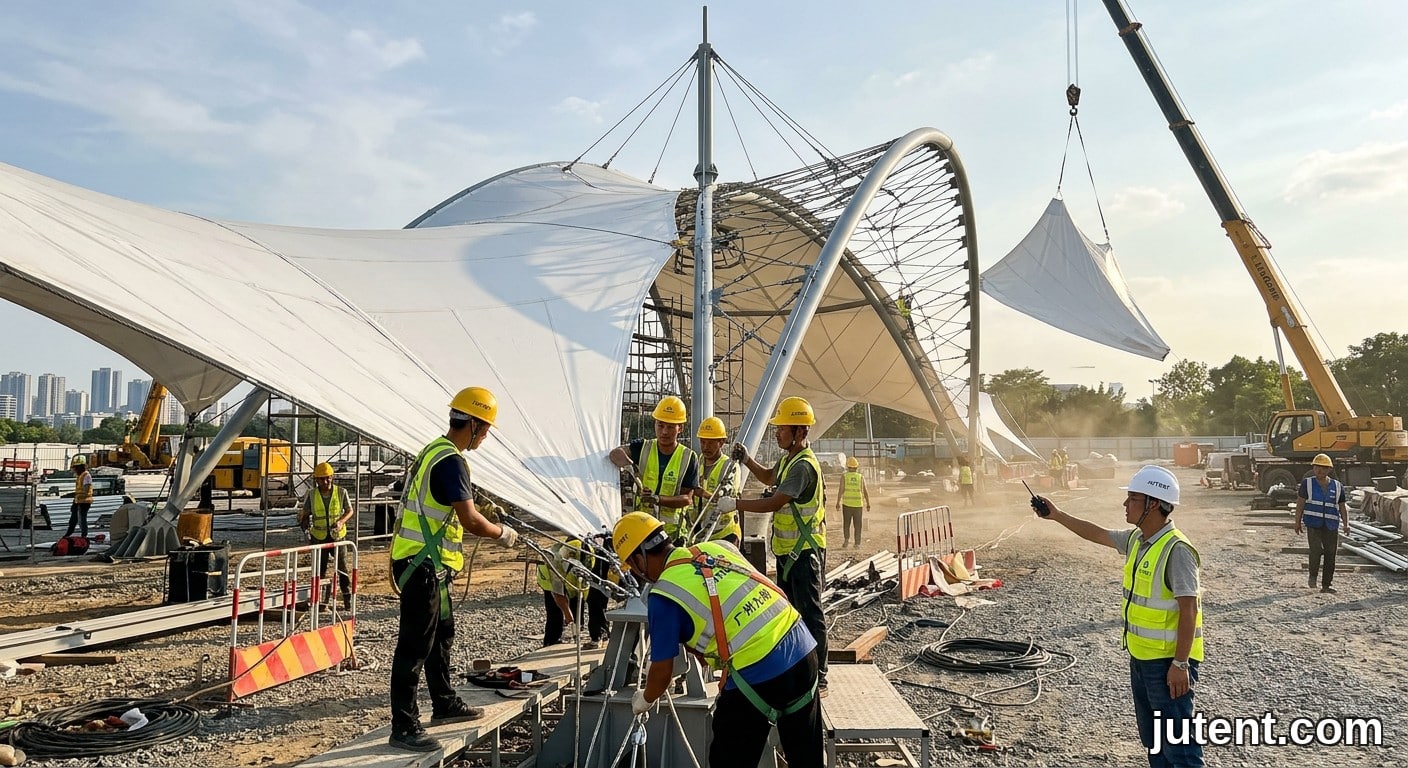
First, identify the membrane type. PVDF (Polyvinylidene Fluoride) coated polyester is a common choice, offering excellent UV resistance and a 10-year warranty with a 12-15 year service life under normal conditions. For projects demanding superior longevity and fire resistance, PTFE (Polytetrafluoroethylene) coated fiberglass is the premium option, typically carrying a 10-15 year warranty and a 25+ year service life.
Second, demand brand names and corresponding test certificates. A reputable manufacturer will use membranes from internationally recognized brands and provide certificates for:
- Tensile Strength: Indicating the material's resistance to breaking under tensio