
Padel & Pickleball Court Shade Structures in the UAE & Saudi Arabia: Design for Extreme Heat & UV
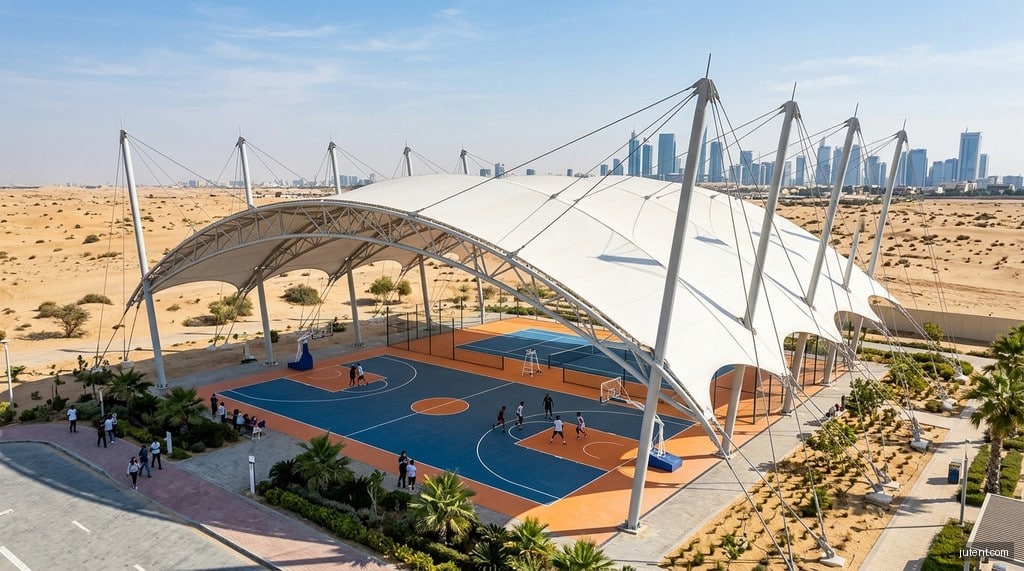
The relentless sun, scorching temperatures, and abrasive sand of the Gulf region present unique challenges for outdoor padel and pickleball court shade structures. While a sports court shade structure is essential for player comfort and safety, standard specifications designed for temperate climates often fall short in the UAE, Saudi Arabia, and Qatar. Contractors in these regions must specify materials and designs that account for 45°C+ summers, intense UV radiation, and sand-laden winds to ensure longevity and performance. This article details the critical design considerations and material requirements for sports court canopies in the Middle East.
Why Gulf Climate Conditions Require Different Specifications
The extreme climate of the Gulf demands a fundamentally different approach to tensile structure design. Unlike regions with moderate weather, the UAE and Saudi Arabia experience prolonged periods of intense heat, often exceeding 45°C, coupled with high humidity near coastal areas. This constant thermal stress can degrade conventional materials rapidly. The solar radiation index is consistently high, leading to accelerated UV degradation of membranes if not properly specified. Beyond temperature and UV, the region is prone to sandstorms and high winds, which introduce abrasive particles that can scour surfaces and clog drainage systems.
These conditions necessitate specific material choices and engineering considerations. For instance, a membrane that performs adequately in Europe might fail prematurely in Dubai due to UV exposure or thermal expansion. Steel coatings must resist both corrosion from humidity and abrasion from sand. Drainage systems need to be designed to prevent sand accumulation. Ignoring these local realities leads to premature material failure, increased maintenance costs, and a shorter service life for the structure. Sport Court Shade
UV Resistance: Membrane Grade Requirements for UAE and Saudi Arabia
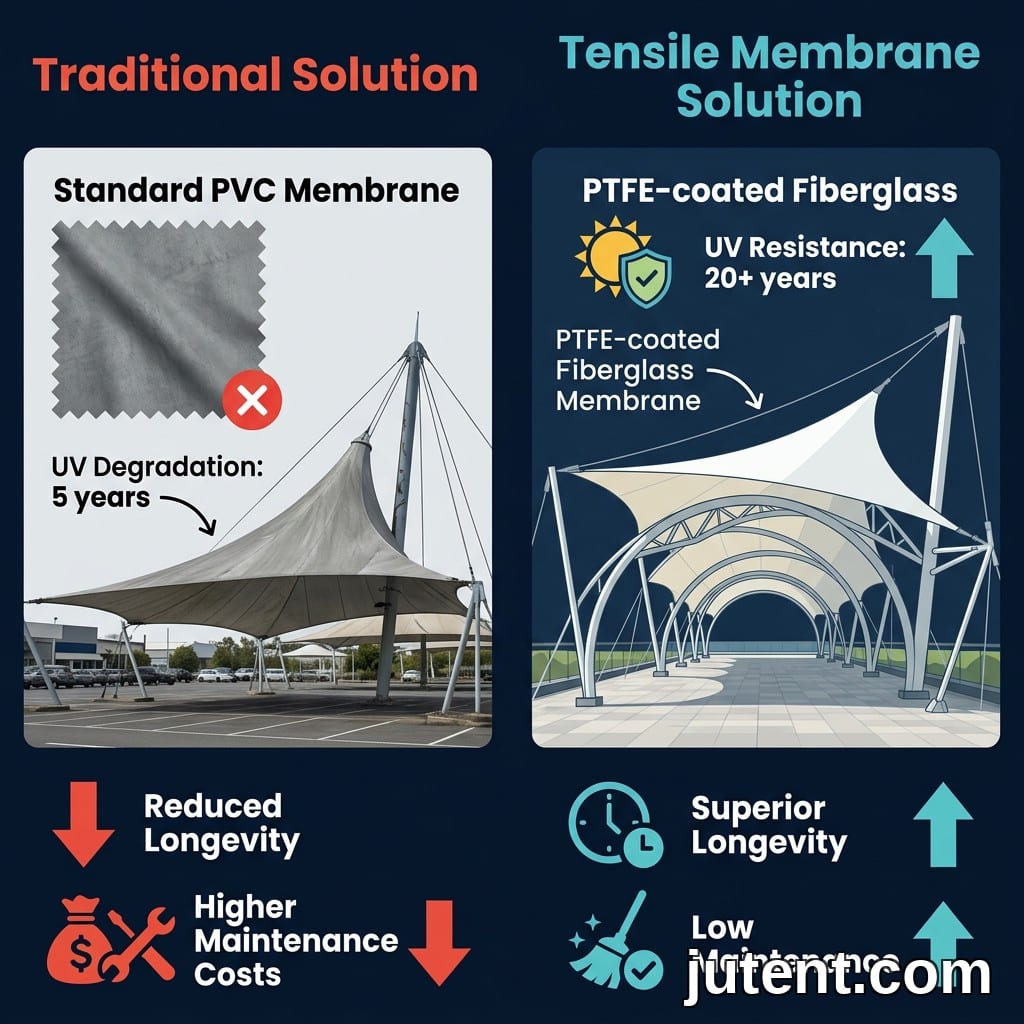
UV radiation is a primary antagonist for tensile membranes in the Middle East. The intensity and duration of sunlight in the UAE and Saudi Arabia are significantly higher than in many other parts of the world, making superior UV resistance a non-negotiable requirement. Standard PVDF membranes, while offering good performance, may not suffice without enhanced UV stabilization.
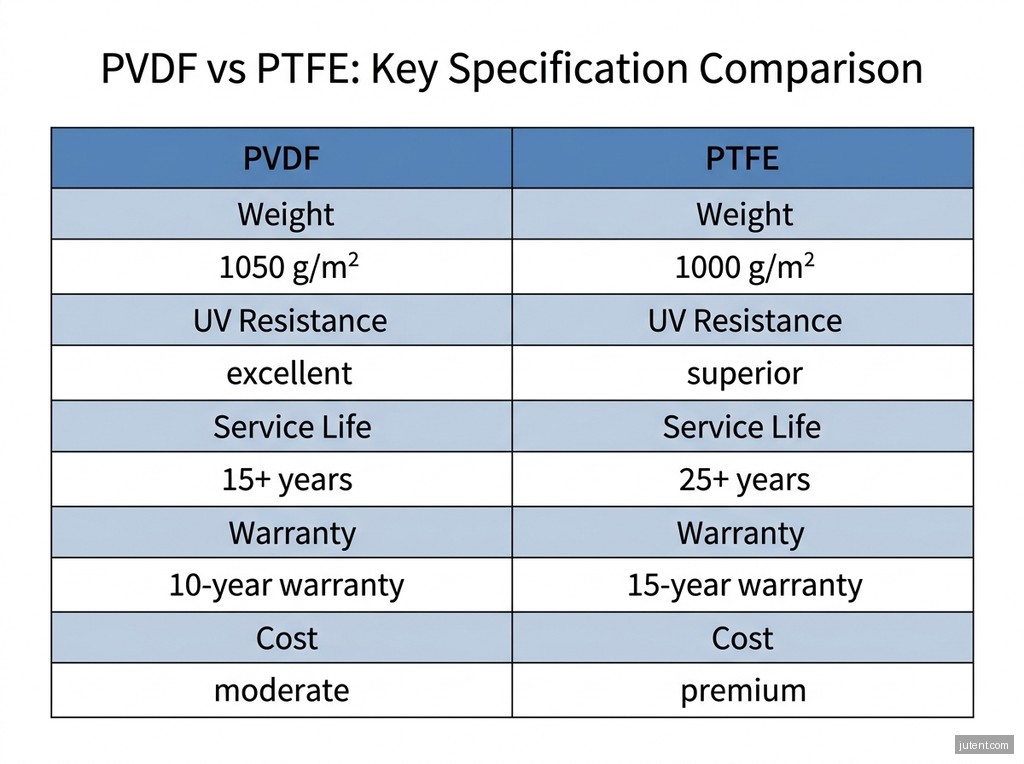
For sports court canopies in the UAE and Saudi Arabia, high-grade PVDF membranes with a UV stabilization index of 95% or higher are typically specified. These membranes incorporate advanced surface treatments and formulations to reflect a greater percentage of UV rays and resist molecular breakdown. For projects demanding a design life of 25 years or more, or higher fire ratings, PTFE membranes are the preferred choice. PTFE offers exceptional UV stability, often exceeding 98%, and maintains its structural integrity and aesthetic appearance over decades in harsh environments.
When specifying, contractors should request detailed UV resistance data from manufacturers, including accelerated weathering test results. The membrane's ability to retain its tensile strength and color stability under prolonged UV exposure is paramount.
| Membrane Type | Typical UV Stabilization Index | Expected Service Life (Gulf Climate) |
|---|---|---|
| Standard PVDF | 85-90% | 10-15 years |
| High-Grade PVDF | 95%+ | 15-20 years |
| PTFE | 98%+ | 25+ years |
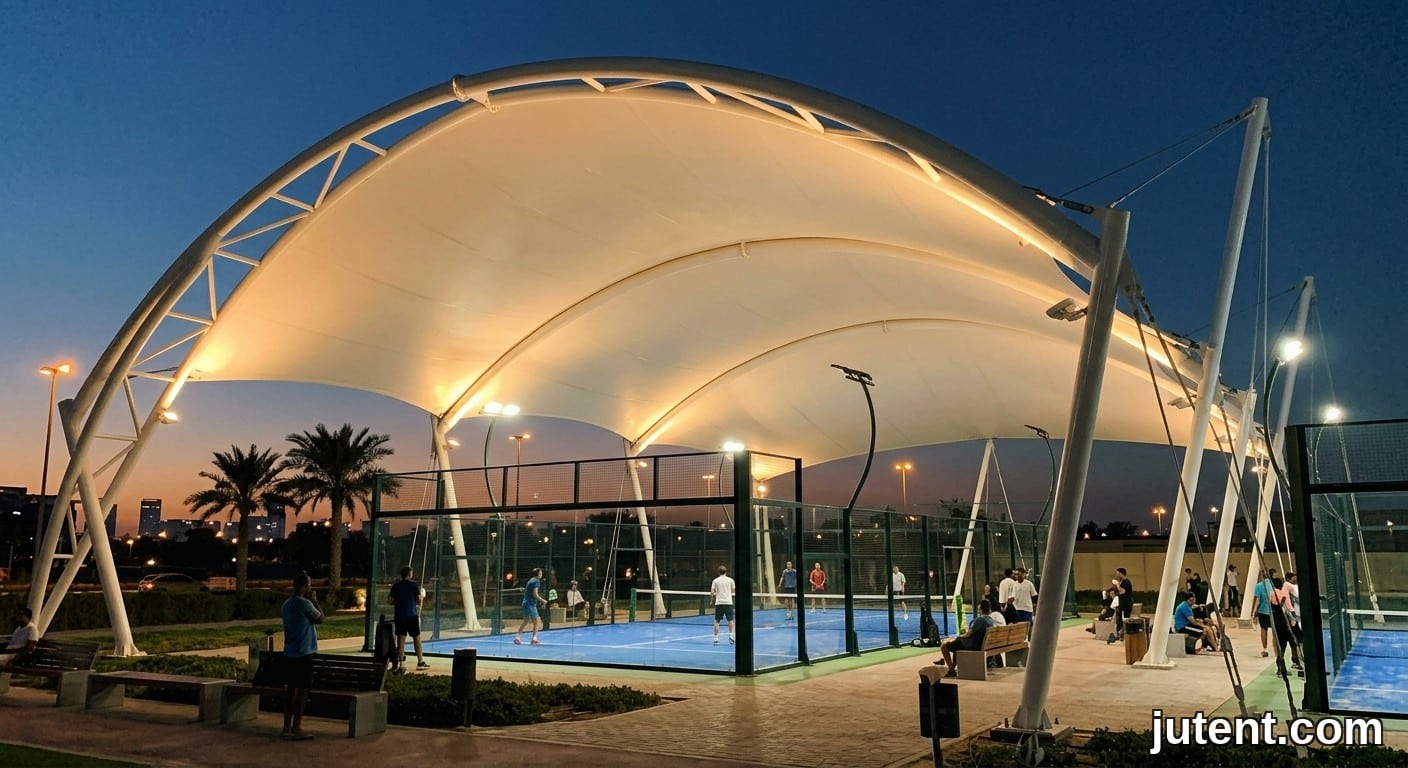
Tensile Shade Structures Sports Courts Guide
Heat Resistance: Steel Coating and Membrane Performance at 45°C+
The sustained high temperatures of the Gulf region, frequently exceeding 45°C, impose significant thermal stress on both the steel framework and the tensile membrane. Steel components must be protected not only from corrosion but also from the effects of thermal expansion and contraction. Membranes must maintain their structural integrity and aesthetic properties without becoming brittle or excessively pliable.
For steel structures, hot-dip galvanizing is a highly effective treatment, providing a reliable barrier against corrosion and offering excellent durability in high-temperature, high-humidity environments. Alternatively, an epoxy zinc-rich primer followed by an acrylic or fluorocarbon topcoat provides superior protection. Jutent specifies Q235B or Q355B steel grades, ensuring structural integrity under thermal loads. Browse our sports court canopy designs for more details.
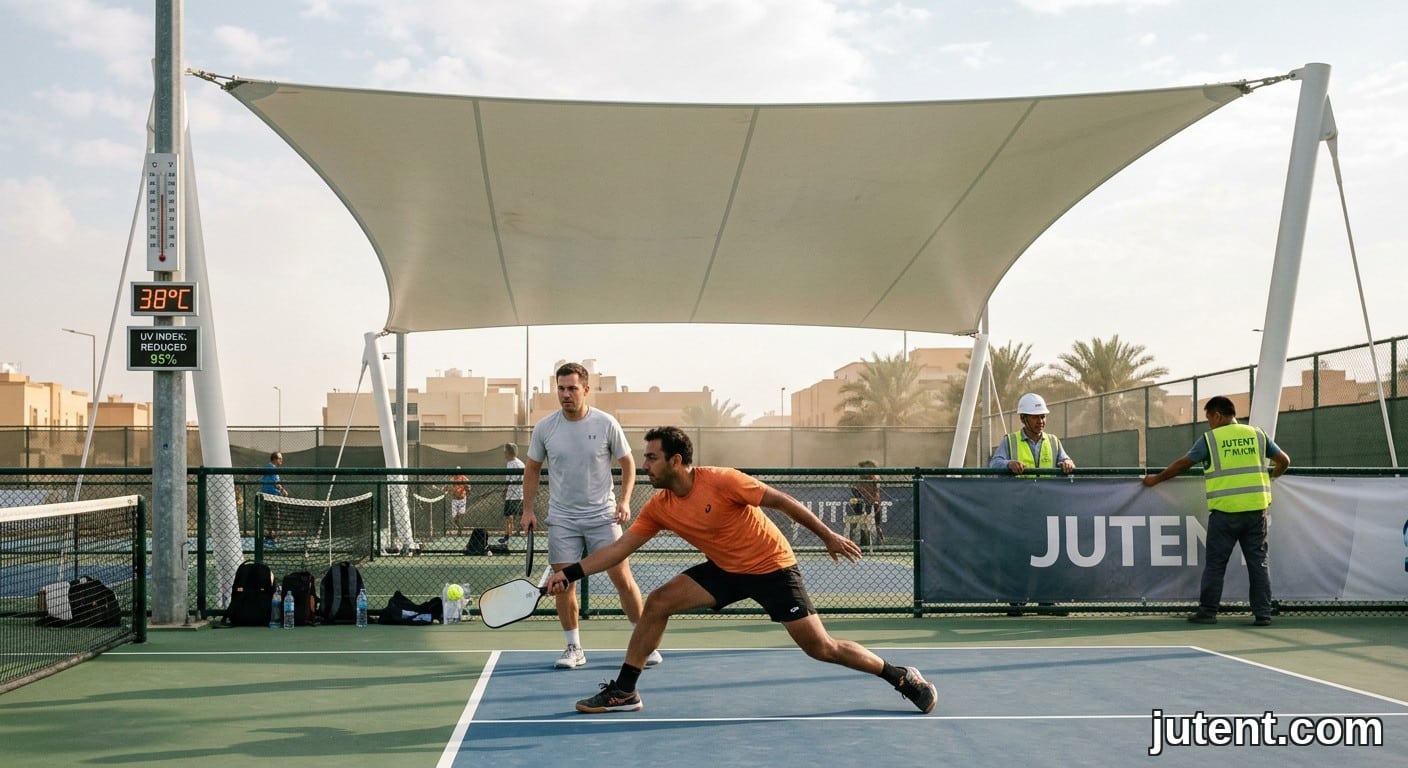
To mitigate sand abrasion, specify PTFE membranes with a smooth, low-friction surface (surface roughness <0.5µm) and self-cleaning TiO₂ coatings. For drainage, use gutters with a minimum width of 300mm and a slope of at least 2%, with clean-out access points every 10 meters.
FAQ
Q: What is the lifespan of a PVDF membrane in Saudi Arabia?
A: High-grade PVDF with 95%+ UV stabilization lasts 15-20 years in Gulf climates.
Q: Can a tensile canopy withstand 50 m/s winds?
A: Yes, when engineered to SBC 301 with CFD analysis and hot-dip galvanized steel frames.