
“`html
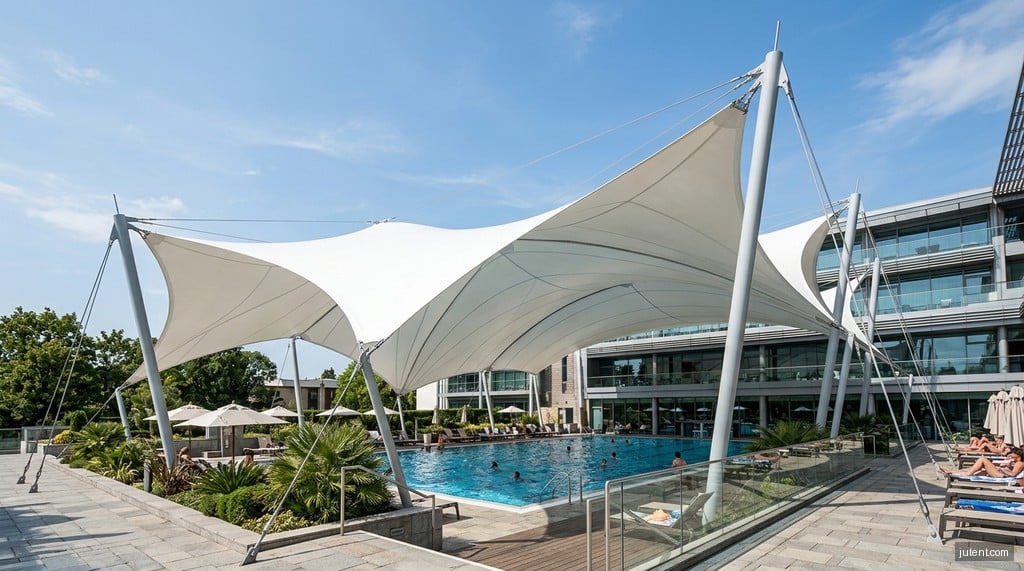
Not every shade structure manufacturer can deliver a pool tensile canopy with the chlorine resistance, wind rating, and documentation that aquatic facilities require. Here's what to verify before signing. For contractors sourcing a commercial swimming pool shade or aquatic center tensile roof, verifying these factors is critical.
Why Pool Canopy Manufacturer Selection Is Different
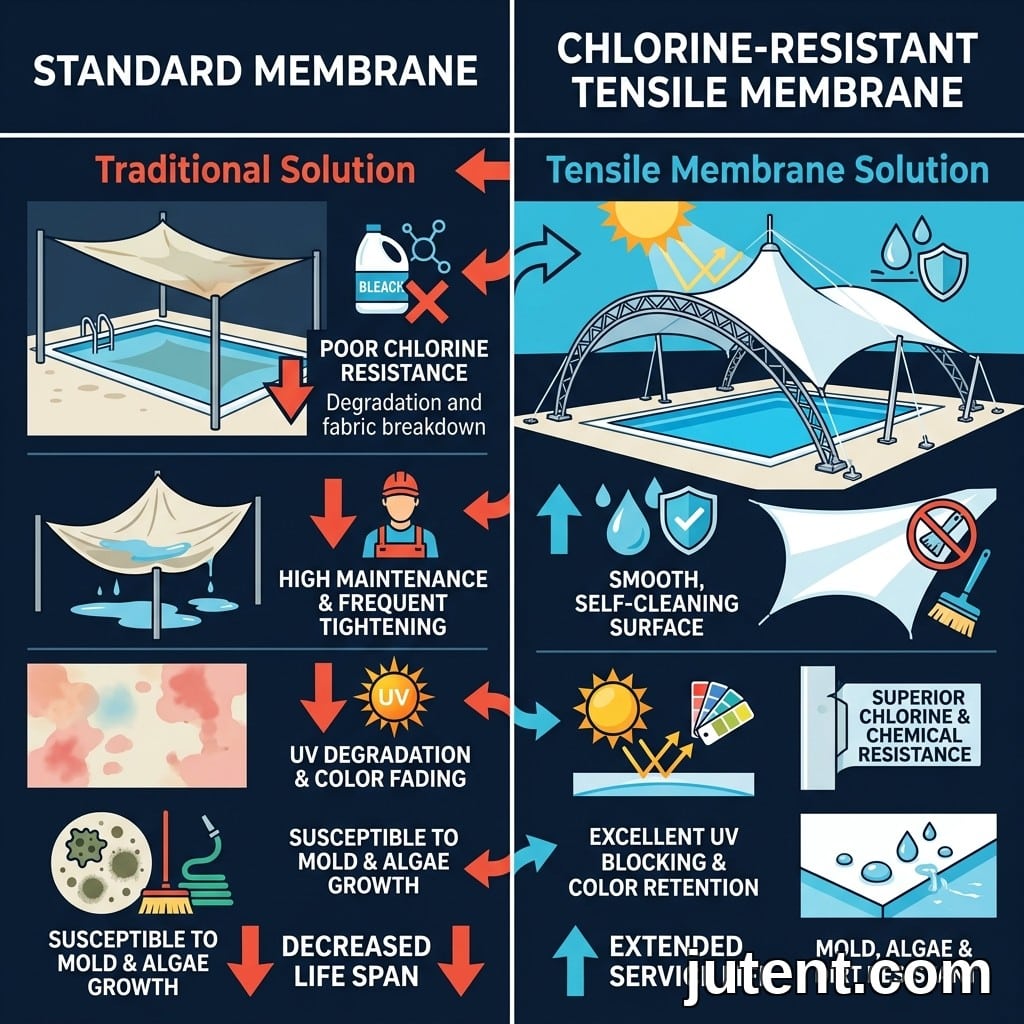
Selecting a pool tensile canopy manufacturer demands a more rigorous due diligence process than for general-purpose shade structures. The unique environment of an aquatic facility introduces specific challenges related to chemical exposure, structural integrity, and long-term durability. Chlorine, a ubiquitous chemical in pool maintenance, can degrade standard membrane materials and corrode steel components if not properly specified and treated. Therefore, a manufacturer's expertise in chemical resistance and appropriate material selection is paramount.
Beyond chemical considerations, pool canopies often cover larger spans and require precise engineering to withstand localized wind loads, especially in open-air or coastal settings. Contractors and procurement managers must scrutinize a manufacturer's engineering capabilities, including their ability to provide detailed wind load calculations specific to the project's geographic location and structural design. A failure to account for these factors can lead to premature material degradation, structural instability, or costly maintenance. Verifying a manufacturer's track record with similar projects, their quality control processes, and their adherence to rigorous quality control processes and engineering standards is not merely good practice—it is essential for mitigating risk and ensuring the longevity of the investment. For more information on specific pool shade solutions, visit our pool shade structure solutions page.
Swimming Pool Tensile Canopy: Chlorine Resistance Test Certificates to Request
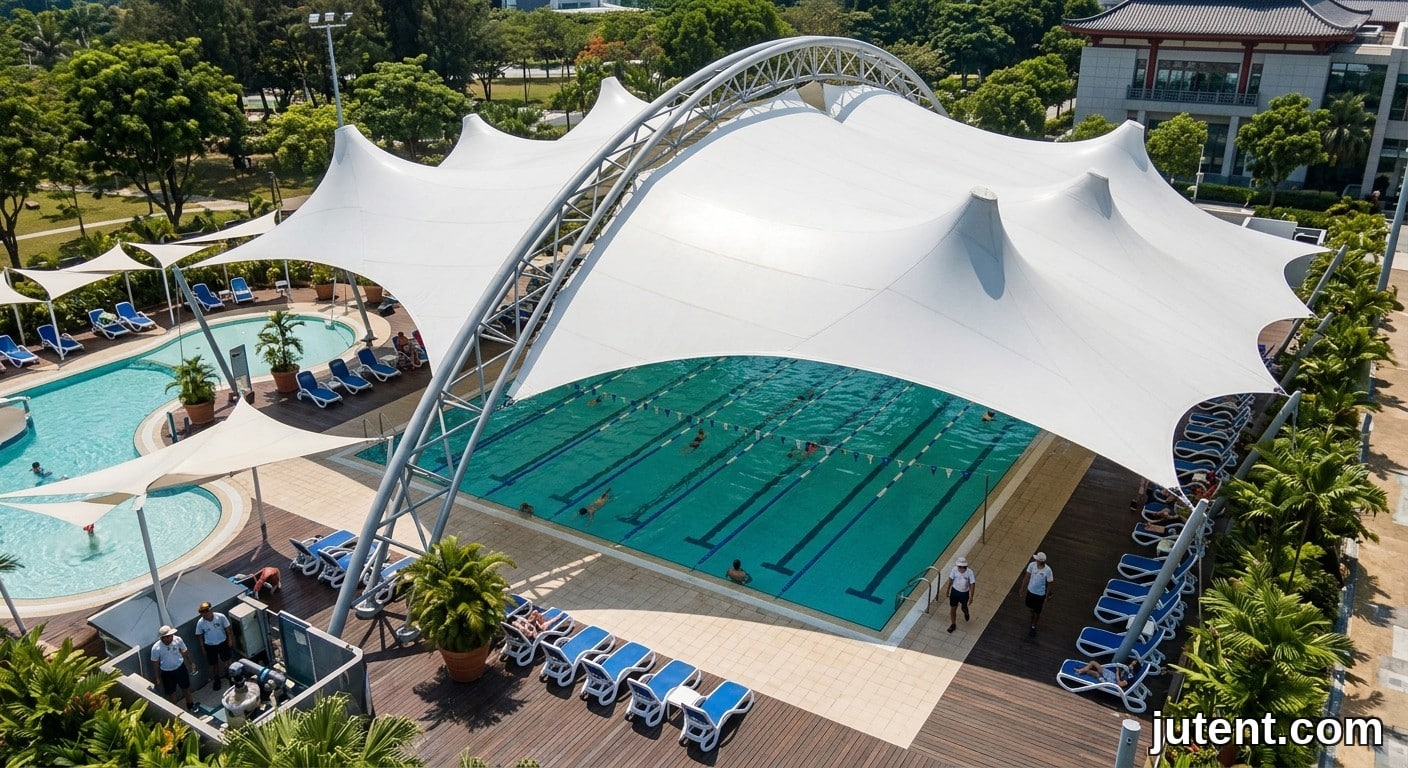
Chlorine resistance is a non-negotiable requirement for any pool tensile canopy membrane. The constant exposure to chlorine vapors, and potential splash contact, necessitates a membrane material specifically engineered to resist chemical degradation. When evaluating a pool tensile canopy manufacturer, always request official test certificates for the proposed membrane material. These certificates should originate from independent laboratories and clearly demonstrate the membrane's resistance to chlorine concentrations typical in pool environments.
For PVDF membranes, which are a common choice for tensile structures, look for documentation detailing accelerated aging tests under chlorine exposure. The certificate should specify the test methodology, the concentration of chlorine used, and the duration of the test, along with the observed material performance (e.g., retention of tensile strength, colorfastness, absence of embrittlement). For PTFE membranes, known for their superior chemical inertness, similar documentation should be provided, although their inherent resistance often simplifies this verification.
inquire about the steel components' surface treatment. While the membrane bears the brunt of chemical exposure, the supporting steel structure is also vulnerable to corrosion from humid, chlorinated air. Approved surface treatments include epoxy zinc-rich primer followed by a fluorocarbon topcoat, or hot-dip galvanizing for maximum corrosion resistance. These treatments provide reliable protection against corrosion. Based on Jutent's experience across 400+ projects in 30+ countries, verifying these material specifications and requesting corresponding test data is critical for long-term performance. Learn more about our manufacturing standards at About.
Wind Load Calculations: What Aquatic Facility Projects Require
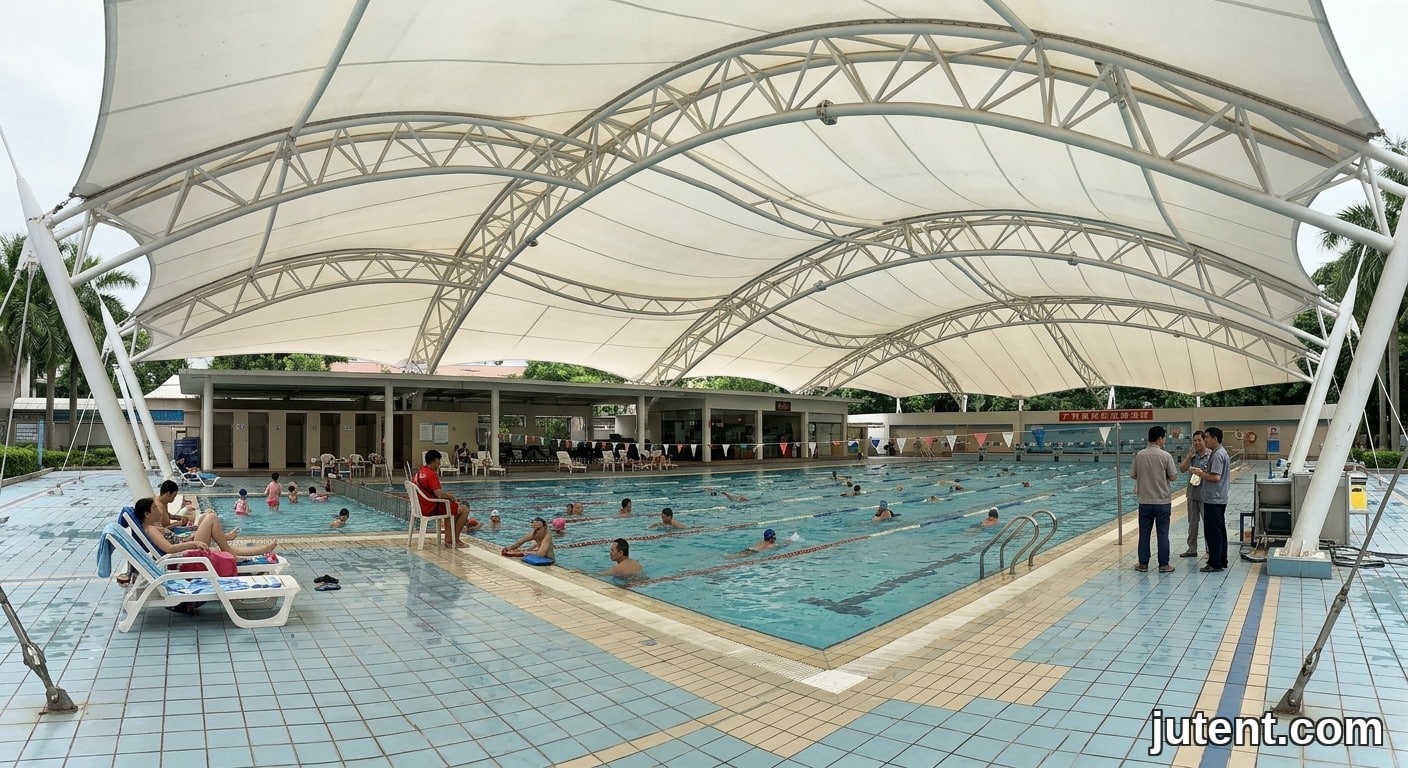
Accurate wind load calculations are fundamental for the structural integrity and safety of any tensile structure, particularly for pool canopies that may cover large, open areas. Aquatic facility projects often have specific site conditions, such as proximity to coastlines or elevated locations, which can significantly influence local wind pressures. A reputable pool tensile canopy manufacturer must demonstrate a thorough understanding of these engineering requirements and provide detailed documentation.
When assessing a manufacturer, demand to see their structural analysis reports. These reports should include:
* Site-specific wind speed data: Based on the project's exact geographic coordinates and local building codes (e.g., ASCE 7 for North America, Eurocodes for Europe).
* Wind pressure coefficients: Applied to the specific geometry of the tensile canopy, considering its shape, height, and surrounding terrain.
* Finite Element Analysis (FEA): Demonstrating how the membrane and steel structure will perform under various wind load scenarios, including uplift and downforce.
* specific steel grades (Chinese standard Q235B and Q355B, equivalent to ASTM A36 and A572 Grade 50 respectively)
“`