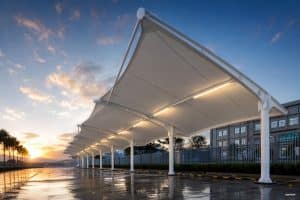
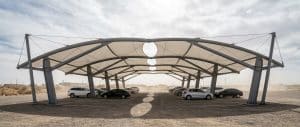
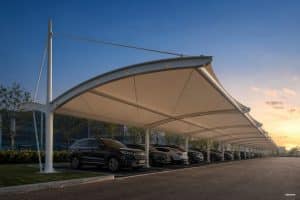
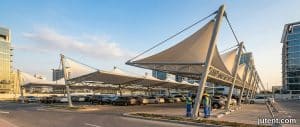
Not every shade structure manufacturer can deliver a tensile fabric carport canopy with the wind rating, documentation, and lead time that parking facility projects require. Here's what to verify before signing. Whether you need a single-bay or multi-bay carport tensile canopy, the same audit criteria apply.
Why Tensile Carport Manufacturer Selection Matters
Selecting the right tensile carport manufacturer is a critical decision that directly impacts project success, longevity, and compliance. A misstep can lead to costly delays, structural failures, or non-compliance with local building codes, especially concerning wind load requirements. For contractors and procurement managers, verifying a manufacturer's capabilities goes beyond just comparing price points. It involves a deep dive into their engineering prowess, material sourcing, production efficiency, and track record. A reputable tensile carport manufacturer ensures the structure is not only aesthetically pleasing but also engineered to withstand specific environmental conditions, providing a safe and durable asset for years. This due diligence minimizes risks and secures the investment for parking facility projects, whether for commercial complexes, educational institutions, or public spaces. Carports
Engineering Capability: Wind Load and Structural Calculations
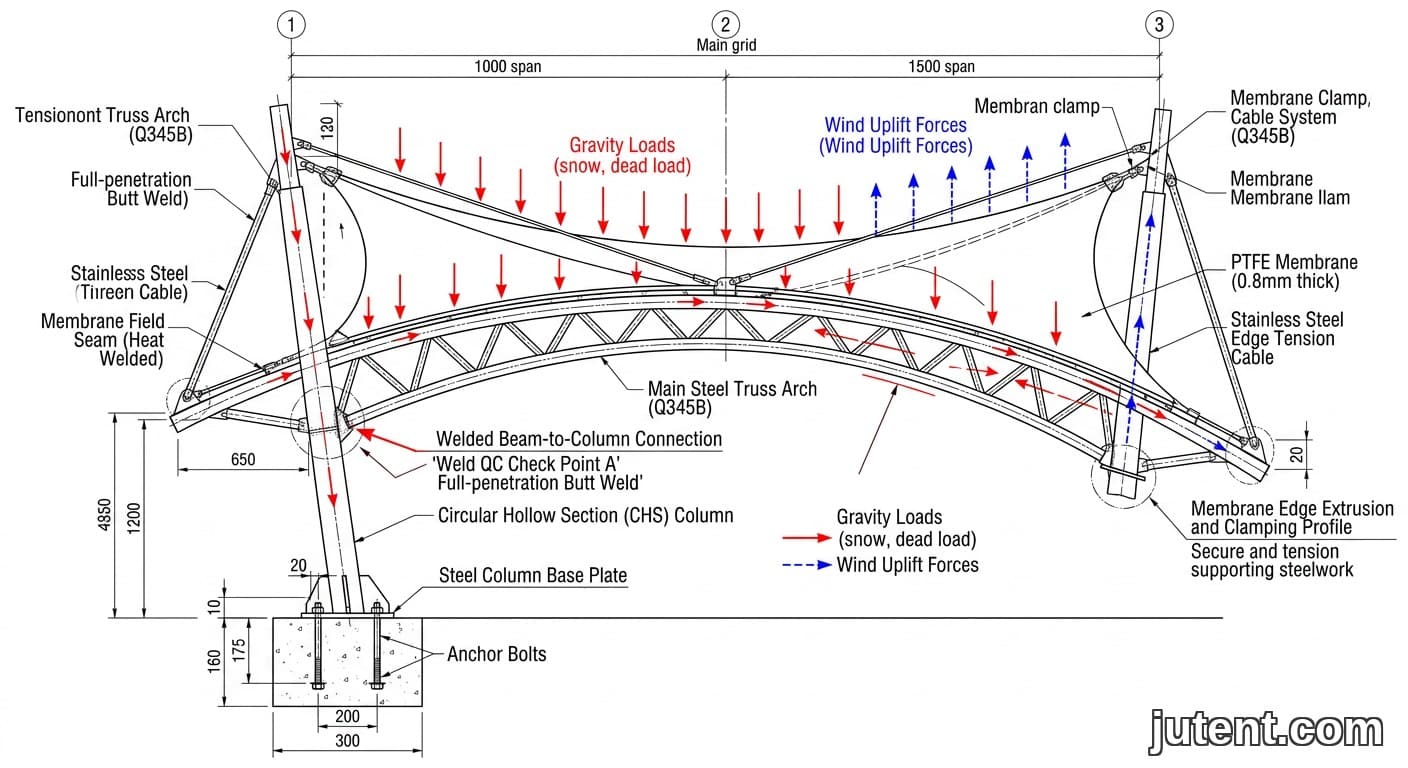
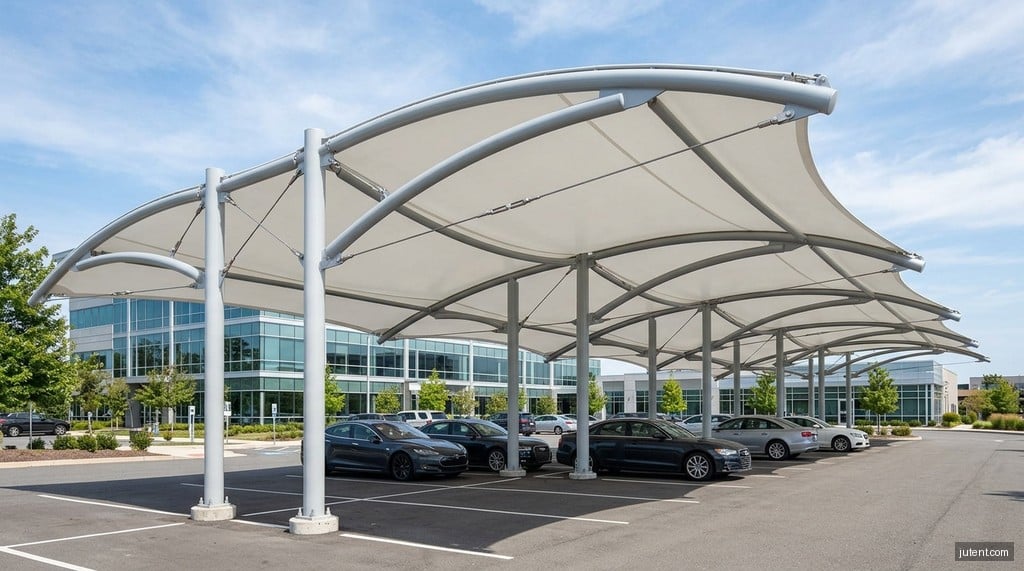
The structural integrity of a tensile carport hinges entirely on its engineering. When evaluating a tensile carport manufacturer, prioritize their ability to provide detailed wind load calculations and thorough structural analyses. These calculations must be specific to your project's location, taking into account local wind speeds, terrain categories, and building codes. A reliable manufacturer will utilize advanced structural analysis software and employ experienced engineers to design the steel framework (typically Q235B or Q355B) and membrane tensioning system. Request to see examples of their engineering reports and design drawings. For projects requiring local approval, ensure the manufacturer can supply all necessary documentation for a local registered engineer to review and stamp. Based on Jutent's experience across 400+ projects in 30+ countries (see our project portfolio), thorough engineering documentation is non-negotiable for ensuring compliance and safety.
Membrane Brand and Test Certificates: What to Ask For
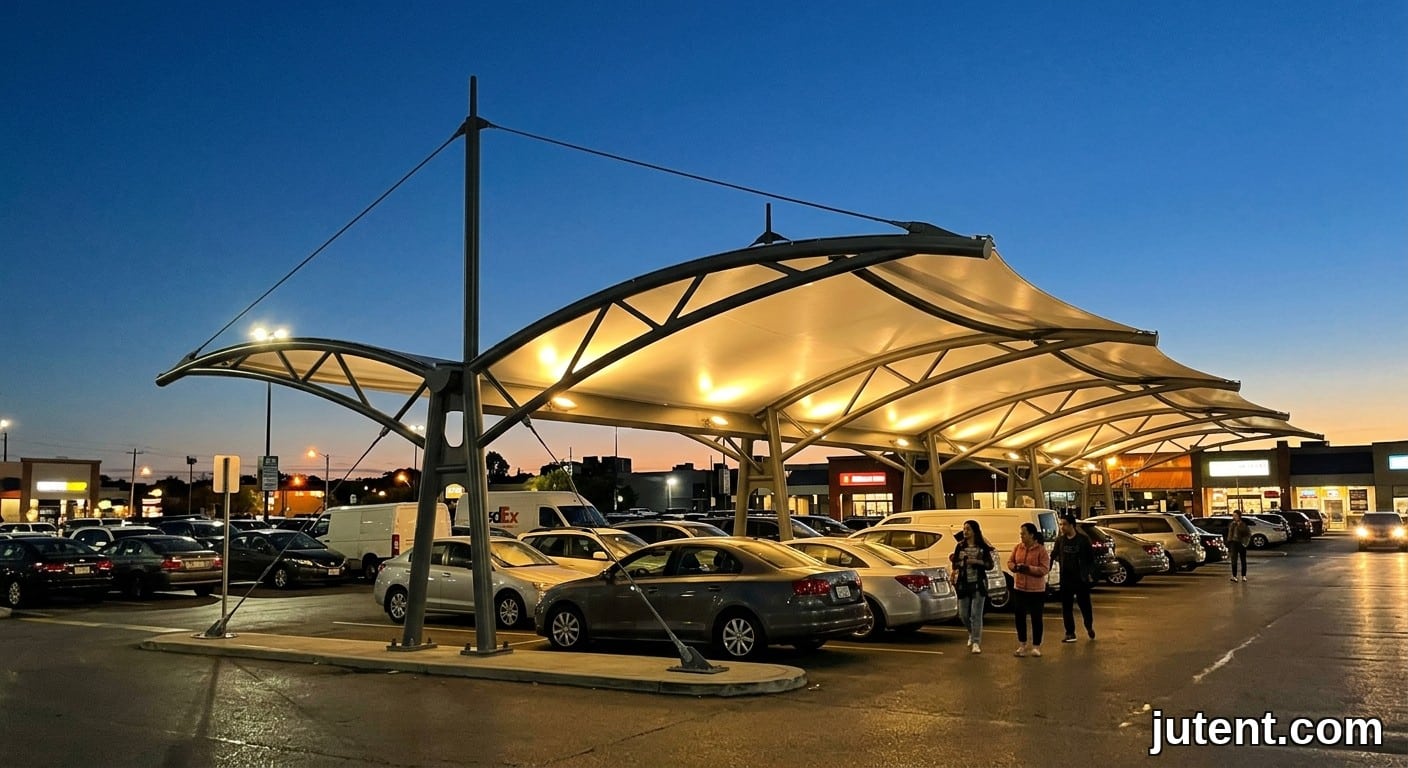
The tensile membrane is the defining feature of a carport, offering both aesthetic appeal and critical protection. Verifying the quality of the membrane material is paramount. Ask the tensile carport manufacturer for specific membrane brand names and their corresponding test certificates. Reputable manufacturers will typically use high-quality PVDF (Polyvinylidene Fluoride) or PTFE (Polytetrafluoroethylene) membranes. For PVDF, a standard membrane is often 1050 g/m², offering a 10-year warranty and 15+ years service life. PTFE membranes, known for their superior durability and self-cleaning properties, typically come with a 15-year warranty and 25+ years service life. Request documentation that confirms UV resistance, fire rating, tear strength, and tensile strength. These certificates provide objective proof that the membrane meets international standards and will perform as expected under various environmental stresses.
Production Lead Time and Logistics
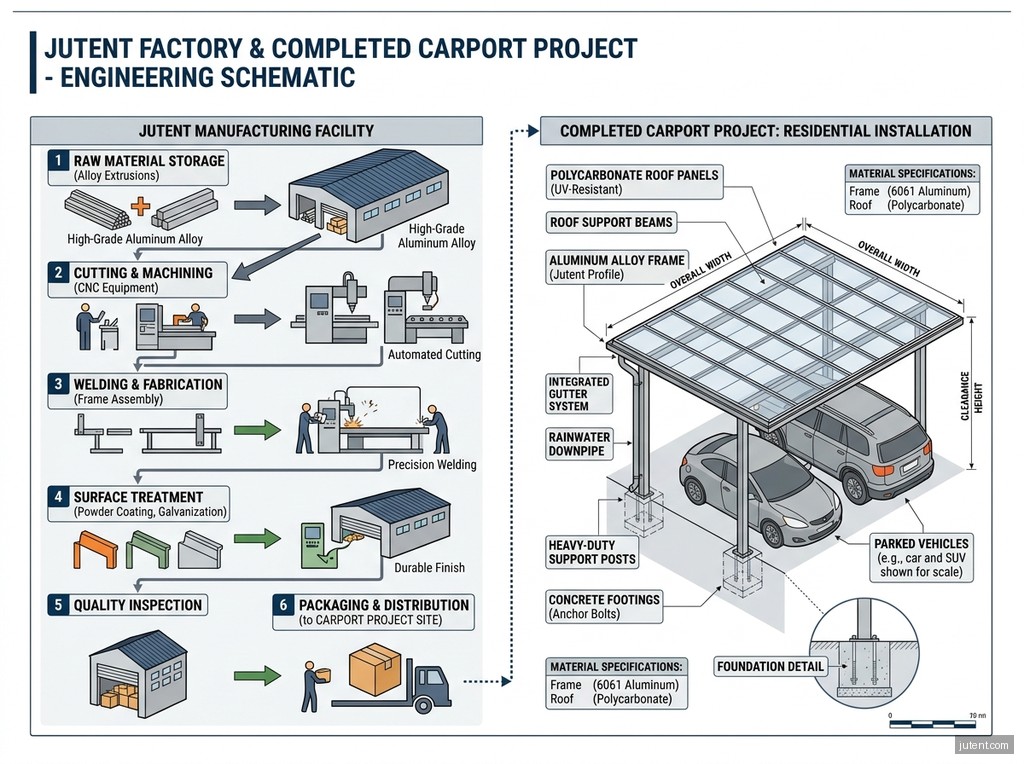
Production lead time and logistics are critical factors for project scheduling and budget management. A reliable carport tensile canopy supplier will provide a clear, realistic timeline from design approval to factory gate. Inquire about their typical production capacity and how they manage multiple projects concurrently. Understand their process for material sourcing, fabrication of steel components (which should be treated with epoxy zinc-rich primer + acrylic topcoat, epoxy zinc-rich primer + fluorocarbon topcoat, or hot-dip galvanizing), and membrane cutting/welding. Discuss their packaging standards for export, ensuring components are protected during transit. For export projects, Jutent can provide design drawings, calculations, material specifications, installation manuals, and free remote guidance, subject to project scope and contract terms. Clarify shipping methods, estimated transit times, and any customs documentation support they offer. Efficient logistics are key to avoiding delays and keeping your project on track. For multi-bay carport tensile canopy projects, Jutent can coordinate phased delivery to match your installation schedule.

References from Similar Carport Projects
A manufacturer's past work is often the best indicator of their