
Procuring a tensile carport structure from an overseas manufacturer involves more steps than a local purchase. This checklist covers everything from RFQ to delivery — so nothing falls through the cracks.
Step 1: Define the Scope — Bay Dimensions, Wind Zone, and Vehicle Type
Successful tensile carport procurement begins with a precise definition of project requirements. This initial phase is critical for accurate quotations and ensuring the final structure meets functional and regulatory demands. Start by detailing the required bay dimensions, including length, width, and clear height, considering the types of vehicles it will shelter. For example, a standard passenger vehicle carport will differ significantly from one designed for commercial trucks or buses.
Next, identify the project's specific wind zone and snow load requirements. These environmental factors directly influence the structural design, material thicknesses, and connection details. Local building codes and international standards (e.g., ASCE 7, Eurocode) provide essential data for this. A reputable manufacturer will require this information to perform accurate structural calculations. Also, specify the desired membrane material – PVDF or PTFE – keeping in mind their respective lifespans and warranties. PVDF membranes typically offer a 10-year warranty and 15+ years service life, while PTFE membranes provide a 15-year warranty and 25+ years service life. Finally, consider any aesthetic preferences, such as membrane color or steel finish (e.g., hot-dip galvanizing, or epoxy zinc-rich primer with an acrylic or fluorocarbon topcoat). A clear scope minimizes revisions and delays later in the process.
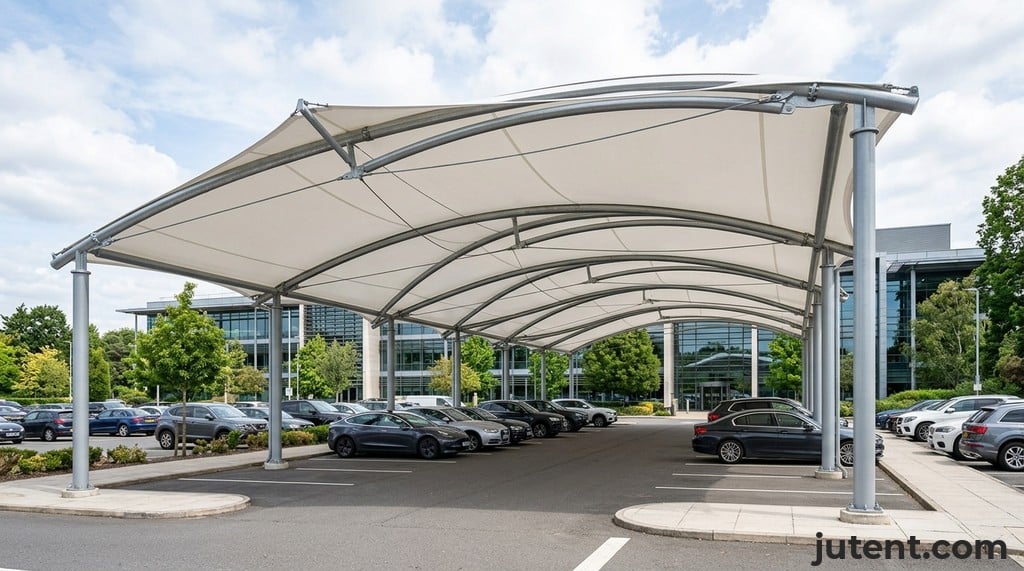
Carports
Step 2: Evaluate Suppliers — What to Ask and What to Look For
Selecting the right manufacturer is paramount for a successful tensile carport project. Begin by verifying their experience with similar projects. Ask for case studies, project references, and client testimonials, especially for international deliveries. A manufacturer with 400+ projects in 30+ countries demonstrates significant global experience. Inquire about their engineering capabilities: Do they have in-house structural engineers? Can they provide detailed design drawings and wind load calculations specific to your project's location? This is crucial for compliance and structural integrity.
Certifications are another key indicator of quality. Look for ISO 9001 certification, which confirms a commitment to quality management systems. SGS certification can further attest to material quality and manufacturing processes. Request material certificates for both steel (e.g., Q235B, Q355B) and membrane (e.g., 1050 g/m² PVDF or PTFE), ensuring they meet specified standards. Ask about their production capacity and lead times, especially for larger projects or multiple units. Understand their quality control procedures during fabrication. For export projects, Jutent can provide design drawings, calculations, material specifications, installation manuals, and free remote guidance, subject to project scope and contract terms. Finally, discuss their warranty policies: typically a 1-year overall project warranty, with separate warranties for membranes.
About
Step 3: Review the Quotation — What Should and Shouldn't Be Included
A detailed quotation is more than just a price list; it's a blueprint of the proposed project. When reviewing a tensile carport quotation, ensure it itemizes all components and services. It should clearly state the membrane type (PVDF or PTFE), weight (e.g., 1050 g/m²), and color. Steel specifications should include grade (e.g., Q235B, Q355B), surface treatment (hot-dip galvanizing, or epoxy zinc-rich primer with an acrylic or fluorocarbon topcoat), and connection hardware (SS304 standard, SS316 optional upgrade). The quotation should also specify the scope of supply, differentiating between materials, fabrication, and any included services like design engineering or remote installation guidance.
Pricing should be presented clearly, often on a per square meter (m²) basis. For a simple PVDF membrane structure, expect prices between $40–$70/m², while complex forms might range from $60–$90/m². PTFE membranes typically add approximately $20/m² to these ranges. Ensure the quotation explicitly states what is not included, such as foundation work, local permits, customs duties, or on-site installation labor (beyond supervision). Shipping terms (e.g., FOB, CIF) and payment terms (e.g., 30–50% deposit, balance before shipment) must be clearly outlined. Any exclusions or ambiguities should be clarified before proceeding.
Step 4: Confirm the Order and Monitor Production
Once the quotation is thoroughly reviewed and all terms are agreed upon, the next step is formal order confirmation. This typically involves signing a contract or purchase order and remitting the agreed-upon deposit. The contract should clearly reiterate all technical specifications, payment schedules, delivery timelines, and warranty details. It's advisable to establish a communication protocol with the manufacturer, identifying key contacts for project updates.
During the production phase, proactive monitoring is essential, especially for overseas manufacturing. Request regular progress reports, including photos or videos of the fabrication process. This allows you to verify material usage, surface treatments, and general workmanship. Pay close attention to the steel fabrication, ensuring proper welding and application of the specified surface treatment (hot-dip galvanizing, or epoxy zinc-rich primer with an acrylic or fluorocarbon topcoat). For the membrane, confirm the correct material type and thickness are being used. Based on Jutent's experience across 400+ projects in 30+ countries, maintaining open communication and requesting periodic updates helps mitigate potential issues and ensures the project stays on track. Any deviations from the agreed-upon specifications should be addressed immediately.
Step 5: Receive, Inspect, and Install
The final stages involve receiving the shipment, conducting a thorough inspection, and proceeding with installation. Upon arrival at the port or site, carefully inspect the packaging for any signs of damage during transit. Cross-reference the received items against the packing list provided by the manufacturer. This list should detail every component, from steel members and membrane panels to connection hardware and cables.
Before commencing installation, perform a detailed inspection of all components. Verify that the steel members have the correct dimensions, surface treatment, and are free from defects. Check the membrane panels for tears, punctures, or incorrect sizing. Ensure all hardware (SS304 standard, SS316 optional) is present and accounted for. Any discrepancies or damage should be documented with photographs and reported to the manufacturer immediately. For installation, follow the provided installation guide meticulously. While remote guidance is typically free, on-site supervision can be arranged as a paid service for complex projects or if local expertise is limited. Proper installation is critical to the structural integrity and longevity of the tensile carport, ensuring it performs as designed for its service life.
Step 6: FAQ: Tensile Carport Procurement
This section addresses common questions that arise during the procurement of tensile carports, providing clear and concise answers to aid contractors and procurement managers. Understanding these aspects can streamline the process and prevent common pitfalls.
FAQ
- What documents should a tensile carport manufacturer provide with an order?
- A reputable manufacturer should provide a thorough set of documents. This includes detailed engineering drawings for fabrication and installation, wind load calculations specific to your project's location, and material test certificates for the membrane (e.g., PVDF, PTFE) and steel (e.g., Q235B, Q355B). A packing list detailing all components shipped, and a clear installation guide are also essential for successful project execution.
- What payment terms are typical for a tensile carport order from China?
- Standard payment terms for tensile carport orders from China typically involve an upfront deposit upon order confirmation. This deposit usually ranges from 30% to 50% of the total project cost. The remaining balance is then due before the shipment departs the manufacturer's facility. This structure helps manage cash flow for both parties and is a common practice in international B2B transactions.
Contact Jutent with your carport project details and we'll guide you through every step of the procurement process.