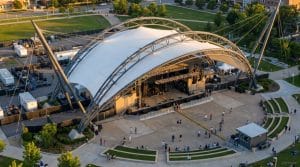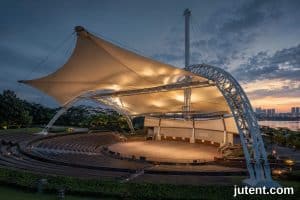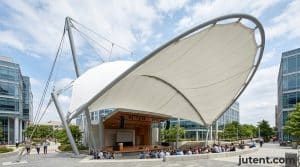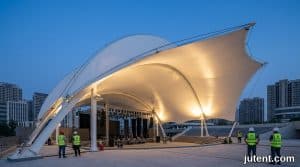

Procuring an outdoor stage canopy from an overseas manufacturer involves more steps than a standard shade structure order. This checklist covers everything from RFQ to delivery — so nothing falls through the cracks.
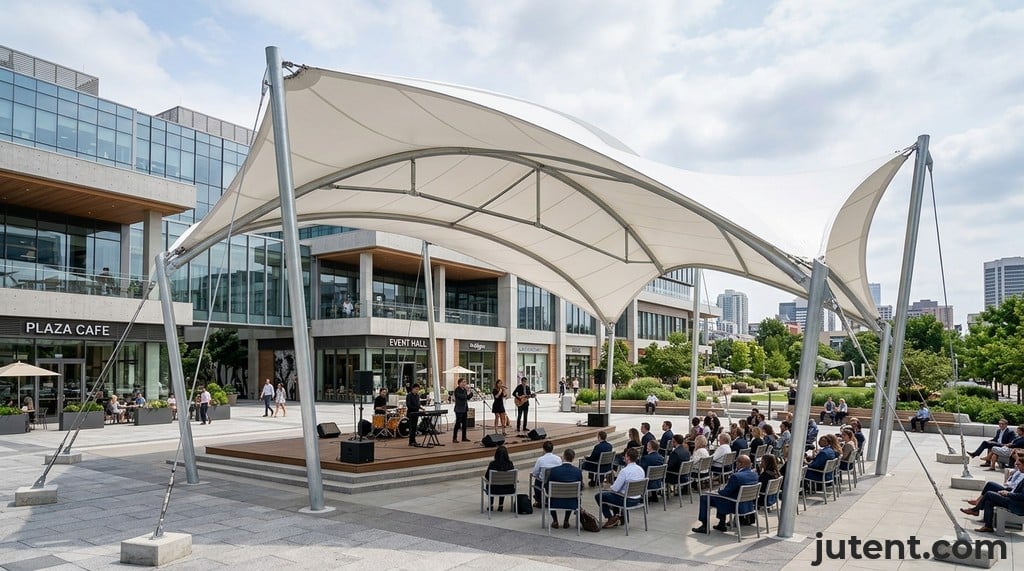
Step 1: Define the Scope — Stage Dimensions, Rigging Requirements, and Wind Zone
The initial phase of outdoor stage canopy procurement requires a precise definition of project parameters. Begin by establishing the exact dimensions of the stage area to be covered, including width, depth, and desired clear height. This dictates the overall footprint and structural scale of the canopy. Next, detail all rigging requirements. This includes the total anticipated load from lighting, sound equipment, video screens, and any special effects, along with the specific points and methods for attachment. Clearly specify whether these loads are static or dynamic, and provide a load distribution plan.
Crucially, identify the project's wind zone and local building code requirements. This information is paramount for structural engineering. A reputable manufacturer will require this data to perform accurate wind load calculations and design a structure capable of withstanding local environmental conditions. For instance, a stage canopy in a hurricane-prone region will demand significantly different structural specifications than one in a temperate zone. Based on Jutent's experience across 400+ projects in 30+ countries, neglecting this step can lead to significant safety and compliance issues. Consider also the desired membrane material – PVDF offers excellent durability and a 10-year warranty, while PTFE provides superior longevity with a 15-year warranty and a 25+ year service life.
Step 2: Evaluate Suppliers — What to Ask and What to Look For
Thorough supplier evaluation is critical for successful outdoor stage canopy procurement. Begin by verifying the manufacturer's experience with similar projects, specifically those involving complex rigging or large spans. Request a portfolio of past stage canopy installations, paying close attention to the structural design and engineering solutions employed. Inquire about their in-house engineering capabilities and the qualifications of their structural engineers. A manufacturer should be able to provide detailed design drawings and wind load calculations specific to your project's location.
Ask about their quality control processes, from material sourcing to fabrication. Reputable manufacturers will hold certifications like ISO 9001, demonstrating a commitment to quality management. Request material certificates for both the steel structure (e.g., Q235B, Q355B) and the membrane (e.g., 1050 g/m² PVDF or PTFE). Inquire about their surface treatment methods for steel, ensuring they utilize approved processes such as epoxy zinc-rich primer + acrylic topcoat, epoxy zinc-rich primer + fluorocarbon topcoat, or hot-dip galvanizing for corrosion resistance. Finally, assess their communication protocols and ability to handle international logistics. For export projects, Jutent can provide design drawings, calculations, material specifications, installation manuals, and free remote guidance, subject to project scope and contract terms.
About
Step 3: Review the Quotation — What Should and Shouldn't Be Included
A thorough quotation for an outdoor stage canopy should be meticulously detailed, leaving no room for ambiguity. It must clearly itemize all components: the steel structure (including grade and surface treatment), the membrane material (type, weight, color, and warranty), connection hardware (e.g., SS304 standard, SS316 optional upgrade), and any specialized rigging attachment points. The quotation should specify the scope of services, including design, engineering, fabrication, packing, and shipping terms (e.g., EXW, FOB, CIF). Crucially, it should include a breakdown of engineering costs, especially for custom designs and wind load calculations tailored to your site.
What shouldn't be included, or at least should be clearly separated, are items outside the manufacturer's direct scope, such as local permits, foundation work, or on-site installation labor unless explicitly negotiated. Be wary of quotations that are overly simplistic or lack specific material grades and treatment details. A transparent quote will also outline payment terms, typically a 30–50% deposit on order confirmation with the balance due before shipment. Ensure the warranty terms are clearly stated: a 1-year overall project warranty, 10 years for PVDF membrane, and 15 years for PTFE membrane are industry standards. Compare the quoted price per square meter against industry benchmarks; for a PVDF membrane, simple form, expect $40–$70/m², while complex forms might range from $60–$90/m². PTFE membrane adds approximately $20/m² to these ranges.
Step 4: Confirm the Order and Monitor Production
Once the quotation is thoroughly reviewed and all specifications are aligned, confirming the order involves formalizing the contract. This document should encapsulate all agreed-upon terms, including technical specifications, payment schedule, delivery timeline, and warranty details. Before issuing the deposit, ensure all engineering drawings and calculations have been reviewed and approved by your team or designated structural engineer. This is your final opportunity to verify that the design meets all local codes and operational requirements.
During the production phase, maintaining communication with the manufacturer is essential. Request regular progress updates, including photos or videos of the fabrication process. This allows for early identification and resolution of any potential issues. Pay particular attention to the steel fabrication, ensuring the specified grades (Q235B, Q355B) are used and the surface treatment (e.g., epoxy zinc-rich primer + fluorocarbon topcoat) is applied correctly. For the membrane, verify the material type and weight. A reputable manufacturer will welcome these checks as part of their commitment to quality. If possible, arrange for a third-party inspection at key production milestones, especially before the final payment and shipment. This proactive monitoring helps ensure the final product adheres strictly to the agreed-upon specifications and quality standards.
Step 5: Receive, Inspect, and Install
Upon arrival of your outdoor stage canopy, a meticulous receiving and inspection process is paramount. Begin by cross-referencing the packing list against the received goods to ensure all components are present and accounted for. Visually inspect all packages for any signs of transit damage before signing off on delivery. Document any discrepancies or damage with photographs and detailed notes, reporting them immediately to the shipping carrier and manufacturer.
Unpack and conduct a thorough inspection of the individual components. Verify the integrity of the steel structure, checking for any deformation, scratches, or issues with the surface treatment. Inspect the membrane for tears, punctures, or manufacturing defects. Confirm that all connection hardware is present and matches the specifications. Any issues identified at this stage should be documented and communicated to the manufacturer for resolution.
For installation, follow the manufacturer's detailed installation guide precisely. While Jutent offers free remote guidance, and on-site supervision is available as a paid service, proper adherence to the manual is crucial for structural integrity and safety. Ensure that the installation team is experienced with tensile structures and understands the specific requirements for your stage canopy. Proper tensioning of the membrane and secure anchoring of the structure are critical steps that directly impact the canopy's performance and longevity.
FAQ
- What documents should a stage canopy manufacturer provide with an order?
- A complete order from a reputable stage canopy manufacturer should include a thorough set of documents. These typically comprise detailed engineering drawings, precise wind load calculations, and critical rigging load calculations to ensure safety. expect membrane test certificates verifying material quality, steel material certificates confirming grade and composition, a detailed packing list for inventory verification, and a clear, step-by-step installation guide to facilitate proper assembly.
- What payment terms are typical for a stage canopy order from China?
- For stage canopy orders from Chinese manufacturers, standard payment terms usually involve an initial deposit upon order confirmation. This deposit typically ranges from 30% to 50% of the total project cost. The remaining balance is then due before shipment, once the fabrication is complete and the product is ready for dispatch. This structure provides security for both the buyer and the manufacturer, ensuring commitment throughout the production and logistics phases.
Contact Jutent with your stage project details and we'll guide you through every step of the procurement process.